Quick wins for a faster PC:
Fix the driver behind crashes, sound loss and screen glitchesFind Drivers →Clear out junk files and repair common Windows errorsFree Scan →Scan for outdated or missing drivers - takes under a minuteDriver Scan →For most buyers, an RTX 5080 prebuilt is the best alternative to an RTX 5090 system. It retains Nvidia’s Blackwell architecture, DLSS 4 and advanced ray tracing while reducing the graphics power envelope from 575W to 360W and the recommended system power from 1,000W to 850W. The main compromise is memory: 16GB of GDDR7 instead of the RTX 5090’s 32GB.
An RX 9070 XT prebuilt is the value-focused choice for rasterization-first gaming, while an RTX 5070 Ti system is the sensible lower-cost option if you accept more upscaling and reduced headroom at maximum 4K settings.
| # | Preview | Product | Price | |
|---|---|---|---|---|
| 1 |
|
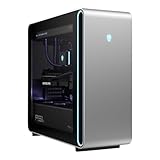
Dell Alienware Area-51 AAT2250 Gaming Desktop - Intel Core Ultra 9 285K, NVIDIA GeForce RTX 5090... | $9,199.00 | Buy on Amazon |
As an Amazon Associate I earn from qualifying purchases.
Which RTX 5090 alternative should you buy?
Your choice depends on whether you value ray tracing and Nvidia features, traditional rasterized performance per dollar, or the lowest acceptable price for 4K gaming.
Do these 3 things before closing this tab:
1Scan for outdated or missing drivers - takes under a minute2Clear out junk files and repair common Windows errors3Fix the driver behind crashes, sound loss and screen glitches| Alternative | Best for | Main strengths | Main compromise |
|---|---|---|---|
| RTX 5080 prebuilt | Closest overall substitute | Blackwell features, DLSS 4, strong ray tracing, lower power demand than RTX 5090 | 16GB VRAM instead of 32GB |
| RX 9070 XT prebuilt | Rasterization value | 16GB memory, AMD software and FSR support, 304W typical board power | Less suitable when ray tracing or CUDA-dependent work is the priority |
| RTX 5070 Ti prebuilt | Lower-cost 4K-capable gaming | Can deliver strong 1440p performance and handle 4K in many games | Below RTX 5080 and RTX 5090 class for maximum 4K settings |
Do not compare prebuilts by graphics-card name alone. The processor, memory capacity, SSD, power supply, cooling, case airflow, warranty and upgrade access can determine whether an otherwise attractive configuration performs consistently.
#1 Best Overall
- Intel Core Ultra 9 285K 3.2GHz Processor
- NVIDIA GeForce RTX 5090 32GB GDDR7
- 64GB DDR5-6400 RAM
- 4TB Solid State Drive
- 2.5GbE LAN; 2x2 Intel Killer WiFi 7 BE1750+Bluetooth 5.4
RTX 5080: the closest RTX 5090 replacement
Why it is the default recommendation
The RTX 5080 keeps the same current-generation Nvidia platform as the RTX 5090. That makes it the most straightforward alternative when you want DLSS 4, Nvidia’s ray-tracing feature set and compatibility with software that depends on Nvidia’s CUDA ecosystem, but do not want the power, cooling and system requirements of a flagship build.
Nvidia specifies 16GB of GDDR7 memory, 360W total graphics power and an 850W required system power for the RTX 5080. The RTX 5090 is specified at 32GB of GDDR7, 575W total graphics power and 1,000W recommended system power. A prebuilt based on the 5080 therefore has a substantially easier thermal and electrical design target.
| Specification | RTX 5090 | RTX 5080 |
|---|---|---|
| Video memory | 32GB GDDR7 | 16GB GDDR7 |
| Graphics power | 575W total graphics power | 360W total graphics power |
| Recommended or required system power | 1,000W recommended system power | 850W required system power |
| Generation and feature direction | Blackwell with DLSS 4 and advanced ray tracing | Blackwell with DLSS 4 and advanced ray tracing |
The 5080 is the right fit for a high-refresh 4K monitor when you want demanding games to use ray tracing and frame-generation features without building around a 1,000W-class power supply. Nvidia lists support for up to 4K at 480Hz, but that is an output capability, not a promise that every game will render at 480 frames per second. Actual frame rates vary with the game, resolution scaling, ray-tracing settings and frame-generation support.
The 16GB VRAM trade-off
Its defining weakness versus the 5090 is capacity. The 5080 has half the VRAM, so texture-heavy games, path-traced effects, high-resolution asset packs and future releases have less memory headroom. That does not make 16GB automatically inadequate for 4K, but it does make the 5090 the safer long-term choice for buyers who refuse to reduce texture quality or who use GPU memory for more than gaming.
For a gaming-only system, evaluate the games you actually play. If you are comfortable using an upscaler or lowering an unusually demanding texture or ray-tracing option, 16GB can be a practical compromise. If keeping every setting at its highest level for many years matters more than purchase price and power consumption, the 5090’s 32GB remains a meaningful advantage.
What to check in an RTX 5080 prebuilt
- An 850W-or-higher power supply that meets the system builder’s stated connector and efficiency requirements.
- A modern high-end CPU that will not limit high-refresh gaming, especially at settings where the GPU is not fully loaded.
- At least 32GB of system RAM for a new high-end gaming PC.
- An SSD large enough for the games you intend to install; current game libraries can quickly make a small boot drive inconvenient.
- A case with unobstructed intake and exhaust paths and a cooler appropriate for the selected CPU.
- A warranty that identifies which company handles component failures and whether you can replace or upgrade parts without losing coverage.
RX 9070 XT: the AMD value alternative
When it makes sense
The RX 9070 XT is the strongest value-oriented alternative in this group when your priority is conventional rasterized 4K rendering rather than the best possible ray-traced experience. AMD specifies 16GB of GDDR6, 304W typical board power and a 750W minimum power-supply recommendation. AMD announced a $599 suggested launch price in 2025; that is the graphics card’s launch guidance, not a guaranteed price for a complete prebuilt.
AMD’s software approach includes FSR upscaling and Fluid Motion Frames. These features can increase perceived smoothness in supported games, but compatibility and image quality vary by title. Check whether the games you play support the particular mode you intend to use instead of assuming every game will receive the same benefit.
Free tools Windows power users keep installed
One-click scans. No signup required.
| Specification | RX 9070 XT | Why it matters in a prebuilt |
|---|---|---|
| Video memory | 16GB GDDR6 | Comparable capacity to RTX 5080, with a different memory type and software ecosystem |
| Typical board power | 304W | Lower graphics power than RTX 5080’s 360W specification |
| Minimum PSU recommendation | 750W | Allows a less demanding power platform, subject to the complete system configuration |
| Suggested launch price | $599 USD, AMD guidance for the 2025 launch | Useful context for value, but not a current prebuilt price |
Rasterization versus ray tracing
Rasterization is the traditional rendering path used by most games. If your library is mostly competitive games, role-playing games without heavy ray tracing, or titles where you prefer native resolution and high settings, the 9070 XT can be a sensible way to spend less on the graphics platform.
Nvidia remains the safer choice when ray tracing is central to your preferred games, when you specifically want DLSS 4, or when you use CUDA-dependent creative, scientific or machine-learning applications. AMD’s feature set is useful, but it is not interchangeable with Nvidia’s software compatibility.
What to inspect in an RX 9070 XT prebuilt
- Confirm that the advertised 750W minimum recommendation is satisfied by the installed power supply after accounting for the CPU and other components.
- Check that the case has enough airflow for a roughly 304W graphics board and that the cooler is not blocked by drive cages or front panels.
- Verify the exact memory configuration. A system can advertise 32GB while using two different modules or a layout that prevents future expansion.
- Check which display outputs are provided if you plan to use a high-refresh 4K monitor.
- Confirm the warranty terms for the complete assembled computer rather than relying on the graphics card manufacturer’s separate policy.
RTX 5070 Ti: the lower-cost step down
An RTX 5070 Ti prebuilt belongs on the shortlist when the RTX 5080 is outside your budget and you accept that 4K will involve more compromises. Current buying coverage commonly pairs the card with a Ryzen 7 9800X3D and describes strong 1440p performance with 4K capability in many games. Those descriptions do not put it in the same performance class as an RTX 5080 or RTX 5090 for maximum 4K settings.
The practical difference is how often you need to use an upscaler, frame generation or reduced ray-tracing settings. A 5070 Ti system can be an excellent 1440p high-refresh machine that also supports 4K, but it is not the right choice if your definition of a 4K system means native rendering with every demanding effect enabled.
What’s actually slowing this PC down?
Pick the symptom - the matching free tool is one click away.
Who should choose it
- Buyers whose monitor is 1440p today but who want the option to connect a 4K display later.
- Players willing to tune individual settings instead of selecting the highest preset blindly.
- People who prefer a balanced system with a stronger CPU and SSD rather than spending the entire budget on the GPU.
- Anyone who understands that the lower entry price buys less long-term 4K headroom.
Who should skip it
Skip the 5070 Ti if you are buying a 4K high-refresh monitor specifically for maximum settings, heavy ray tracing or long service life without upgrades. In that case, the extra cost of an RTX 5080-class system is directed toward the performance headroom you will actually use.
Do you need 32GB of VRAM for 4K gaming?
No. The RTX 5080 and RX 9070 XT both provide 16GB, and that capacity can be practical for current 4K gaming when settings are chosen sensibly. The RTX 5090’s 32GB is valuable headroom, not a universal requirement.
VRAM usage rises with texture resolution, ray-tracing data, high-resolution assets, mods and multi-monitor or high-resolution workloads. When a game exceeds available memory, symptoms can include stutter, texture streaming delays or the need to lower a texture setting. Upscaling reduces the internal render resolution but does not eliminate every memory demand.
Choose 32GB of VRAM when you want to keep the same graphics card for many years, install large texture mods, use path tracing frequently or perform GPU compute work. Choose a 16GB card when the complete system is better balanced, the price difference is substantial, and you are willing to adjust a small number of settings as games become more demanding.
Power, cooling and noise considerations
Why the RTX 5090 costs more to build around
The RTX 5090’s 575W total graphics power and 1,000W recommended system power affect more than the power-supply label. A suitable prebuilt also needs a case that can move substantial heat, a cooler that keeps the CPU from adding to the thermal load, and a motherboard and chassis layout that leaves room for a large graphics card and its power cabling.
The RTX 5080’s 360W specification and the RX 9070 XT’s 304W typical board power are easier targets. They can still produce significant heat under sustained 4K loads, so a small case with restricted ventilation is not automatically acceptable simply because the GPU uses less power than a 5090.
Power-supply checklist
- Read the graphics card requirement and the complete system builder’s recommendation.
- Confirm the installed wattage, efficiency certification and connector standard, not just the brand name printed on the listing.
- Check whether the power supply is a replaceable standard unit or a proprietary design.
- Leave sensible capacity for additional drives, USB devices and future upgrades.
- Look for reviews or documentation describing cable routing and connector clearance, especially in compact cases.
Cooling and acoustics
Ask whether the case includes front or bottom intake fans, rear or top exhaust, and a CPU cooler sized for the processor. During long 4K sessions, sustained temperature and fan behavior matter more than a brief promotional benchmark. A quieter system may be worth choosing even when two listings use the same GPU.
How to compare complete prebuilts
Use the following order instead of filtering by GPU alone.
Windows Errors? Fix Them Before They Spread
Repair common Windows errors and clear accumulated junk for a smoother, more stable PC - no reinstall needed.Free scan · no reinstallCrashes, No Sound, or Screen Glitches?
Random freezes, missing sound and display glitches usually trace back to one bad driver. Find and replace yours safely.Free scan · under a minute- Set the display target. Decide whether you need native 4K, 4K with upscaling, or 1440p high refresh with occasional 4K output.
- Choose the graphics tier. Select RTX 5080 for the closest Nvidia replacement, RX 9070 XT for rasterization value, or RTX 5070 Ti for a lower entry price.
- Check the CPU. A high-end processor such as the Ryzen 7 9800X3D may be paired with an RTX 5070 Ti in current configurations, but verify the exact model and cooling in every listing.
- Require adequate system memory. Target 32GB or more, with two matching modules where possible.
- Check storage. Confirm SSD type, capacity and whether a second M.2 slot or drive bay remains available.
- Validate power delivery. Match the PSU wattage and connector standard to the GPU and CPU requirements.
- Inspect airflow and physical clearance. Confirm graphics-card length, radiator support, fan positions and access to memory and storage slots.
- Read the warranty and return policy. Listing details, component brands and inventory can change quickly, so verify these terms immediately before purchase.
Choosing for a high-refresh 4K monitor
A powerful GPU is most useful when the display can show the additional frames. Nvidia lists up to 4K at 480Hz for the RTX 5090 and RTX 5080 output capability. Games vary widely, however: a lightweight competitive title may run far faster than a visually intensive, ray-traced release. Match the monitor to the games you play rather than treating the maximum interface specification as a guaranteed frame rate.
- Choose a high-refresh 4K display if you play competitive or fast-action games and can use the extra frames.
- Choose a lower-refresh 4K display if your library emphasizes cinematic single-player games and image quality over latency.
- Check adaptive-sync support, input connections and the monitor’s actual refresh limit at 4K.
- Budget for the display separately; a cheaper prebuilt paired with an unsuitable monitor may deliver less benefit than a balanced system.
Common buying mistakes and fixes
Buying the GPU name without checking the rest
A high-end GPU paired with 16GB of system RAM, a small SSD, weak airflow or a marginal power supply can perform worse in sustained use than a better-balanced alternative. Compare every major component and the upgrade path.
Assuming launch pricing is current
The RX 9070 XT’s $599 figure is AMD’s suggested launch price from 2025. Retail pricing for cards and complete systems changes with inventory, region, configuration and promotions. Treat it as historical value context, then verify the current prebuilt price.
Confusing output support with game performance
A card may support a 4K 480Hz signal while a particular game renders much more slowly. Look for the settings and feature combination you actually intend to use.
The Tool Desk
Outbyte PC Repair FREERepair Windows errors before they cause bigger problemsFix Now →Outbyte Driver Updater FREEScan for outdated or missing drivers - takes under a minuteDriver Scan →Ignoring software requirements
If your workflow depends on CUDA, an AMD system may not be a drop-in replacement. If your games support AMD’s FSR or Fluid Motion Frames particularly well, those features may change the value calculation in the other direction.
Decision guide
| Your priority | Recommended prebuilt | Reason |
|---|---|---|
| Closest alternative to an RTX 5090 | RTX 5080 | Same Blackwell direction and Nvidia feature stack with lower power requirements |
| Ray tracing, DLSS 4 or CUDA compatibility | RTX 5080 | Nvidia’s ecosystem is the safer fit for these requirements |
| Rasterized 4K value and AMD software | RX 9070 XT | 16GB memory, 304W typical board power and a lower platform requirement |
| Lowest-cost route to 4K capability | RTX 5070 Ti | Strong 1440p performance and 4K support in many games, with more compromises |
| Maximum memory headroom | RTX 5090 | 32GB GDDR7, if the budget and 1,000W-class system are justified |
For a high-end 4K gaming PC that avoids the RTX 5090’s power and cost burden, start with an RTX 5080 prebuilt. Move to the RX 9070 XT when rasterization value and AMD’s software matter more than ray tracing or CUDA. Choose the RTX 5070 Ti only when the lower price outweighs the need for maximum 4K settings.
Quick Recap
Product prices and availability are accurate as of the date/time indicated and are subject to change. Any price and availability information displayed on Amazon at the time of purchase will apply.

