Free tools Windows power users keep installed
One-click scans. No signup required.
For the smoothest remote PC gaming, connect the phone to 5 GHz Wi‑Fi, connect the gaming PC to the router with Ethernet, keep local sessions on the same network, and match the stream to the phone or host display. Start at a refresh target the phone can decode reliably—usually 60 fps—then lower resolution or streaming bandwidth when frames drop. Hardware video decoding, a current phone, and a physical controller make a larger difference than chasing a single “perfect” bitrate.
The settings below apply to Steam Link, Moonlight, and Xbox Remote Play, with platform-specific requirements called out where they differ.
As an Amazon Associate I earn from qualifying purchases.
Set up the connection before changing picture quality
Most stutter blamed on a phone setting is caused by the path between the phone, router, and host. Fix that path first; otherwise lowering resolution only hides the symptom.
Use 5 GHz Wi‑Fi on the phone
Choose the router’s 5 GHz network rather than its 2.4 GHz band. Valve’s Steam guidance explicitly recommends 5 GHz over the highly congested 2.4 GHz band. The shorter-range 5 GHz signal is usually the better choice in the same room or nearby room, where it can provide a cleaner link for game video.
#1 Best Overall

- FULL SIZED CONTROLLER FORM FACTOR — Console performance meets mobile convenience for iPhone* and Android; play for extended periods in complete comfort and control with larger ergonomic handles that feel more natural to hold than standard mobile controllers (*iPhone 15 series and up)
- FULL SIZED TMR THUMBSTICKS — Perfect your aim with high-precision, anti-drift thumbsticks that are superior to Hall Effect designs
- DUAL MOUSE CLICK BACK BUTTONS — Enjoy the same ultra-responsive actuation found in our top gaming mice with 2 back buttons built into the controller’s ergonomic handles
- UNPARALLELED CASE COMPATIBILITY — Fits many popular phone cases thanks to an innovative USB C ‘island’ design and thicker depth clearance than other controllers
- POWERED BY THE RAZER NEXUS GAME LAUNCHER — Launch games, customize controls, record and share gameplay, and keep the controller updated with a free* app that can be brought up at the touch of a dedicated button. (*Razer Nexus does not require a fee/subscription, however some apps within Razer Nexus do)
Wireless traffic can interfere with itself when the PC, router, and phone are all competing over Wi‑Fi. If the host PC is wireless, moving it to Ethernet removes one of those wireless hops. Also pause large downloads, cloud synchronisation, video uploads, and other high-throughput activity while playing.
Wire the gaming PC to the router
Run Ethernet from the host PC to the router whenever practical. Moonlight’s documentation calls a wired host connection highly recommended and pairs it with a good 5 GHz connection to the client device. The phone can remain wireless; the important improvement is taking the high-volume game capture stream off the host’s Wi‑Fi link.
Keep local Steam Link sessions on one network
For a local Steam Link session, the phone and the computer running Steam need to be on the same network. Valve documents this requirement for both Android and Apple clients. A phone on a guest network, an isolated IoT SSID, or mobile data will not meet that local-session requirement even if both devices have internet access.
Use the cleanest practical radio path
- Play close enough to the router for a strong 5 GHz signal.
- Prefer a dedicated 5 GHz SSID if your router combines bands and the phone keeps roaming to 2.4 GHz.
- Stop background downloads on the phone, PC, and other devices before testing.
- If the stream is stable beside the router but not in the play area, the problem is coverage rather than a frame-rate setting.
“Choose the 5 GHz WiFi band over the highly congested 2.4 GHz band.”
Use a resolution and frame rate the phone can actually decode
Streaming has two separate workloads: the host encodes the game and the phone decodes the video. A high-resolution, high-frame-rate stream can overwhelm either the network or the handset. Start with the display target that matches the client or host, then reduce one variable at a time.
Rank #2
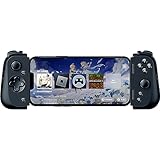
- CONSOLE QUALITY MOBILE GAMING CONTROLS — Designed with cutting edge microswitch buttons, analog triggers, and programmable macros to bring console-quality control to the phone
- UNIVERSAL FIT WITH EXTENDABLE BRIDGE — Features a stable, extendable bridge that provides a secure fit that perfectly holds all modern iPhone models, including the latest iPhone 14 models lightning connectors
- DISCOVER THE BEST GAMES IN ONE PLACE FOR FREE — Browse through thousands of compatible games, record and share gameplay, and keep Kishi updated with an integrated Razer Nexus App that allows full customizability
- STREAM PC AND CONSOLE GAMES — Play full PC, Xbox and PlayStation games directly on the phone, with support for the biggest game streaming apps.
- OPTIMIZED FOR MAXIMUM PERFORMANCE — Utilize iPhone's lightning connection to eliminate input latency, allow for seamless control—and passthrough charging for ultimate iOS compatibility
Match the stream to the display
Moonlight advises matching stream resolution to the host display. Steam Link exposes live resolution and bandwidth controls, so you can adjust the stream without changing the game’s desktop resolution. Valve’s Steam Link hardware documentation references 720p and 1080p display capability for clients; those figures describe supported display classes, not a universal setting for every phone.
For a 1080p phone, use a 1080p stream when the host, network, and decoder remain stable. On a 720p handset, sending 1080p creates extra scaling work and consumes more bandwidth without adding visible detail. If the phone has an unusual native resolution, select the nearest stream option that avoids unnecessary upscaling or downscaling.
Begin with a sustainable refresh target
Set the stream to the phone’s native refresh target, often 60 fps, only when the device and network can sustain it. A lower, steady frame rate feels better than a nominally faster stream that repeatedly drops frames. If the overlay shows decode time or network latency rising, reduce resolution or frame rate before increasing anything else.
Separate game rendering from stream output
The game can render at a different resolution from the stream. If the host GPU is struggling, lowering the game’s own graphics settings may help encode time; if the phone is struggling, lowering stream resolution or frame rate is the relevant change. Make one adjustment, replay the same demanding scene, and check whether frame drops, decode time, or network delay improved.
Choose bitrate by stability, not by a universal number
There is no vendor-published bitrate guarantee that works for every phone, router, game, and Wi‑Fi environment. Steam Link provides bandwidth controls, and Moonlight exposes stream settings, but the correct value depends on resolution, frame rate, codec support, radio conditions, and competing traffic.
Rank #3

- CONSOLE-QUALITY MOBILE GAMING CONTROLS — Designed with cutting edge microswitch buttons, analog triggers, programmable macros, and the Xbox Button to bring console-quality control to the phone
- UNIVERSAL FIT WITH EXTENDABLE BRIDGE — Features a stable, extendable bridge that perfectly holds all modern iPhone models, providing a secure fit that won’t come loose while gaming
- DISCOVER THE BEST GAMES IN ONE PLACE FOR FREE — Browse through thousands of compatible games, record and share gameplay, and keep Kishi updated with an integrated Razer Nexus App that allows full customizability
- STREAM PC AND XBOX GAMES — Play full PC and Xbox games directly on iPhone, with support for Xbox Cloud Gaming (Beta) and Xbox remote play — stream from the mobile device or play from the cloud (Third-party hardware and services may be required)
- OPTIMIZED FOR MAXIMUM PERFORMANCE — Utilizes the iPhone's lightning connection to eliminate input latency, allowing for responsive, seamless control—and features passthrough charging to power the phone when gaming
A practical bitrate sequence
- Start with the app’s default bandwidth for the chosen resolution and frame rate.
- Run the app’s network test or enable its performance overlay.
- Play a graphically busy scene for several minutes rather than judging a static menu.
- If the image freezes, becomes blocky, or the network-latency graph spikes, lower bandwidth one step.
- If the stream is stable but visibly soft, raise bandwidth gradually and retest while other household traffic remains active.
When Wi‑Fi is shared, a lower bitrate often produces a more responsive result because it leaves headroom for control packets and other devices. Raising bitrate cannot repair a weak signal or a congested channel; it only gives the encoder more data to send.
Recommended Free Tools
Recognize the type of failure
- Blocky image with otherwise responsive controls: the encoder is short of bitrate or the link is dropping packets. Reduce bandwidth or improve the connection.
- Sharp image but delayed controls: network or queueing latency is the likely bottleneck. Stop competing traffic and wire the host.
- Consistent pauses while the phone is hot: decoding or thermal throttling may be limiting the handset. Lower resolution or frame rate and remove restrictive battery modes.
- Periodic drops when another person starts a download: shared Wi‑Fi capacity is being consumed. Lower bandwidth or schedule the download outside play sessions.
Phone settings that protect the stream
Keep hardware decoding enabled
Use the app’s hardware video-decoding option when available. Moonlight notes that newer, faster phones are more likely to stream smoothly because they can use the device’s hardware video system. Software decoding consumes more CPU, raises heat, and leaves less capacity for the game-stream client.
Remove battery restrictions for the streaming app
Disable aggressive battery optimisation for Steam Link, Moonlight, or the Xbox app while you play. Android menu names vary by manufacturer and OS version; look under the app’s battery or background-use settings for an unrestricted or “don’t optimise” option. This does not increase network speed, but it prevents the operating system from suspending the client or reducing its work in the background.
Stop background activity
Pause app updates, photo backup, cloud-drive synchronisation, and video uploads on the phone. On the PC, pause game downloads and launchers that are updating in the background. A phone can show full Wi‑Fi bars while another process is consuming the available throughput.
Keep the phone cool and powered
High-brightness screens, charging, and sustained video decoding generate heat. Remove a thick case if the handset becomes hot, avoid direct sunlight, and use a charger that does not obstruct the phone’s grip. Thermal throttling can appear as a gradual increase in decode delay rather than an immediate disconnection.
What’s actually slowing this PC down?
Pick the symptom - the matching free tool is one click away.
Rank #4

- FULL SIZED CONTROLLER FORM FACTOR — Console performance meets mobile convenience; play for extended periods in complete comfort and control with larger ergonomic handles that feel more natural to hold than standard mobile controllers
- FITS PHONES, IPAD MINI & ANDROID TABLETS UP TO 8" — Game on a phone or go even bigger; get a viewing experience worthy of the best AAA games with an innovative telescopic bridge that fits iPad mini and Android tablets up to 8 inches
- FULL SIZED TMR THUMBSTICKS WITH SWAPPABLE CAPS — Perfect your aim with high-precision, anti-drift thumbsticks that are superior to Hall Effect designs; customize them for more speed or precision with 2 swappable caps
- DUAL MOUSE CLICK BACK BUTTONS & CLAW GRIP BUMPERS — Enjoy the same ultra-responsive actuation found in our top gaming mice with 2 back buttons built into the controller’s ergonomic handles—topped with 2 claw grip bumpers for even more control
- POWERED BY THE RAZER NEXUS GAME LAUNCHER — Launch games, customize controls, record and share gameplay, and keep the controller updated with a free* app that can be brought up at the touch of a dedicated button. (*Razer Nexus does not require a fee/subscription, however some apps within Razer Nexus do)
App-by-app requirements and controls
| App | Host and session model | Connection baseline | Display or bandwidth guidance | Controller support cited by the platform |
|---|---|---|---|---|
| Steam Link | Computer running Steam; local Android and Apple sessions require the phone and host PC on the same network. | Android 5.0 or newer; a 5 GHz wireless router is recommended. | Steam exposes live resolution and bandwidth controls. Match the stream to the phone or host display. | Xbox One S controller, DualShock 4 on Android 9 or newer, and Razer Kishi are listed as supported Android inputs. |
| Moonlight | PC game-streaming client connected to a PC host. | A mid- to high-end wireless router, 5 GHz client connection, and Ethernet from the PC to the router are strongly recommended; Wireless-N (802.11n) or better is recommended. | Match stream resolution to the host display. Reduce stream settings if decode or network latency rises. | Use a controller supported by the phone and the host; verify every button in Moonlight before launching a game. |
| Xbox Remote Play | Compatible phone or tablet connecting to an Xbox console with remote features enabled. | 5 GHz Wi‑Fi or mobile data and 10 Mbps downstream are listed by Microsoft as requirements. | Use the client’s available quality controls and lower the stream when the mobile or Wi‑Fi link cannot sustain it. | A supported Bluetooth controller is required for Xbox Remote Play. |
These products serve different host ecosystems. Steam Link and Moonlight are aimed at PC-hosted games, while Xbox Remote Play streams from an Xbox console. Account, game-ownership, and service entitlements are separate from the phone’s network settings; verify those in the relevant platform before troubleshooting latency.
Exact setup workflow
- Test the path. Open the streaming app’s network test or performance overlay. Record whether the warning is about bandwidth, network latency, decoding, or dropped frames.
- Join 5 GHz. In the phone’s Wi‑Fi settings, select the router’s 5 GHz network. For local Steam Link, confirm that the phone and host PC are on the same home network rather than a guest or isolated network.
- Wire the host. Connect the gaming PC—or the console for a wired-console setup—to the router with Ethernet when possible. Leave the phone on 5 GHz.
- Select the display target. In Steam Link or Moonlight, choose the phone’s native resolution or the host-display resolution recommended by the client. Do not begin by forcing a higher resolution than the phone can show.
- Set a sustainable frame rate. Start at 60 fps when the phone and network support it. If the overlay reports dropped frames or rising decode time, lower frame rate or resolution.
- Adjust bandwidth. Keep the default first. Lower the app’s bandwidth or bitrate when the image stutters, Wi‑Fi is shared, or the network graph spikes. Raise it only after a stable test in a busy game scene.
- Protect the client. Disable battery restrictions for the streaming app, stop background downloads, and keep the phone cool.
- Pair and test the controller. Connect a supported Bluetooth or USB controller, open the app’s input test or a simple game, and verify sticks, triggers, bumpers, buttons, and the guide/menu button before starting a demanding title.
Controller choice: when touch controls are not enough
Touch controls are workable for turn-based games, menus, and slower strategy titles. Action games, shooters, racing games, and platformers are considerably easier with a physical controller because the phone is already handling video decoding and wireless communication.
Steam Link on Android
Valve lists the Xbox One S controller, DualShock 4 on Android 9 or newer, and the Razer Kishi as supported Steam Link inputs. A phone-mounted controller keeps the screen and controls together, while a separate Bluetooth pad leaves the phone to be propped up. Either approach is valid; choose based on portability and hand comfort.
Xbox Remote Play
Microsoft requires a supported Bluetooth controller for Xbox Remote Play. Pair it in the phone’s Bluetooth settings before opening the session, then test the triggers and sticks. If the controller connects to the phone but the game does not respond, close other apps that may have claimed the input and reconnect it before changing network settings.
PC Slower Than It Used to Be?
A free scan shows the junk files, broken settings and background clutter dragging Windows down - then fixes them in one click.Free scan · Windows 10 & 11Outdated Drivers Are Slowing You Down
One free scan finds every outdated or missing driver and matches the right update for your exact hardware.Free scan · exact hardware matchUSB versus Bluetooth
A USB controller can avoid Bluetooth pairing conflicts, but it requires the correct phone adapter and may prevent simultaneous charging unless the adapter supports power pass-through. Bluetooth is simpler for most phones; keep the controller charged and remove old pairings that cause it to reconnect to another device.
Best Value

- Universal Mobile Gaming Controller: Designed to bring console-level control to your phone for gaming anywhere
- Cloud and Mobile Gaming: Compatible with leading cloud gaming services including Xbox Game Pass Ultimate, Stadia, Amazon Luna, GeForce NOW, & Steam Link; & hundreds of popular mobile games including Fortnite, Minecraft, Roblox, Brawlhalla, Asphalt 9: Legends, Black Desert Mobile, emulators, & many more.
- Refine Your Aim and Execution: Clickable analog thumbsticks provide greater accuracy and tactile feedback, and the performance buttons and d-pad deliver precision input
- Latency-Free Gameplay: Unlike Bluetooth controllers which produce lag, the controller has zero latency by directly connecting to the device’s charging port
- USB Type C Charging Port: For pass-through charging of your phone or tablet while using the controller
Troubleshooting by symptom
The stream will not connect
- For Steam Link, confirm Steam is running on the host and that both devices are on the same network.
- Leave any guest or isolated Wi‑Fi network and join the main 5 GHz network.
- For Xbox Remote Play, confirm the console’s remote features are enabled and that the phone has either 5 GHz Wi‑Fi or mobile data.
- Restart the app and router only after checking the network path; restarting cannot fix an incorrect SSID or disabled console setting.
The picture stutters every few seconds
- Watch the performance overlay during a stutter. A network spike points to congestion; a decode spike points to the phone.
- Pause downloads and uploads on every device sharing the connection.
- Lower bandwidth first when the image is otherwise clear, then lower resolution or frame rate if the phone continues to miss frames.
- Move the phone closer to the router or wire the host PC.
Input feels delayed even though the picture is clear
- Use Ethernet for the host and 5 GHz for the phone.
- Check whether another wireless device began transmitting at the same time.
- Reduce stream bandwidth to prevent queueing on a busy connection.
- Test with a wired USB controller if Bluetooth interference is suspected.
The phone shows a black screen or decoder error
- Enable hardware decoding if the app offers the choice.
- Lower the stream resolution and frame rate to reduce decoder load.
- Remove battery restrictions and let the phone cool before retesting.
- If only one app fails while another decodes normally, the issue is likely app or host configuration rather than Wi‑Fi capacity.
What the available numbers do—and do not—tell you
Android Steam Link’s minimum operating-system requirement is Android 5.0 or newer. That is a compatibility floor, not a promise of smooth 1080p or 60-fps streaming; newer hardware is more likely to provide hardware decoding and sustained performance.
Xbox Remote Play lists 10 Mbps downstream, with 5 GHz Wi‑Fi or mobile data. Treat that as a minimum connection requirement, not a guaranteed latency or image-quality target. Mobile networks can meet the download rate while adding variable delay or data charges.
There is no dated independent latency study or universal bitrate statistic in the cited official material. Your overlay and repeatable in-game test are therefore more useful than a benchmark number copied from another phone, router, or region.
Quick wins for a faster PC:
Clear out junk files and repair common Windows errorsFree Scan →Fix the driver behind crashes, sound loss and screen glitchesFind Drivers →Repair Windows errors before they cause bigger problemsFix Now →Choose settings for your situation
Phone beside the router, wired PC
Use 5 GHz, the phone’s native resolution, and a 60-fps target if the decoder remains stable. Keep the app’s default bandwidth initially; increase it only when the image needs more detail and the overlay stays clean.
Shared apartment Wi‑Fi
Keep the host on Ethernet, select 5 GHz on the phone, stop background traffic, and lower bandwidth before lowering resolution. A consistent 60 fps at a slightly softer image is usually preferable to sharp frames separated by pauses.
Older or entry-level phone
Enable hardware decoding, start at 720p or the nearest supported lower resolution, and use a conservative frame-rate target. If the phone heats up or decode latency climbs, lower resolution again and remove battery restrictions.
Remote play over mobile data
Xbox Remote Play’s documented mobile-data option still requires 10 Mbps downstream. Monitor data usage and signal variation, begin with lower bandwidth, and avoid assuming that a speed test alone predicts game responsiveness.
Do these 3 things before closing this tab:
1Clear out junk files and repair common Windows errors2Fix the driver behind crashes, sound loss and screen glitches3Repair Windows errors before they cause bigger problemsBottom line
Build the connection in this order: 5 GHz phone Wi‑Fi, Ethernet host, same-network routing for local Steam Link, matched resolution, sustainable frame rate, then bitrate tuning. Hardware decoding and an unrestricted, cool phone keep the client stable; a physical controller supplies the precision that touch input cannot. If an overlay identifies a different bottleneck, change that setting rather than blindly increasing resolution or bandwidth.
Quick Recap
Product prices and availability are accurate as of the date/time indicated and are subject to change. Any price and availability information displayed on Amazon at the time of purchase will apply.

