Recommended Free Tools
Best overall approach: run OpenAI’s open-weight gpt-oss-20b or gpt-oss-120b on infrastructure you control, then choose a serving runtime that matches your hardware and traffic. Use Ollama for the simplest developer setup, llama.cpp for CPU, Apple Silicon, broad hardware coverage or limited GPU memory, and vLLM for concurrent production traffic on suitable NVIDIA CUDA systems.
These models are not provided through the OpenAI API. Their weights are released under Apache 2.0, subject to the gpt-oss usage policy, so you can operate them on-premises, in a private cloud or through a hosting partner while retaining control of the inference environment.
As an Amazon Associate I earn from qualifying purchases.
Outdated Drivers Are Slowing You Down
One free scan finds every outdated or missing driver and matches the right update for your exact hardware.Free scan · exact hardware matchPC Slower Than It Used to Be?
A free scan shows the junk files, broken settings and background clutter dragging Windows down - then fixes them in one click.Free scan · Windows 10 & 11What a private OpenAI alternative actually means
A private or self-hosted alternative is a model whose inference runs inside infrastructure administered by your organization rather than on a vendor’s public inference service. That infrastructure can be a workstation, a server in your own data center, a private cloud account or a managed host selected by your team.
Self-hosting changes the data path. OpenAI states:
“OpenAI does not receive or process the data you send to these self-hosted models unless you explicitly share it with OpenAI, or use one of our managed hosting partners.”
#1 Best Overall
 PNY NVIDIA RTX A5500 Professional Graphics Card 24GB GDDR6 PCI Express 4.0 x16, Dual Slot, 4X DisplayPort, 8K Support, Ultra Quiet Active Fan, 13659239000
- GPU processor: NVIDIA RTX A5500
- CUDA cores: 10240
- 24GB GDDR6 ECC Graphics Memory
- System Interface: PCI-Express 4.0 x16
- 1 x DisplayPort to HDMI adapter
The qualification matters: a deployment you operate yourself is different from a managed hosting arrangement, and the operator remains responsible for securing every component around the model.
Private inference is useful when data-residency rules, contractual confidentiality, network isolation, predictable retention or internal governance matter more than the convenience of a fully managed API. It also gives you control over model versions, quantization, logging and upgrade timing. The trade-off is that your team must supply hardware, operations, security controls, performance testing and support.
The models: gpt-oss-20b and gpt-oss-120b
gpt-oss-20b
gpt-oss-20b is the smaller of the two open-weight reasoning models described in the current OpenAI open-models material. Its lower parameter count generally makes it the more practical starting point for a local workstation or a modest private server, especially after quantization. Actual memory requirements still depend on the quantization format, context length, batch size and number of simultaneous requests; the name alone is not a hardware specification.
gpt-oss-120b
gpt-oss-120b is the larger model and therefore imposes a substantially heavier memory and serving requirement. It is a candidate for teams that need the strongest published results in this pair and can provide the necessary accelerator or multi-device capacity. Do not assume that a single consumer graphics card can run it: calculate the complete weight, runtime, cache and concurrency budget for the exact configuration you intend to deploy.
License and policy
OpenAI says the model weights use the Apache 2.0 license, subject to the gpt-oss usage policy. Apache 2.0 provides broad rights to use, modify and redistribute software and associated materials covered by that license, but it does not cancel the additional usage-policy obligations. Before shipping a product, review the policy, preserve required notices and document how your organization handles generated content and restricted use cases.
They are not an OpenAI-hosted endpoint
Neither model is served through the OpenAI API. You download or obtain compatible weights, select an inference runtime and expose your own local or private endpoint. A runtime may offer an OpenAI-compatible API shape for application convenience, but that compatibility does not turn the deployment into a hosted OpenAI service.
Rank #2
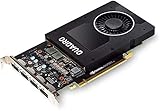
- 1280 CUDA Cores deliver powerful graphics and compute performance
- 5 GB of fast GDDR5x GPU memory holds large models or scenes
- Ideal for 3D Design and FHD video editing, and medical imaging systems (ultrasound)
- Drives up to four displays at 5K resolution with 30-bit color
- Compatible with NVIDIA CUDA, NVIDIA nView and Mosaic
Published benchmark results
The following figures are vendor-published results shown on OpenAI’s open-models page in 2026. They are indicators from specified benchmark sets, not guarantees for your prompts, languages, tools, retrieval data or latency target.
| Benchmark | gpt-oss-120b | gpt-oss-20b |
|---|---|---|
| MMLU | 90.0 | 85.3 |
| GPQA Diamond | 80.1 | 71.5 |
| AIME 2024 | 96.6 | 96.0 |
| AIME 2025 | 97.9 | 98.7 |
The numbers do not move in a single direction: the smaller model is slightly ahead on the published AIME 2025 result, while the larger model leads on MMLU, GPQA Diamond and AIME 2024. Treat them as model-selection evidence, then run an evaluation set built from your own tasks before committing hardware or changing a production model.
Choosing the serving runtime
Model choice and serving-runtime choice are separate decisions. The same weights can behave very differently operationally depending on whether you prioritize one interactive user, CPU compatibility, Apple Silicon, low memory, high throughput or many concurrent requests.
| Runtime | Best fit | Hardware profile | Concurrency and throughput | Operational notes |
|---|---|---|---|---|
| Ollama | First local experiment, a developer workstation or a small internal tool | Use the hardware supported by the current model package; verify packaging and acceleration support before deployment | Convenient for interactive use; not the default choice when maximum multi-user throughput is the primary requirement | Among the runtimes named in OpenAI’s compatibility guidance, it is the easiest entry point for many consumers and developers. Packaging and hardware support can change, so check the current release details. |
| llama.cpp | CPU-only systems, Apple Silicon, limited GPU memory, quantized local models and single-user development | Broad local hardware coverage, including CPU and Apple Silicon paths | Well suited to one user or light traffic; throughput depends heavily on quantization, memory bandwidth and context settings | Documentation positions it as the practical default for constrained systems and as a flexible engine for quantized-model workflows. |
| vLLM | Production serving, multiple concurrent requests and maximum throughput | Docker’s Model Runner guidance requires an NVIDIA GPU with CUDA support for this path; vLLM documentation also describes CPU and ARM build paths for supported configurations | Designed for high-throughput, concurrent serving and OpenAI-compatible endpoints | Choose it when the deployment has suitable accelerator capacity and an operations team comfortable with a more server-oriented stack. CPU support is configuration-specific rather than a reason to assume every vLLM feature works without a GPU. |
How to decide between the three runtimes
Choose Ollama for the shortest path to a local proof of concept
Ollama is a sensible first step when one developer needs to download a compatible package, start an interactive session and test prompts without designing a production service. It reduces the amount of serving configuration you need to understand at the beginning. Move to another runtime if you require detailed batching controls, a deployment topology for many users or hardware that the current package does not support.
Free tools Windows power users keep installed
One-click scans. No signup required.
Choose llama.cpp for hardware flexibility
llama.cpp is the strongest fit when your machine is CPU-only, uses Apple Silicon, has constrained GPU memory or must run a quantized file on varied local hardware. It is also a practical choice for single-user development, offline experiments and edge environments where installing a large accelerator stack is not realistic. Expect to make explicit choices about quantization and context size because those settings directly affect memory use and response speed.
Choose vLLM for concurrent production traffic
vLLM is aimed at serving rather than merely launching a model. Its value appears when several applications or users send requests concurrently and you need efficient scheduling, a stable endpoint and high aggregate throughput. The recommended path assumes suitable NVIDIA CUDA hardware in the container-oriented guidance. If your environment does not have that hardware, compare the supported CPU or ARM build paths with your latency and maintenance requirements instead of assuming the same performance profile.
Rank #3
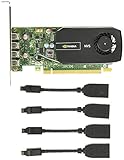
- Quad display support1
- Display Port 1.2 features.H.264 Encoder
- Versatile connectivity options using Mini Display Port (mDP) connector.NVIDIA FXAA and TXAA.Intelligent Power Management
- Multi-display experience with NVIDIA Mosaic technology.NVidia High-Definition Video Technology
- Maximum Power Consumption:35Watts
Hardware sizing without a misleading “best GPU” answer
There is no universal GPU recommendation for private LLM inference. The required memory is determined by at least five variables:
- Parameter count: gpt-oss-120b needs far more weight storage than gpt-oss-20b.
- Quantization: lower-precision formats reduce memory use but can change quality, compatibility and speed.
- Context length: a longer prompt window increases key-value cache memory during generation.
- Batch size: serving multiple sequences at once consumes more memory than one interactive request.
- Concurrency: simultaneous users require additional cache and scheduler capacity.
Start by writing down the model, quantization, maximum input and output lengths, target requests per minute and acceptable time to first token. Then measure the full runtime configuration, not just the model file. Leave headroom for the operating system, driver, tokenizer, cache, monitoring and request bursts. A card advertised as having enough raw memory for the weights may still fail once context and concurrent requests are included.
Quick wins for a faster PC:
Fix the driver behind crashes, sound loss and screen glitchesFind Drivers →Repair Windows errors before they cause bigger problemsFix Now →For vLLM’s documented Model Runner path, select an NVIDIA GPU with CUDA support. For llama.cpp, CPU, Apple Silicon and systems with limited GPU memory are explicitly supported scenarios. For either runtime, verify that the exact model format and quantization are implemented by the version you plan to install.
A deployment plan for a private model
- Define the workload. List the applications, user count, languages, tool calls, retrieval sources, maximum context, expected response length and latency target. Separate interactive chat from batch jobs because their resource profiles differ.
- Select the model. Begin with gpt-oss-20b when a smaller footprint and faster iteration are more valuable than the larger model’s published advantages. Select gpt-oss-120b only after confirming that the quality gain matters to your evaluation set and that the hardware budget supports it.
- Choose the runtime. Use Ollama for a straightforward local proof of concept, llama.cpp for CPU, Apple Silicon or limited-memory deployments, and vLLM for CUDA-backed concurrent serving.
- Obtain and verify the weights. Use an official distribution or a trusted internal mirror, record the model version and checksum, retain the Apache 2.0 notices and review the gpt-oss usage policy before redistribution.
- Prepare the host. Install the required operating-system packages, accelerator drivers and runtime version. Keep model storage on encrypted disks and ensure that the host has enough space for weights, temporary files and logs.
- Set resource limits. Configure maximum context, output tokens, batch size and concurrency deliberately. Begin conservatively, observe memory use and increase limits only after the service remains stable under representative load.
- Keep the endpoint private. Bind the service to an internal interface or private network, place authentication and authorization in front of it, and prevent accidental exposure through a public reverse proxy or permissive firewall rule.
- Evaluate before launch. Run a fixed test set covering factual answers, reasoning, structured output, refusals, tool calls and sensitive-data handling. Record quality, latency, token throughput, error rate and peak memory for each candidate configuration.
- Operate it as a service. Pin versions, back up configuration, monitor hardware health and queue depth, rotate credentials, patch the host and define a rollback path before upgrading the model or runtime.
Privacy and security responsibilities move to the operator
Keeping inference inside your network does not automatically make the system private. Data can still leave through telemetry, application logs, crash reports, model-download tools, remote administration, misconfigured storage or a third-party plugin. Map every outbound connection and disable anything your policy does not permit.
- Access control: require authenticated requests, assign least-privilege roles and separate experimentation from production credentials.
- Network isolation: restrict ingress to approved applications and egress to explicitly required services. Do not expose an unauthenticated inference port to the internet.
- Logging: decide whether prompts and completions may be logged, redact secrets and personal data, limit retention and protect logs with the same controls as source data.
- Patching: maintain the operating system, GPU driver, runtime, dependencies and container images. A private server still has an attack surface.
- Model governance: record the exact weights, policy version, quantization and prompts used in each release. Review licensing and prohibited-use requirements for every redistribution or customer deployment.
- Safety evaluation: test prompt injection, data exfiltration, unsafe instructions, privacy leakage and tool misuse in the context of your applications.
OpenAI describes these deployments as self-managed and self-serviced and does not provide hands-on implementation or debugging support for third-party runtimes. Plan for internal expertise, a systems integrator or a managed infrastructure provider if your team cannot own those duties.
Cost categories to include in the business case
Self-hosting replaces a per-request service bill with a stack of capital and operating costs. Account for:
Rank #4

- Graphics Coprocessor NVIDIA Quadro K4000
- Brand NVIDIA
- Graphics Ram Size 3 GB
- GPU, server, memory, storage, networking and any redundant hardware;
- electricity and cooling, especially for continuously running accelerators;
- engineering time for installation, upgrades, monitoring, incident response and evaluation;
- security controls, backups and disaster-recovery capacity;
- private GPU hosting or deployment support when buying and operating hardware is not economical.
A smaller model can reduce the initial hardware requirement, while a larger model may reduce manual review or improve task completion for a valuable workflow. Compare total cost at the throughput and availability your application actually needs, not only the purchase price of a graphics card.
Independent reader supportYour contribution helps us test, update, and keep practical guides available for everyone.Common deployment scenarios
One developer on a laptop or workstation
Start with gpt-oss-20b and a runtime that supports your operating system and available memory. llama.cpp is the documented fit for Apple Silicon, CPU-only use and limited GPU memory; Ollama is convenient when its current package supports your hardware. Keep context and concurrency modest, and treat the result as a development environment rather than a production SLA.
An offline or regulated internal application
Use a private network, an approved model mirror and a runtime that can operate without external calls. Document data retention, restrict logs and perform a security review of every integration. The privacy benefit comes from the complete controlled data path, not merely from downloading model weights.
Do these 3 things before closing this tab:
1Repair Windows errors before they cause bigger problems2Fix the driver behind crashes, sound loss and screen glitches3Clear out junk files and repair common Windows errorsA team serving many simultaneous users
Evaluate vLLM on NVIDIA CUDA hardware when throughput and concurrency dominate. Measure queueing, time to first token, generation rate and tail latency under the planned number of users. If your hardware cannot meet those targets, consider a private GPU host or a smaller model before exposing the service to a larger audience.
Batch analysis and scheduled jobs
Batch workloads can tolerate different latency and scheduling choices than chat. Use a queue, cap concurrency to protect memory and record failed jobs for retry. Test whether gpt-oss-20b completes the task accurately enough before allocating the substantially larger footprint of gpt-oss-120b.
Pitfalls and fixes
“The model fits, but the process crashes during long prompts”
The weights fit in memory, but the context cache or concurrent sequences do not. Lower the maximum context, output length or concurrency; use a more memory-efficient quantization if quality remains acceptable; and leave headroom for runtime overhead.
Best Value

- GeForce RTX 30 Series GPUs deliver ultimate performance for gamers and creators. They're powered by Ampere, NVIDIA's 2nd generation RTX architecture, with new RT cores, Tensor cores, and streaming multiprocessors for the most realistic ray-plotted graphics and cutting-edge AI features.
- Discover today's biggest blockbusters like never before with the visual fidelity of real-time ray tracing and the ultimate performance of AI-powered DLSS. RTX It's on.
- NVIDIA DLSS is a revolutionary AI rendering that increases frame rates with uncompromising image quality using dedicated AI processing Tensor cores on Geforce RTX. This gives you the margin of performance to increase settings and resolutions for an amazing visual experience. The AI revolution has arrived in the game.
- NVIDIA Reflex delivers the ultimate competitive advantage. The lowest latency. The best responsiveness. Powered by Geforce RTX 30 Series GPUs and NVIDIA G-SYNC monitors. Acquire targets faster, react faster and increase aiming accuracy with a revolutionary suite of technologies to measure and optimize system latency for competitive gaming.
- Enhance your creative projects with Geforce RTX 30 Series GPUs. Accelerate AI in the best creative applications. Supported by the NVIDIA Studio platform of dedicated drivers and exclusive tools. Designed to run in record time. Whether it's rendering complex 3D scenes, editing 8K videos, or live streaming with the best encoding and image quality, Geforce RTX GPUs give you the performance you need to create the best.
“Responses are too slow on a CPU”
CPU inference can be practical for occasional or offline use, but speed depends on processor, quantization, thread settings and context. Reduce unnecessary context, use an appropriate quantized build and benchmark llama.cpp with realistic prompts. If interactive latency is still unacceptable, move the workload to an accelerator rather than assuming a different prompt will solve a hardware limit.
The Tool Desk
Outbyte Driver Updater FREEFix the driver behind crashes, sound loss and screen glitchesFind Drivers →Outbyte PC Repair FREERepair Windows errors before they cause bigger problemsFix Now →“A GPU is underused while requests wait”
Check whether the bottleneck is tokenization, storage, CPU scheduling, a small batch limit or application-level serialization. A production runtime such as vLLM can improve utilization when the model and CUDA hardware are supported, but measure before and after changing stacks.
“The local answer differs from the hosted answer”
Differences can result from model version, quantization, system prompt, sampling parameters, tool definitions or context truncation. Record those variables in your evaluation harness and compare like-for-like configurations. Published benchmark scores cannot certify equivalence for a private application.
“The service is private, but sensitive prompts appear in logs”
Inspect runtime, proxy and application logging separately. Disable prompt capture where possible, redact at the application boundary, restrict log access and set a retention period. Verify the result with a test prompt containing a marker that should never be written to disk.
Decision checklist
- Do you need inference to remain on infrastructure you control?
- Have you selected gpt-oss-20b or gpt-oss-120b based on an evaluation set rather than benchmark scores alone?
- Are model weights, quantization, context and concurrency included in the memory calculation?
- Is Ollama sufficient for your local prototype, or do you need llama.cpp’s hardware breadth or vLLM’s concurrent serving?
- If using vLLM’s container-oriented path, do you have an NVIDIA CUDA-capable GPU and the required driver stack?
- Who owns authentication, patching, monitoring, incident response, policy compliance and safety testing?
- Have you budgeted hardware, electricity, storage, support and private hosting where applicable?
Verdict
For most private-AI projects, the sensible sequence is to validate the workload with gpt-oss-20b, then select the runtime around the deployment constraint: Ollama for the easiest start, llama.cpp for broad local hardware and vLLM for CUDA-backed concurrency. Move to gpt-oss-120b when your tests show a material quality benefit and your memory, power and operations budget can sustain it. The defining advantage is control of the inference environment; the defining cost is that security, reliability and support become your responsibility.
Quick Recap
Product prices and availability are accurate as of the date/time indicated and are subject to change. Any price and availability information displayed on Amazon at the time of purchase will apply.

