Quick wins for a faster PC:
Fix the driver behind crashes, sound loss and screen glitchesFind Drivers →Clear out junk files and repair common Windows errorsFree Scan →The right internal TV tuner is determined by three checks: your broadcast standard (such as ATSC/QAM or DVB), an available motherboard slot and bracket, and whether your antenna or cable feed actually delivers a usable signal. For a US PC with a free half-height PCIe slot and a need to watch or record several channels at once, Hauppauge’s WinTV-quadHD model 1609 is the most capable documented option here because it has four digital tuners. A single-tuner PCIe card such as the WinTV-HVR-1265 (model 1196) is a simpler fit. The older full-height PCI WinTV-HVR-1150 (model 1288) is relevant only when a compatible legacy slot and supported software are available.
These cards do not guarantee excellent reception or superior sound by themselves. Reception depends on the local broadcast, antenna installation or cable provider, while surround sound is available only on broadcasts that carry it. Use the comparison and installation checks below to avoid buying a card for the wrong signal standard or case.
As an Amazon Associate I earn from qualifying purchases.
What an internal TV tuner card does
An internal tuner is an expansion board that receives digital television through an antenna or cable connection and passes the decoded channels to Windows software. The card handles tuning; the application handles live viewing, electronic program data where available, pausing, and recording. A model with multiple tuners can record one channel while you watch another, or record several channels at the same time, subject to the software and the number of usable channels in the incoming signal.
The Tool Desk
Outbyte Driver Updater FREEScan for outdated or missing drivers - takes under a minuteDriver Scan →Outbyte PC Repair FREEClear out junk files and repair common Windows errorsFree Scan →The tuner must support the modulation and broadcast family used at your location. The US comparison page lists ATSC and QAM for the models below, while the UK listing uses DVB-T2/Freeview HD, DVB-T and DVB-C. Those standards are not interchangeable, so a card intended for one region is not automatically suitable in another.
#1 Best Overall
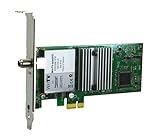
- Watch, pause or record UP TO FOUR DIFFERENT UNENCRYPTED ATSC or clear QAM TV channels live, simultaneously via antenna or cable TV. Note: clear QAM cable TV is not available on all cable networks. Please contact your cable operator for availability of clear QAM.
- INCLUDES HAUPPAUGE WINTV V10. WinTV v10 shows live TV on the Windows desktop in a window or in full screen. With four-channel picture-in-picture. Timer function and electronic program guide for programming daily, weekly or one-off TV recordings.
- INCLUDES HAUPPAUGE remote control with an IR sensor cable
- FOR WINDOWS 11 and 10. Also works on Windows 8 and 7.
Internal cards also differ mechanically. PCI Express (PCIe) is the current expansion-bus choice in this group; the HVR-1150 uses the older PCI bus. Half-height boards fit slim cases only when the case has the matching low-profile bracket, whereas a full-height board needs a standard expansion opening.
Documented models at a glance
| Model | Bus and bracket | Tuners | Digital standards listed by the manufacturer | Operating-system notes | Best fit |
|---|---|---|---|---|---|
| WinTV-quadHD, model 1609 | PCIe, half-height | Four digital tuners | ATSC and QAM | WinTV v10 listed | US users who need several simultaneous tuners and have a compatible half-height PCIe installation |
| WinTV-HVR-1265, model 1196 | PCIe; verify the supplied bracket and case clearance | One tuner | ATSC and QAM | Windows 11 and Windows 10 listed on the product page | A straightforward single-tuner US PCIe build |
| WinTV-HVR-1150, model 1288 | Full-height PCI | One tuner | ATSC and QAM | Support and current availability require checking | Legacy desktops that genuinely provide a compatible PCI slot |
| UK quadHD listing | PCIe | Four tuners | DVB-T2/Freeview HD, DVB-T and DVB-C | Regional listing; confirm current software support | UK signal environments using the listed DVB services |
The specifications above come from Hauppauge’s TV tuner comparison and, for the UK standards, its UK internal-tuner comparison. They describe capabilities, not a controlled ranking of sensitivity, audio quality or value.
Choose the broadcast standard before the card
ATSC over the air in the United States
ATSC is the terrestrial digital-TV system used by the US models in the comparison. You connect an antenna to the card’s RF input. The HVR-1265 product information specifically recommends a high-gain antenna for over-the-air reception, but that recommendation cannot predict the channels available at a particular address. Terrain, building materials, antenna height, cable losses and transmitter distance all affect the result.
Clear QAM cable
QAM on these product pages refers to unencrypted digital cable. It does not mean that every cable-company lineup will work. Hauppauge notes that clear QAM is not available from every cable operator; many providers encrypt their digital channels or use equipment and channel plans that the card cannot tune. Ask the provider whether unencrypted QAM is delivered at your outlet and whether the intended software supports that lineup before relying on cable reception.
Rank #2

- Four Tuners on a half height PCI Express board.Built-in cable TV splitter allows you to make one connection to cable TV.
- ATSC is free over-the-air HD TV. ATSC is broadcast in the US and Canada, and does not require a subscription. ATSC is HD and FREE!
- Built-in antenna splitter allows you to make one connection to an ATSC antenna but watch and record up to 4 channels
- Watch, pause and record up to four ATSC or clear QAM HD TV programs at the same time,Also works with Windows Media Center (included in Windows 7 and optional in Windows 8). The X692-quadHD is seen as 4 tuners so you can watch one TV program or record up to 4 TV programs at the same time.
- Note: not all cable TV networks send clear QAM channels. Please check with your local cable operator for the availability of clear QAM digital cable TV
DVB-T2, DVB-T and DVB-C in the UK
The UK quadHD listing specifies four tuners for DVB-T2/Freeview HD, DVB-T and DVB-C. These are regional DVB services, not the ATSC/QAM combination listed for the US comparison. A UK buyer should use the UK product listing and confirm that the card’s regional version, drivers and software are available for the exact PC.
Which model fits which PC?
WinTV-quadHD model 1609: four-tuner PCIe option
The 1609 combines four digital tuners with a half-height PCIe board. It is the logical choice when one computer must record multiple channels or serve several viewing sessions. Confirm that the motherboard has an open PCIe slot with the electrical and physical clearance the card requires, and that the case accepts a half-height board or the appropriate bracket. Four tuners do not create four independent signals: they still depend on the channels present in the antenna or cable feed and on software that can address multiple tuners.
WinTV-HVR-1265 model 1196: single-tuner PCIe option
The HVR-1265 is a one-tuner PCIe card with ATSC/QAM support. Its product page lists Windows 11 and Windows 10 compatibility and gives the high-gain-antenna guidance for OTA use. It suits a PC that normally watches or records one channel at a time, or a system where a smaller tuner count is preferable. Check the physical bracket and slot before ordering; the product page’s operating-system statement does not remove the need to verify your particular case and motherboard.
Windows Errors? Fix Them Before They Spread
Repair common Windows errors and clear accumulated junk for a smoother, more stable PC - no reinstall needed.Free scan · no reinstallCrashes, No Sound, or Screen Glitches?
Random freezes, missing sound and display glitches usually trace back to one bad driver. Find and replace yours safely.Free scan · under a minuteWinTV-HVR-1150 model 1288: legacy full-height PCI
The HVR-1150 is a one-tuner, full-height PCI card. Modern motherboards commonly provide PCIe rather than legacy PCI, so this model should be considered only after opening the case and identifying a real PCI slot. Because it is an older interface, verify current driver, WinTV and Windows support and confirm that the card is actually available in your region. Do not choose it merely because the specification table looks similar to the PCIe models.
Rank #3

- DVB-S/S2/S2X: Support DVB-S, DVB-S2 and DVB-S2X standard
- WATCH SATELLITE TV PROGRAMES: A powerful DVB-S2 octa tuner card with PCI Express interface, it is capable of receiving SD/HD digital TV channels from 8 different transponders simultaneously, which is considered as a professional TV tuner for industrial-level users
- 8 TUNER WITH 4 INPUTS: When you have limited PCIe slots in your server, this tuner card enables you to receive more channels than the usual dual or quad TV tuner
- SUPPORT: Fast scanning functionality; VCM, ACM, CCM, QPSK, 8PSK, 16APSK, 32APSK; wide band
- APPLICATION: Data receiving and monitoring
Regional quadHD versions
The UK quadHD entry demonstrates why model names alone are insufficient. A four-tuner PCIe product for DVB services is not the same signal solution as a US ATSC/QAM card. Match the regional listing to the country where the PC and antenna or cable outlet will operate.
Pre-purchase compatibility checklist
- Signal: Identify whether the source is ATSC antenna, clear QAM cable, DVB-T2/DVB-T, DVB-C or another service. If the provider encrypts cable channels, a QAM tuner will not decrypt them.
- Slot: Count open PCIe slots for the 1609 or 1265. Choose the 1150 only if the motherboard has a compatible legacy PCI slot.
- Case height: A half-height board requires low-profile clearance and the correct bracket; a full-height board needs a standard opening.
- Operating system: The HVR-1265 page lists Windows 11 and 10. WinTV v10 documentation covers multiple-tuner operation, but Windows 11 Memory Integrity support is documented for named products rather than every tuner. Check the exact model in the WinTV v10 product information and the WinTV v10 support documentation.
- Inputs and cabling: Plan the antenna coax or cable feed, a grounded splitter if needed, and enough room to route coax without sharp bends. A tuner cannot compensate for a damaged cable or an overloaded splitter.
- Software: Confirm that your chosen Windows TV application recognizes the card and can use all of its tuners. The manufacturer lists WinTV v10 with multiple-tuner support and a signal-strength monitor.
Install and configure an internal tuner
- Shut down and prepare the PC. Turn off Windows completely, unplug the power cable and peripherals, and press the power button once to discharge residual power. Work on a non-carpeted surface and touch the metal chassis before handling the board.
- Confirm the slot and bracket. Remove the side panel and identify the required PCIe or PCI slot. Compare the card’s height with the case opening. Do not force a half-height board into a full-height arrangement or vice versa; install the bracket supplied for your case when applicable.
- Seat the card. Remove the corresponding slot cover, align the edge connector and press straight down until fully seated. Secure the bracket with the case screw. Keep the card level and avoid contacting nearby components.
- Connect the RF source. Attach the antenna for ATSC or DVB reception, or the coax outlet for supported clear QAM. Use a short, good-quality cable for the first scan so that a marginal installation is not mistaken for a tuner fault.
- Boot Windows and install the current software. Use the model’s supported driver and WinTV package. Restart when requested. If Windows blocks a driver because Memory Integrity is enabled, first check whether the exact model is documented as compatible; do not disable a security feature as a routine first step.
- Select the correct country and source. In WinTV, choose the regional broadcast standard and the input type that matches your connection. Selecting ATSC for a DVB feed, or antenna when the signal is cable, produces an empty or incomplete scan.
- Run a channel scan. Let the scan finish before judging the result. Save the channel list, then open a known strong station. For cable, scan only after confirming that the provider supplies unencrypted QAM.
- Inspect signal levels. Use WinTV v10’s signal-strength monitor while testing channels. Move or reorient the antenna, remove an unnecessary splitter, or shorten the coax run when levels are unstable. The meter helps diagnose a feed; it is not a guarantee that every channel will remain reliable.
- Test recording and tuner concurrency. Record a short program, change channels and, on the 1609, schedule overlapping recordings to confirm that the application sees all four tuners. Check the saved files for video continuity and audio before relying on the system for long recordings.
Improving over-the-air reception
Start with the antenna, not a promise about the card. Place the antenna as high and unobstructed as practical, orient it toward the local transmitters when it is directional, and keep coax runs short. The HVR-1265 guidance calls for a high-gain antenna, but gain is not universally better: an overloaded or poorly aimed antenna can create its own problems. Test one direct cable run before adding a splitter or amplifier, and compare several channels rather than judging from a single station.
Use the signal monitor to find a stable position, then repeat the scan. If only some channels fail, note whether they share a frequency; that pattern often points to interference, multipath or a weak frequency-specific path rather than a defective tuner. If every channel is absent, recheck the selected country, input, connector and driver before changing hardware.
Free tools Windows power users keep installed
One-click scans. No signup required.
Sound quality and surround audio
The cited comparison says surround sound is available on some ATSC and clear QAM broadcasts. That is a property of the transmitted program and the software’s audio handling, not evidence that one card has inherently superior sound. A stereo broadcast will remain stereo, and a channel that carries no surround track cannot gain one from a different tuner.
Rank #4
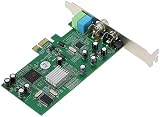
- ecoding RF modulated signals from set top boxes, satellite receiver, DVR into digital MPEG format for viewing or recording through desktop PC. Features: Full TV frequency range for CATV / VHF / UHF and support only Analog TV signal (not include digital or satellite TV) Perfect for recording video in multiple formats, the schedule recording allows user to preset the recording schedule in weekly manner Support analog TV standard of NTSC, PAL B/G, PAL I and SECAM TV system
- This multifunctional TV tuner card is an ideal solution to expand your desktop PCI-E with TV function and video recorder. It transforms your desktop PC into a full-featured multimedia station with video / audio / radio input for all regions and countries. It has an universal built-in TV tuner to decode either analog basic cable channels or UHF/VHF aerial/closed-circuit channels for all countries around the world, world universal. It is also a cost efficient solution for
- upports Time-Shifting function to pause, rewind, and fast forward live TV, replay a scene or skip the commercials Snap shot format in BMP and JPEG. Image browse function works like photo album Audio output to sound card or speaker. R/M port is for remote control Video recorder, TV functions and planner YUV data format supported Favorite channel list and channel rename supported and full-featured remote control included Multi-input source, include composite Video In and
- udio line in/out for external device input such as VCR / VCD / DVD / Camcoder Supports 16:9 and 4:3 ratio for the sub video window size Wide compatibility, universal compatible for Win 7 / SE / ME / 2000 / XP / Vista / Win 98
For clean playback, install the correct driver, select the desired Windows output device and test a known broadcast that advertises multichannel audio. If video plays but audio does not, check Windows volume and per-application mixer settings, the selected audio output, mute states and the channel’s audio mode. Compare another station before concluding that the tuner is at fault.
Independent reader supportYour contribution helps us test, update, and keep practical guides available for everyone.Recording with one or four tuners
A one-tuner card can normally watch or record one digital service at a time. The quadHD’s four tuners make simultaneous recordings practical when the software supports them and the incoming signal contains the required channels. Schedule overlapping recordings as a real-world test: a successful scan alone does not prove that all four tuner paths are available to the application.
Plan storage separately from tuner selection. High-definition recordings consume substantial disk space, and a slow or nearly full drive can cause dropped data even when reception is strong. Keep the recording folder on a drive with adequate free space and verify a complete file after a short test recording.
Common failures and fixes
No channels found
- Confirm the antenna or cable is connected to the tuner, not an unused motherboard connector.
- Choose the correct regional standard and source in the scan dialog.
- Install the model-specific driver and reboot.
- For QAM, verify that the cable operator supplies unencrypted digital channels.
- Test the feed directly without a splitter or amplifier.
Only a few channels appear
Use the signal monitor on the missing channels, reposition the antenna and rescan. A weak or obstructed frequency, not the tuner count, is a common cause. If the provider encrypts the missing cable channels, no scan setting will make them available through clear QAM.
Best Value

- QUAD TUNER: The four advanced DVB-S2/S/S2X tuners enable you to watch TV channel from one satellite transponder while recording three other channels from different satellite transponders at the same time
- VCM AND MULTI STREAM: It not only supports to receive SD/HD digital TV channels, but also supports VCM which is considered as a professional TV tuner for industrial-level users
- WATCH AND RECORD FTA PROGRAMES: The PCI Express interface digital satellite TV tuner card with four tuners for watching and recording Free to Air (FTA) satellite TV and radio programs on PC
- Support: High-speed data download via satellite, Fast scanning functionality
Windows does not detect the board
Power down and reseat the card, check the slot’s physical fit and inspect Device Manager for an unknown device. Try another suitable slot if available, then install the exact driver package. On Windows 11, consult the manufacturer’s Memory Integrity compatibility information for the specific model before changing security settings.
Recordings stutter or lose audio
Check signal stability first, then test a direct coax run and another channel. Close heavy disk or CPU workloads, confirm that the recording drive has free space and verify that the application is using the intended tuner. A broadcast with an intermittent signal can produce damaged recordings even when live video appears mostly normal.
Cost and “budget” expectations
No current street-price survey establishes which of these cards is the cheapest or the best value. Treat “budget” as a fit decision: a four-tuner card may prevent buying additional hardware later, while a single-tuner card can avoid paying for capability you will not use. Compare the total installation cost, including an antenna or cable hardware, bracket requirements and any replacement for an obsolete PCI motherboard.
Recommended Free Tools
Do not select a model solely from a sale label or an old listing. Confirm the exact model number, regional standard, included bracket, driver availability and return policy before purchase. A low purchase price is not economical if the board cannot fit the case or tune the signal delivered to your home.
A practical decision path
- If your source is UK DVB-T2/DVB-T/DVB-C, use the regional quadHD specification and verify local software support.
- If your source is US ATSC/QAM and you need multiple simultaneous channels, check for a half-height PCIe slot and choose the WinTV-quadHD 1609 when the four-tuner capability is useful.
- If your source is US ATSC/QAM and one channel at a time is enough, evaluate the PCIe HVR-1265 and follow its Windows and antenna guidance.
- Choose the HVR-1150 only for a confirmed legacy PCI system with verified current support.
- Before finalizing, confirm the antenna or provider can deliver the intended channels; tuner specifications cannot overcome an unavailable or encrypted signal.
The strongest documented choice is therefore conditional rather than universal: the 1609 is the capable multi-tuner PCIe option for a matching US setup, the HVR-1265 is the simpler single-tuner PCIe path, and the HVR-1150 is a legacy compatibility case. Match the card to the signal and chassis first, then use WinTV’s scan and signal tools to validate the installation.
Quick Recap
Product prices and availability are accurate as of the date/time indicated and are subject to change. Any price and availability information displayed on Amazon at the time of purchase will apply.

