What’s actually slowing this PC down?
Pick the symptom - the matching free tool is one click away.
If you like Poly Fighter because it combines solo roguelike progression, arcade-style one-on-one bouts, forgiving controls and a distinctive low-poly 1990s look, the best alternative depends on which of those ingredients matters most. Punch Planet is the closest direction for a traditional competitive fighter, Pocket Rumble and Divekick are the clearest simplified-input choices, Lethal League Blaze delivers stylish projectile combat, Them’s Fightin’ Herds offers deeper matchup study, Rivals of Aether changes the format to platform fighting, and Your Only Move Is HUSTLE turns fights into planned, turn-like decisions.
None reproduces Poly Fighter’s exact combination of learning moves from defeated opponents and assembling a personal moveset. The useful way to compare them is by the part of Poly Fighter you want to keep.
As an Amazon Associate I earn from qualifying purchases.
The short answer: choose by the Poly Fighter trait you want to keep
| If you value… | Start with… | What changes |
|---|---|---|
| Traditional two-dimensional competition | Punch Planet | A conventional fighter structure replaces Poly Fighter’s run-based move collection. |
| Readable, low-execution controls | Pocket Rumble | The command vocabulary is compact, so you can focus on spacing and decisions. |
| Projectile timing and visual exaggeration | Lethal League Blaze | The central threat is a projectile rather than a normal strike exchange. |
| The smallest possible input set | Divekick | The game reduces fighting to a highly focused pair of actions and their timing. |
| Character-based matchup depth | Them’s Fightin’ Herds | You study a conventional cast instead of building a new moveset during a run. |
| Movement, recovery and stage control | Rivals of Aether | Duels take place in a platform-fighter space rather than on a fixed plane. |
| Planning and turn-like choices | Your Only Move Is HUSTLE | You plan actions in a fighting-game framework instead of relying only on real-time execution. |
These are curated leads, not a claim that the games are interchangeable. Each preserves one or two parts of Poly Fighter while changing the rest.
Quick wins for a faster PC:
Fix the driver behind crashes, sound loss and screen glitchesFind Drivers →Repair Windows errors before they cause bigger problemsFix Now →Scan for outdated or missing drivers - takes under a minuteDriver Scan →What makes Poly Fighter distinctive?
A solo roguelike built around a changing moveset
HeartLoop Games describes Poly Fighter as a single-player roguelike fighting game in which you learn new moves from every opponent you defeat and use them to build your fighter’s unique style. That is the central hook: the character is not simply selected from a finished roster. Your run changes what the fighter can do, so a successful attempt becomes a record of the choices you made along the way.
#1 Best Overall

- Small Form Factor Fight Stick featuring an 8-button layout and 8ft. cable
- Great for both Arcade and Fighting Games
- Compact, lightweight and portable design
- Features Classic 8-Button Layout and HORI’s Original Joystick with V-cut Housing
- Officially Licensed by Sony
The progression is delivered through one-on-one arcade bouts, escalating leagues, ascension runs and secret-boss challenges. Those structures give a solo player a reason to replay matches without requiring an online ladder. They also make the game a poor match for anyone looking only for a standard round-based fighter with a fixed character and a familiar training routine.
Accessible execution with room for expression
The Steam store description advertises a choice between simple inputs and motion inputs. In practical terms, that promises an approachable entry point without removing the possibility of more expressive execution. When comparing alternatives, separate “easy to start” from “shallow”: a compact input system can make the first hour welcoming while still leaving spacing, timing, matchup knowledge or route selection to master.
The visual target is deliberately retro
Creative Bloq characterized the game as a 1990s-inspired low-poly fighter, and reported that creative director Osama Dorias connected the visual direction to Virtua Fighter 2. The appeal is not photorealism or modern anime presentation; it is the angular geometry, sparse surfaces and arcade-era silhouette of early 3D fighters.
Recommended Free Tools
Early Access changes the comparison
Steam lists an October 13, 2026 release entry with an Early Access presentation. Features, balance, availability and the shape of the progression can therefore change. Treat any comparison as a snapshot of the design described here, not a permanent promise about the finished game.
The best alternatives, explained
Punch Planet: for a traditional competitive 2D fighter
Punch Planet is the most straightforward recommendation when what you want is an indie game that behaves like a conventional competitive fighter. Its fit is structural rather than visual: it gives you the familiar two-dimensional fighting-game frame, while Poly Fighter wraps its bouts in solo roguelike progression and a low-poly 3D presentation.
Choose it when the match itself is the priority. You can concentrate on the normal fighting-game questions—how to approach, defend, punish and convert an opening—without making a run’s collected moves the main subject of every decision. That makes it a better lead for readers who enjoy Poly Fighter’s arcade rhythm but want a more traditional competitive format.
The trade-off is important. Nothing in the current description identifies Punch Planet as a game where defeated opponents teach you moves or where a run creates a personal moveset. If that changing-build sensation is the reason you are interested in Poly Fighter, this is a thematic neighbor, not a replacement.
Rank #2

- Compatible with Switch and Windows.
- Supports ultimate software - customize button mapping and create macros
- Dynamic button layout - button mapping changes with mode functionally and visually
- Ultra-moddable arcade stick - Universal mounting plate supports Sanwa arcade sticks
- Three ways to connect: Bluetooth, 2.4g and wired USB-C. The included 2.4g receiver has a special hidden compartment to store it safely.
- Best fit: players seeking a conventional indie 2D fighter.
- Keep in mind: the comparison does not establish current platforms, pricing or a solo campaign structure; check the game’s current store page before buying.
Pocket Rumble: for compact, readable fights
Pocket Rumble is aimed at readers who want the clarity of a small, readable fighter with simplified inputs. That makes it a useful bridge from Poly Fighter’s advertised simple-input option to a game in which execution is deliberately less of a barrier.
Its strongest match is accessibility. If complicated motion inputs stop you from experimenting, a compact command set lets you spend more attention on distance, timing and choosing the right response. It is also a good choice for local sessions where new players need to understand what is happening quickly.
The difference is progression. Poly Fighter’s identity is tied to collecting moves during a solo run; Pocket Rumble belongs in the “learn a focused fighter” lane instead. Before purchasing, verify the current edition, supported platforms and price, since those details are not established by a current official listing here.
- Best fit: newcomers and experienced players who prefer simplified commands.
- Keep in mind: simplified inputs do not automatically mean a single-player roguelike campaign.
Lethal League Blaze: for projectile timing and exaggerated style
Lethal League Blaze is the recommendation for readers who enjoy the drama of an object moving through the arena more than a conventional punch-and-block exchange. Its combat is built around projectile timing, and its presentation is deliberately exaggerated rather than restrained low-poly retro.
This is the largest mechanical departure in the list. In Poly Fighter, the personal question is which learned attacks belong in your moveset. In Lethal League Blaze, the immediate question is how the projectile’s timing, direction and threat shape your next position. That gives matches a strong rhythm of prediction and reaction while preserving the quick, arcade-like readability many players seek.
Pick it if visual style and competitive spectacle matter more than run progression. Do not pick it expecting a substitute for Poly Fighter’s move-learning loop; no current description identifies such a system here. Confirm current platform support and pricing on the title’s store page.
- Best fit: players who want projectile-centered competition and a bold presentation.
- Keep in mind: the combat structure is projectile-based rather than a direct recreation of fixed-plane martial-arts bouts.
Divekick: for the smallest input vocabulary
Divekick is the clearest choice if your definition of “easy to start” means reducing the number of buttons and commands as far as possible. The game is an extremely focused fighter with a small input vocabulary, so the challenge moves away from memorizing long command sequences and toward reading the opponent, controlling timing and committing at the right instant.
Rank #3

- Compatible with Switch/Switch 2, PS4, PS3, Xbox Series S/X, Xbox One, Xbox 360, PC Windows, macOS, Steam Deck, Android.
- Compatible with Sanwa Denshi buttons and joystick that is perfect for customization
- Supports the XINPUT and DINPUT when being used on PC
- Supports the Turbo functions with different speed settings.
- F300 is compatible with PS5 by MAYFLASH Magic-S Ultimate adapter or MagicBoots-S5 Converter.
That focus makes it valuable as a contrast with Poly Fighter. Poly Fighter offers a choice between simple and motion inputs while still presenting a growing moveset. Divekick asks whether a fighter can remain tense and expressive when the available actions are intentionally narrow. It is a good fit for short sessions, demonstrations and players who find large move lists intimidating.
Do these 3 things before closing this tab:
1Scan for outdated or missing drivers - takes under a minute2Clear out junk files and repair common Windows errors3Fix the driver behind crashes, sound loss and screen glitchesThe trade-off is breadth. If you want a run to unlock new attacks, a large character-specific toolkit or a retro 3D visual target, this is not the same experience. It is a minimalist interpretation of fighting-game decision making, not a roguelike replacement.
- Best fit: players who want minimal commands and maximum emphasis on timing.
- Keep in mind: the tiny input set is the point, so it will not reproduce Poly Fighter’s moveset-building variety.
Them’s Fightin’ Herds: for conventional characters and matchup study
Them’s Fightin’ Herds suits readers who want a conventional character-based fighter with more room for long-term matchup study. Instead of asking you to assemble a fighter during a run, this direction asks you to understand the strengths, weaknesses and interactions of a chosen character within a broader competitive system.
This is the recommendation to make when “depth” means learning how a cast interacts over many matches. It preserves the deliberate study that can make Poly Fighter’s opponents and secret challenges compelling, but places that study in a more standard character-based framework.
Its fit is therefore strongest for players who are willing to spend time in training and repeated matchups. It is weaker for someone whose favorite part of Poly Fighter is starting each run with uncertainty about which moves will become available. Current modes, platforms and pricing should be checked on the game’s live store page rather than inferred from this comparison.
Free tools Windows power users keep installed
One-click scans. No signup required.
- Best fit: players who want a conventional cast and deeper matchup learning.
- Keep in mind: character-based depth is different from earning and recombining moves during a roguelike run.
Rivals of Aether: for platform-fighter movement and recovery
Rivals of Aether is the right lead if the fixed-plane duel is the part of Poly Fighter you are ready to leave behind. It focuses on platform-fighter movement and recovery, so vertical space, stage position and the ability to return after being launched become central concerns.
That changes the meaning of “spacing.” In a traditional bout, spacing usually describes the distance between two fighters on one plane. In a platform fighter, you also manage height, ledges, launch trajectories and recovery routes. Players who enjoy making a personal plan under pressure may find that movement system as expressive as Poly Fighter’s changing moveset, even though the source of expression is different.
Rank #4
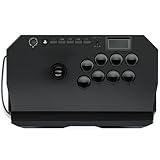
- Compatible with PlayStation5, PlayStation4, and PC
- Officially licensed Sony peripheral
- Authentic Qanba buttons and lever
- Full control panel, touch pad, Qanba 30-mm B30 buttons, and Qanba OV7 OMRON switch joystick
- 3.5-mm microphone input with mute button control
Choose it when mobility and stage control are more attractive than arcade-league progression. It is not a direct substitute for Poly Fighter’s solo roguelike structure, and no current description establishes a matching move-learning system.
- Best fit: players who want platform movement, recovery decisions and stage control.
- Keep in mind: the combat space and win conditions differ from fixed-plane one-on-one bouts.
Your Only Move Is HUSTLE: for planned, turn-like decisions
Your Only Move Is HUSTLE is the unusual recommendation for readers who like fighting games as decision trees. It uses a planning-focused, turn-like framework, so you think through actions and their consequences rather than relying solely on real-time execution.
This can appeal to the same solo-minded player who enjoys Poly Fighter’s run structure. Both invite you to make meaningful choices instead of treating every match as a pure test of reflexes. The difference is where the thinking happens: Poly Fighter changes your available moves as you defeat opponents, while Your Only Move Is HUSTLE makes the planning process itself the defining system.
Select it if you enjoy replaying situations, predicting responses and refining a plan. Avoid it if the tactile immediacy of arcade controls is non-negotiable. Verify the current store listing for platform, price and available modes.
- Best fit: players who enjoy planning and turn-like decision making in a fighting-game setting.
- Keep in mind: its deliberate structure is a major departure from real-time arcade execution.
How the alternatives differ on the five decisions that matter
Solo play versus competition
Poly Fighter starts from a solo premise: defeat opponents, learn moves and push through escalating challenges. The alternatives above are better understood as competitive formats or systems that can be enjoyed solo for practice, rather than assumed replacements for a roguelike campaign. If you need a game built around repeated solo advancement, confirm that the current edition has the mode you want before purchase.
Combat structure
| Structure | Relevant picks | What to expect |
|---|---|---|
| Traditional 2D fighter | Punch Planet; Pocket Rumble; Them’s Fightin’ Herds | Read a conventional opponent, manage exchanges and learn a character or compact system. |
| Projectile-centered arena combat | Lethal League Blaze | Track projectile timing and use positioning to create or avoid danger. |
| Minimalist fighter | Divekick | Use a very small command set where timing and prediction carry more weight. |
| Platform fighter | Rivals of Aether | Manage movement, vertical space and recovery as well as direct attacks. |
| Planning-focused fighter | Your Only Move Is HUSTLE | Choose and evaluate actions in a turn-like decision framework. |
Progression and replay value
Poly Fighter’s replay value comes from a changing moveset earned during a run, alongside leagues, ascension runs and secret-boss challenges. The comparison titles are being recommended for other kinds of replay: mastering a fixed or compact toolkit, learning matchups, improving projectile timing, exploring platform movement or refining planned decisions. Do not assume that a title has unlock trees, a campaign or roguelike generation unless its current store page says so.
Input accessibility
For the closest control philosophy, start with Pocket Rumble or Divekick. Pocket Rumble is described as using simplified inputs while retaining a readable fighter structure; Divekick goes further by making the input vocabulary extremely small. Poly Fighter itself is unusual in offering both simple and motion inputs, so players can decide how much execution complexity they want.
Best Value

- First Xbox-licensed wireless arcade stick worldwide.
- Compatible with Xbox Series X|S, Xbox One, Windows 10 and above.
- Wireless 2.4G or wired USB connectivity.
- Support 8BitDo Ultimate Software. Customizable button mapping.
- Fast-mapping and profile setting buttons. 3.5mm Audio Jack and volume control.
Aesthetic direction
Poly Fighter’s low-poly 1990s look is a specific attraction, not just a technical limitation. The alternatives span indie 2D presentation, exaggerated projectile spectacle, conventional character-based visuals, platform-fighter staging and a planning-focused interface. If the visual hook is your first priority, inspect current screenshots or video for each title rather than assuming that an indie game shares Poly Fighter’s retro-3D style.
A practical decision path
- Decide whether run progression is essential. If you need to earn and recombine moves during solo attempts, keep Poly Fighter at the top of your list and treat the other games as genre alternatives.
- Choose your combat plane. Pick a traditional 2D fighter for direct exchanges, a projectile game for timing around a moving threat, a platform fighter for vertical movement or a planning-focused game for turn-like decisions.
- Set your execution threshold. Start with Pocket Rumble for simplified commands or Divekick for an extremely small input vocabulary. Choose a more conventional fighter if learning a broader toolkit is part of the appeal.
- Decide how much matchup study you want. Them’s Fightin’ Herds and Punch Planet are the better directions when repeated character-focused competition sounds more appealing than rebuilding a fighter every run.
- Check the live product information. Confirm the current platform, price, edition, modes and controller support on the relevant store page. No current official listing establishes those volatile details for the comparison titles.
Controls and the case for an arcade-style controller
Poly Fighter is explicitly framed as a retro-arcade fighter with controller support, so a PC arcade fight stick or USB fight stick controller is the most natural physical accessory category to consider. A stick can make directional inputs feel closer to an arcade cabinet and may be comfortable for players who dislike using a keyboard’s arrow cluster.
Do not buy on the assumption that every model works everywhere. Before ordering, verify the controller’s connection type, operating-system support and the game’s recognized input devices. A standard gamepad remains the safer choice if you move between computers or prefer analog controls. The accessory is most useful after you have decided whether you actually enjoy arcade-style inputs; it will not compensate for a game whose combat structure is not to your taste.
Crashes, No Sound, or Screen Glitches?
Random freezes, missing sound and display glitches usually trace back to one bad driver. Find and replace yours safely.Free scan · under a minutePC Slower Than It Used to Be?
A free scan shows the junk files, broken settings and background clutter dragging Windows down - then fixes them in one click.Free scan · Windows 10 & 11Other names surfaced as discovery leads
A SteamPeek similarity page also surfaces Omega Knockout: Punch Boxing, Superation, Karate Survivor, The King of Fighters XIII and Street Fighter IV. Treat these as search leads rather than ranked recommendations. Their current store pages should be checked individually for availability, platform, price, input model and whether their solo content resembles what you want from Poly Fighter.
In particular, a similarity result does not prove that a game is indie, roguelike, solo-focused or visually related. It only indicates that the title appeared in a related-results context, so it should not outweigh the more specific fit descriptions above.
What to verify before buying
- Release status: Poly Fighter is listed in Early Access, so read the current store description and update notes for changes to features or balance.
- Mode availability: distinguish a true solo progression mode from ordinary offline practice or matches against an artificial opponent.
- Input options: check whether simple inputs, motion inputs, remapping and controller support are available in the edition you are buying.
- Combat format: confirm whether the game is a fixed-plane fighter, projectile game, platform fighter or planning system.
- Current product details: verify price, platform and regional availability directly on the live store page; no stable cross-game price or platform comparison is established by current official listings.
The central distinction is simple: Poly Fighter is defined by solo runs in which defeated opponents teach you new moves, while the alternatives each preserve a different fighting-game pleasure. Pick Punch Planet for traditional 2D competition, Pocket Rumble or Divekick for approachable execution, Lethal League Blaze for projectile spectacle, Them’s Fightin’ Herds for matchup depth, Rivals of Aether for platform movement, and Your Only Move Is HUSTLE for deliberate planning.
Quick Recap
Product prices and availability are accurate as of the date/time indicated and are subject to change. Any price and availability information displayed on Amazon at the time of purchase will apply.
The Tool Desk
Outbyte PC Repair FREERepair Windows errors before they cause bigger problemsFix Now →Outbyte Driver Updater FREEFix the driver behind crashes, sound loss and screen glitchesFind Drivers →
