The Tool Desk
Outbyte PC Repair FREEClear out junk files and repair common Windows errorsFree Scan →Outbyte Driver Updater FREEFix the driver behind crashes, sound loss and screen glitchesFind Drivers →For the closest free Lightroom-style workflow, start with darktable. It combines a database-backed photo library with non-destructive RAW development. Choose RawTherapee when detailed RAW conversion is your priority and you are happy to organize files separately. Choose digiKam when importing, tagging, rating and searching a large collection matter more than having a specialized RAW-development environment.
None of these is a guaranteed drop-in replacement for Lightroom. The right choice depends on whether you need a catalog, how much control you want over RAW processing, your exact camera and RAW mode, and how much time you can spend learning a different workflow.
As an Amazon Associate I earn from qualifying purchases.
What Lightroom does that a free alternative may split into two jobs
Lightroom bundles two separate tasks: managing a photo library and developing camera RAW files. Library work includes importing, albums, ratings, keywords, metadata searches and filtering. RAW development covers demosaicing, exposure and color adjustments, sharpening, noise reduction and export.
A replacement can cover both jobs in one application, or you can pair a cataloging tool with a dedicated RAW processor. Treating those as separate decisions prevents a common mistake: choosing a powerful RAW converter and then discovering that it does not provide the library workflow you relied on.
#1 Best Overall

- ALL-IN-ONE SUITE – view, present, edit, crop and organize your photos
- ADDITIONAL FUNCTIONS – make your own calendars and photo cards, create your own collages and slideshows, burn them on CD/DVD
- EASY TO INSTALL AND USE – very easy and intuitive user-interface - take a guided tour through the program when you first use it
- FREE TECH SUPPORT – get in touch with us if you have any questions, we will give you all the assistance you need
- For Win 11, 10 - lifetime license for 1 PC
The three strongest free paths in the available project documentation are different rather than interchangeable:
- darktable: a photography workflow application and RAW developer with a virtual lighttable, database management, filtering, metadata queries, non-destructive editing, export and XMP sidecars.
- RawTherapee: a free, cross-platform RAW processor focused on conversion and detailed image controls.
- digiKam: an open-source photo manager emphasizing camera import, albums, tags, ratings, labels, metadata search and editing, with RAW loading through LibRaw.
Project pages do not provide a controlled benchmark comparing speed or rendered image quality. The recommendations below therefore describe workflow fit, not an objective ranking of output quality.
Quick recommendation
| Tool | Best fit | Library and organization | RAW workflow | Main caution |
|---|---|---|---|---|
| darktable | One application for cataloging and RAW development | Database-backed lighttable, filtering, sorting and metadata queries | Non-destructive processing, export and XMP sidecars; broad format support | The project says it is not a direct Lightroom replacement, and its flexible controls can take time to learn. Verify your exact camera and compression variant. |
| RawTherapee 5.13 | Readers who want deep RAW-conversion control | Do not assume a Lightroom-style catalog from the reviewed project description | Non-destructive 32-bit floating-point engine, demosaicing, color and detail tools, and multi-frame features | Plan a separate way to organize and search your photo archive if catalog functions are important. |
| digiKam | Importing, albums, tags, ratings and library search | Strong emphasis on management, metadata and advanced search | Loads RAW files through LibRaw; its project page reports support for more than 1,000 formats | The available documentation does not establish that its RAW rendering matches a dedicated RAW developer. |
All three projects describe themselves as free and open source in their official materials. You do not need to buy paid software to follow any of these three paths.
darktable: the closest all-in-one workflow
What it provides
darktable is designed around a virtual lighttable and a database-backed workflow. You can manage a collection, filter and sort images, query metadata, edit non-destructively, export finished files and keep adjustments in XMP sidecars. That combination makes it the most natural first experiment for someone who wants one program to handle both Lightroom-style library work and RAW development.
Non-destructive editing means the original RAW is not overwritten by your adjustments. The application records processing instructions and uses them when displaying or exporting the image. XMP sidecars can keep those instructions alongside the source file, while the local database supports the browsing and filtering experience.
Why it is not a one-click Lightroom replacement
The darktable project FAQ answers the comparison directly: “Yes and no. Darktable is an alternative to Lightroom the same way any other raw editor is, since it edits raw files, but it would be a mistake to think it’s a direct replacement.” That is a useful warning about workflow, not a claim that the software is inadequate.
Its approach puts the user in control, but the project also warns that the initial learning curve can be steep. Lightroom’s panel names, default behavior and shortcuts should not be expected to map one-for-one. Give yourself time to learn how darktable’s modules, styles, database and sidecars fit together before deciding that an adjustment is missing.
Do these 3 things before closing this tab:
1Fix the driver behind crashes, sound loss and screen glitches2Repair Windows errors before they cause bigger problems3Scan for outdated or missing drivers - takes under a minuteRank #2
![Corel AfterShot Pro 3 | RAW Photo Editing Software [PC/Mac Key Card]](https://m.media-amazon.com/images/I/51cHkSe5ByL._SL160_.jpg)
- Non-destructive photo editing: Manage and edit your RAW photos with this powerful and ultra-fast photo editor
- Simple photo management: With no importing required, conveniently view, store and organize all your photos in one place
- Powerful batch processing: Load, select, edit and output your photos quickly with controls and presets that allow you to edit one or thousands of photos at once
- Time-saving tools: Watermark, correct, remove blemishes and more with integrated tools; image presets automate tedious and repetitive processing work
- Get complete control with a personalized workflow: Customizable workspace, easy integration with photo editors, built-in support, and shareable web galleries
Camera and file compatibility
darktable supports many camera formats, but compatibility is version- and format-sensitive. The project directs users to its camera-support list and specifically warns that a camera can be supported while a particular format or compression option from that camera is not. Check the exact model, RAW extension and compression setting you use; “my camera is listed” is not enough evidence by itself.
Platforms
The project describes builds for Linux, macOS and Windows, along with other platforms. Check the current download page for the build appropriate to your operating system before installing, since package availability can change.
RawTherapee: choose it for RAW-processing control
What it provides
RawTherapee presents itself as free, cross-platform RAW software rather than as a complete photo-library manager. Its official description highlights a non-destructive 32-bit floating-point processing engine, demosaicing, and tools for color and detail work. It also describes multi-frame features, which can matter when your workflow uses more than one exposure or frame.
This focus suits photographers who prefer to browse files through their operating system or another catalog, then open selected RAWs for careful conversion. You get a processing-centered environment without paying for a proprietary developer, but you should decide where albums, ratings, keywords and searches will live.
Current release information
The RawTherapee project homepage states that version 5.13 was released on July 26, 2026. Release information is time-sensitive, so verify the current version on the project site when you download it. A later release may alter camera support, defaults or available tools.
When RawTherapee is the better fit
- You spend more time refining exposure, color, demosaicing and detail than browsing a large catalog.
- You already have a dependable folder, backup or catalog system and do not want to move it into a new database.
- You are willing to learn a processing-oriented interface instead of looking for Lightroom’s exact layout.
The reviewed project information does not promise Lightroom-style cataloging, so do not select RawTherapee on the assumption that it will replace albums, metadata queries and library management by itself.
digiKam: make cataloging the priority
What it provides
digiKam’s official description centers on importing from cameras and external storage, organizing albums, applying tags, ratings and labels, searching metadata and editing images. That makes it a strong candidate when the hardest problem is finding and maintaining a large collection rather than performing every stage of RAW development in one specialized environment.
Rank #3

- AI Object Removal with Object Detection - Clean up photos fast with AI that detects and removes distractions automatically.
- AI Image Enhancer with Face Retouch - Clearer, sharper photos with AI denoising, deblurring, and face retouching.
- Wire Removal - AI detects and erases power lines for clear, uncluttered outdoor visuals.
- Quick Actions - AI analyzes your photo and applies personalized edits.
- Face and Body Retouch - Smooth skin, remove wrinkles, and reshape features with AI-powered precision.
The project says RAW loading uses LibRaw and reports support for more than 1,000 formats, attributing that format count to LibRaw. This is a format-support figure, not a claim about rendering quality, speed, or the number of cameras you personally own. LibRaw is described as maintained and updated for camera support, but you should still confirm your camera and RAW mode directly before moving an archive.
What the documentation does not establish
The available digiKam material supports its management, search, RAW-loading and editing capabilities. It does not provide a controlled comparison proving that digiKam renders RAW files as well as a dedicated RAW developer. If image development is central to your work, use digiKam as the catalog and pair it with a processor whose controls match your needs, then test the handoff on representative files.
When digiKam is the better fit
- You need dependable albums, tags, ratings, labels and metadata search.
- You are importing from cameras or external storage and want those operations organized around a library.
- You prefer to keep catalog management distinct from detailed RAW conversion.
How the three options differ
| Decision factor | darktable | RawTherapee | digiKam |
|---|---|---|---|
| Primary role | Combined library workflow and RAW development | RAW processing and conversion | Photo management, search and editing |
| Catalog emphasis | Database-backed lighttable, filtering, sorting and metadata queries | Not stated in the reviewed official description | Albums, tags, ratings, labels, imports and advanced search |
| Editing model | Non-destructive processing with export and XMP sidecars | Non-destructive 32-bit floating-point processing | Editing is described; the reviewed page does not establish comparative RAW-rendering quality |
| RAW support note | Broad support, but check exact camera, format and compression | RAW-focused processor; verify your camera with the current release | RAW loading through LibRaw; project reports over 1,000 supported formats |
| Learning and migration risk | Project warns of a steep learning curve and says it is not a direct Lightroom replacement | Expect a processing-centered workflow and separate organization method | Do not assume it substitutes for a dedicated RAW developer |
| Operating-system information | Linux, macOS, Windows and other platforms are described | Cross-platform; exact current builds are not stated here | Check the project’s current download options for your system |
Use the table as a decision filter rather than a scorecard. A tool can be the right choice because it fits your process even if another has a different set of controls.
Check your camera before migrating anything
RAW compatibility is the first practical test because a catalog can be reorganized later, while an unsupported or incorrectly decoded RAW mode can block the development workflow immediately. Use this sequence before importing a full archive:
- Identify the exact source files. Note your camera model, RAW extension, bit depth if your camera exposes it, and whether you use lossless, lossy or compressed RAW.
- Check the project’s camera-support information. For darktable, use the project’s camera-support list and look for your exact model and file variant. For RawTherapee and digiKam, verify support in the current release documentation and camera-related information.
- Copy a small representative set. Include normal exposures, high-ISO frames, unusual lighting and any compressed or special RAW mode you regularly use.
- Open the files without altering the originals. Confirm that thumbnails, metadata, previews and editable controls behave as expected.
- Export a few files and inspect them elsewhere. Check color, exposure, dimensions, metadata and file naming in the exported JPEG or TIFF before you commit to a new workflow.
Support statements can change with software releases. Recheck the project information when you upgrade your camera, switch RAW modes or install a new application version.
Outdated Drivers Are Slowing You Down
One free scan finds every outdated or missing driver and matches the right update for your exact hardware.Free scan · exact hardware matchPC Slower Than It Used to Be?
A free scan shows the junk files, broken settings and background clutter dragging Windows down - then fixes them in one click.Free scan · Windows 10 & 11What happens to Lightroom edits, presets and history?
Do not assume that your existing Lightroom develop history will transfer cleanly. darktable’s FAQ says presets and styles are program-specific and describes old support for importing Lightroom edits as somewhat broken. In practical terms, treat your previous adjustments as reference information unless you have verified a specific migration path for your files.
A safe migration preserves the originals and keeps the old catalog available while you rebuild the edits that matter. Export finished Lightroom images if you need a visual reference, then recreate a small set of representative looks in the new application. Rebuilding a handful of styles is usually more predictable than trying to convert every historical adjustment at once.
Rank #4
![Corel AfterShot Pro 3 | RAW Photo Editing Software [PC Download]](https://m.media-amazon.com/images/I/51PwnVv0S8L._SL160_.jpg)
- Manage and edit your RAW photos with this powerful and ultra-fast photo editor
- With no importing required, conveniently store and organize all your photos in one place
- Load, select, edit and output your photos quickly, with powerful batch processing with controls and presets that allow you to edit one or thousands of photos at once
- Watermark, correct, remove blemishes and more with time-saving integrated tools Image presets automate tedious and repetitive processing work
- Correct distortions introduced by different lenses with built-in support, or share and import new lens corrections with the AfterShot Pro community on Facebook
Keep your original RAW files untouched, retain existing sidecars and catalogs, and work from copies during the trial. Only change your long-term folder or backup plan after you can open, edit and export the files you care about.
A low-risk trial plan
You can evaluate the three workflows without committing your full archive. Use the official download pages for each project and make the trial deliberately small.
Free tools Windows power users keep installed
One-click scans. No signup required.
- Create a test set. Select 20 to 50 RAW files from your own camera, including different lighting, ISO settings, lenses and file-compression modes.
- Keep the originals safe. Duplicate the test set to a working location. Do not reorganize or rename your master archive during this experiment.
- Install darktable, RawTherapee and digiKam separately. Use the current build for your operating system and note the version installed. Avoid judging an outdated package against a current one.
- Test the library task. In darktable and digiKam, import or add the copies, apply a rating and a tag, search by metadata and confirm that the result is repeatable after restarting the application. In RawTherapee, decide whether your existing folder or catalog method is sufficient.
- Test the development task. Adjust exposure, white balance, tone, color and detail on the same few RAW files. Record which controls you actually use and whether the interface lets you reach them efficiently.
- Test non-destructive behavior. Close and reopen the applications, then confirm that your edits remain available and that the original RAW bytes are unchanged.
- Export comparable files. Export a few images from the workflow you are considering and inspect them at normal viewing size and at 100 percent. Check metadata and filenames as well as appearance.
- Test recovery. Move a test file or temporarily disconnect the working location, then confirm that you understand how the application reports missing files and how you would relink them.
- Choose a workflow, not just an application. Decide whether one program covers your catalog and development needs or whether a catalog manager plus a dedicated processor is more practical.
This is a suggested reader test, not a published benchmark. Your camera files, operating system and organizational habits determine the result.
Independent reader supportYour contribution helps us test, update, and keep practical guides available for everyone.Common mistakes and how to avoid them
Choosing by the word “free” alone
License cost answers only one question. A free processor can still require substantial setup, learning time or a second cataloging tool. Start with the jobs you need to perform every week, then choose the workflow that removes the most friction.
Assuming a camera listing guarantees every RAW mode
Compression options and format variants can differ even within one camera model. Test files from the mode you actually shoot rather than relying on a generic compatibility statement.
Moving the archive before testing search and metadata
Database-backed tools and folder-based workflows behave differently when files are renamed or moved. Keep the trial set isolated until you understand how each application tracks locations, sidecars and metadata.
What’s actually slowing this PC down?
Pick the symptom - the matching free tool is one click away.
Expecting Lightroom presets to be universal
Presets and processing histories are application-specific. Recreate important looks manually and preserve the old catalog as a reference instead of assuming an import will reproduce every adjustment.
Best Value
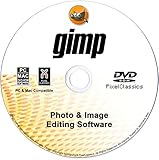
- GIMP – The #1 alternative and fully compatible with Adobe Photoshop and Adobe Photoshop Elements files, it is the ultimate fully featured digital image and photo editing software. Restore old photos, change the background, enhance and manipulate images, or simply create your masterpiece from scratch. Multilingual - English, Spanish (Español) and more languages supported.
- Full Tool Suite - Graphic designers, photographers, illustrators, artists and beginners can utilize many tools including channels, layers, filters, effects and more. A plethora of file formats are supported including .psd, .jpg, .gif, .png, .pdf, .hdr, .tif, .bmp and many more.
- Full program that never expires - Free for-life updates and a lifetime license. No yearly subscription or key code is required ever again!
- Multi-Platform Edition DVD-ROM Disc – Compatible with Microsoft Windows PC and Mac.
- PixelClassics Bonus Content – Access to 2.7 MILLION royalty-free stock images photo repository, Installation Menu (PC only), Quick Start Guides and comprehensive User Manual PDF.
Ranking output without a controlled test
Different defaults, profiles and export settings can make two applications look different before you have matched the processing choices. The project pages reviewed here do not publish a controlled speed or image-quality benchmark, so any “best rendering” claim should be treated as a personal test result, not a general fact.
Storage and backup considerations
A local photo library benefits from a dependable storage and backup plan, whether you choose a database-backed application or a folder-centered processor. A portable external SSD can be useful for keeping a working library or RAW copies, and both darktable and digiKam document workflows involving local files or external storage.
No particular capacity, interface, speed or model is established by the software documentation. Do not treat an external drive as a software requirement, and do not choose one on the assumption that a specific specification is needed for these applications. Keep at least one additional backup of irreplaceable originals before reorganizing a collection.
Quick wins for a faster PC:
Repair Windows errors before they cause bigger problemsFix Now →Scan for outdated or missing drivers - takes under a minuteDriver Scan →Which free Lightroom alternative should you choose?
Choose darktable if you want one application
Pick darktable when cataloging, filtering and metadata queries need to sit alongside non-destructive RAW development. It is the strongest all-round starting point for a Lightroom-style workflow, provided you accept a new interface and verify your camera files.
Choose RawTherapee if processing depth comes first
Pick RawTherapee when the central task is converting and refining RAW files and you already have a satisfactory way to organize them. Its current project description emphasizes processing control rather than a Lightroom-like catalog.
Choose digiKam if finding photos is the hardest problem
Pick digiKam when import, albums, tags, ratings, labels and metadata search drive your decision. Add a dedicated RAW developer if the editing controls or rendering behavior you need are not covered by your catalog workflow.
When uncertain, install all three for a small, representative trial. The best choice is the one that handles your camera files reliably, preserves the organization you actually use and lets you complete a real edit-and-export cycle without fighting the software.
Recommended Free Tools
Quick Recap
Product prices and availability are accurate as of the date/time indicated and are subject to change. Any price and availability information displayed on Amazon at the time of purchase will apply.

