What’s actually slowing this PC down?
Pick the symptom - the matching free tool is one click away.
There is no single Epic-approved “best” sensitivity or camera number for every PS5 player. The most reliable setup is a repeatable process: start from a comfortable controller layout, tune camera and aim sensitivity one setting at a time, decide between gyro aiming and aim assist, then add only the accessibility and video options that solve a specific problem.
This guide gives the exact Fortnite and PS5 menu paths documented by Epic and Sony, explains the important feature conflicts, and provides a practical way to build and test your own settings without treating an untested preset as universal.
As an Amazon Associate I earn from qualifying purchases.
What “best” means on PS5
Fortnite settings involve several real trade-offs rather than one winning configuration. A faster camera can help you turn toward an opponent quickly, but the same speed can make small crosshair adjustments harder. Stronger visual or vibration feedback can improve awareness for some players while making the screen or controller feel busier for others. Motion aiming can suit a player who likes fine physical adjustments, but Epic states that aim assist is disabled whenever gyro is active.
Use these priorities when deciding what to change:
- Control first: You should be able to make a full turn without losing your target and stop the crosshair precisely on a nearby object.
- Consistency second: A setting that feels good in one match but causes over-aiming in the next is not helping. Test in the same type of movement and combat each time.
- Comfort third: Reduce vibration, motion effects or visual overlays if they cause fatigue, nausea or distraction.
- Access needs always count: Visual sound cues, color settings, haptics and console-level text or contrast options are legitimate ways to make play more usable. Epic describes these options as customization without unfair advantages.
Epic’s accessibility overview states: “We also offer in-game accessibility settings to help customize your gameplay without giving unfair advantages.” That principle is more useful than copying a creator’s sensitivity values that were tuned for a different controller, display and play style.
#1 Best Overall
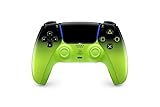
- Heighten Your Senses. Discover Deeper, highly immersive gaming experiences.
- Feel your in-game actions and environment simulated through haptic feedback
- Chat online through the built-in microphone or connect a headset directly via the 3.5mm jack
- Play on more devices Connect using a USB Type-C cable or Bluetooth wireless technology so you can easily play on more devices including Windows PC and Mac computers, Android and iOS mobile phones.
- Elevate PC gaming with advanced features like haptic feedback and adaptive triggers in a range titles
Build a camera and sensitivity baseline
Start with a neutral, comfortable layout
Open Fortnite’s Settings and review the controller mapping before changing sensitivity. Fortnite includes layout presets and a Custom option. Pick the preset whose movement, jump, crouch and build actions you can perform without stretching your thumb or releasing the stick at the wrong time. If an action repeatedly feels awkward, move that action rather than compensating with a more extreme sensitivity.
Keep a short note of your starting values. The note can be as simple as “camera look: current value, ADS: current value, build/edit: current value.” Recording the baseline prevents a string of small experiments from becoming impossible to undo.
Tune one variable at a time
Fortnite provides separate controller sensitivity controls, but Epic does not publish a universal ideal value for camera look or aiming down sights. Treat any number you choose as a starting point, not a tested recommendation. Change one variable, play a short practice sequence, and keep the change only if it improves control.
Free tools Windows power users keep installed
One-click scans. No signup required.
- Use ordinary movement to make several slow turns, then make quick turns in both directions. Check whether you can stop the camera where you intend.
- Track a moving target or a moving practice object without pressing the trigger. This reveals whether the camera is too fast for smooth tracking.
- Repeat while aiming down sights. ADS can feel comfortable at a different speed from the normal camera, so do not assume both controls should match.
- Make a small adjustment to only the setting that caused the problem. Return to the same movement and aiming checks.
- Keep the change if both the original problem and the new side effect are acceptable. If the new setting fixes one task but harms the other, return to the baseline and try a smaller change.
This method is general guidance, not the result of a comparative performance test. Its purpose is to make your preference measurable and reversible.
Use symptoms to choose the next adjustment
| What you notice | Likely adjustment to test | What to verify afterward |
|---|---|---|
| You regularly swing past a target during small corrections. | Try a lower aiming or ADS sensitivity. | Check that turning to face a new direction does not become uncomfortably slow. |
| You cannot turn toward an opponent quickly enough. | Try a modestly higher camera-look sensitivity. | Check that you can still stop on a small target without repeated over-correction. |
| Normal camera movement feels fine, but scoped or ADS shots wobble. | Adjust the ADS or scoped control only. | Repeat both close-range and longer-range tracking. |
| Building or editing feels rushed after a sensitivity change. | Leave camera sensitivity where it works and review the separate build/edit controls or your button layout. | Perform the same build sequence several times without changing your grip. |
| Your aim is acceptable but your hand becomes tense. | Reduce the setting that forces constant micro-corrections, or choose a layout that reduces thumb travel. | Play a longer session and check comfort, not just one successful fight. |
Do not change camera speed, ADS speed, button mapping and gyro all at once. When several settings move together, you cannot tell which change helped.
Rank #2

- Haptic feedback - Feel physically responsive feedback to your in-game actions with dual actuators which replace traditional rumble motors. In your hands, these dynamic vibrations can simulate the feeling of everything from environments to the recoil of different weapons. .Operating temperature : 41 °F to 95 °F (5 °C to 35 °C)
- Adaptive triggers - Experience varying levels of force and tension as you interact with your in-game gear and environments. From pulling back an increasingly tight bowstring to hitting the brakes on a speeding car, feel physically connected to your on-screen actions.
- Built-in microphone and headset jack - Chat with friends online using the built-in microphone or by connecting a headset to the 3.5mm jack. Easily switch voice capture on and off at a moment’s notice with the dedicated mute button. Internet and account for PlayStation Network required.
- DualSense Controller PS5 and PC compatible. Not compatible with PS4.
- PS Remote Play requires Remote Play App connected to Wi-Fi, PS4 or PS5 console with the latest system software and compatible game. A PS4 or PS5 console with a wired connection via a LAN cable is recommended. Version 4.0 of the Remote Play App on iOS and iPadOS or version 4.1 on macOS is required for games to be playable with the controller over Bluetooth.
Turn on and configure aim assist
Epic’s documented aim-assist route is:
- Open Settings in Fortnite.
- Enter Controller Options.
- Open Sensitivity.
- Turn on Use Advanced Options.
- Choose the desired Aim Assist Strength.
- Select Apply to save the change.
Epic notes that not every option is available on every platform. Its troubleshooting guidance says Aim Assist Strength can be set to 100% or lower according to preference; that range is a control, not a claim that 100% is best for everyone.
If “Use Advanced Options” is missing
Epic specifically says the game mode must be Battle Royale for the Advanced Options toggle to appear. Switch to that mode, reopen the settings menu and check Controller Options > Sensitivity again. If the toggle is still absent, verify that the game is displaying the controller settings rather than a different input category, then restart Fortnite and check for an available game update.
Recommended Free Tools
Understand the gyro conflict before choosing a setup
Aim assist and gyro are not additive features in Fortnite. Epic states that aim assist is disabled whenever gyro is active. Decide which behavior you want to evaluate, and test it on its own so that you do not mistake the loss of aim assist for a sensitivity problem.
Try gyro aiming only when motion control suits you
Epic places gyro controls under Settings > Touch and Motion > Gyro Options. The menu lets you turn gyro aiming on or off and choose the available activation behavior, but Epic does not prescribe a gyro sensitivity value or a universally best activation mode.
- Open Settings.
- Select Touch and Motion.
- Open Gyro Options.
- Turn gyro aiming on, choose an activation mode, and apply the setting.
- Practice small corrections first, keeping the controller supported and your wrists relaxed.
- Compare the experience with gyro off. Remember that turning gyro on disables aim assist.
Gyro can be worthwhile if you naturally make fine movements with the controller and can keep the device steady. It may be a poor fit if motion causes discomfort, your playing position changes often, or you depend on aim assist. There is no evidence in the available Epic documentation that one activation mode or sensitivity wins for all PS5 players.
Rank #3

- Bring gaming worlds to life - Feel your in-game actions and environment simulated through haptic feedback*. Experience varying force and tension at your fingertips with adaptive triggers*
- Find your voice, share your passion - Chat online through the built-in microphone. Connect a headset directly via the 3.5mm jack. Record and broadcast your epic gaming moments with the create button
- A gaming icon in your hands - Enjoy a comfortable, evolved design with an iconic layout and enhanced sticks. Hear higher-fidelity** sound effects through the built-in speaker in supported games
- Multi-device connectivity - Connect using a USB Type-C cable or Bluetooth technology and easily play on more devices including Windows PC and Mac computers.
- Elevate PC gaming with advanced features like haptic feedback and adaptive triggers in a range of blockbuster PC titles.
Choose a controller layout that reduces mistakes
Controller mapping affects practical accuracy as much as a numeric sensitivity value. Fortnite’s layout presets provide a quick starting point, while Custom lets you place actions where your hands can reach them reliably.
A simple mapping check
- Can you jump, crouch and move the camera without removing your thumb from the right stick?
- Can you build or edit without accidentally pressing an adjacent action?
- Can you reload, switch weapons and interact while maintaining your normal grip?
- Does the layout still work when you are under pressure, rather than only when you inspect it in the menu?
Change one binding at a time and repeat the same movement or build sequence. If a custom layout solves one problem but creates a new accidental press, revert that individual binding instead of replacing the whole layout.
Accessibility settings inside Fortnite
Visual sound effects
Fortnite offers visual sound cues that represent nearby audio information on screen. Epic identifies this option as useful for players with hearing impairments. It also changes the visual density of the interface, so players who hear directional audio clearly may prefer a less populated display. Turn it on when visual information improves your awareness; turn it off if the extra indicators distract you.
Color-blind settings
Use Fortnite’s color-blind controls when particular effects, markers or the storm are difficult to distinguish. Select the mode that improves separation for your vision rather than choosing a mode because it is popular. Recheck the result in bright outdoor areas, darker interiors and during effects-heavy fights; a filter that helps one scene can reduce contrast in another.
Customizable aim assist
Aim-assist strength is also an accessibility control. Epic allows players to choose 100% or a lower amount. A lower setting can feel less intrusive for someone who wants more manual control, while a higher setting may reduce the effort required to track targets. Evaluate comfort and control, and remember the gyro interaction described above.
Do these 3 things before closing this tab:
1Repair Windows errors before they cause bigger problems2Scan for outdated or missing drivers - takes under a minute3Clear out junk files and repair common Windows errorsRank #4

- Ultra Customizable Controls
- Mappable Back Buttons
- DualSense Wireless Controller Features Built In
- Replaceable Stick Modules and Caps
PS5 haptic feedback
Epic documents this PS5 path for vibration:
- Open Fortnite’s Settings.
- Select Wireless Controller.
- Choose Input.
- Set Vibration Feature to On.
- Select Apply.
Vibration can communicate shots, impacts or other events without requiring you to look away from the action. If it causes sensory discomfort or makes fine aiming harder, turn it off or reduce related feedback where the game allows. The useful setting is the one you can tolerate for a complete session.
Complement Fortnite options with PS5 accessibility settings
PS5 system settings can support Fortnite without replacing its in-game controls. From the console home screen, open Settings > Accessibility. Sony provides categories that include controller settings and display or text options such as:
- Color Correction for system-level color adjustments.
- Text Size and Bold Text for easier reading.
- High Contrast to separate interface elements.
- Reduce Motion to limit selected system motion effects.
- Controller settings for players who need a different input behavior.
These controls apply at the console level and may affect menus or other games as well as Fortnite. Change one system option, open Fortnite and verify that the result is actually easier to read or use. If a game-specific color or display control conflicts with a console filter, keep the combination that preserves the clearest target and interface information.
Independent reader supportYour contribution helps us test, update, and keep practical guides available for everyone.Choose between 120 FPS Mode and listed HDR features
Epic documents a specific PS5 and Xbox Series X|S video-mode trade-off: 120 FPS Mode must be off for the listed HDR features—Nanite, Lumen, Virtual Shadow Maps and Temporal Super Resolution—to be available. This is a compatibility condition, not a universal ranking of image quality or responsiveness.
Quick wins for a faster PC:
Fix the driver behind crashes, sound loss and screen glitchesFind Drivers →Repair Windows errors before they cause bigger problemsFix Now →Scan for outdated or missing drivers - takes under a minuteDriver Scan →| Priority | Mode choice to test | What you give up or gain |
|---|---|---|
| Higher frame-rate mode is your priority. | Keep 120 FPS Mode on. | You should not expect the named HDR features to be available under Epic’s documented condition. |
| The listed HDR rendering features are your priority. | Turn 120 FPS Mode off. | You give up the 120 FPS mode in exchange for access to those features. |
To choose, decide whether your display and personal preference favor the 120 FPS presentation or the listed HDR features. Check Fortnite’s current video menu after updates, because menu labels and feature availability can change.
Best Value

- Enjoy precise, comfortable control over 10,000+ supported Steam games.
- Easily pair the controller directly to your Windows PC via Bluetooth or play as you charge with the included USB Type-C cable
- Stay paired with up to four different Bluetooth devices, making it easy to enjoy the controller across Windows PC, Mac, PS5 consoles and smartphones. Discover more connection tips and tricks at playstation.com/pair-dualsense
- Access the latest available controller firmware directly from your PC with the free-todownload PlayStation Accessories app
- Play games streamed from your PS5 or PS4 console to your PC via the PS Remote Play App
A repeatable PS5 setup procedure
- Record the baseline. Note your current controller layout, camera sensitivity, ADS sensitivity, aim-assist strength, gyro state, vibration state and video mode.
- Set the layout. Choose a preset or Custom mapping that you can operate without changing your grip.
- Configure aim assist. Use Controller Options > Sensitivity > Use Advanced Options, set the strength you want, and select Apply. If the toggle is missing, enter Battle Royale first.
- Choose gyro or aim assist. If you want motion aiming, use Touch and Motion > Gyro Options and test with the knowledge that aim assist is disabled while gyro is active.
- Tune camera controls. Change only normal camera look or only ADS, then run the same turning and tracking checks.
- Add accessibility features. Enable visual sound cues, a color-blind mode, haptics or other options only when they improve your access or comfort.
- Adjust PS5-level options. Use Settings > Accessibility for text, contrast, color, motion and controller support that Fortnite itself does not provide.
- Select a video mode. Test 120 FPS Mode against the HDR-feature requirement, then keep the priority that matches your display and preference.
- Play a full session. A setting that feels good for a few minutes may cause fatigue or mistakes later. Keep the configuration only after it remains comfortable.
Troubleshooting common setting problems
Aim assist seems weaker or absent
- Check whether gyro aiming is active; Epic says aim assist is disabled whenever gyro is active.
- Confirm that Aim Assist Strength is not set lower than intended.
- Make sure you selected Apply after changing the value.
- If Advanced Options is missing, switch to Battle Royale and revisit the controller sensitivity menu.
The camera feels inconsistent after changes
- Return to your recorded baseline.
- Restore camera and ADS values before testing another variable.
- Check whether a custom controller binding is causing accidental stick or trigger input.
- Test in the same environment and movement pattern rather than judging from one fight.
Visual cues or haptics are overwhelming
Disable the feature that adds unwanted information, or reduce vibration if the game exposes a lower setting. Accessibility is individual: a feature can be helpful for one player and distracting for another without either choice being incorrect.
The picture changed after switching video modes
Review the 120 FPS setting and the listed HDR features together. Epic’s documented dependency means that turning 120 FPS Mode on can make Nanite, Lumen, Virtual Shadow Maps and Temporal Super Resolution unavailable. Recheck the current in-game menu after updates before assuming a setting is broken.
How to evaluate whether your setup is working
Use the same short routine whenever you make a change: perform a slow turn, a fast turn, close tracking, ADS tracking, a build or edit sequence, and a menu-reading check if you changed accessibility options. Ask four questions:
- Can I stop the crosshair where I intend?
- Can I turn quickly enough without over-correcting?
- Can I perform essential actions without changing my grip?
- Can I play for a full session without pain, nausea, visual overload or controller fatigue?
If the answer to one question is no, change only the setting connected to that failure. This produces a personal configuration that is explainable and easy to restore, rather than a collection of copied numbers.
Quick Recap
Product prices and availability are accurate as of the date/time indicated and are subject to change. Any price and availability information displayed on Amazon at the time of purchase will apply.

