Free tools Windows power users keep installed
One-click scans. No signup required.
For a balanced starting point, select Vocal boost, then open Custom Equalizer and set Low bass +20, Bass +10, Mid +10, Treble +15, and Upper treble +10. This is an editorial starting curve on the app’s relative slider scale, not an official Google recipe. It adds low-end weight while keeping the midrange and vocal presence ahead of the bass. If speech sounds cloudy, reduce Bass first; if “s” sounds become sharp, reduce Treble or Upper treble.
The best starting EQ for voices plus bass
Google’s quickest official starting point for intelligibility is Vocal boost, described in Pixel Buds Help as “Makes vocals stand out.” For listeners who also want more depth, use that preset as the starting character and then apply this restrained Custom Equalizer curve:
As an Amazon Associate I earn from qualifying purchases.
| Band | Starting value | What it contributes |
|---|---|---|
| Low bass | +20 | Sub-bass depth and low-end weight |
| Bass | +10 | Kick drums, bass guitar and warmth |
| Mid | +10 | Body for speech and instruments |
| Treble | +15 | Consonant definition and perceived detail |
| Upper treble | +10 | Air and edge without a large brightness boost |
The numbers use the app’s relative slider scale. Google does not publish a universal numeric curve for the combined goal of clearer vocals and deeper bass, so treat these values as a controlled first adjustment rather than a certified or measured result. Your ear-tip seal, Pixel Buds model, listening level, hearing and the recording itself can all change the result.
Choose the right preset before making manual changes
Presets are useful because they give you a recognizable baseline. The best choice depends on whether speech, impact or detail is the priority.
#1 Best Overall

- Google Pixel Buds 2a deliver lightweight comfort, crisp audio, Active Noise Cancellation, and a dependable battery, all for less[1]
- Hear only what you want to hear; Google Tensor A1 powers Active Noise Cancellation with Silent Seal 1.5 to help block external noise; or switch to Transparency mode to hear the world around you while you listen
- Immerse yourself in clear, crisp audio with the 11 mm dynamic speaker driver, or customize the levels of bass, treble, and more with the 5-band equalizer
- Pixel Buds 2a are built for lightweight comfort and an impeccable fit; secure them during workouts or commutes with the twist-to-adjust stabilizer, or twist the other direction for relaxed comfort
- Hear and be heard with Clear Calling; it helps block background noise, so wind, external chatter, or other distractions in your environment won’t interrupt your conversations[2]
| Preset or approach | Vocal intelligibility | Bass depth | Midrange congestion | Treble sharpness | Low-volume behavior | Best use |
|---|---|---|---|---|---|---|
| Vocal boost | Highest emphasis on speech presence | Not the main focus | Usually less masking than a bass-heavy curve | Depends on the model and source | Good starting point when voices disappear | Podcasts, calls, dialogue and vocal-led music |
| Heavy bass | Can be less forward when bass dominates | Strongest preset-oriented impact | Greater risk of bass masking the midrange | Not stated in Google’s preset description | May sound fuller at quiet levels, but can become thick | Electronic, hip-hop, action soundtracks and bass-first listening |
| Clarity | Often favors perceived detail | Less low-end emphasis than Heavy bass | Can leave more room around voices | May sound brighter depending on the recording | Useful when detail is lost quietly | Speech and recordings that sound veiled |
| Custom Equalizer | Adjustable | Adjustable | Adjustable | Adjustable | Can be paired with Volume EQ on supported models | A compromise such as the five-band curve above |
Google documents Heavy bass as a starting preset and describes Vocal boost as making vocals stand out. Preset names and the controls exposed to you can vary with the Pixel Buds model, firmware and app version.
Why a small bass lift preserves clearer speech
Speech intelligibility depends heavily on the middle and upper frequency content of consonants and vowels. A large broad bass boost does not make a voice clearer; it can cover the lower part of the vocal range and make words sound thick. The recommended curve puts the largest increase in Low bass, keeps the adjacent Bass lift smaller, and gives the vocal region a moderate Mid increase. The Treble and Upper treble changes supply definition rather than trying to make the entire sound bright.
Rank #2

- Google Pixel Buds Pro 2 are designed to be the most comfortable earbuds yet, with a twist-to-adjust fit; they’re built for Gemini, with the Tensor chip that powers premium, immersive sound and cancels twice as much noise as before[1]
- Pixel Buds Pro 2 are made to stay put; use the twist-to-adjust stabilizer to lock your earbuds in during workouts, or adjust the other way for all-day comfort
- Active Noise Cancellation with Silent Seal 2.0 cancels up to twice as much noise as before[1]; Adaptive Audio lets you be aware of your surroundings while drowning out distractions in loud spaces for comfortable listening[10]
- Immerse yourself in clear, crisp audio; the 11 mm drivers and high-frequency chamber deliver powerful bass and smooth treble, and spatial audio with head tracking give you immersive surround sound[2]
- Go live with Gemini, your Google AI assistant; brainstorm ideas, make grocery lists, and schedule events, just by using your voice – with advanced audio processing, you can have clear conversations, even in noisy environments[2,11]
That balance is why the adjustment should be made one band at a time. If the full curve sounds congested, the first correction is usually a lower Bass value, not a wholesale removal of Low bass. If the result is hissy, piercing or tiring, reduce Treble or Upper treble. Large boosts at high volume can increase distortion, so more slider movement is not automatically better.
How to apply Custom Equalizer in Pixel Buds controls
Google’s Pixel Buds Help documentation says Custom Equalizer has five frequency bands and allows preferred settings to be saved. The labels may appear in the Pixel Buds app or in the Pixel phone’s controls for the connected earbuds.
Rank #3

- Pixel Buds A-Series wireless earbuds deliver rich, high-quality audio, no matter what you’re listening to.
- With a flush-to-ear design, three eartip sizes, and a stabilizer arc, the wireless earbuds stay in place and create a gentle seal for amazing sound.
- Get up to 5 hours of listening time or 2.5 hours of talk time with a single charge, or listen for up to 24 hours with the charging case[1].
- Play music, get directions, check the weather, or have notifications read to you just by using your voice; or press and hold the earbud to talk to Google[2].
- Pair the Pixel Buds A-Series with your Pixel or any Android device in just one tap[3]; or quickly and easily connect to iOS or any other Bluetooth 4.0 plus device[4].
- Connect the Pixel Buds to your phone and make sure the earbuds are the active audio output.
- Open the Pixel Buds app, or open the connected Pixel Buds device controls on a Pixel phone.
- Open Sound or EQ. If the EQ menu is missing, update the Pixel Buds app and check that your model and firmware support the feature.
- Select Custom Equalizer.
- Move Low bass to +20, Bass to +10, Mid to +10, Treble to +15 and Upper treble to +10.
- Leave the settings page. Google’s interface saves a changed profile as Last saved; return to the EQ page to confirm the values.
- Play the same short vocal passage you intend to use for comparisons, then adjust only one slider if something is wrong.
Do not judge a new curve by switching between different songs or videos. A bright master, a compressed podcast and a bass-heavy film mix can make the same EQ appear to behave differently.
Fine-tune the curve for common listening goals
When dialogue is still hard to understand
- Check the physical seal before adding more treble. A poor seal can remove bass and change the tonal balance enough to make every EQ decision misleading.
- Lower Bass in small steps if words sound covered or “boxy.” Keep Low bass higher if you still want depth.
- If consonants remain indistinct, try a modest Treble increase only after checking that the recording itself is not muffled.
- For spoken-word content, compare a sentence containing “s,” “f,” “t” and “k” sounds; these expose excess brightness quickly.
When bass is not deep enough
- Raise Low bass slightly before raising Bass. This targets depth with less midrange masking.
- Use Heavy bass as a quick comparison, but switch back if voices become recessed.
- Check playback volume. At very high levels, added bass can become distorted rather than deeper.
When “s” sounds or cymbals are sharp
- Reduce Treble first, then Upper treble if the edge remains.
- Compare the same vocal passage at the volume you normally use; a setting that sounds acceptable quietly may become aggressive when louder.
- Do not compensate for a harsh recording by adding more bass. That can make the mix both dull and congested.
When music sounds thin at low volume
On supported models, enable Volume EQ. Google says this feature enhances bass and treble at lower volume levels. It is intended for quiet listening, so judge it separately from the Custom Equalizer curve and avoid stacking large manual boosts on top of it.
Rank #4

- Google Pixel Buds Pro 2 are designed to be the most comfortable earbuds ever, with the most secure fit; and they’re built for Google AI, with the Tensor chip that powers premium, immersive sound
- Pixel Buds Pro 2 are small, light, and made to stay put; use the twist-to-adjust stabilizer to lock your earbuds in during workouts, or adjust the other way for all-day comfort
- The first Google Tensor chip in an earbud, the Tensor A1 chip powers twice the Active Noise Cancellation and delivers premium sound[1]
- Conversation Detection pauses your music and switches your earbuds to Transparency mode when you start talking, so you don’t have to take them out
- Pixel Buds Pro 2 have large 11mm drivers for powerful bass and a new high-frequency chamber for smooth treble
Model support and changing menu labels
Google lists Pixel Buds Pro, Pixel Buds Pro 2 and Pixel Buds 2a as models with bass boost, Volume EQ and other EQ customizations. Google’s Pixel Buds Pro 2 product information specifically describes a full five-band EQ in the app.
Availability is not identical across every Pixel Buds generation. Firmware updates and app releases can change menu wording, placement or which controls are exposed. If your earbuds are supported but you cannot find Custom Equalizer, install the latest Pixel Buds app update, update the earbuds through the app and reconnect them before troubleshooting the sound itself.
Best Value
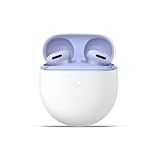
- Google Pixel Buds 2a deliver lightweight comfort, crisp audio, Active Noise Cancellation, and a dependable battery, all for less[1]
- Hear only what you want to hear; Google Tensor A1 powers Active Noise Cancellation with Silent Seal 1.5 to help block external noise; or switch to Transparency mode to hear the world around you while you listen
- Immerse yourself in clear, crisp audio with the 11 mm dynamic speaker driver, or customize the levels of bass, treble, and more with the 5-band equalizer
- Pixel Buds 2a are built for lightweight comfort and an impeccable fit; secure them during workouts or commutes with the twist-to-adjust stabilizer, or twist the other direction for relaxed comfort
- Hear and be heard with Clear Calling; it helps block background noise, so wind, external chatter, or other distractions in your environment won’t interrupt your conversations[2]
A repeatable listening test that avoids guesswork
- Choose one 20- to 30-second section with clear speech and a little background music or room sound.
- Listen at your normal volume with the original or neutral setting.
- Apply the starting curve and replay the exact same section without changing volume.
- Ask three questions: Are words easier to follow? Is the bass deeper without covering the voice? Are “s” sounds comfortable?
- Change only one slider by a small amount, replay the passage and write down whether the change helped.
- Repeat the check with a second recording. Keep the setting only if it improves both, since one master can hide a problem that appears elsewhere.
This process matters because EQ is relative to the source. A podcast recorded close to the microphone may need less midrange than a film scene, while a heavily mastered music track may already have pronounced bass and treble.
Common problems and fixes
The EQ option is missing
- Confirm that the earbuds are connected and selected as the current output.
- Open the Pixel Buds app or Pixel phone device controls rather than the phone’s unrelated global sound menu.
- Update the Pixel Buds app and earbud firmware.
- Check the model: Google’s documented support for these EQ customizations includes Pixel Buds Pro, Pixel Buds Pro 2 and Pixel Buds 2a; other generations may expose fewer controls.
The settings do not seem to stick
- After moving the sliders, leave the EQ page so the profile can be stored as Last saved.
- Reconnect the earbuds and verify the values in Custom Equalizer.
- If a different device is controlling the earbuds, return to the phone where you made the change and confirm that the same Pixel Buds are selected.
The sound is distorted
- Reduce the largest boost, usually Low bass or Treble, before increasing anything else.
- Lower the playback volume and retest; high-level boosts can overload the earbuds or the recording.
- Try the same passage with the preset disabled. If distortion remains, the source, connection or hardware—not the EQ curve—may be responsible.
Bass disappeared after changing ear tips
Recheck the fit. A stable seal is a prerequisite for judging Low bass and Bass, and a different tip size can alter the perceived balance more than a small slider change.
How to choose between the four practical approaches
- Choose Vocal boost when intelligibility is the only urgent problem and you want the fastest official starting point.
- Choose Heavy bass when impact is more important than a forward voice and you accept a higher risk of midrange masking.
- Choose Clarity when the recording sounds veiled and you want perceived detail without deliberately emphasizing low bass.
- Choose Custom Equalizer when you want both goals at once and are willing to compare, adjust and save a personal compromise.
There is no single best curve for every listener. Ear-tip seal, model, volume, hearing and recording mastering all change the outcome, and Google has not published a universal numeric setting for this exact combination of goals. The recommended profile is therefore best used as a cautious baseline: start there, make one change at a time and keep the smallest adjustment that makes voices easier to follow without sacrificing the bass depth you actually want.
Quick Recap
Product prices and availability are accurate as of the date/time indicated and are subject to change. Any price and availability information displayed on Amazon at the time of purchase will apply.

