Do these 3 things before closing this tab:
1Fix the driver behind crashes, sound loss and screen glitches2Clear out junk files and repair common Windows errors3Scan for outdated or missing drivers - takes under a minuteThe best cine SLR camera lens is the one that matches your camera’s mount and sensor, gives the framing and light transmission your production needs, and fits your manual-focus workflow. There is no universal winner: a 105mm prime, a 20–50mm zoom, and an ultra-wide-to-telephoto set solve very different shots.
Cine lenses are designed chiefly for controlled motion-picture work. Their long focus throws, geared rings, stepless iris controls and T-stop markings make repeatable focus pulls and exposure changes easier, but those same manual controls can be slower for ordinary still photography. Use the buying process below to decide whether a cine lens improves your DSLR video work or simply adds bulk and cost.
As an Amazon Associate I earn from qualifying purchases.
What makes a cine lens different from a still-photo lens?
A cine lens is engineered around predictable operation while a camera is recording. Focus rings usually rotate much farther than photographic autofocus rings, allowing a focus puller to make small, repeatable adjustments. The focus and iris rings commonly carry standard 0.8-pitch gears so a follow-focus motor or other rig accessory can engage them. Iris movement is often stepless, avoiding visible exposure jumps during a shot, and exposure is specified with T-stops rather than only f-stops.
Those features are functional advantages for filmmaking, not proof that a cine lens produces better still photographs. Many cine lenses are fully manual. Autofocus, optical stabilization, electronic iris control, lens metadata and in-camera correction may be absent or behave differently from a photographic lens. A lens can mount physically and still fail to provide infinity focus, electronic communication or adequate clearance through an adapter.
#1 Best Overall

- T1.2 Large Aperture - Featuring large T1.2 aperture, this cine lens is perfect for low-light filming. No need to use extremely high ISO and you'll get a pure low noise night scene. The fast T1.2 aperture also contributes to pleasing bokeh quality and clear subject, giving the footage extra expressiveness and aesthetics.
- Night Walker 24mm - SIRUI Night Walker Series cine lenses come in S35 coverage. The Night Walker 24mm is equivalent to a 34mm full frame lens, suitable for landscape, street and scene filming. SIRUI Night Walker is available in classic black and fashionable metal gray. Both choices are premium and aesthetic in the appearance.
- Outstanding Optical Performance - SIRUI Night Walker takes a revolutionary step in improving the optical performance at even the max aperture, achieving perfect sharpness, minimal focus breathing and well controlled aberration.
- Premium Cine Body - The strong aluminum cine housing makes it sturdy yet portable in hand. It helps to protect inner optical elements while the minimum weight of each single lens is around only 500g, creating a new era of lightweight fast aperture lens.
- Model: SIRUI 24mm T1.2 | Focus Length: 24mm | Frame: APS-C/S35 | Aperture: T1.2-T16 | Lens Structure: 12 elements in 11 groups | Aperture Blade: 12 | Minimum Focus Distance: 0.3m | Filter Spec:M67*0.75 | Rotation Angle of the Focus Ring: 270° | Max. Diameter(mm/inches): 79/3.11 | Diameter of the Focus Ring(mm/inches): 77.6/3.06 | Length(mm/inches): 84/3.3
For a DSLR movie setup, decide first whether you will accept manual focus and manual exposure. If you need fast autofocus for candid stills, a conventional photographic lens may be more practical. If you need consistent focus marks, a de-clicked iris and a rig-friendly control layout, cine mechanics can justify the trade-offs.
Mount compatibility comes before every other specification
Identify the exact mount on the camera body and the exact variant of the lens. A manufacturer may sell one optical design in several mounts, but the variants are not interchangeable. Sigma lists EF, E and PL versions across its cine families, while Canon’s cinema range includes both EF- and PL-mount lenses. The mount name alone does not tell you whether autofocus, stabilization, electronic aperture, metadata or an adapter will work.
EF on a Canon or other compatible DSLR
An EF cine lens is the most direct path for an EF-mount DSLR: there is no mount adapter between the lens and body. Sigma says its 105mm T1.5 FF Cine is offered in an EF variant and can be used on still cameras with compatible mounts for DSLR movie shooting. The lens uses standardized 0.8M gears, making it suitable for a follow-focus setup. Read the body’s clearance and communication requirements before assuming every EF feature is retained.
PL on a cinema body or adapted system
PL is common on dedicated cinema cameras, but adapting PL to an SLR body requires a mechanically and optically suitable adapter. Flange distance, mirror clearance and the adapter’s locking mechanism matter. Sigma states that mount conversion is not user-performed, costs extra and is unavailable for PL lenses; contact Sigma for current service details rather than planning to convert a PL lens yourself.
E-mount and other mirrorless mounts
An E-mount cine lens can be a good fit for an E-mount camera, but an E-mount lens is not automatically compatible with an SLR. If the body is not EF, verify whether an adapter preserves infinity focus, electronic communication and mechanical clearance. Treat every lens-and-body combination as a separate compatibility check.
Rank #2
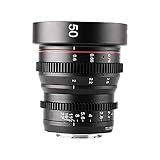
- With a wide aperture of T2.2,the lens allows you to create shallow depth of view videos
- The 50mm cine lens has a wide view angle of 24.8 degrees , great for portrait or landscape
- The Meike Mini Prime 50mm T2.2 is small and compact build , offers a focal length equivalent to 100mm with focal lengths that are ideal for video use
- The lens structure is 7 groups 9 elements , makes the lens capable of producing sharp image and videos with low distortion
- This cine lenses have very little focus breathing sharpness is perform very well both in the center and in the corners , it haven’t any significant chromatic aberration
Compatibility checklist
- Read the camera body’s exact mount designation, not just the camera family name.
- Match that designation to the lens variant (for example, EF, E or PL).
- Confirm image-circle coverage for the camera’s recording sensor and intended crop modes.
- Check flange distance, mirror or shutter clearance and infinity-focus behavior when an adapter is involved.
- Verify whether autofocus, stabilization, electronic iris and metadata are supported; assume they are unavailable until the manufacturer says otherwise.
- Confirm the rig can accommodate the lens’s front diameter, gear position, length and mass.
Sensor coverage determines whether the framing works
Image-circle coverage and field of view are separate decisions. A full-frame cine lens generally covers smaller formats, but the smaller sensor records a narrower portion of the image circle, changing the effective framing. A lens that is comfortably wide on full frame can look normal or telephoto on a crop sensor. Select the focal length for the sensor mode in which you will actually record.
Canon identifies the CN-E20-50mm T2.4 L F as a full-frame zoom. Irix describes its EF cine range as having a full-frame image circle. These statements establish coverage, not a universal angle of view for every DSLR. Check the camera’s active sensor area, crop or windowed recording mode and any aspect-ratio crop before ordering.
Comparison of notable cine options
The table uses information published by the manufacturers. “Not stated” means the cited material does not establish that specification; it is not an invitation to guess. Prices and stock change, and no current price was independently verified.
| Lens or family | Camera mount and adapter requirement | Sensor coverage | Focal length and intended framing | Maximum T-stop | Prime versus zoom | Focus-ring rotation and geared-ring position | Iris operation | Focus breathing | Zoom parfocality or focus shift | Front diameter and support needs | Weight | Price and availability |
|---|---|---|---|---|---|---|---|---|---|---|---|---|
| SIGMA 105mm T1.5 FF Cine, EF variant | Canon EF; direct fit on a compatible EF body. Other mount versions exist; adapters require separate verification. | Full-frame designation in the product family. | 105mm telephoto prime; suited to portraits, compressed perspectives and distant subjects rather than general coverage. | T1.5 | Prime | Standardized 0.8M gears; rotation specification not stated on the cited product page. | Manual cine iris; exact control details not stated on the cited product page. | Sigma notes that some models may show more breathing than lenses designed exclusively as cine lenses. | Not applicable to a prime. | Front diameter and support requirement not stated on the cited product page. | Not stated by Sigma’s product page. | Current price and stock not stated; verify with a dealer. |
| Canon CN-E20-50mm T2.4 L F | EF or PL variant; choose the exact mount. An adapter may be needed for another body and must be checked for clearance and communication. | Full frame. | 20–50mm wide-to-normal zoom for establishing views, interiors and medium coverage. | Constant T2.4 throughout the zoom range. | Zoom | Rotation, gear positions and 0.8-pitch details not stated in the cited Canon listing. | Not stated in the cited Canon listing. | Not stated in the cited Canon listing; test the individual setup. | Parfocal behavior and focus shift not stated in the cited Canon listing. | Front diameter and support requirement not stated in the cited Canon listing. | Not stated by Canon on the cited listing. | Current price and availability not stated; verify the selected EF or PL version. |
| Irix Cine EF range: 11, 15, 21, 30, 45, 65 and 150mm | EF versions for compatible EF bodies; adapters for other mounts require body-specific checks. | Full-frame image circle according to the compatibility guide. | 11–21mm ultra-wide, 30–45mm wide/normal, 65mm short telephoto and 150mm telephoto; the 150mm options include tele and macro versions. | Maximum T-stops vary by focal length and are not tabulated in the cited guide. | Prime set | Common 0.8-pitch gears; rotation values not stated. | Not stated in the cited compatibility guide. | Not stated; evaluate each focal length. | Not applicable to individual primes. | Common 95mm fronts; camera support needs depend on the body and rig. Exact weight not stated. | Not stated by Irix in the cited guide. | Current price and stock not stated; confirm the precise lens variant. |
| Sigma High Speed cine primes | EF, E and PL options are described in Sigma’s 2023 buyer guide; select the correct version. | Coverage varies by model; verify the individual lens. | Multiple prime focal lengths for a matched, clean-looking set. | Varies by model; not stated as one family-wide value in the guide. | Prime set | Family-wide rotation and gear-position details not stated in the guide. | Manual cine controls; exact family-wide iris specification not stated. | Model-specific; Sigma cautions that some models can breathe more than lenses designed exclusively as cine lenses. | Not applicable to primes. | Model-specific; not stated family-wide. | Not stated by the buyer guide. | Prices and availability are volatile; verify current listings. |
| Sigma Classic cine primes | PL-only in Sigma’s 2023 buyer guide; verify current versions before purchase. | Model-specific; verify the individual lens. | Prime set intended for a warmer, lower-contrast rendering with stylized flare. | Varies by model; not stated as one family-wide value. | Prime set | Family-wide rotation and gear-position details not stated in the guide. | Manual cine controls; exact family-wide iris specification not stated. | Model-specific; no family-wide value stated. | Not applicable to primes. | Model-specific; not stated family-wide. | Not stated by the buyer guide. | Prices and availability are volatile; verify current listings. |
Product examples and the jobs they fit
SIGMA 105mm T1.5 FF Cine (Canon EF)
The 105mm T1.5 is a specialist telephoto prime, not an all-purpose first lens. Its T1.5 maximum transmission is useful when you need subject separation or faster shutter and aperture combinations in controlled lighting. On an EF DSLR, the EF version avoids an additional mount interface. Sigma’s product page confirms the EF and other mount choices and the standardized 0.8M gears. See the SIGMA 105mm T1.5 FF Cine specifications and verify the body combination through Sigma’s cine FAQ.
Choose it when your scenes repeatedly call for a long perspective, portraits, detail shots or distant-camera placement. Do not choose it as your only lens if you still need wide establishing shots or fast changes in framing.
Rank #3

- Full-Frame Coverage- SIRUI 35mm anamorphic lens available in E/RF/L/Z mount pairs perfectly with popular mirrorless and cinema camera models.
- 1.6x Squeeze Factor - this anamorphic is equivalent to the horizontal FOV of a FF 22mm. This premium squeeze factor offers 2.4:1 aspect ratio images when using a 3:2 sensor mode and achieves an even wider 2.8:1 frame when shooting at a 16:9 mode, offering a wider angle of view and featuring the key to the wide-screen cinematic world.
- Impressive Anamorphic Look - This incredible squeeze factor offers cinematographers more noticeable cinematic effects such as sci-fi lens flare and creamy oval bokeh, adding a stylistic cinematic feel to your scenes, and producing a consistent aesthetic of the images with other SIRUI full-frame anamorphic.
- Cine Lens Housing- Constructed with robust aluminum alloy, this lens is super smooth and sturdy in hand yet lightweight, the perfect combo for a run-and-gun setup. Featuring geared aperture and focus ring and 82mm filter thread for versatile attachment.
- Focal Length: 35mm | Lens Mount: RF Mount | Maximum Aperture: T2.9 | Minimum Aperture: T16 | Lens Structure: 18 Elements in 13 Groups | Aperture Blades: 10 | Support Format: Full-Frame | Shooting Distance: 3ft(0.9m)-∞ | Focus Method: Manual Focus | Max Magnification: 1:22.87(V), 1:40.08(H) | Filter Spec: M82X 0.75 | Rotation Angle of Focus Ring: 120°| Weight: 948g/2.09lbs | Length: 118.2mm/4.65inch
Canon CN-E20-50mm T2.4 L F
This zoom covers wide through normal perspectives in one full-frame lens and keeps a constant maximum T2.4 across the range, so exposure does not change merely because you zoom. That makes it a practical single-lens option for interiors, interviews and moving-camera work where changing primes would interrupt the shot. Canon offers EF and PL variants; confirm which one you are buying on the Canon Cinema Lenses page.
Free tools Windows power users keep installed
One-click scans. No signup required.
A constant T-stop does not guarantee parfocal zooming. The cited Canon listing does not establish focus-breathing or focus-shift behavior, so test the exact lens with your camera if you plan to zoom during a take.
Irix Cine EF focal-length range
Irix’s compatibility guide lists EF cine lenses at 11mm, 15mm, 21mm, 30mm, 45mm, 65mm and 150mm, including tele and macro versions at 150mm. The guide describes a full-frame image circle, common 95mm fronts and 0.8-pitch gears. This range is useful when you want a matched prime set spanning ultra-wide establishing shots to long telephoto or macro work. Treat the guide as a compatibility claim to verify against the precise body, adapter and lens revision; consult the Irix EF compatibility guide.
Sigma High Speed and Classic families
Sigma’s 2023 buyer guide positions its High Speed primes as the cleaner-looking option and lists EF, E and PL versions. It describes the Classic primes as warmer and lower contrast, with stylized flare, and lists them as PL-only in that guide. That is a rendering choice rather than a quality ranking: a clean image may be easier to grade when you want neutral color and contrast, while a lower-contrast, flared look can be deliberate. Confirm current mounts and versions because the guide is dated 2023. Read the Sigma cine lens buyer guide.
Choose focal length from the shot, not from the lens label
Ultra-wide and wide
11mm, 15mm and 21mm options are appropriate starting points for architecture, cramped interiors, vehicle-mounted perspectives and environmental establishing shots. Ultra-wide lenses exaggerate the distance between foreground and background and reveal camera movement; that can be expressive but also makes subject placement and distortion more demanding.
What’s actually slowing this PC down?
Pick the symptom - the matching free tool is one click away.
Rank #4
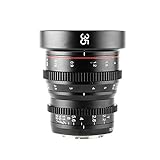
- Lens Not Attached:MANUAL LENS need you to enable"M mode" or "Release without lens" in the setting of camera.
- The 35mm cine lens has a wide view angle of 37 degrees, great for portrait shots or interviews, With a wide aperture of T2.2, the lens allows you to create shallow depth of view videos
- The lens structure is 8 groups 10 elements, makes the lens capable of producing sharp image and videos with low distortion
- The Meike Mini Prime 35mm T2.2 is small and compact build, offers a focal length equivalent to 70mm with focal lengths that are ideal for video use
- This cine lenses have very little focus breathing, sharpness is perform very well both in the center and in the corners, it haven’t any significant chromatic aberration
Normal and short telephoto
30mm, 45mm and 65mm primes cover progressively tighter views. They are useful for dialogue coverage, half-body portraits and general-purpose scenes, but the exact framing depends on the sensor crop and camera distance. A 45mm on a crop sensor will not frame like a 45mm on full frame.
Long telephoto and macro
The 105mm Sigma and 150mm Irix options are specialized choices for compressed perspective, isolated subjects, distant details and macro work. They need more camera-to-subject distance and make focus errors obvious. Plan support and focus-pull technique before treating a long prime as a general-purpose lens.
Prime set or zoom?
Primes usually offer a consistent visual character and can be selected as a matched set. A zoom reduces lens changes and can preserve a shot when the camera cannot move. The trade-off is that zoom focus shift and breathing are model-specific. Select a prime set when repeatable focal-length character matters; select a zoom when speed of reframing matters more than a uniform set.
Independent reader supportYour contribution helps us test, update, and keep practical guides available for everyone.Understand T-stops, focus breathing and parfocal behavior
T-stop versus f-stop
An f-stop describes geometric aperture. A T-stop incorporates transmission loss, so two lenses set to the same T-stop are intended to deliver more comparable exposure. The Canon CN-E20-50mm’s constant T2.4 means its stated maximum transmission remains the same through the zoom range. It does not promise identical depth of field, flare behavior or sharpness at every focal length.
Crashes, No Sound, or Screen Glitches?
Random freezes, missing sound and display glitches usually trace back to one bad driver. Find and replace yours safely.Free scan · under a minuteWindows Errors? Fix Them Before They Spread
Repair common Windows errors and clear accumulated junk for a smoother, more stable PC - no reinstall needed.Free scan · no reinstallFocus breathing
Focus breathing is a change in angle of view while you refocus. It can make a deliberate rack focus look like an unintended zoom. Sigma notes that some models may show more breathing than lenses designed exclusively as cine lenses. If your shot includes prominent foreground and background transitions, test a focus pull at the distances and aperture you will use rather than relying on the family name.
Best Value

- Very long (270º) focus throw , Delivery image with smooth, circular bokeh and little to no focus breathing
- Angle of view on S35 cameras: Diagonal: 31.7°, Horizontal: 25.2°, Vertical: 17.2°; Accommodate more vision for the film
- Minimum focusing distance of 0.6m, Lens construction is 12 elements in 9 groups, multi layer coating, capable of delivering sharp and clear video
- Wide aperture of T2.1, suitable for lanscape and portrait shooting
- This S35 cine lens adopts precious glass with high refractive index and low dispersion; With 6K high resolution and sharper imaging.
Parfocality and focus shift
A parfocal zoom keeps the subject acceptably focused while you change focal length. A varifocal zoom requires a refocus after zooming. Sigma describes its cine zooms as nearly, but not perfectly, parfocal. The Canon listing supplied for the 20–50mm does not state parfocal performance. Plan to rehearse a zoom-and-focus move and keep a focus control available if the shot depends on it.
Set up a cine lens on an SLR or DSLR
- Record the body and lens identifiers. Write down the exact camera mount, sensor mode and lens mount variant. This prevents an EF body from being confused with a different mount or crop mode.
- Test bare mounting first. With the camera powered off, mount the lens or adapter without forcing the locking mechanism. Check that the mirror, shutter and rear element have safe clearance through the full focus range.
- Verify infinity focus. Point at a distant subject and confirm that the focus scale reaches a genuinely distant focus. An adapter that stops short is unsuitable for the intended work.
- Check camera functions. Confirm whether the body recognizes the lens, records aperture data, drives autofocus or stabilization, and displays metadata. If a function is missing, plan a fully manual workflow rather than assuming a firmware setting will restore it.
- Balance the rig. Mount the camera on the support system you will use for recording. Check that the lens does not overload the camera mount and that a lens support is available when the combination is long or heavy.
- Align control gears. Position the follow-focus gear with the accessory’s drive gear and confirm that the full focus throw is reachable without striking the camera or cage.
- Calibrate marks. Set near and far focus marks with the actual camera, adapter and recording resolution. Do not copy marks from another body; flange and sensor differences can change them.
- Rehearse exposure changes. Move the iris through the range while recording a test clip. Confirm that the stepless movement is smooth and that no rig component blocks the iris ring.
- Test the shot’s optics. Record the planned focus pull, zoom, backlight and flare conditions. Review breathing, focus shift, vignetting and edge coverage before the production day.
Rig, support and handling considerations
Cine lenses are often longer, heavier and wider at the front than still-photo lenses, although the supplied sources do not establish weights for the examples above. A 95mm front, as described for the Irix EF range, may require a larger matte-box or filter system than a photographic lens. Confirm the actual front diameter and support requirement for each model before buying accessories.
Use a baseplate, rods or lens support when the lens-and-adapter combination places leverage on the camera mount. Keep the follow-focus drive aligned across the full focus throw. If you handhold, check that the geared rings do not catch on the cage or your hand and that the camera remains balanced when the focus position changes.
The Tool Desk
Outbyte Driver Updater FREEFix the driver behind crashes, sound loss and screen glitchesFind Drivers →Outbyte PC Repair FREEClear out junk files and repair common Windows errorsFree Scan →Common purchase and shooting failures
| Symptom | Likely cause | Correction |
|---|---|---|
| The lens mounts but the camera will not focus to infinity. | Incorrect flange distance or an unsuitable adapter. | Use a mount combination rated for the body, verify flange distance and test infinity focus before the return period ends. |
| Autofocus, stabilization or electronic iris is unavailable. | The cine lens is manual or the adapter does not pass electronic functions. | Plan manual focus and iris operation, or select a lens and adapter whose manufacturer explicitly supports the required electronic feature. |
| The image is cropped more tightly than expected. | The camera is using a smaller sensor area or crop mode. | Recalculate framing for the active sensor and choose a shorter focal length if necessary. |
| A focus pull looks like a zoom. | Focus breathing. | Test the lens at the actual distances, adjust the move, or choose a model with better-controlled breathing for that shot. |
| The subject slips out of focus during a zoom. | The zoom is not perfectly parfocal or has focus shift. | Rehearse the zoom, pull focus during the move, or use a prime if the shot requires locked focus. |
| A follow-focus gear will not engage. | Gear pitch or ring position does not match the rig. | Confirm 0.8-pitch compatibility and reposition the camera or accessory; do not force mismatched gears. |
| The rig flexes or the mount feels stressed. | The lens is unsupported or the adapter is carrying excessive leverage. | Add a lens support and balance the rig before recording. |
Decision guide: which type fits your project?
- One EF DSLR, mostly interviews and interiors: investigate an EF wide-to-normal zoom such as the Canon 20–50mm T2.4, then verify breathing and support needs with your body.
- Portraits, details or distant subjects: consider the Sigma 105mm T1.5 EF variant, provided you can work with manual focus and the longer camera distance.
- A matched set from ultra-wide to telephoto: compare the Irix EF focal lengths and select only the focal lengths your sensor and locations require.
- Neutral, grade-friendly rendering: start with the Sigma High Speed family and verify the exact mount and model.
- Warm, lower-contrast character and stylized flare: investigate the Sigma Classic family, remembering that Sigma’s 2023 guide lists it as PL-only and that current availability must be checked.
- Still photography first: keep a photographic autofocus lens as your primary tool unless the cine lens’s manual mechanics are a deliberate part of your workflow.
What to verify before paying
- Exact camera mount, lens mount and adapter model.
- Active sensor size, crop modes and required angle of view.
- Maximum T-stop at the focal lengths you will use.
- Manual focus rotation, gear pitch and the physical position of each control.
- Whether the iris is stepless and whether your camera can control it electronically.
- Focus-breathing and zoom-focus behavior from a test clip or a manufacturer statement.
- Front diameter, matte-box or filter compatibility, lens support and total rig balance.
- Return, service and mount-conversion conditions. Sigma says mount conversion is a paid service, not a user operation, and is unavailable for PL lenses.
- Current price and stock for the exact variant; these were not established in the cited material and can change by region and date.
Bottom line
Choose the mount and sensor coverage first, then choose focal length and optical behavior. The Sigma 105mm T1.5 EF is a compelling specialist telephoto example for compatible EF DSLR movie work; Canon’s CN-E20-50mm T2.4 offers constant-T-stop wide-to-normal coverage; and Irix’s EF range provides a broad prime selection with a full-frame image circle. None is universally best. Your camera, framing, manual-control tolerance and production workflow determine the right cine lens.
Sigma’s official FAQ describes the design goal this way: “Our cine lenses feature a completely updated mechanical system, better optimized for modern cinematography.” That optimization is valuable when you need repeatable motion-picture operation, but it should be weighed against the convenience of autofocus and electronic features in still photography.
Quick Recap
Product prices and availability are accurate as of the date/time indicated and are subject to change. Any price and availability information displayed on Amazon at the time of purchase will apply.

