Recommended Free Tools
Start with Castlevania Anniversary Collection if you want one accessible, legal entry point into the Belmont family. It contains the original Castlevania, Castlevania II: Simon’s Quest, Castlevania III: Dracula’s Curse, Super Castlevania IV, both Christopher Belmont handheld games, Castlevania Bloodlines, and the bonus title Kid Dracula. Konami describes it as the best first step into the series.
From there, choose a route based on what interests you most: Trevor and Simon’s family history, the exploration-focused games that begin with Symphony of the Night, Richter Belmont’s two-game pairing in Castlevania Requiem, or the separate Lords of Shadow continuity. The guide below keeps those paths distinct so you know which game, character and version to choose first.
As an Amazon Associate I earn from qualifying purchases.
The quickest way to choose
| What you want | Start with | What you will learn or experience | Current access noted by Konami |
|---|---|---|---|
| A broad introduction to the classic Belmont saga | Castlevania Anniversary Collection | Simon, Trevor, Christopher and several classic formats in one package | Digital download for PlayStation 4, Xbox One, Nintendo Switch and Steam |
| The earliest family connection | Castlevania III: Dracula’s Curse | Trevor Belmont, identified as Simon’s forefather and the original vampire slayer in this story | Included in Anniversary Collection |
| Simon’s foundational adventure | Castlevania | The straightforward castle assault that establishes Simon Belmont | Included in Anniversary Collection |
| The strongest 16-bit Simon game | Super Castlevania IV | Expanded whip control and a smoother presentation; its original US release was in 1991 | Included in Anniversary Collection |
| Richter’s story and the exploration style | Rondo of Blood then Symphony of the Night | A direct Richter-to-Symphony pairing in Castlevania Requiem | Both games are packaged together in that collection |
| Modernized handheld exploration | Dominus Collection | The three Nintendo DS-era games with convenience features and reference tools | Collection availability and storefront support can vary by territory |
| A separate rebooted continuity | Lords of Shadow | Gabriel Belmont, his descendants Trevor and Simon, and a later Gabriel who is Dracula | Follow the entries as their own continuity rather than mixing them with the classic timeline |
Why the Belmont family is a useful way into Castlevania
The Belmonts are the franchise’s central vampire-hunting bloodline, but Castlevania is not a single-character series. Some entries put a Belmont on the cover, while others follow allies, descendants, or protagonists outside the family. That is why a release-order list can feel confusing to a new player: the games change control style, time period, protagonist and even continuity.
Do these 3 things before closing this tab:
1Scan for outdated or missing drivers - takes under a minute2Clear out junk files and repair common Windows errors3Fix the driver behind crashes, sound loss and screen glitchesA family-first approach gives you a practical map. Trevor’s appearance in Dracula’s Curse explains why that game is the best direct prequel to Simon’s adventures. Simon then anchors the original 8-bit and 16-bit experiences. Christopher’s handheld story shows another generation of the clan. Richter’s arc leads into the exploration-heavy design of Symphony of the Night. Gabriel’s story in Lords of Shadow must be kept separate because it is a rebooted setting rather than another chapter in that classic sequence.
#1 Best Overall

- Classics that defined the Castlevania series.
- Includes the "History of Castlevania - Book of the Crescent Moon" ebook.
- This includes eight classic Castlevania games preserved on one disc with a full-color manual.
- The Castlevania Anniversary Collection on physical disc for the PlayStation 4. Also works on PlayStation 5. Region-free.
You do not need to understand every historical detail before playing. The important choice is whether you want linear action, map-based exploration, or a self-contained alternate universe.
Best first purchase: Castlevania Anniversary Collection
Castlevania Anniversary Collection is the safest recommendation for a first-time player because it puts the core classic games in one digital package. Konami’s own description calls it “the best first step for anyone to take into the world of Castlevania and the fight against Dracula.” The collection is available as a digital download on PlayStation 4, Xbox One, Nintendo Switch and Steam.
What is included
- Castlevania
- Castlevania II: Simon’s Quest
- Castlevania III: Dracula’s Curse
- Super Castlevania IV
- Castlevania: The Adventure
- Castlevania II: Belmont’s Revenge
- Castlevania Bloodlines
- Kid Dracula as a bonus title
The package is valuable even if you eventually prefer the later exploration games. It lets you compare the series’ original linear design with the more flexible movement and whip handling introduced in later entries, while keeping the central family names in view.
How a beginner should use it
- Begin with Dracula’s Curse if your priority is family history. Trevor is Simon’s forefather, so this is the clearest starting point for the Belmont lineage.
- Play the original Castlevania next to see Simon’s foundational castle assault.
- Move to Super Castlevania IV when you want Simon again with a smoother 16-bit presentation and expanded whip control.
- Try Simon’s Quest after those two if you want to see how the series experimented with towns, exploration and a less direct structure. It is part of the same package, but it does not teach the classic formula as cleanly as the other two Simon games.
- Save The Adventure and Belmont’s Revenge for a focused Christopher Belmont session, then sample Bloodlines and Kid Dracula as side paths.
This order is a recommended first-play route, not a claim that every event in the wider franchise forms one perfectly linear chronology. It keeps the most important family relationships understandable while letting you stop before the older design becomes tiring.
Route one: follow the classic Belmont family
1. Castlevania III: Dracula’s Curse — Trevor Belmont
Choose Dracula’s Curse when the question is, “Where does the Belmont family’s classic story begin?” Konami identifies Trevor as Simon’s forefather and the original vampire slayer in this story. That makes the game the strongest direct prequel to Simon’s adventures in the original continuity.
Its importance is primarily narrative and historical. You see an earlier Belmont defending the world before Simon’s name becomes the series’ shorthand for vampire hunting. The game also represents the classic, stage-based action format: you move through a sequence of dangerous areas, learn enemy patterns and rely on precise jumps, attacks and timing rather than building a character through equipment or statistics.
Start here if you want ancestry and context. If you are new to demanding retro action, use it as a focused session rather than insisting on finishing it immediately.
The Tool Desk
Outbyte Driver Updater FREEScan for outdated or missing drivers - takes under a minuteDriver Scan →Outbyte PC Repair FREERepair Windows errors before they cause bigger problemsFix Now →2. Castlevania — Simon Belmont’s foundation
The original Castlevania is Simon Belmont’s defining castle assault. It is the cleanest expression of the early formula: advance through fixed stages, manage spacing around enemies and traps, improve your weapon through power-ups, and preserve enough health to survive the next encounter.
The first collection entry lists original US and European release years as 1987 and 1988. Those dates describe the historical release of the game, not a modern storefront launch. In the collection, it works best after Dracula’s Curse because you can recognize Simon as the next major Belmont without needing a separate lore guide.
3. Super Castlevania IV — the most forgiving classic Simon starting point
Super Castlevania IV is another Simon-led classic, but its 16-bit presentation and expanded whip control make it feel more fluid than the earliest entries. Konami lists its original US release as 1991.
The broader whip movement changes how you approach enemies and platforms. Instead of treating the whip as a single fixed-direction strike, you can use its flexibility to control space more deliberately. That makes this the best Simon game to try when you want classic stage-based action without starting with the oldest presentation.
What’s actually slowing this PC down?
Pick the symptom - the matching free tool is one click away.
Play it after the original if you want to feel the design progression, or play it first if responsiveness matters more to you than release history.
4. Castlevania: The Adventure and Castlevania II: Belmont’s Revenge — Christopher Belmont
These two handheld games form Christopher Belmont’s arc. They are useful for readers who want to see the family represented outside Simon’s era and outside the home-console format.
Rank #2
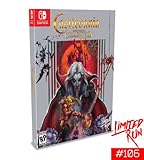
- Classic edition includes Konami-style silver box, physical game and soundtrack CD, 18 by 24" poster, and a NES-style dust sleeve to protect the game.
- Games Included in collection: Castlevania, Castlevania II Simon's Quest, Castlevania III Dracula's Curse, Super Castlevania IV, Castlevania The Adventure, Castlevania II Belmont's Revenge, Castlevania Bloodlines, and Kid Dracula.
- Box features all new art from legendary Konami cover artist Tom duBois.
Belmont’s Revenge follows Christopher after he defeats Dracula and introduces a new personal threat: Christopher’s son Soleil is turned into a demon. That premise gives the sequel a clear family stake rather than treating the Belmont name as a generic title passed from one unrelated hero to another.
Play The Adventure before Belmont’s Revenge if you want the Christopher story in sequence. Expect a more compact handheld experience than the large exploration games discussed later.
5. Rondo of Blood and Symphony of the Night — Richter’s bridge
For Richter Belmont, use the two-game pairing in Castlevania Requiem. Konami packages Rondo of Blood and Symphony of the Night together, creating a useful transition from linear action to exploration.
Play Rondo of Blood first, then Symphony of the Night. The order matters because it gives Richter’s appearance in the second game context and lets you experience the shift from a stage-based structure to a large map built around backtracking, discoveries and character progression.
This is the best route for a player who wants the Belmont family but is also curious why later Castlevania games are often described as exploration-focused rather than simply “retro action games.”
Route two: choose exploration and character progression
If your favorite part of modern action-adventure games is opening a map, finding a new ability and returning to an earlier area, begin with Symphony of the Night rather than forcing yourself through every 8-bit entry. Konami’s release history places this style alongside games released for PlayStation, Game Boy Advance and Nintendo DS.
Recommended exploration order
- Symphony of the Night
- Aria of Sorrow
- Dawn of Sorrow
- Portrait of Ruin
- Order of Ecclesia
This sequence starts with the game that most clearly establishes the exploration template, then moves through later handheld interpretations. It is not a strict Belmont-only path: several of these games center on other protagonists or allies. They belong here because they develop the design language that many players associate with modern Castlevania—large interconnected areas, locked routes, collectible abilities and progression that changes how you traverse the world.
Symphony of the Night
Symphony of the Night is the essential exploration entry and the second half of Richter’s Rondo of Blood pairing. Begin here if you want a game that rewards curiosity more than memorizing a fixed sequence of stages.
Its role in this guide is twofold. It continues the Richter thread, and it demonstrates why the Belmont family is only one part of Castlevania’s identity. The series can remain rooted in Dracula and the Belmont legacy while giving most of the moment-to-moment play to a different hero.
Aria of Sorrow
Aria of Sorrow is the next stop for players who want the exploration formula in a portable-era adventure. It follows Symphony in this route because the controls and map-based structure are easier to appreciate once you know the model it is building on.
Dawn of Sorrow
Dawn of Sorrow continues the exploration path on Nintendo DS. Play it after Aria of Sorrow so the relationship between the two entries is clear and the later interface does not feel like a disconnected experiment.
Portrait of Ruin
Portrait of Ruin keeps the interconnected exploration approach while presenting another cast and another variation on how areas are arranged. It is a good choice when you want the familiar structure without simply replaying the same protagonist’s journey.
Order of Ecclesia
Order of Ecclesia completes this five-game exploration path. Place it last because it works well as a final example of how the handheld era refined the formula before you return to the more overtly family-centered classics.
Rank #3
- 819976026033
- 1186668
Why the Dominus Collection is the convenient DS route
Castlevania Dominus Collection packages the three Nintendo DS titles—Dawn of Sorrow, Portrait of Ruin and Order of Ecclesia—with features designed to reduce the friction of playing older releases. Konami lists rewind, quick saves, regional-version switching, music playlists, and a compendium covering enemies, items, glyphs and tactical souls.
Free tools Windows power users keep installed
One-click scans. No signup required.
Those tools matter when your priority is learning the games rather than reproducing every original hardware limitation. Rewind can help you study a difficult encounter, quick saves let you stop between sessions, and the compendium keeps terminology and collectibles in one place. If you already know you prefer exploration, this is a more focused purchase than starting with the entire classic anthology.
Independent reader supportYour contribution helps us test, update, and keep practical guides available for everyone.Route three: play the Lords of Shadow continuity separately
Lords of Shadow should not be inserted between Trevor, Simon, Christopher and Richter as though it were another chapter in the same classic timeline. Konami presents it as a separate continuity with its own version of the Belmont legacy.
1. Lords of Shadow — Gabriel Belmont
The first game’s protagonist is Gabriel Belmont. His story establishes a different foundation for the family and reinterprets the conflict with Dracula in a setting distinct from the classic games.
2. Mirror of Fate — Trevor and Simon
Mirror of Fate takes place 57 years after Lords of Shadow and follows Gabriel’s descendants Trevor and Simon. The names are familiar, but their place in the family history belongs to this rebooted continuity, not to the classic sequence that begins with Dracula’s Curse.
PC Slower Than It Used to Be?
A free scan shows the junk files, broken settings and background clutter dragging Windows down - then fixes them in one click.Free scan · Windows 10 & 11Outdated Drivers Are Slowing You Down
One free scan finds every outdated or missing driver and matches the right update for your exact hardware.Free scan · exact hardware match3. Lords of Shadow 2 — Gabriel as Dracula
Lords of Shadow 2 returns to Gabriel, now Dracula, in a modern setting. Play it last in this route so the transformation has the intended narrative weight.
Choose this trilogy when you want a self-contained reinterpretation with a different tone and chronology. Do not use it as your first source for understanding Simon’s relationship to Trevor in the classic games; the shared names are not evidence that the timelines are interchangeable.
The newest Belmont-focused context: Castlevania: Belmont’s Curse
Konami’s 40th-anniversary announcement states that Castlevania: Belmont’s Curse released on October 15 for PlayStation 5, Xbox Series X|S, Xbox on PC, Steam and Nintendo Switch. Its story is set in Paris in 1499, 23 years after the events of Castlevania III: Dracula’s Curse, and follows Rose Belmont, Trevor Belmont’s daughter.
That placement makes it especially relevant after you finish Dracula’s Curse. Rose is not a replacement for Trevor or Simon; she is a later member of the same family line, and the 23-year interval gives the game a direct historical connection to Trevor’s story. Because availability and platform support can change after launch, check the storefront for your region before purchasing.
Collection comparison for first-time players
| Collection | Best for | Contents or focus | Convenience features or access notes |
|---|---|---|---|
| Castlevania Anniversary Collection | Most newcomers | Classic entries featuring Trevor, Simon and Christopher, plus Bloodlines and Kid Dracula | Digital on PlayStation 4, Xbox One, Nintendo Switch and Steam |
| Castlevania Requiem | Richter and the classic-to-exploration transition | Rondo of Blood followed by Symphony of the Night | Two-game package; the supplied official information does not specify a platform list |
| Castlevania Dominus Collection | Players who already want the DS-era exploration games | Dawn of Sorrow, Portrait of Ruin and Order of Ecclesia | Rewind, quick saves, regional-version switching, music playlists and a detailed compendium; storefront availability varies |
Difficulty, pacing and practical expectations
The classic games and the exploration games ask for different kinds of patience. Stage-based entries expect repeated attempts, memorized enemy patterns and careful management of jumps and attacks. Exploration entries give you more room to improve through discovery, equipment or abilities, but they can require backtracking and remembering where a blocked route was found.
- If you dislike repeated attempts: begin with Super Castlevania IV or the exploration route, then return to the earliest games when you are comfortable with the controls.
- If you want the family story first: play Dracula’s Curse, the original Castlevania and Super Castlevania IV before moving to Christopher or Richter.
- If you want the least-fragmented modern session: use the collection that matches your route. Anniversary Collection covers the classic family material; Dominus Collection concentrates the three DS exploration games.
- If you are sensitive to continuity spoilers: finish the classic Richter pair before starting Lords of Shadow, and treat Gabriel’s trilogy as a separate story from the beginning.
Convenience features also change the learning curve. The DS collection’s rewind and quick saves let you practice without losing a long session, while the classic anthology is better suited to sampling several historical styles. Neither approach is more authentic; they simply support different reasons for playing.
A complete first-play plan
Use the following plan if you want a clear route without buying every collection at once:
- Buy or access Castlevania Anniversary Collection on a supported platform.
- Play Dracula’s Curse to meet Trevor and establish the earliest Belmont connection in this guide.
- Play the original Castlevania for Simon’s foundational adventure.
- Play Super Castlevania IV for the refined Simon experience and expanded whip control.
- Play The Adventure and Belmont’s Revenge if Christopher’s branch of the family interests you.
- Move to Rondo of Blood and then Symphony of the Night through Castlevania Requiem if Richter and exploration are your priority.
- Continue with Aria of Sorrow, Dawn of Sorrow, Portrait of Ruin and Order of Ecclesia for a longer exploration-focused campaign.
- Start Lords of Shadow only when you want a separate interpretation of the Belmont name.
- Try Castlevania: Belmont’s Curse as the later Rose Belmont chapter set in Paris in 1499, after the events of Dracula’s Curse.
If you want only one game, choose Super Castlevania IV for classic Simon action, Dracula’s Curse for the earliest family connection, or Symphony of the Night for exploration. If you want one collection rather than one game, choose Anniversary Collection unless you already know that the Nintendo DS-era exploration trilogy is your main interest.
Quick wins for a faster PC:
Fix the driver behind crashes, sound loss and screen glitchesFind Drivers →Clear out junk files and repair common Windows errorsFree Scan →Scan for outdated or missing drivers - takes under a minuteDriver Scan →Quick Recap
Product prices and availability are accurate as of the date/time indicated and are subject to change. Any price and availability information displayed on Amazon at the time of purchase will apply.

