There is no single best bass drum microphone. The right choice depends on whether you need sub-bass weight, beater attack, feedback rejection, secure mounting, or a voicing that already fits your mix. For a dependable first choice across stages and studios, start with the Shure Beta 52A. Choose the AKG D112 MkII when low-end body and a flexible mount matter most, the Audix D6 when its modern 30 Hz–15 kHz voicing suits your production, or the Sennheiser e 902/e602 II when detailed, durable performance is the priority.
Quick picks
| Microphone | Best fit | Key evidence | Main trade-off |
|---|---|---|---|
| Shure Beta 52A | All-around live and studio starting point | 20 Hz–10 kHz response, specified 4 kHz presence boost, supercardioid pickup, high-SPL design, locking adapter and hardened steel grille | Its tailored curve may be more colored than a neutral recording approach |
| AKG D112 MkII | Maximum low-end body and flexible mounting | Large diaphragm with very low resonance frequency; AKG describes a solid, powerful response below 100 Hz; integrated flexible mount; 300 g microphone-only weight | Its low-end emphasis may need balancing in a dense arrangement |
| Audix D6 | Modern, pre-shaped kick sound | 30 Hz–15 kHz response and 144 dB maximum SPL in Sweetwater’s current comparison | The broad, voiced response is not intended as a neutral reference |
| Sennheiser e 902 | Detailed kick capture with touring durability | Sweetwater describes deep sonic detail and heavy-duty dependability | The available comparison does not establish a standardized frequency or SPL ranking against the other models |
| Sennheiser e602 II | Alternative Sennheiser bass-drum option | Consider it where the e-series handling and a detailed, durable approach fit the setup | Specific comparative response and SPL figures are not established here |
These are design tendencies and published specifications, not guarantees of how every shell, head, room, preamp or mix will sound.
As an Amazon Associate I earn from qualifying purchases.
What makes a kick-drum microphone “best”?
A bass drum produces two very different things at once: the low-frequency air movement that makes the drum feel large, and the short beater transient that tells a listener where the note starts. A microphone that captures plenty of sub-100 Hz energy can sound impressive alone but disappear when bass guitar and synths enter. A microphone with pronounced upper-mid attack can cut through a live band yet seem hard or clicky in a sparse recording. “Best” therefore means the model that gives you the useful part of that spectrum with the least corrective work in your actual room and arrangement.
Do these 3 things before closing this tab:
1Fix the driver behind crashes, sound loss and screen glitches2Clear out junk files and repair common Windows errors3Scan for outdated or missing drivers - takes under a minuteLow-end weight
Diaphragm size, resonance and voicing influence how convincingly the microphone records the fundamental and the surrounding air pressure. The D112 MkII is the only model in this group for which the manufacturer explicitly describes a powerful response below 100 Hz. The Beta 52A is instead specified as a tailored bass-instrument microphone, while the D6’s published range extends down to 30 Hz. Those statements describe capability or design intent; they do not predict identical results on every drum.
#1 Best Overall
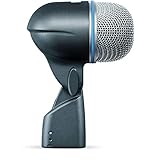
- Frequency response shaped specifically for kick drums and bass instruments
- Built-in dynamic locking stand adapter with integral XLR connector simplifies setup, especially inside a kick drum
- Studio quality performance, even a high sound pressure levels
- Supercardioid pattern for high gain before feedback and superior rejection of unwanted noise
- Hardened steel mesh grille that resists wear and abuse
Beater attack and mix cut
Attack lives higher than the fundamental. The Beta 52A’s specified 4 kHz presence boost is intended to help kick and bass instruments cut through. A microphone with more extended high-frequency response, such as the D6’s stated upper limit, can preserve more beater definition, but the result still depends on head choice, beater material, muffling and placement.
Pickup pattern and feedback control
On a loud stage, rejection is as important as frequency response. The Beta 52A uses a supercardioid pattern, a design intended to improve gain before feedback and reduce unwanted sound when the microphone is aimed carefully. The other models may work perfectly well live, but the available product information here does not establish an equivalent, directly comparable rejection specification.
SPL and transient handling
A kick port can expose a capsule to intense, fast pressure changes. The Beta 52A is specified for extremely high SPL operation, and Sweetwater’s comparison reports a 144 dB maximum SPL for the Audix D6. Those figures indicate headroom, not a promise that either microphone will sound identical at the limit. Leave preamp gain below clipping and listen for distortion in the complete signal path.
Mounting and physical reliability
Internal kick placement puts the microphone near moving air, vibration and occasional contact with a shell or blanket. The Beta 52A includes an integrated locking adapter and hardened steel grille. The D112 MkII has an integrated flexible mount, and AKG uses “bulletproof construction” language on its product page. These features reduce setup time and the chance of a loose stand or damaged grille, but no published source supplies a reliable lifetime-durability figure.
Published specifications and what they mean
| Model | Published response or detail | Pattern or SPL information | Mounting and construction |
|---|---|---|---|
| Shure Beta 52A | 20 Hz–10 kHz; tailored kick/bass voicing; 4 kHz presence boost | Supercardioid; designed for extremely high SPL | Integrated locking adapter; hardened steel grille |
| AKG D112 MkII | Large diaphragm and very low resonance frequency; solid, powerful response below 100 Hz | Specific comparative SPL figure not stated | Integrated flexible mount; 300 g microphone-only weight; AKG describes bulletproof construction |
| Audix D6 | 30 Hz–15 kHz | 144 dB maximum SPL, as reported by Sweetwater’s current comparison | Specific mount and grille details are not stated in the supplied comparison |
| Sennheiser e 902 | Deep sonic detail, according to Sweetwater’s comparison | Specific response, pattern and SPL figures are not stated here | Described as heavy-duty and dependable |
| Sennheiser e602 II | Specific comparative response not stated here | Specific pattern and SPL figures not stated here | Consider as a durable e-series alternative |
Do not read the response ranges as a quality score. A wider number can capture more information, while a narrower, shaped response can deliver a finished kick tone faster.
Rank #2

- OPTIMIZED FOR KICK DRUM - Specifically tuned for kick drums, bass, and other low-end instruments, this kick drum microphone delivers rich lows at 150Hz and crisp detail at 2kHz. Built for high sound pressure levels, it handles loud sources without distortion while preserving a wide dynamic range—ideal for flexible post-production
- EASY TO DRIVE - Effortlessly driven with minimal gain, this instrument microphone delivers full and dynamic sound even when paired with mixers or audio interfaces that have weak preamps
- ENHANCED NOISE REDUCTION - The cardioid polar pattern of this bass drum mic focuses on the desired sound source while rejecting unwanted background noise, ensuring clear and focused sound even in noisy environments
- STURDY BUILD - The kick drum mic features a built-in stand adapter and a standard XLR connector, streamlining your setup. The sturdy metal housing of the drum mic resists daily wear and tear for increased longevity
- BOX CONTENT: 1 x PDM33 Bass Drum Mic, 1x Zipper Pouch, 1 x User Manual
Microphone-by-microphone buying guide
Shure Beta 52A: the safest all-purpose starting point
Shure describes the Beta 52A as a high-output dynamic microphone with a tailored frequency response designed specifically for kick drums and other bass instruments. Its combination of a 20 Hz–10 kHz specification, a stated 4 kHz presence boost and supercardioid pickup makes it a practical choice when you need weight, audible beater definition and stage rejection from one microphone.
The integrated locking adapter is useful when the microphone is placed inside a kick or on a short stand that gets moved frequently. The hardened steel grille is another advantage for touring and rehearsal rooms. In a studio, the same built-in security lets you concentrate on placement rather than keeping a delicate stand perfectly still.
The Tool Desk
Outbyte Driver Updater FREEFix the driver behind crashes, sound loss and screen glitchesFind Drivers →Outbyte PC Repair FREERepair Windows errors before they cause bigger problemsFix Now →Choose the Beta 52A first when you do not yet know the drum, room or PA system, or when one microphone must cover both live work and straightforward recording. Its curve is intentionally shaped, so engineers seeking an uncolored reference may prefer to compare it with a flatter microphone rather than assume the built-in contour is universally desirable.
AKG D112 MkII: prioritize fundamental and flexible mounting
The D112 MkII uses a large diaphragm with a very low resonance frequency. AKG says that design delivers a solid and powerful response below 100 Hz, which makes it attractive for a large, round kick sound or for drums that lack body. The integrated flexible mount can simplify positioning inside a ported shell and reduce the number of hardware pieces that can shift during transport.
At 300 g for the microphone alone, its published weight is useful when you are balancing a short stand or an internal holder. AKG’s “bulletproof construction” wording signals a touring-oriented design, although it should be treated as a manufacturer description rather than a measured service-life claim.
Rank #3

- Large diaphragm capsule enhances bass response
- Capable of greater than 155 dB SPL
- Integrated stand mount stabilizes high mass housing
- 10 year warranty
Select the D112 MkII when the lowest octave and low-mid fullness are the first things missing from your recordings. If the bass drum already dominates the arrangement, check the result with bass guitar and sub-synth playing before committing to the most bass-heavy placement.
What’s actually slowing this PC down?
Pick the symptom - the matching free tool is one click away.
Audix D6: a modern, wide-range voiced option
Sweetwater’s current comparison reports a 30 Hz–15 kHz response and 144 dB maximum SPL for the D6. That combination suggests generous bandwidth and substantial headroom for a close kick position, including the sharp transient from a hard beater. It is a sensible option when you want a contemporary kick tone with substantial attack information and do not want the microphone to feel limited at either end of its stated range.
A wide response does not automatically mean a natural response. The shell, port, damping and distance determine how much of that bandwidth reaches the capsule. Listen to the D6 in the full arrangement and decide whether its voicing gives you useful definition or creates extra click and low-end that you must remove later.
Sennheiser e 902: detailed and built for demanding use
Sweetwater describes the e 902 as delivering deep sonic detail and heavy-duty dependability. That combination suits players and engineers who want the attack and texture of the drum to remain intelligible while the microphone withstands regular setup and teardown. The supplied comparison does not provide a standardized response, pattern or SPL figure that can be ranked directly against the Beta 52A, D112 MkII or D6.
Treat the e 902 as a listening-led choice: audition it on the actual drum, especially if you need more definition than a very low-end-focused microphone provides. Its durable positioning makes sense for stages, practice spaces and studios where the same microphone is handled often.
Recommended Free Tools
Rank #4

- Uniform half-cardioid polar pattern for maximum gain-before-feedback and rejection of off-axis sound
- Precision-engineered low-profile design features integrated preamplifier and XLR connector to maximize setup efficiency while minimizing stage clutter
- Frequency response tailored for kick drum/low frequency applications with a wide dynamic range for use in high SPL environments
- Two-position contour switch to maximize attack and clarity depending on application: select the flat response setting for natural sound in most applications or the “low-mid scoop” setting for a strong low frequency “punch” with plenty of higher frequency attack
- Requires no external mounting or accessories for ease of use and storage
Sennheiser e602 II: another e-series route
The e602 II belongs in the same decision set when you want a dedicated bass-drum microphone from Sennheiser but the e 902 is unavailable or does not suit the shell. The available evidence supports considering it as a detailed, durable alternative, but does not establish equivalent frequency, pattern or SPL figures. Compare the two on your drum rather than assuming one model is automatically superior.
Choose by application
For a loud live stage
- Start with the Beta 52A if feedback margin and a secure mount are priorities.
- Use the D112 MkII when the drum needs more fundamental weight and you can manage its low-frequency contribution in the PA.
- Consider the D6 or e 902 when attack detail must remain clear through dense guitars and cymbals.
Whichever model you choose, aim the null or least-sensitive area toward the loudest monitor and verify the result at performance volume. A pattern specification only helps when the microphone is oriented correctly.
For a project or home studio
- Pick the Beta 52A when you want a repeatable, mix-ready contour with minimal experimentation.
- Pick the D112 MkII when the shell and room need additional low-end authority.
- Pick the D6 when you want to retain a broad range for a modern, aggressive kick sound.
- Pick the e 902 when detail and repeated handling are more important than a published frequency headline.
Studio flexibility comes from placement as much as from the microphone. If you can spare an input, pair a close kick microphone with a boundary, sub or outside microphone, but judge polarity, phase and low-frequency buildup before blending.
For one microphone that must do both
The Beta 52A is the most straightforward starting point because its published design addresses kick-specific voicing, high SPL, rejection and secure mounting in one package. The D112 MkII is the strongest alternative when your definition of “both” emphasizes a full low end and fast setup. The D6 and e 902 are valid choices when their attack and detail match the band or production style.
Placement: a repeatable starting procedure
- Mute the drum and inspect the hardware. Confirm that the head, port and muffling are secure. Remove rattles before blaming the microphone.
- Choose the first position. For a ported shell, place the microphone just inside the hole, aimed toward the beater area for more attack. Move it farther from the beater or angle it toward the shell wall for a rounder sound. With no port, start outside the head or use an approved internal mount rather than forcing a stand against the head.
- Secure the mount. Lock the Beta 52A adapter, engage the D112 MkII flexible mount fully, or tighten the stand and clip appropriate to the chosen model. Keep the capsule clear of the moving head and pedal.
- Set gain conservatively. Have the drummer play the hardest expected hits while you watch the preamp and converter meters. Leave headroom for inconsistent strikes and do not rely on a microphone’s maximum-SPL figure to protect a clipped preamp.
- Listen in the complete mix. Check kick with bass, guitars, keyboards and vocals playing. A sound that is huge in solo may mask the bass line; a thin solo sound may be exactly what the mix needs.
- Move before equalizing. Change depth, angle and distance in small increments. Placement alters the balance of fundamental, beater attack and bleed without adding phase shift from an electronic filter.
- Apply processing only after the position works. Use EQ, compression and gating to support the chosen capture, not to compensate for a microphone touching the head, a rattling port or excessive room spill.
Placement decisions that change the result
Inside the port, near the beater
This position emphasizes the initial transient and reduces room sound. It is a useful starting point for the Beta 52A, D112 MkII, D6 or e 902 when the kick must be precise in a busy arrangement. Small angle changes can make the beater either articulate or overly clicky.
Best Value

- OPTIMIZED FOR KICK DRUM - Featuring a frequency response tailored for kick drum, this boundary condenser microphone delivers powerful, articulate low-end reproduction, ideal for capturing bass-rich sound sources. The kick drum microphone's extended frequency and dynamic range ensure every sonic detail is preserved — from deep subs to crisp transients — with minimal distortion and maximum headroom (You'll need 48V phantom power to operate this condenser microphone)
- BROADER APPLICATIONS - Equipped with a two-position EQ contour switch, this bass drum microphone adapts to various instruments with ease. Set it to the kick-tuned mode for deep, punchy bass drum sound, or switch to flat mode for a more balanced response when miking piano, bass guitar, and other low-end sources
- EXCELLENT ISOLATION - The supercardioid pickup pattern of the bass drum mic is ideal for close-miking, capturing the kick drum with focus while rejecting unwanted bleed from nearby instruments — resulting in a cleaner, more isolated sound
- EASY TO DRIVE - Delivering higher output with less gain, the kick drum mic performs reliably even when paired with mixers or audio interfaces that have weak preamps. No matter the setup, it ensures clear, professional sound without compromise
- EFFORTLESS SETUP - Rugged metal housing of the drum mic protects against on-stage wear, while the standard XLR connector ensures stable signal and broad compatibility. No mounting accessories are required — simply place it inside the kick drum for a quick, reliable setup
Inside the port, farther back
Increasing distance generally blends more shell and air movement with the attack. It can make a close microphone sound less aggressive while retaining isolation from the room. Watch for a bass buildup that competes with the bass guitar.
Outside the front head
An outside position captures more of the drum’s overall movement and less of the immediate beater spike. It can work well in a controlled room or as a second microphone, but it is more sensitive to room reflections and low-frequency cancellation. Check polarity and timing before combining it with an internal microphone.
Common problems and fixes
The kick is boomy but has no definition
Move the microphone toward the beater or angle it away from the shell wall. Reduce unnecessary low-frequency boost and check whether bass guitar is occupying the same range. If the drum is physically over-muffled, change the damping before adding more EQ.
Free tools Windows power users keep installed
One-click scans. No signup required.
The kick is all click
Back the microphone away from the beater, turn it slightly off-axis, or move it toward the shell wall. A less aggressive beater, a different patch or a small amount of damping can solve the source problem more naturally than a deep high-frequency cut.
The microphone feeds back on stage
Confirm the supercardioid microphone is aimed consistently and that the monitor is not firing into its most sensitive area. Lower stage-monitor level, move the monitor or change the microphone position before applying severe EQ. Feedback performance depends on the entire PA, room and gain structure, not on pattern alone.
The signal distorts even though the microphone is rated for high SPL
Check the preamp pad, interface input, channel insert and converter. A microphone can tolerate a loud source while the next device clips. Reduce gain at the earliest overloaded stage and verify the cable and connector.
The kick disappears when the bass enters
Listen to both instruments together, then decide which one owns the lowest octave. Shift the microphone slightly toward attack, reduce overlapping low frequencies, or arrange the bass part to leave space. Do not assume the microphone with the deepest solo sound will win in the mix.
Quick wins for a faster PC:
Fix the driver behind crashes, sound loss and screen glitchesFind Drivers →Clear out junk files and repair common Windows errorsFree Scan →Scan for outdated or missing drivers - takes under a minuteDriver Scan →What the available evidence cannot prove
No neutral, standardized statistic establishes that one of these microphones is objectively best. There is no controlled test here ranking mix success, and no reliable published lifetime-durability figure. Prices, stock, seller, regional availability and any promotional eligibility change over time and require a current check at the point of purchase. The most defensible decision is therefore a fit-based one: match the microphone’s stated design to your low-end, attack, rejection, mounting and handling requirements, then confirm the result on the actual drum.
Quick Recap
Product prices and availability are accurate as of the date/time indicated and are subject to change. Any price and availability information displayed on Amazon at the time of purchase will apply.

