Quick wins for a faster PC:
Clear out junk files and repair common Windows errorsFree Scan →Scan for outdated or missing drivers - takes under a minuteDriver Scan →For most shoppers, the AMD Radeon RX 7700 XT is the best alternative to Intel’s Arc B580 for 1440p gaming when its local price is reasonably close. It targets a higher native-raster performance tier and keeps 12GB of video memory. The NVIDIA GeForce RTX 4060 Ti is the closer ecosystem alternative if you rely on NVIDIA-specific software or prefer its ray-tracing behavior, although its 8GB version has less memory headroom than the B580. The GeForce RTX 4070 is the sensible step-up when you can spend substantially more and want more consistent 1440p headroom.
The B580 remains important to this decision because its $249 launch price and 12GB configuration reset expectations for this class. Treat that launch figure separately from today’s street prices: the right purchase depends on the prices in your country, the games you play, and whether you use native rendering, ray tracing, or an upscaler.
As an Amazon Associate I earn from qualifying purchases.
Best alternatives at a glance
| GPU | Best use | VRAM | 1440p native-raster position | Ray tracing | Price evidence | Power, size and connectors |
|---|---|---|---|---|---|---|
| Intel Arc B580 | Value baseline | 12GB | Competitive 1440p class; results vary by game and API | Game-dependent; no single ranking applies | $249 launch MSRP (Intel, 2024); current local price not stated | Exact figures not stated in the cited launch and review material |
| AMD Radeon RX 7700 XT | Higher raster performance when the premium is modest | 12GB | Meaningful step above the B580 in the intended comparison tier | Generally a weaker reason to buy than its raster performance; game-dependent | GamersNexus compared it with cards around $400 in its review context; current local price not stated | Exact figures not stated in the cited material |
| NVIDIA GeForce RTX 4060 Ti | NVIDIA software ecosystem and a close-class alternative | 8GB or 16GB | Close enough to require game-by-game comparisons | Can be preferable in supported games, but settings and drivers matter | GamersNexus compared competing cards around $400 in its review context; current local price not stated | Exact figures not stated in the cited material |
| NVIDIA GeForce RTX 4070 | Higher-budget 1440p upgrade | Not stated in the cited material | Higher tier with more headroom for demanding settings | Stronger upgrade path for ray-traced workloads | Current local price not stated; position it above the B580 and 4060 Ti | Exact figures not stated in the cited material |
These are not universal rankings. Frame rates change with the game engine, graphics API, driver version, quality preset, ray-tracing options and upscaling mode. A card that wins a rasterized benchmark can lose once heavy ray tracing is enabled.
What the Arc B580 establishes as the baseline
Launch value and memory
Intel launched the Arc B580 at $249 in 2024 and equipped it with 12GB of memory. That combination is the reference point for every alternative here. A replacement that costs materially more should deliver a clear performance, feature or longevity benefit rather than a barely measurable change.
#1 Best Overall
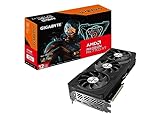
- Powered by Radeon RX 7700 XT
- Integrated with 12GB GDDR6 192-bit memory interface
- WINDFORCE cooling system, RGB Fusion, Protection metal backplate
Intel’s own media deck reported 132% of the RTX 4060’s value and 123% of the RX 7600’s value in selected 1440p Ultra tests calculated at launch MSRP. Those are vendor-selected results, not an independent industry-wide average, so use them as Intel’s claim about its launch positioning rather than as a guarantee for your game library.
Generational improvement
Intel’s launch brief also reported that the B580 was 24% faster than the Arc A750 across selected 1440p Ultra games. That figure describes Intel’s selected test set and does not predict every title, but it explains why the B580 is a more relevant starting point than older Arc comparisons suggest.
Independent 1440p context
GamersNexus placed the B580 in a competitive 1440p class and compared it directly with the RTX 4060 Ti and RX 7700 XT. In that review’s pricing context, those competing cards were about 60% more expensive, or roughly $400. Prices move quickly, so do not carry that historical relationship into a purchase without checking local listings.
Do these 3 things before closing this tab:
1Fix the driver behind crashes, sound loss and screen glitches2Repair Windows errors before they cause bigger problems3Scan for outdated or missing drivers - takes under a minuteTechSpot documented how uneven individual results can be: in one demanding 1440p test, the B580 produced 41 frames per second and was nearly 60% faster than the RTX 4060. That is useful evidence that Intel can excel in a particular workload, not a claim that the B580 is nearly 60% faster in every game.
Choose by the performance tier you actually need
When the RX 7700 XT is the right alternative
Choose the Radeon RX 7700 XT when you want a noticeable native-raster step above the B580 and the price premium is acceptable. It is the most direct answer for a player who values high 1440p settings, higher average frame rates and more room for demanding textures without moving to a much more expensive class.
- Prioritize it when most of your games use conventional raster rendering and you want the highest frame rate per setting level.
- Use local pricing, not the B580’s $249 launch MSRP, to calculate the premium. A small gap can justify the faster tier; a large gap may make the B580 the better value.
- Keep expectations realistic for ray tracing. The RX 7700 XT’s main advantage in this comparison is raster performance, and ray-traced results remain title-specific.
When the RTX 4060 Ti makes sense
The GeForce RTX 4060 Ti is the close NVIDIA alternative. It is most defensible when your games or creative applications benefit from NVIDIA’s software ecosystem, or when a specific title’s ray-tracing and upscaling implementation runs better on NVIDIA hardware.
Memory capacity is the critical distinction. The card is sold in 8GB and 16GB forms; the 8GB model has less headroom than the B580’s 12GB. At 1440p, that can force texture or ray-tracing compromises sooner in games that exceed an 8GB working set. The 16GB model removes that particular capacity limit but may weaken the value case if its local price approaches a faster tier.
- Buy the 8GB version only when its price is clearly lower and your settings target is known to fit within that capacity.
- Consider the 16GB version for long ownership or texture-heavy games, while checking whether the price is close to a higher-performance card.
- Do not assume NVIDIA branding alone determines the winner; compare the exact game, preset and upscaling mode you intend to use.
When the RTX 4070 is worth the jump
The GeForce RTX 4070 is not a same-price substitute for the B580. It is an upgrade tier for buyers who can spend more to obtain additional 1440p headroom, particularly at high refresh rates or with demanding ray-traced effects.
Rank #2

- Powered by Radeon RX 9070 XT
- WINDFORCE Cooling System
- Hawk Fan
- Server-grade Thermal Conductive Gel
- RGB Lighting
Choose it when lowering settings or relying heavily on an upscaler would defeat the purpose of your display, or when you want a longer runway before the next upgrade. Its value improves when the local price gap to the RTX 4060 Ti is modest; if the gap is large, calculate how many years you expect to keep the card and whether the extra performance will be used.
Native raster performance: what to compare
Native raster performance renders the image without an upscaler and is the cleanest way to compare the core GPU. For a fair 1440p decision, use the same game build, driver date, preset, texture setting and test sequence. Average FPS describes throughput; 1% lows show how often the experience dips during traversal or heavy effects.
The cited comparisons establish the B580, RX 7700 XT and RTX 4060 Ti as a competitive 1440p group, but they do not provide one universal set of average-FPS and 1% low numbers that applies to every game. Treat any single chart as a workload sample. The RX 7700 XT is the choice to investigate first for a raster-focused performance step, while the RTX 4060 Ti can trade wins with the B580 depending on the title and driver.
How game type changes the result
- Esports and older engines: CPU limits can flatten differences, especially at high frame rates. A faster GPU may not improve performance if the processor is already the bottleneck.
- Open-world and modern AAA games: 12GB cards provide a more comfortable memory target than an 8GB card when textures and geometry are aggressive.
- DirectX and Vulkan variations: Driver maturity and API behavior can change the order between Intel, AMD and NVIDIA from one game to another.
- Heavy visual effects: Ray tracing, volumetrics and high shadow settings can turn a raster comparison into a different ranking.
Ray tracing and upscaling
Ray tracing changes the buying advice
If ray tracing is central to your games, do not select on raster averages alone. Compare the exact effects you will enable and whether you are willing to use an upscaler. The RTX 4070 is the clearest upgrade tier for this use case. The RTX 4060 Ti can be attractive when a game’s ray-tracing implementation and NVIDIA-specific features matter more than raw raster speed. The RX 7700 XT remains primarily a raster-value choice, and the B580’s result must be checked title by title.
Upscaling and frame generation are game features, not guaranteed FPS
Intel, AMD and NVIDIA each offer their own upscaling and frame-generation technologies, but support is implemented per game and sometimes per rendering API. A feature name on a specification sheet does not guarantee that your preferred title supports the same mode, image-quality setting or frame-generation path.
- Open the game’s graphics menu and confirm which upscaler and frame-generation options are available for your GPU.
- Benchmark native 1440p first, then test the quality-oriented upscaling preset you would actually use.
- Check latency and frame-time behavior, not only the displayed FPS. Generated frames can raise the counter while input response remains tied to the underlying rendered frames.
- Keep a fallback setting ready. A driver update or game patch can change performance and image quality.
For a buyer who wants simple native rendering, prioritize raster performance and memory. For someone comfortable tuning per game, software support can justify choosing the RTX 4060 Ti or RTX 4070 over a faster-per-dollar raster option.
VRAM and 1440p longevity
The B580 and RX 7700 XT both carry 12GB, giving them the same stated capacity in this comparison. The RTX 4060 Ti requires a deliberate choice between 8GB and 16GB. The 8GB version can become constrained first when texture quality, ray tracing and large open worlds are combined; the 16GB version provides more capacity but does not automatically deliver more shader performance.
Crashes, No Sound, or Screen Glitches?
Random freezes, missing sound and display glitches usually trace back to one bad driver. Find and replace yours safely.Free scan · under a minuteWindows Errors? Fix Them Before They Spread
Repair common Windows errors and clear accumulated junk for a smoother, more stable PC - no reinstall needed.Free scan · no reinstallThe cited material does not state the RTX 4070’s memory capacity, so compare the exact model specification before ordering. Regardless of capacity, memory is only one part of performance: bandwidth, cache behavior, compression and the GPU’s rendering throughput also determine whether a setting is practical.
Rank #3

- Axial-tech fans now feature a smaller fan hub that facilitates longer blades and a barrier ring that increases downward air pressure
- Phase-change GPU thermal pad helps ensure optimal heat transfer, lowering GPU temperatures for enhanced performance and reliability
- 2.5-slot design allows for greater build compatibility while maintaining cooling performance
- Dual-ball fan bearings last up to twice as long as standard conventional sleeve bearings designs
- 0dB technology lets you enjoy light gaming in relative silence
Signs that memory is the limit
- Stuttering or severe 1% low drops appear when moving between areas, even though average FPS looks acceptable.
- Lowering textures produces a larger improvement than lowering resolution.
- The game warns that the selected preset exceeds available video memory.
- Performance worsens sharply when ray tracing and high-resolution texture packs are enabled together.
Reduce texture quality first when memory is saturated; lowering output resolution can then address shader load. If those compromises are unacceptable, favor a 12GB-or-more option or move up a performance tier.
Independent reader supportYour contribution helps us test, update, and keep practical guides available for everyone.Power, cooling and physical fit
Power draw, cooler design, card length, slot thickness and connector requirements affect whether an upgrade fits your system. The launch and review figures available for these four GPUs do not provide a single, model-specific table of wattage, dimensions or connectors, and board-partner designs vary. Check the exact product page before purchase rather than assuming every version of a GPU has the same cooler or plug layout.
Pre-purchase checks
- Measure the case’s maximum GPU length with front fans, radiator and drive cages installed.
- Count available expansion slots; a large cooler can block adjacent slots even when the card technically fits.
- Confirm the power supply’s rated capacity, cable type and number of dedicated GPU leads against the exact board specification.
- Check airflow direction and intake clearance. A higher-tier card can raise case temperature even when its average FPS gain looks attractive.
- Read the retailer’s return policy in case the delivered board differs from the reference dimensions shown in a listing.
Drivers, compatibility and ownership risk
Driver and game compatibility are part of the 1440p experience. Intel’s B580 can perform exceptionally in particular workloads, as the 41-FPS TechSpot result illustrates, but rankings can move as drivers and game patches change. AMD and NVIDIA also receive continual driver updates, and a benchmark captured on one release should not be treated as a permanent hierarchy.
What’s actually slowing this PC down?
Pick the symptom - the matching free tool is one click away.
Before buying, search the latest driver notes for your most-played games, especially if you use a new release, a modded renderer or an older API. Check whether the title supports the upscaler, frame-generation mode and ray-tracing path you expect. If a game is essential to you, prioritize independent testing in that game over a brand-wide average.
How to evaluate today’s local price
Use the B580’s $249 figure only as a historical launch benchmark. Intel’s 132% and 123% value claims were calculated against launch MSRP in selected 1440p Ultra tests, not against current retail prices. GamersNexus’ approximately $400 comparison context for the competing cards is likewise tied to its review period.
Build a simple price-per-performance decision from current listings:
- Record the delivered price, including taxes and shipping, for each exact model.
- Group cards by the same warranty and return terms; a low price with no practical return path is a different risk.
- Compare performance in three or more games you actually play, separating native raster and ray-traced settings.
- Assign a value to memory capacity and software features only if you will use them.
- Reject a nominal bargain that requires a power-supply, case or cooling upgrade unless that cost is included in the calculation.
When the RX 7700 XT is only modestly more expensive than the B580, its higher raster tier is the strongest alternative. When the premium is large, the B580’s 12GB and launch-value positioning become more compelling. The RTX 4060 Ti needs either a meaningful discount or a clear NVIDIA feature requirement to overcome the 8GB model’s narrower memory margin. The RTX 4070 earns its price when you specifically need the higher tier rather than simply wanting a different brand.
Recommended Free Tools
Decision guide by buyer priority
| Your priority | Start with | Why | What to verify |
|---|---|---|---|
| Maximum native-raster value near B580 pricing | Radeon RX 7700 XT | It is the intended higher raster-performance alternative | Local premium, cooler size and your power supply |
| Lowest upfront cost with 12GB | Arc B580 | $249 was its launch MSRP and it retains 12GB | Current street price and driver results in your games |
| NVIDIA software or game-specific ray tracing | GeForce RTX 4060 Ti | Closest NVIDIA-class option | Choose 8GB or 16GB deliberately; verify game support |
| High-refresh 1440p and heavier ray tracing | GeForce RTX 4070 | Higher-budget tier with more headroom | Exact model price, memory specification and case clearance |
Bottom line
Buy the Radeon RX 7700 XT when its local price is close enough to the Arc B580 to justify a higher native-raster tier. Keep the B580 if its 12GB capacity and lower price win your value calculation. Select the GeForce RTX 4060 Ti for a specific NVIDIA software or game requirement, not simply because it carries the NVIDIA name, and choose the 16GB version only when its price makes sense. Move to the GeForce RTX 4070 when you want a substantial 1440p upgrade and have the budget to pay for it.
Quick Recap
Product prices and availability are accurate as of the date/time indicated and are subject to change. Any price and availability information displayed on Amazon at the time of purchase will apply.

