Recommended Free Tools
BandOpticon Geo lets you scan PSKreporter-based amateur-radio reports around the world, compare activity across bands, and open a focused map for a closer look. It is a browser-based visualiser that runs in JavaScript without a download. Its maps show reported reception—not a complete measure of propagation or a guarantee that a contact will work.
What BandOpticon Geo shows
BandOpticon Geo turns PSKreporter data into geographic views of amateur-radio activity by band and mode. Its carousel displays separate band tiles so you can compare where reports appear across multiple bands. Colors distinguish stations that are transmitting only, receiving only, or doing both, according to the project description. For one band’s activity in greater detail, open its tile to see a larger map.
As an Amazon Associate I earn from qualifying purchases.
The project was created to make multi-band comparisons and filtered views easier to assemble than the author found them in PSKreporter itself. That is the author’s stated motivation, not an independent usability comparison. Read the BandOpticon Geo project page.
How to use the map
- Open BandOpticon Geo in a browser. The project says it runs in JavaScript on your device and requires no download. It was designed with mobile support in mind, but the project does not publish a supported-browser list.
- Choose the mode or modes you want to inspect. The carousel shows activity tiles for the selected mode or modes across bands.
- Scan the tiles for a broad comparison. Look at the geographic spread and colors of reports, rather than treating a tile as a definitive measure of band conditions.
- Open a band tile for focused inspection. The larger map provides filters, including views of connections involving a callsign, comparisons among home callsigns, and reciprocal connections.
- Adjust the map view as needed. The project describes automatic zoom-to-activity and a choice of map projection. Exact control labels and their placement may vary with the interface.
What reciprocal connections mean
A reciprocal connection is one where station A reports hearing station B and station B reports hearing station A. This gives evidence of reception in both directions, so it is more suggestive of a path that may support a QSO than a one-way report. It is not a promise that the stations can complete a contact: operating conditions and other factors still matter. BandOpticon Geo describes its reciprocal-connection feature here.
#1 Best Overall

- Mini mobile two way radio; 1.54"D x 4.88"W x 6.42"H; easy to install on trucks; jeeps; RVs and other vehicles; use the RT95 as a base station at home or in the office; long range communication; RT95 ham radio with high gain antenna; to obtain long distance signal sources; communication is more convenient
- Microphone gain & dual speakers; adjust the microphone gain level appropriately to ensure clear and interference-free calls; with the built-in dual speaker design; the sound quality is full and penetrating; equipped with RCA output ports; can be directly connected to car audio systems; immersive in-car listening experience
- 180 degree rotatable TFT color screen; free adjustment of viewing angle; supports multi-level control of LCD brightness; clearly visible under strong light; no glare during night operation; illuminated front panel buttons and microphone buttons; clear operation buttons at night; suitable for all-weather use scenarios
- Dual band mobile transceiver; amateur radio display the dual frequencies; and monitor dual band signals (2m/70cm band) at the same time; quickly respond to key communication needs; and improve work efficiency and safety
- VFO fast frequency adjustment & CHIRP compatible; VFO mode supports instant frequency adjustment; no computer is required for outdoor travel; compatible with CHIRP open source software; one-click import/export of channel parameters; easy management of 200 storage channels; CTCSS/DCS; DTMF; 5Tone; power adjustment; etc
How to interpret activity—and blank areas
The map visualizes reports submitted to PSKreporter by participating stations. It does not directly measure the entire ionosphere, predict whether a contact will succeed, or include every station that may be active. A visible report indicates that reception was reported; it is not proof that every station in the area can hear the same signal.
A blank area is inconclusive. It may mean that no participating station reported reception there at that time, that the selected mode or filters exclude relevant reports, or that reporting stations were not active. It does not prove propagation is impossible. F5KEE’s September 23, 2026 explanation of PSKreporter likewise notes that displayed activity depends on the network’s observations and selection. Read F5KEE’s explanation.
Rank #2
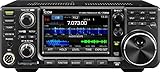
- 100W (25W AM) Output power
- 0.030-74.800 RX frequencies
- Receiver type: Direct sampling
When to use the carousel or the detail map
- Use the carousel for a quick, broad scan of reports across bands and selected modes.
- Use the detail map when you want to focus on one band, inspect connections involving a callsign, compare home callsigns, or apply reciprocal-connection filtering.
- Use reciprocal filtering as a clue when looking for reports in both directions, not as confirmation that a QSO is assured.
What the project does not establish
The project page does not specify an exact data-refresh interval, current uptime, or a supported-browser matrix. Treat the display as a view of available PSKreporter reports rather than relying on an assumed refresh schedule or universal browser compatibility. The page credits Editor John Schouten VE7TI for mentioning an early version in the March/April 2025 issue of The Communicator, the Surrey Amateur Radio Society magazine; that is a dated mention, not a product endorsement. See the project page for its feature and background details.
Free tools Windows power users keep installed
One-click scans. No signup required.
Quick Recap
Best Value

- Detachable Display Unit - The display unit and the radio body can be separated. This allows you to place the head remotely. FCC ID: 2BGMW-G90
- Wide Range Auto Antenna Tuner - Unlike other QRP radios, the G90 has a wide-range internal automatic antenna tuner so you can load up your favorite field antenna! The G90 also comes with a built-in mediumwave (AM broadcast) high-pass filter.
- Beautiful Color LCD Screen - All vital operating information is clearly visible in daylight conditions. 48KHZ wide spectrum display with waterfall gives you excellent awareness of the signal conditions around you.
- Easy to Use - You can use the Quick Mode button to turn on or off various functions. Instead of setting up different functions in the menu, you can directly adjust them by pressing corresponding function keys.
- We provide a 18 months warranty on Xiegu G90. As usual, if you modify the radio's hardware, the warranty is void. [Latest Firmware Version] - Firmware V1.81 is available on Radioddity official.
Rank #4

- Quad-Band Operation: The TH-9800D mobile radio frequency range: TX: 28-29.7 / 50-54 / 144-148 / 420-450 MHz, suitable for various communication scenarios. If you encounter any programming issues, please feel free to contact us via Amazon Message
- Dual Display & Cross-Band Repeat: The mobile ham radio display 2 frequencies simultaneously, supports cross segment relay function, enhances communication flexibility and coverage range
- High Power & Adjustable Output: Ham mobile transceiver delivers up to 50W output with multiple power settings (High/Mid/Low) for flexible operation
- Detachable Control Head: TH-9800D radio remote-mount faceplate for easy installation in vehicles; stores up to 800 alphanumeric memory channels
- Includes Programming Cable & Software: The radios comes with programming cable and software (also compatible with free CHIRP software) for convenient and efficient
Rank #3

- MENUS THAT MAKE SENSE. 1,000 MEMORIES. 10 NAMED ZONES. Built for amateur operators who want organized analog control. Use clear English menus and the full keypad for common changes; group home, travel, club, event, simplex, and receive channels as your plan grows.
- SCAN THE ZONES THAT MATTER. Choose which named zones scan together. Temporarily skip a busy channel without changing your saved scan list. Scanning is for conventional analog channels; it does not decode DMR/digital or trunked systems.
- MORE INFORMATION AT A GLANCE. Choose Name + Frequency in the two-channel view. Dual Watch alternates one receiver between the two displayed channels. Turn Dual Watch off and enable Single Watch for a full-screen view of one channel's name, zone, and frequency. Approximate dBm adds signal context.
- START ON THE RADIO. BUILD LARGER PLANS ON A COMPUTER. Make common changes from the keypad. For larger plans, use BTECH CPS or supported CHIRP-next with the separately sold PC03. Firmware updates require BTECH CPS, the PC03, and BTECH's matching instructions. USB-C charges the battery.
- TRI-BAND AMATEUR TRANSMIT. RECEIVE-ONLY LISTENING. Valid amateur authorization is required to transmit on amateur frequencies in the U.S.; use only supported amateur bands within your privileges. Airband AM, NOAA weather, and broadcast FM are receive-only.
Product prices and availability are accurate as of the date/time indicated and are subject to change. Any price and availability information displayed on Amazon at the time of purchase will apply.

