The best way to judge a Balatro Joker is not to ask whether it is “strong” in isolation. Ask three practical questions: what event triggers it, which cards or hands it affects, and how often your current deck can satisfy that condition. A large bonus that rarely activates can be worse than a smaller effect that works on nearly every scoring hand.
Jokers fall into four useful groups: scoring effects that change Chips or Mult, card-behavior effects that alter how cards function, economy effects that create money for shop purchases, and copying or scaling effects that become stronger when the rest of your lineup supports them. This guide shows how to read those effects, test synergies, place copy Jokers, and replace a Joker when your run changes direction.
| # | Preview | Product | Price | |
|---|---|---|---|---|
| 1 |

|
Balatro: Special Edition - For Nintendo Switch | $34.20 | Buy on Amazon |
| 2 |
|
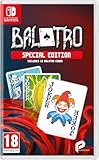
Balatro Special Edition - Compatible for NS - UK PAL | $39.99 | Buy on Amazon |
| 3 |
|
Hello Neighbor - Nintendo Switch | Buy on Amazon | |
| 4 |

|
Minecraft - Nintendo Switch | $29.82 | Buy on Amazon |
As an Amazon Associate I earn from qualifying purchases.
What a Joker actually contributes
Balatro’s official FAQ describes the game as using Poker Hands to score enough points to beat rounds. It also explains that every Joker has a unique mechanism. A Joker may add a multiplier to the final score, change the way a number card works, or give you extra cash to spend in the in-game shop. Those are different jobs, so comparing every Joker by its printed bonus alone leads to poor decisions.
The Tool Desk
Outbyte Driver Updater FREEFix the driver behind crashes, sound loss and screen glitchesFind Drivers →Outbyte PC Repair FREERepair Windows errors before they cause bigger problemsFix Now →“Every Joker has a unique mechanism, whether that is adding a multiplier to your final score, changing the way a number card works, or giving you extra cash to spend in the in-game shop.”
#1 Best Overall
Balatro: Special Edition - For Nintendo Switch
- 150 Jokers, each with their own unique abilities.
- 15 Decks with distinct modifiers to choose from for each run.
- 5 potential variants of each Joker which add further abilities.
- 22 Tarot cards variants that can enhance your regular playing cards.
- 11 Planet cards that help level up your possible poker hands.
In practice, read each Joker as a small rule with three parts:
- Trigger: the event that checks the effect, such as playing a card, scoring a particular hand, or using a Planet card.
- Target: the cards, suits, ranks, hand types, or run actions that receive the effect.
- Value: the Chips, Mult, money, card change, or other advantage produced when the trigger and target line up.
A fourth question determines whether the rule belongs in your run: reliability. If your deck produces the required event only occasionally, the Joker’s theoretical value is misleading. A conditional effect is useful when your deck is built to meet its condition, not simply because the displayed number looks high.
The four effect families
Scoring Jokers
Scoring Jokers directly improve the points generated by a hand. Some add Chips, some add Mult, and some apply their bonus only after a particular card, suit, rank, or Poker Hand condition is met. The distinction between Chips and Mult matters because they contribute at different stages of score calculation. More importantly, the trigger determines whether the bonus appears on most hands or only on carefully constructed ones.
Do these 3 things before closing this tab:
1Scan for outdated or missing drivers - takes under a minute2Repair Windows errors before they cause bigger problems3Fix the driver behind crashes, sound loss and screen glitchesWhen evaluating a scoring Joker, identify whether it checks the hand you play, the cards that actually score, or a card event that occurs during resolution. A played card can be present in the five-card selection without contributing to the scoring hand, depending on the hand being made and the game’s scoring rules. A Joker tied to scored cards therefore may activate less often than one tied to every played hand.
Scoring effects are usually strongest when they reinforce the hand pattern your deck already produces. If your deck reliably makes one hand type, a Joker rewarding that hand has a predictable trigger. If you are still changing between several hand types, a narrower bonus may consume a Joker position without providing dependable output.
Card-behavior Jokers
These Jokers change what cards do or how a card-based strategy functions. The official FAQ specifically calls out changing the way a number card works. Such an effect may not look like a normal score bonus because its value appears through altered card behavior, improved consistency, or a new route to a hand.
Judge this family by asking what the change enables. Does it make a needed rank easier to use? Does it help a suit, rank, or hand pattern appear more often? Does it remove a restriction that was blocking your deck? A card-behavior Joker can be more valuable than a visible Mult increase when it turns an unreliable build into one that activates its other effects.
Economy Jokers
Economy Jokers provide money for the in-game shop. Their benefit is indirect: they do not automatically increase the score of the hand being played. Instead, they give you more opportunities to buy Jokers, packs, vouchers, or other run pieces later.
Use an economy Joker when the extra cash can be converted into a meaningful improvement. Early in a run, money can help you assemble a build before the blinds become difficult. Later, an economy effect may be less valuable if your lineup is already complete and the immediate problem is surviving the next score check. The right question is not “Does this Joker score?” but “What can the money buy before I need it?”
Rank #2
- UK e-store account may be required for any online features
Copying and scaling Jokers
Copying Jokers borrow value from another Joker, so their strength depends on placement and lineup quality. Blueprint copies the ability of the Joker to its right. That means the same Blueprint can perform very differently after a shop purchase, a sale, or a rearrangement.
Scaling Jokers improve when you repeatedly perform a specified action. The database example Constellation gains Mult when a Planet card is used. It is therefore more attractive in a run that expects to use Planet cards repeatedly than in a run that rarely visits that upgrade path. The trigger supports that evaluation; it does not prove that Constellation will produce a particular score or win rate in every run.
What’s actually slowing this PC down?
Pick the symptom - the matching free tool is one click away.
Brainstorm is another placement-sensitive example: the database describes it as copying the leftmost Joker. Blueprint and Brainstorm reward different lineup arrangements, so blindly placing them beside one another can waste their abilities. Treat their positions as part of the build rather than as cosmetic order.
| Family | What to inspect | When it tends to fit | Main risk |
|---|---|---|---|
| Scoring | Which hand, card, suit, rank, or scoring event is checked? | Your deck produces the condition on most important hands. | The bonus sits idle when the trigger is missed. |
| Card behavior | What card rule changes, and which other effects benefit? | The change improves consistency or unlocks your intended hand. | The effect is hard to value until the rest of the deck is built. |
| Economy | How often does it pay, and what will the money purchase? | You still need several build pieces or shop access. | It occupies a slot without helping the next scoring check. |
| Copying | Which Joker is copied, and can the target move? | A neighboring ability is stronger than the copier’s standalone value. | Reordering the row can silently change the effect. |
| Scaling | Which repeated action increases the effect? | Your route naturally performs that action many times. | The run ends or changes direction before the bonus catches up. |
How to read a Joker description before buying it
- Circle the trigger words. Terms such as “played,” “scored,” a named hand, a suit or rank, and an action such as using a Planet card define when the check occurs.
- Separate played cards from scoring cards. A card can be selected for a hand without being one of the cards that contributes to that hand’s score. If the text refers to scored cards, do not assume every selected card qualifies.
- Identify the target. Determine whether the effect applies to the whole hand, one card, a suit, a rank, a hand type, or a later shop action.
- Find the timing. An effect that resolves during scoring behaves differently from one that changes a card before scoring or pays money after a condition.
- Estimate frequency from your actual deck. Look at the hands you are choosing, the cards you draw, and the actions you can afford. Count reliable activations rather than imagining an ideal hand.
- Check encounter restrictions. A Boss Blind can debuff cards, and a debuffed card may prevent an effect tied to that card from activating. Confirm the current implementation when an edge case matters.
- Compare the opportunity cost. A Joker uses one of your limited Joker positions. Keep it only if its expected contribution is better than the best alternative you can buy, keep, or seek.
How synergies work
A synergy exists when one effect helps produce the cards or actions that another effect rewards. The relationship can be direct, such as a card-behavior change making a target hand easier to form, or indirect, such as an economy effect funding the shop purchases needed to complete a scoring package.
Trigger reliability comes first
Start with the event, not the bonus. Suppose a Joker rewards a particular suit. If your deck contains that suit in useful numbers and your chosen hands regularly include it, the trigger is reliable. If the suit appears only in occasional draws, the Joker should be treated as a speculative piece rather than guaranteed scoring.
Reliability also changes during a run. A Joker that was dependable before a deck alteration may become awkward after cards are removed, added, or modified. Re-evaluate whenever your preferred hand changes. Keeping an old Joker solely because it was good several blinds ago is a common source of dead slots.
Windows Errors? Fix Them Before They Spread
Repair common Windows errors and clear accumulated junk for a smoother, more stable PC - no reinstall needed.Free scan · no reinstallOutdated Drivers Are Slowing You Down
One free scan finds every outdated or missing driver and matches the right update for your exact hardware.Free scan · exact hardware matchMatch the target to the build
The target must describe what your deck actually does. A rank-based effect wants the relevant ranks to appear in your hands; a suit-based effect wants consistent access to that suit; a hand-based effect wants you to choose that hand often enough to justify the position. A Joker that rewards an action you never take is not a synergy, even if another Joker in the row looks complementary.
Make roles cover the run’s current need
Runs usually need different kinds of help at different times. A scoring effect can solve an immediate blind, while an economy effect can finance future improvements. A card-behavior effect can stabilize a fragile plan. Do not evaluate all three roles with the same yardstick. Ask what is preventing the next required score and whether the Joker addresses that bottleneck.
Use copying and scaling deliberately
A copying Joker has no fixed value independent of its target. If Blueprint sits immediately left of a powerful ability, it may duplicate that ability; if the lineup changes, Blueprint’s value changes with it. Before each blind, inspect the right-hand target and decide whether moving Blueprint would copy a better effect. Brainstorm requires the opposite positional check because it copies the leftmost Joker.
Rank #3
- STEALTH horror
- Neighbors AI learns your tactics and evolves
- Interactive environment
- Extremely tense, but family-friendly gameplay
- Entertainment Software Rating Board (ESRB) Content Description: Mild violence
For a scaling Joker such as Constellation, project the actions you will actually take. If Planet cards are central to your route, repeated use can make its Mult more relevant over time. If your shop choices, money, or deck plan do not support Planet cards, the same Joker may remain underdeveloped. This is a forecast, not a guarantee: the documented trigger does not establish a universal outcome for every run.
Worked examples
Blueprint: place it beside the ability you need now
First, identify the strongest ability currently in your row. Place Blueprint so the Joker on its right is the one you want copied. Play a few hands while watching whether that copied trigger activates as expected. If you later buy a new Joker or move an existing one, reassess the row because Blueprint follows its immediate right-hand neighbor.
Blueprint is especially useful when your lineup has one standout effect and several weaker or more situational ones. It is less compelling when the row contains no reliable target or when moving it would break another placement-dependent arrangement. The correct placement is conditional and can change between blinds.
Brainstorm: protect the leftmost target
Because Brainstorm copies the leftmost Joker according to the database description, the first position becomes strategically important. Put the ability you most want duplicated at the left edge, then check whether the copied effect is actually helping the hands you play. A later purchase may be stronger than the current leftmost target, so update the order rather than assuming Brainstorm remains optimal automatically.
Constellation: value repeated Planet-card use
Constellation gains Mult when a Planet card is used. To evaluate it, inspect your likely shop and pack choices, your money, and whether Planet cards are part of the route you are already pursuing. Repeated use gives the Joker opportunities to scale; infrequent use leaves its growth limited. Keep the distinction clear: the documented trigger explains how it scales, while the eventual strength depends on your run decisions.
A card trigger under a Boss Blind
Imagine a Joker whose text depends on a particular played or scored card. If a Boss Blind debuffs that card, the effect may not trigger. Likewise, if the card is selected but does not belong to the scoring hand, a scoring-card condition may fail. The community wiki documents these kinds of trigger limitations, but exact wording and implementation can change. When a blind creates an unusual interaction, verify the current in-game behavior before basing the whole run on it.
Choosing Jokers through the stages of a run
Early run: buy reliability and flexibility
At the start, your deck is usually less specialized and your shop resources are limited. Favor effects that activate across the hands you can already make, or card-behavior changes that improve consistency. An economy Joker can also be correct if its payments will fund several upgrades before the next difficult blind. Avoid locking yourself into a narrow trigger unless you already have the cards or hand pattern needed to meet it.
Middle run: convert a theme into a system
Once a preferred hand, suit, rank, or action has emerged, replace generic effects with pieces that reward that direction. Look for complementary triggers: one Joker should help you create the target, while another rewards the target when it appears. Recheck every slot after a deck change. A once-useful generalist may now be weaker than a conditional effect you can activate repeatedly.
Late run: protect the next scoring check
Late decisions should be based on survival rather than theoretical ceiling. Keep the effects that contribute on the hands you will actually play against the next blind. A scaling Joker is worthwhile only if there is enough time and access to its trigger for the growth to matter. An economy effect is worthwhile only when the remaining shops can turn its money into a concrete improvement.
Quick wins for a faster PC:
Scan for outdated or missing drivers - takes under a minuteDriver Scan →Repair Windows errors before they cause bigger problemsFix Now →Rank #4
- Minecraft is a game about placing blocks and going on adventures
- Explore randomly generated worlds and build amazing things from the simplest of homes to the grandest of castles
- Play in creative mode with unlimited resources or mine deep into the world in survival mode, crafting weapons and armor to fend off the dangerous mobs
- Play on the go in handheld or tabletop modes
- Includes Super Mario Mash-Up, Natural Texture Pack, Biome Settlers Skin Pack, Battle & Beasts Skin Pack, Campfire Tales Skin Pack; Compatible with Nintendo Switch only
A practical comparison framework
When two Jokers compete for one position, score each one qualitatively on the following axes:
| Axis | Question to ask | Strong evidence in your run | Warning sign |
|---|---|---|---|
| Trigger reliability | How often will the condition occur before the next blind ends? | Your recent hands already meet it repeatedly. | You need an unusually lucky draw or a different hand. |
| Target fit | Does it reward the cards and patterns you are producing? | Your deck and chosen hands naturally contain the target. | The target belongs to a plan you abandoned. |
| Role | Do you need score, card consistency, or money right now? | The effect addresses the current bottleneck. | It solves a problem you no longer have. |
| Scaling or copying | Will repeated actions improve it, or is the copied target strong? | Your route guarantees many relevant actions or a clear target. | The effect depends on actions you cannot afford. |
| Slot opportunity cost | Is this better than the best alternative use of a limited Joker position? | It outperforms the weakest current slot on expected value. | You keep it because of its reputation rather than its activations. |
This framework deliberately avoids a universal tier list. The available mechanics references do not establish current win-rate statistics or a ranking that applies to every deck, difficulty, seed, or game version. Recommendations should therefore state their assumptions: a Joker is “best” for a particular trigger, target, role, and lineup, not for every run.
Common mistakes and how to recover
Chasing the largest printed bonus
A large value that rarely triggers can lose to a smaller effect that activates on nearly every scoring hand. Track actual activations over several hands. If the condition is consistently missed, sell or replace the Joker when a more reliable option appears.
Confusing selected cards with scored cards
Read the exact trigger and watch the scoring result. If the text refers to a scored card, a card that merely sits in the selected hand may not qualify. Build around the cards that the hand calculation actually recognizes.
Recommended Free Tools
Ignoring debuffs
A Boss Blind that debuffs a relevant card can disable a card-triggered effect. Before committing to a hand, inspect which cards are affected and choose a line that does not depend on the disabled trigger when possible.
Leaving copy Jokers in the wrong position
Blueprint checks the Joker immediately to its right, while Brainstorm copies the leftmost Joker. After every rearrangement, verify the target. A correct Joker in the wrong position behaves like the wrong Joker.
Keeping an economy effect after the shopping window closes
Money has value only if it can be spent on improvements. If the next shop cannot materially change your build and your score is the immediate issue, a direct scoring or consistency effect may deserve the slot instead.
Digital Jokers versus the official physical deck
An official Balatro playing-card deck is a related collectible, not a complete reference for the digital game’s Joker set or mechanics. The standard deck listing includes 52 standard playing cards and four Jokers: Joker, Juggler, Blueprint, and Gros Michel. The listing showed that deck out of stock when accessed, while a Ghost Deck listing described four different Jokers and preorder shipping expected in Fall 2026. Stock, preorder timing, and regional availability can change, so check the retailer’s current page if you are shopping for the physical product.
The most descriptive shopping phrase is “Balatro playing cards.” Treat that as a collectible search, not a way to learn how every digital Joker works. Physical-card contents do not establish digital effects, balance, or a current in-game tier list.
Version and edge-case checks
High-level descriptions come from the official FAQ, while detailed examples such as Blueprint, Brainstorm, and Constellation are documented by a community wiki and a third-party database. Game updates can change wording, timing, or interactions. Before relying on a niche trigger for a serious run, compare the current in-game tooltip and observe one activation in the present version.
- Read the full tooltip, including whether the condition says played, scored, held, or used.
- Check the Boss Blind text for debuffs or restrictions before selecting a hand.
- Confirm that a copied Joker is still in the position Blueprint or Brainstorm checks.
- Watch the score and money changes after an activation instead of assuming a visual effect fired.
- If a behavior differs from an older guide, trust the current game text and version-specific documentation.
A repeatable decision checklist
- What event activates this Joker?
- Which cards, suits, ranks, hands, or shop actions does it affect?
- How often has my current deck met that condition?
- Does the effect solve my immediate scoring, consistency, or economy problem?
- Will another Joker help create the condition or multiply its payoff?
- If it copies or scales, is the target and placement correct?
- Can a Boss Blind debuff or exclude the relevant card?
- Is this expected value higher than the alternative use of the slot?
If you can answer those questions with your actual deck rather than an imagined ideal draw, you have a defensible reason to buy, keep, move, or sell the Joker. That approach produces better decisions than memorizing a fixed ranking because it adapts to triggers, targets, timing, and the changing needs of the run.
Quick Recap
Product prices and availability are accurate as of the date/time indicated and are subject to change. Any price and availability information displayed on Amazon at the time of purchase will apply.
Free tools Windows power users keep installed
One-click scans. No signup required.

