ARRI Film Lab 1.5 adds 8 mm, 16 mm and 65 mm starting formats alongside 35 mm, more precise controls for grain and halation, and ACES 2.0 ACEScc and ACEScct input and output options. ARRI also claims processing up to four times faster, but does not publish benchmark conditions; actual playback will depend on the system and host application.
What Film Lab 1.5 is
ARRI Film Lab is a license-based OpenFX plugin for postproduction. It applies adjustable analog-film characteristics—including grain, color, halation and gate weave—to digital images. ARRI describes it as compatible with RGB images from any camera brought into an ARRI workflow; that does not establish compatibility with every operating system or OpenFX host. ARRI Film Lab product information
As an Amazon Associate I earn from qualifying purchases.
ARRI announced version 1.5 on October 12, 2026. Its central change is greater control over the film-like treatment: users can choose among four starting formats and adjust grain scale, perceived detail, halation and anamorphic grain and glow behavior. Existing Negative Stocks, Print Processes and Gate Weave controls remain. ARRI’s Film Lab 1.5 announcement
What changed in the image controls
| Control | What it changes | Options or range stated by ARRI |
|---|---|---|
| Starting format | Selects the film format used as the starting point for the look. | 8 mm, 16 mm, 35 mm and 65 mm |
| Grain Size | Changes the scale of the grain. | 0.75 to 1.5 |
| Rendition of Detail | Changes perceived sharpness. | 0.75 to 1.5 |
| Anamorphic Ratio | Adjusts horizontal stretching of grain and halation glow to suit footage from different anamorphic lenses. | Eight squeeze ratios from 1.25x to 2.0x |
| Halation Spread | Controls the radius and character of glow around highlights and high-contrast edges. | Adjustable; a numeric range is not stated in ARRI’s announcement. |
| Grain Intensity | Sets the strength of the grain effect. | 0.0 to 2.0 |
| Halation Intensity | Sets the strength of the halation effect. | 0.0 to 2.0 |
ARRI says the maximum values for Grain Intensity and Halation Intensity are double their former limits. The broader ranges let a colorist push either effect further, while Grain Size and Rendition of Detail provide separate controls for grain scale and perceived sharpness rather than treating them as one adjustment. These controls change the rendered image; choosing a format is a look-making option, not evidence that the source footage was captured on that film gauge.
#1 Best Overall

- Half-Frame Format: 35mm compact film camera capturing two 17mm x 24mm images within a single 35mm film exposure (2x more pictures per roll)
- Retro-Inspired Design: Top and bottom covers made of solid, lightweight magnesium alloy for durability and classic aesthetics
- Zone-Focus System: From close ranges to long distances, the zone-focus system is divided into six zones. Set the camera's focus by simply selecting the mark best suited for the distance to your subject
- Manual Film-Winding Mechanism: Features a film advance lever to recreate the feel of a traditional film camera. The lever is designed for optimal finger hold to improve the feel of the film-winding action after each shutter release
- High-Quality Lens: Features a 25mm F3.5 lens (equivalent to a 37mm lens in the 35mm format). This lens is treated with HD (High Definition) coating to optimize the image quality of half-size pictures
How anamorphic and halation controls affect a look
The Anamorphic Ratio control addresses how grain and halation glow stretch horizontally. Its eight choices, spanning 1.25x to 2.0x, let users tune that behavior to footage associated with different anamorphic lenses. Halation Spread addresses a different part of the effect: how far and in what character the glow extends around highlights and high-contrast edges. Intensity controls strength; spread controls the glow’s radius and character.
ARRI’s announcement does not provide numeric bounds for Halation Spread or prescribe settings for particular lenses, stocks or scenes. Treat the available controls as creative parameters to judge in context, rather than as a calibrated lens-matching guarantee.
Rank #2

- Tungsten-balanced colour neg. movie film, Exposure index of 500 in tungsten light, Expanded highlight latitude, Dye layering technology, Fine grain and sharpness, Wide dynamic range, Well-suited to digital post-production, Process in ECN-2 chemistry, Single perforated, Daylight loading spool
ACES 2.0 and color-managed workflows
Version 1.5 adds ACES 2.0 ACEScc and ACEScct options for both input and output. ARRI names DaVinci Resolve and Baselight as example application contexts. The release describes a specific automatic color-management integration for Baselight: Film Lab can follow the timeline color space and receive the correct input transform automatically, removing the need to select a color space manually in the plugin.
That automatic behavior is the Baselight integration ARRI describes; the announcement does not establish identical automation in every host. In other workflows, confirm that the plugin’s input and output choices match the project’s color-management setup before judging the look. A mismatch can affect how the plugin interprets and returns color.
Rank #3

- Tungsten-balanced colour neg. movie film, Exposure index of 200 in tungsten light, Expanded highlight latitude, Fine grain and sharpness, Wide dynamic range, Single perforated, Well-suited to digital post-production Process in ECN-2 chemistry Daylight loading spool
What ARRI says about performance
ARRI claims Film Lab 1.5 processes up to four times faster and that smooth real-time 4K playback should be possible on many more devices, including Apple Silicon MacBook Pro systems. The release gives no test conditions or benchmark methodology, and no independent benchmark is established here. “Up to” is a stated maximum, not a guarantee: playback depends on the computer, footage, host application and project configuration. Do not assume every MacBook Pro or every OpenFX setup will sustain real-time 4K.
Independent reader supportYour contribution helps us test, update, and keep practical guides available for everyone.Availability, upgrade terms and what to check
ARRI says new customers can purchase Film Lab 1.5 through RE:Vision Effects and that existing license holders can upgrade for free. The announcement does not state a price. Check the vendor’s current listing for pricing, supported hosts and system requirements before purchasing or installing; those details are not established by the announcement. ARRI’s availability announcement
Rank #4

- Reloadable design for repeated use and film experimentation
- Compatible with Minolta-16 sub-miniature cameras
- Durable construction for long-term reliability
- 2-Pack included for extended shooting or backup cartridges
- Ideal replacement for rare or expensive original film cartridges
For context, ARRI introduced Film Lab as a plugin for applying analog-film character to digital images in 2025. ARRI’s original Film Lab announcement
Recommended Free Tools
Quick Recap
Best Value
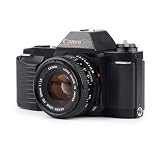
- Classic Design: Enjoy the timeless appeal of this Canon T50 35mm SLR film camera, featuring a sleek black finish and a robust, plastic body
- Versatile Zoom Lens: Capture a wide range of shots with the included Canon FD mount zoom lens, offering a focal length range of 35mm to 50mm
- Automatic Exposure: Benefit from automatic exposure control, ensuring perfectly exposed photos every time
- Nine Autofocus Points: Achieve sharp focus with the camera's nine autofocus points, supporting continuous-servo AF
- Hot Shoe Flash Mount: Enhance your photography with the hot shoe flash mount, compatible with external flash units for well-lit shots
Product prices and availability are accurate as of the date/time indicated and are subject to change. Any price and availability information displayed on Amazon at the time of purchase will apply.

