No—not as a category. A tube microphone uses a vacuum tube in its active electronics; a FET microphone uses transistor electronics. That difference alone does not determine sound quality. The capsule, circuit, polar pattern, frequency response, source, placement, room and recording chain all matter. Choose by how a particular microphone performs in your intended setup, not by the tube or FET label.
Tube vs. FET microphones: what’s the difference?
“Tube” and “FET” describe part of a microphone’s active electronics. They are useful design terms, but they are not sound-quality rankings. Microphones within either category can differ in capsule, circuit topology, output stage, polar patterns and frequency response, so the label cannot tell you exactly how a model will sound on a particular source.
As an Amazon Associate I earn from qualifying purchases.
Manufacturer specifications illustrate why comparisons need to be model-specific. Neumann describes its M 147 as a tube microphone with a K 47 capsule and a transformerless solid-state output stage. Neumann lists 12 dB-A self-noise and says its output design supports cable runs up to 300 m without transmission losses. Those are the maker’s specifications and claims, not independent lab verification.
Recommended Free Tools
By contrast, Telefunken describes the TF17 as a phantom-powered FET microphone. The manufacturer emphasizes easier transport and setup compared with a tube microphone system that requires an external supply and proprietary cable. That comparison describes the maker’s products; requirements vary by model.
#1 Best Overall
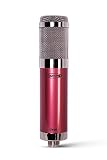
- Large-diaphragm Tube Condenser Microphone with Nine Polar Patterns
- Aluminum Storage Box
- Power Supply
Do tube microphones sound warmer?
“Warmth” is a subjective description, not a dependable result of the tube label alone. A microphone’s frequency response, capsule, circuit and output stage all contribute to its sound. So do the source, microphone position, room and preamp. Without a specified model and recording setup, it is not accurate to promise that a tube microphone will sound warmer, more detailed or better.
Tube microphones themselves are not one uniform design. Neumann’s U 67, for example, uses an EF86 tube, has a listed frequency range of 20 Hz–20 kHz, and offers omni, cardioid and figure-eight patterns. Neumann’s M 147 pairs a tube with a transformerless solid-state output stage. Neither example establishes how all tube microphones sound or how either will compare with a FET model on your source.
Rank #2

- Large-diaphragm Tube Condenser Microphone with Cardioid Polar Pattern
- Included External Power Supply
- Transformer-balanced Output
- Highpass Lowpass Filters
Why tube microphones have a legendary reputation
Tube microphones have a significant place in recording history, but that history is not proof that the technology is inherently superior. Neumann says the U 47 was introduced in 1949 with an M7 capsule. After the VF 14 tube was no longer available, a transistorized successor, the U 47 fet, appeared. This history shows that both tube and transistor designs have been used in notable microphones.
Quick wins for a faster PC:
Scan for outdated or missing drivers - takes under a minuteDriver Scan →Repair Windows errors before they cause bigger problemsFix Now →Fix the driver behind crashes, sound loss and screen glitchesFind Drivers →Neumann calls the U 47 “a technical revolution” and says it “is still considered the indisputable reference for perfect sound.” Those are the manufacturer’s promotional statements, not a neutral measure of current consensus or a controlled comparison.
Rank #3
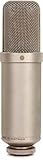
- Premium large-diaphragm valve condenser microphone
- 1-inch gold-sputtered capsule
- Hand-selected twin-triode 6922 valve
- Ultra-low noise
- Wide dynamic range
What to compare before choosing a microphone
- Your source and goal: Consider what you are recording and what kind of result you want. A microphone that suits one voice, instrument or room may not suit another.
- Tonal response and off-axis sound: Look beyond a frequency-response headline. If sound entering from the sides matters in your room or placement, consider how the microphone handles it.
- Polar patterns: Check which patterns are available and whether they fit the recording. The U 67, for instance, offers omni, cardioid and figure-eight.
- Self-noise and maximum SPL: These specifications can matter for quiet sources and loud sound levels. Compare values only when the manufacturers’ measurement methods and conditions are sufficiently comparable.
- Power, cables and setup: Confirm what the exact model requires and what is included. Telefunken lists a tube microphone cable and power supply among the TF47’s included accessories; do not assume accessories or requirements are universal.
- Portability and total system cost: Account for any required power supply, cables and setup, rather than judging a microphone as an isolated unit. The available specifications here do not establish comparable prices.
For example, Neumann lists 12 dB-A self-noise for the M 147, while Telefunken lists 10 dBA amplifier self-noise for the TF47. These are manufacturer figures for different models. Without established comparable measurement conditions and methods, the numbers do not show that one microphone is quieter than the other.
Independent reader supportYour contribution helps us test, update, and keep practical guides available for everyone.How to make a fair audition
- Use the intended source and room. A demo from another singer, instrument or recording space may not predict how the microphone will work for you.
- Keep placement consistent. Use the same position and distance when comparing options so that changes in sound are not simply changes in microphone placement.
- Match playback levels. Similar loudness makes tonal differences easier to judge; a louder sample can seem preferable even when loudness is the only difference.
- Use the intended recording chain. Include any microphone-specific power supply, cable and preamp settings needed for normal operation.
- Listen for the result you need. Compare tone, room pickup, noise and practical setup, then choose the microphone that works best for the recording.
This is a suggested comparison method, not a report of a controlled listening test. No named independent study or controlled head-to-head result in the cited sources establishes that tube microphones are generally superior to FET microphones.
Quick Recap
Best Value

- Vintage Tube Sound
- Large Gold diaphragm condenser capsule
- Complete microphone system with Mogami XLR and Tube Cables included
- 24 carat gold plated grill
Rank #4

- Large-diaphragm Tube Condenser Microphone with 3 Polar Patterns
- Wood Presentation Box
- External PSU
- Shockmount
Product prices and availability are accurate as of the date/time indicated and are subject to change. Any price and availability information displayed on Amazon at the time of purchase will apply.

