Quick wins for a faster PC:
Clear out junk files and repair common Windows errorsFree Scan →Fix the driver behind crashes, sound loss and screen glitchesFind Drivers →Repair Windows errors before they cause bigger problemsFix Now →Smart locks can be safe, but safety is a system property rather than an encryption checkbox. A sound choice protects credentials and accounts, keeps a dependable way to enter during outages or battery depletion, limits cloud and bridge dependencies, receives updates, and is installed on a mechanically sound door. The exact model determines whether a keypad, scheduled code, app, physical key, or remote notification still works when something fails.
Safety is a system question, not a single feature
A smart lock combines a conventional locking mechanism with electronics, software, wireless links, and usually an account. Each layer can affect whether an intruder gets access or an authorized person gets locked out. Encryption helps protect messages and stored data, but it cannot correct a weak account-recovery process, an exposed reset procedure, a poorly aligned deadbolt, or a bridge that is offline.
As an Amazon Associate I earn from qualifying purchases.
- Mechanical security: The deadbolt, cylinder, strike plate, door frame, and installation must resist forced entry and operate reliably. A sophisticated digital design cannot compensate for a loose or badly fitted door.
- Credential security: Entry codes, phone credentials, digital keys, and administrator accounts need protected storage, controlled sharing, revocation, and recovery.
- Communications: Bluetooth, Wi-Fi, Thread, a proprietary hub, or a bridge may each have different local and remote behaviors.
- Power: Batteries eventually run down. You need a documented recovery method that does not depend on the same depleted batteries or unavailable network as the normal unlock path.
- Operations and updates: Firmware, mobile apps, cloud services, and support policies change. A lock that was compatible or supported at purchase may not have identical capabilities later.
- Human procedures: Shared codes, lost phones, former household members, and forgotten administrator accounts are practical security issues, not merely technical ones.
No universal safety ranking or comparative compromise rate has been established for smart locks. Evaluate the complete failure and recovery plan for the model sold in your region.
The Tool Desk
Outbyte PC Repair FREEClear out junk files and repair common Windows errorsFree Scan →Outbyte Driver Updater FREEFix the driver behind crashes, sound loss and screen glitchesFind Drivers →What encryption tells you—and what it does not
Manufacturers often highlight encryption because it can prevent an eavesdropper from reading or altering traffic. That is useful, but the word alone does not answer who holds the keys, how credentials are synchronized, or what happens after an account is taken over.
#1 Best Overall
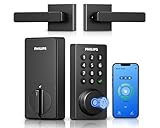
- Connect to 2.4GHz WiFi, No Hub Needed:Connect your Philips 4200 Series Wifi Door Lock Deadbolt directly to your home WiFi network—no extra hub or bridge required. Manage your door anytime, anywhere through your smartphone. 𝙉𝙊𝙏𝙀: Please keep the smart lock within 33 ft (10 m) of your Wi-Fi router. Minimize obstacles such as walls, metal objects, and interference sources for a stronger connection.
- App Control with Real-Time Access:Control smart lock remotely via the Philips Home Access App: lock/unlock, manage user codes/fingerprints, check your door lock status, and monitor access history in real time, etc, whether you’re at work or on vacation.
- Voice Assistant Compatible:Hands full? No problem. Use voice commands with Alexa or Google Assistant to lock or check the status of your front door lock set effortlessly.
- Versatile Passcode Options: This Keypad deadbolt supports permanent, one-time, periodic, and recurring PIN codes—perfect for family, guests, housekeepers, or Airbnb use. Easily manage and share access through the app for ultimate convenience and control.
- 0.3S Fingerprint Fast Access:With this fingerprint keyless entry door lock, unlock your door in 0.3 seconds with fast, secure biometric access. Store multiple fingerprints for family and trusted visitors.
NIST’s SP 800-63B guidance for syncable authenticators says synced authentication keys are exportable and should be encrypted in the synchronization fabric, restricted so only the authenticated user can access them, and protected with authentication equivalent to AAL2 multi-factor authentication. This is general identity guidance, not a certification that any named lock implements those controls.
NIST SP 800-57 Part 1 addresses protection and management of cryptographic keying material. It is useful background when asking how a vendor stores, rotates, revokes, and recovers keys, but it is not a smart-lock test or approval.
Questions behind an encryption claim
- Are credentials encrypted both while stored and while transmitted?
- Where are encryption keys generated and kept: in the lock, the phone, a bridge, a cloud service, or several places?
- Does the owner account support multi-factor authentication, and is it required for sensitive changes?
- Can a lost phone, old guest code, or former household member be revoked without replacing the lock?
- How does account recovery work if the original phone, email address, or authenticator is unavailable?
- How are firmware updates authenticated, delivered, and rolled back if an update fails?
A strong answer to these questions is more meaningful than a product page that merely says “encrypted.”
Credentials, synchronization, and backup are different things
A lock may keep a local copy of codes while also synchronizing account data to an app or cloud service. Synchronization makes administration convenient across devices, but it creates another account and another recovery path to protect. Use a unique, long password for the lock account, enable every available multi-factor option, and remove access for people who no longer need it.
Do not confuse a cryptographic backup with a physical key. NIST defines key or metadata backup as copying it to separate media from operational storage so it can be recovered if the original is lost or changed. That definition concerns digital key material. A metal key, interior thumb turn, or emergency-entry procedure is a separate way to operate the lock when electronics or accounts are unavailable.
Rank #2

- 𝐅𝐥𝐞𝐱𝐢𝐛𝐥𝐞 𝐖𝐚𝐲𝐬 𝐭𝐨 𝐔𝐧𝐥𝐨𝐜𝐤: Unlock the way you want: app, passcode, fingerprint, physical key, or voice via Alexa/Google Assistant. Everyone in the family can choose what works best — convenience meets flexibility. Batteries are not included.
- 𝐔𝐧𝐥𝐨𝐜𝐤 𝐅𝐫𝐨𝐦 𝐀𝐧𝐲𝐰𝐡𝐞𝐫𝐞: Built-in Wi-Fi lets you lock and unlock your door remotely anytime, anywhere from your smartphone — no extra hub needed. Stay connected and in control, even when you’re at work or on vacation. Only support 2.4Ghz network. Keep the router and lock with 65ft for better remote control.
- 𝗩𝗼𝗶𝗰𝗲 𝗖𝗼𝗻𝘁𝗿𝗼𝗹 𝗥𝗲𝗮𝗱𝘆: Pair with Alexa or Google Assistant to unlock or lock with your voice. Great for when your hands are full or you're relaxing at home and still welcome who’s at the door. Note: Please log in to your own Google or Alexa account first before use Voice Control and make sure your network connection is stable.
- 𝗬𝗼𝘂𝗿 𝗙𝗶𝗻𝗴𝗲𝗿𝘀 𝗶𝘀 𝗬𝗼𝘂𝗿 𝗞𝗲𝘆: Just one touch unlocks the door instantly. No need to search for keys — Your fingers is your keys, perfect for busy mornings. Philips wifi lock store multiple prints for easy family access.
- 𝐂𝐨𝐝𝐞 𝐀𝐜𝐜𝐞𝐬𝐬 𝐌𝐚𝐝𝐞 𝐒𝐢𝐦𝐩𝐥𝐞: Create up to 100 custom passcodes for family, friends, or renters. Easily share unlimited one-time or scheduled codes to guests, cleaners, or deliveries— no need to be home to open the door.
Before buying, document the account owner, additional administrators, code limits, revocation process, and factory-reset consequences. A reset that erases credentials may restore control but can also leave you unable to enter until the lock is re-enrolled. Keep recovery instructions somewhere accessible outside the locked home.
Will you still get in when Wi-Fi or the internet fails?
“Works offline” can mean several different things. Local keypad entry may continue while remote app control, scheduled-code synchronization, alerts, and firmware updates stop. A bridge may be required for internet access even when the lock itself does not contain a Wi-Fi radio.
What the documented examples show
| Configuration | Local entry during an outage | Remote features and dependencies | Backup-entry detail |
|---|---|---|---|
| Google Nest × Yale Lock | Google says most passcodes and the inside thumb turn continue to work when the lock is offline. The keypad does not rely on home Wi-Fi for locking and unlocking. | It communicates through Nest Connect, which connects to Wi-Fi. When offline, the Nest app cannot operate the lock, and the lock cannot send alerts or information to the phone. Scheduled-access passcodes may not work. | Google describes this model as keyless, using a keypad, app, and interior thumb turn. |
| Yale devices using Yale Access | Yale says a compatible phone can connect over Bluetooth when nearby. Exact local behavior depends on the lock model and configuration. | Adding Wi-Fi enables remote control and notifications for compatible configurations. A local Bluetooth connection is not the same as internet-based access. | Not stated as a universal feature; check the exact model. |
| Yale Smart Lock with Matter | The product listing advertises entry codes and a physical key backup; it does not establish every offline behavior for every setup. | A Matter hub and Thread border router are required for Google Home Matter compatibility and remote access, according to the listing. | The listing advertises a physical key backup. |
These examples demonstrate why a brand-level assumption is unsafe. Test the exact lock with its bridge disconnected, the home internet unplugged, and the phone away from the house. Verify which code types still work and whether the event is recorded locally for later synchronization.
Physical key backups are not universal
A physical key provides an independent entry method, but it also introduces a conventional cylinder that must be protected and maintained. Other locks deliberately remove the exterior keyway and rely on a keypad, app, or interior control. Neither design is automatically safer; the right choice depends on who needs access and which failures you are prepared to handle.
Google’s current Yale Smart Lock with Matter listing advertises a physical key backup. Google describes Nest × Yale as keyless, with keypad and app entry plus an interior thumb turn. Do not infer the behavior of one model from another model sold by the same manufacturer.
Rank #3

- 6 Ways to Unlock: Unlock with a touch for less than 1s with fingerprint lock. You can also open your front door lock via the eufy Security app, using the keypad or physical key, from Apple Watch, or use your voice with Alexa/Google Voice Assistant.
- 8 Months Battery Life: With 8 AA batteries, Smart Lock C220 runs around 8 months. Experience ultimate convenience and peace of mind with our long-lasting power solution. *May vary depending on the frequency of the lock being used.
- Self-learning AI: Fingerprint door lock recognition gets more precise with every touch, so you don't have to try agian and again to get in. Never be awkward or upset at unlocking the door.
- Control from Anywhere with Built-in Wi-Fi: No bridge required, you can control your wifi smart lock from anywhere via the eufy Security app. Easy setup.
- Integrated eufy ecosystem: If you have a eufy doorbell, you can add your wifi door lock to your routines and control devices together for keyless entry within the eufy Security app.
Decide which independence you need
- Independent of accounts: A physical key does not require a cloud login or phone.
- Independent of exterior power: A key or interior mechanical control can work when batteries are exhausted, subject to the lock’s design.
- Independent of the house: A key stored inside the locked home is not an exterior backup. Keep any emergency method where an authorized person can reach it without creating an obvious security weakness.
- Independent of one person: Households, carers, and emergency responders may need a controlled method that does not depend on the owner’s phone.
What happens when the batteries die?
Battery behavior is model-specific. Google says Nest × Yale uses four standard AA alkaline batteries. Its keypad locking and unlocking does not rely on home Wi-Fi, but that does not mean the keypad can operate after the batteries are fully depleted. The product’s documented emergency-entry procedure and battery warnings should be part of your household plan.
Free tools Windows power users keep installed
One-click scans. No signup required.
For any model, confirm these details before installation:
- Battery type, quantity, and whether the manufacturer specifies alkaline, lithium, or another chemistry.
- How low-battery warnings appear, how much notice they provide, and whether warnings remain available without internet access.
- Whether an exterior emergency-power method, a physical key, an interior control, or a locksmith procedure is provided.
- Whether changing batteries preserves codes, schedules, and integrations.
- How the lock behaves if batteries are removed, inserted backward, or replaced after a long outage.
Replace batteries on the schedule in the manual rather than waiting for the final warning. Record the model’s emergency procedure in a password manager and on paper stored somewhere you can reach during a phone or network outage. Never assume a USB power bank, a 9-volt contact, or another technique is safe unless the manufacturer documents it for that lock.
Bridges, hubs, and remote access add dependencies
A lock can be secure for local entry yet unavailable for remote control. Nest × Yale reaches the internet through Nest Connect rather than directly over Wi-Fi. If the bridge loses power or its network connection fails, the lock’s local keypad and other local methods may remain usable while app control and notifications stop.
Yale describes nearby Bluetooth access through the Yale Access app, with Wi-Fi enabling remote control and notifications for compatible devices. Matter installations have their own requirements: the Yale Smart Lock with Matter listing says a Matter hub and Thread border router are required for Google Home compatibility and remote access.
Rank #4
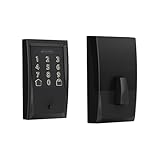
- ANYWHERE ACCESS: With built-in WiFi compatibility, you can easily and securely connect your Schlage Encode Deadbolt to your home WiFi network to control and monitor your home from anywhere with the Schlage Home app
- PEACE OF MIND: Lock and unlock from anywhere, manage up to 100 access codes for keyless entry, view lock history, receive customizable notifications and easily manage multiple locks at once - all when paired to the Schlage Home app and connected to a secure WiFi network
- VOICE CONTROL: Works with Alexa and Google Home for optional, hands-free convenience when paired with the Schlage Home app and a voice enabled device
- ADVANCED SECURITY: Secure, encrypted connection; built-in, customizable alarm for door movement and forced entry attempts; fingerprint-resistant touchscreen; certified highest residential Security, Durability and Finish rating by BHMA industry experts
- EASY INSTALL: Install in minutes with just a screwdriver, no hardwiring required; Snap ‘n Stay design helps keep the lock on the door so both hands are free; fits standard doors with 1-3/8 in to 1-3/4 in door thickness and 2-3/8 in or 2-3/4 in backset
Map every dependency: lock battery, phone battery, Bluetooth range, bridge or hub power, router, internet service, cloud account, and notification service. Decide which of those may fail without preventing an authorized person from unlocking the door. A remote alert is helpful, but it is not proof that the lock changed state if the network was unavailable.
Installation is part of the security decision
Electronic protections cannot compensate for a door that does not close firmly or a deadbolt that binds. Before fitting a smart lock, make sure the existing deadbolt extends fully into a solid, correctly aligned strike and that the door can be locked with the key or thumb turn without force. Follow the manufacturer’s templates and torque limits; overtightening can distort the mechanism.
Inspect exterior escutcheons, exposed screws, trim gaps, and the interior mounting plate. Keep the interior assembly inaccessible through nearby glass or a mail slot. If the door or frame is damaged, have a qualified locksmith or installer correct it before adding electronics. After installation, test locking and unlocking from both sides with the door open, then repeat with the door closed.
Independent reader supportYour contribution helps us test, update, and keep practical guides available for everyone.A practical buyer checklist
| Question | Why it matters |
|---|---|
| Can I enter locally if the internet and bridge are down? | Separates keypad, Bluetooth, or mechanical operation from cloud-dependent control. |
| Do scheduled and guest codes work offline? | Some locally stored codes work while scheduled access may require synchronization. |
| Is there an exterior physical key, interior thumb turn, or another independent method? | Determines your options after battery, phone, account, or network failure. |
| What happens when batteries are depleted? | Reveals the actual lockout-recovery plan and the supplies you must keep available. |
| What hub, bridge, Wi-Fi, Thread, or Matter equipment is required? | Identifies extra failure points, costs, and compatibility limits. |
| How are owners, guests, and lost devices revoked? | Controls access after people, phones, or codes change hands. |
| How are firmware and account-security updates delivered? | A lock needs a supported update path after vulnerabilities are found. |
| What support exists in my country and for this exact hardware revision? | Availability, instructions, and replacement parts vary by region and model. |
Set up a safer smart-lock routine
- Choose the failure plan first. Write down how an authorized person will enter after an internet outage, dead batteries, a lost phone, and a disabled account.
- Verify the model and region. Read the current manual and compatibility list for the exact lock, bridge, firmware, and country rather than relying on a family name.
- Secure the owner account. Use a unique password, enable multi-factor authentication when offered, and limit administrator privileges.
- Create individual access. Give each resident or service provider a separate code or account so access can be revoked and activity attributed.
- Install and test mechanically. Confirm alignment, full bolt travel, interior operation, and correct operation with the door both open and closed.
- Run outage tests. Disconnect the bridge and internet, then test local codes, Bluetooth, the interior control, alerts, and scheduled access separately.
- Test the battery plan. Learn the warning signal, keep the specified replacement batteries, and practice the documented emergency-entry method before you need it.
- Review quarterly. Remove old users, check firmware and app support, inspect the door hardware, and replace batteries according to the manufacturer’s guidance.
Common failure modes and fixes
The app says the lock is unavailable
Check whether the lock is locally reachable by keypad or Bluetooth before assuming it is physically jammed. Then inspect bridge power, Wi-Fi, internet service, and account status in that order. Local entry and remote control are separate functions.
A scheduled code fails during an outage
Some systems cannot validate or synchronize scheduled access while offline. Use a locally supported code or the independent entry method documented for the model, and redesign time-limited access if outages are common.
Best Value

- Passcode Entry: This keypad lock offers 20 access codes for family use and a temporary code for single-use guest entry
- One-Time Code: A one-time PIN code can be set for door opening and will automatically be deleted after use
- Smart Locking: Features an automatic door lock that can be set to lock in 10-99 seconds (off by default) and one-touch auto-lock by pressing and holding any key on the keypad for 2 seconds
- Long Battery Life & Low Battery Indicator: Powered by 4 AA batteries (not included), lasts up to 365 days. A red light indicator alerts you when battery level drops below 15%
- Security Deadbolt: Provides reliable home protection with its sturdy aluminum alloy construction, weather resistance (IP54), durability, anti-peeping user code protection, low battery indicator, and solid lock cylinder
Notifications stop arriving
An alert depends on the lock, bridge, network, cloud service, and phone notification settings. Treat a missing alert as a communications failure, not evidence that the lock is unlocked or locked.
The deadbolt stalls or drains batteries quickly
Binding often indicates door or strike misalignment. Test the lock with the door open; if it works there but not when closed, correct the mechanical alignment before replacing batteries or blaming the software.
An owner loses the phone or account access
Use the documented account-recovery and device-revocation process. If recovery would erase credentials, make sure an authorized independent entry method is available before starting a reset.
Outdated Drivers Are Slowing You Down
One free scan finds every outdated or missing driver and matches the right update for your exact hardware.Free scan · exact hardware matchPC Slower Than It Used to Be?
A free scan shows the junk files, broken settings and background clutter dragging Windows down - then fixes them in one click.Free scan · Windows 10 & 11What a sensible verdict looks like
A smart lock is a reasonable security choice when its mechanical installation is sound, its account and credentials are protected, its update path is supported, and its offline and battery-failure behavior match your household’s needs. Encryption strengthens that design but does not replace independent entry planning or careful account management. Compare models by outage entry, physical-key availability, scheduled-code behavior, remote dependencies, battery recovery, compatibility, and current support—not by a single security slogan.
Quick Recap
Product prices and availability are accurate as of the date/time indicated and are subject to change. Any price and availability information displayed on Amazon at the time of purchase will apply.

