Freedom251 › Ecommerce platforms

WooCommerce
by WooCommerce
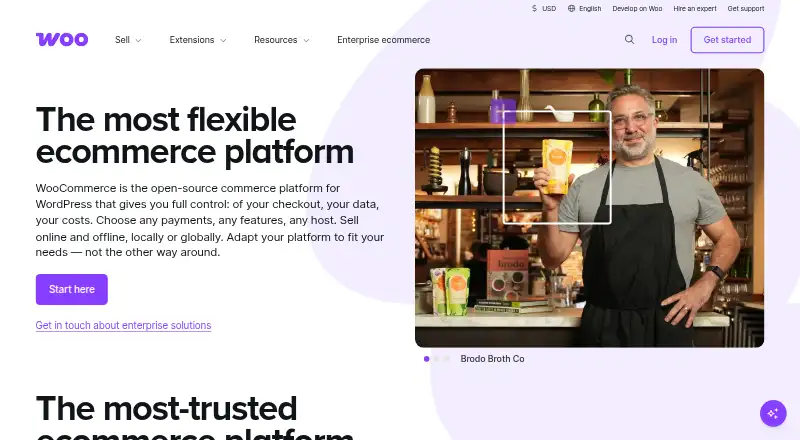
What WooCommerce is
WooCommerce is self-hosted software for running an online store, with omnichannel sales channels and tools for selling both physical and digital products. Its free core plan lists unlimited products, unlimited orders and unlimited APIs. Store owners can use abandoned-cart recovery and access an app marketplace. WooCommerce is made by WooCommerce, founded in 2005 and headquartered in San Francisco, California, USA. The hosting model is self-hosted, so it is for users who manage their own hosting rather than use a hosted platform. The listed transaction fee is payment-only. WooCommerce Core is priced at $0, billed free with no monthly subscription. The listed features make it relevant to businesses that need an online storefront, want to sell across channels and need room for product and order volume without a core-plan cap.
Who it suits
It suits businesses that want to run a self-hosted store and sell physical or digital products across channels. Its unlimited products, orders and APIs may suit stores that need those capacities on the free core plan.
What it does well
- Free core plan with unlimited products and orders
- Unlimited APIs on WooCommerce Core
- Abandoned-cart recovery is available
- Supports digital products and omnichannel sales
- Includes an app marketplace
What to know first
- Self-hosted hosting model requires managing hosting
- Listed transaction fee is payment-only
Plans
| Plan | Billed and limits | Price |
|---|---|---|
| WooCommerce core | free download · no monthly subscription · unlimited products, orders and APIs | Free |
| WooCommerce mobile app | iPhone, iPad and Apple Watch · Android phones and tablets | Free |
| Typical hosting | $25–$350/month · hosting cost for most stores · scales with traffic and performance needs | $25 a month |
| Extensions | $29–$299/year per extension · à-la-carte extensions · annual pricing per extension | $29 a year |
As woocommerce.com lists them, read 15 Oct 2026. The maker's own page has the final word.
Getting started
- Visit https://woocommerce.com/.
- Use the free WooCommerce core plan.
- Arrange hosting for a self-hosted store.
- Set up the store using WooCommerce core.
Overview
WooCommerce is an ecommerce platform for merchants who want to build a store on self-managed hosting. It is best suited to sellers who value an uncapped core and are willing to take responsibility for that setup. The trade-off is clear: no monthly software subscription, but no hosted store either.
Key features
The core allows unlimited products, orders and APIs, so WooCommerce imposes no built-in ceiling on catalog size or order volume. That is useful for stores expecting to expand, though those limits do not remove the need to manage hosting. Support for digital products also makes the platform relevant to sellers of downloads as well as physical goods.
Omnichannel sales support suits merchants selling across multiple channels. Abandoned-cart recovery gives stores a way to follow up with shoppers who leave before buying, and the app marketplace offers a route to extend the core. The payment-only transaction-fee model means payment processing is the relevant source of transaction fees, rather than an additional WooCommerce transaction charge.
Pricing
WooCommerce core
free, billed Free, with no monthly subscription. It includes unlimited products, unlimited orders and unlimited APIs. There is no paid plan to weigh against it, making the core a sensible starting point for merchants who want to avoid a recurring software subscription.
The free core is not a hosted-store package: WooCommerce is self-hosted, so merchants need to manage their own hosting. That makes the zero subscription price most compelling for sellers comfortable taking on that responsibility; it is a weaker fit for anyone who wants hosting bundled into their store platform.
Platforms
WooCommerce is self-hosted. That gives merchants a store model built around their own hosting rather than a hosted platform, but means hosting management is part of the decision.
Who it's for
WooCommerce fits merchants who need room for an expanding catalog or order volume, sell digital products, or want to reach customers across channels without a monthly core subscription. It is less suitable for sellers who want a hosted setup and do not want to manage hosting themselves.
Pros and cons
- Pros: The free core has unlimited products, orders and APIs, avoiding built-in catalog and order caps.
- Pros: Digital-product support, omnichannel sales, abandoned-cart recovery and an app marketplace cover several core store needs.
- Cons: Self-hosting puts hosting management on the merchant, so the free software subscription does not mean a hands-off store setup.
Alternatives
Big Cartel may suit sellers who prefer a freemium option with web, Android, iOS and API platforms; its Gold plan is free but capped at five products and one customizable store template.
Selldone is another freemium option, with a free Personal plan that carries a 2% transaction fee; it supports Android, API, iOS, web and Windows.
Instamojo may be worth considering for sellers looking for a free plan with unlimited payment links and web, iOS and Android support.
Tiendanube offers a free Inicial plan with unlimited products, sales and visits, plus one distribution center, for merchants whose needs match that plan.
Payhip offers a Free Forever plan with all features, unlimited products and unlimited revenue, but charges a 5% transaction fee.
Mozello may be a fit for a smaller catalog: its free plan includes 0.5 GB storage, five products and one bookable service.
ExpandCart is a freemium option with a $19 a month Standard plan limited to 100 products, one user and one responsive template.
Dukaan offers a one-time restaurant plan with no per-order commission, separate dine-in and delivery menus, and unlimited items.
For broader comparisons, browse No-Code E-Commerce Platforms, Subscription Ecommerce Software, Ecommerce platforms, Dunning Management Software, Website Template Marketplaces or Dropshipping Software.
Verdict
Choose WooCommerce if you want a free store core without product, order or API caps and are prepared to manage your own hosting. Its main reason to choose it is that uncapped core without a monthly software subscription; look elsewhere if you need a hosted store rather than a self-managed setup.
Verdict
WooCommerce offers a free self-hosted store core with unlimited products, orders and APIs. Its self-hosted model is an important consideration for anyone choosing a store platform.
Questions
How much does WooCommerce core cost?
The WooCommerce core plan costs nothing, billed free with no monthly subscription.
What is included in the core plan?
It includes unlimited products, unlimited orders, and unlimited APIs.
Is WooCommerce self-hosted?
Yes. WooCommerce uses a self-hosted model, so the store runs on hosting managed by the user.
Can I sell digital products?
Yes. WooCommerce lists support for digital products and omnichannel sales.
Does WooCommerce include abandoned-cart recovery and an app marketplace?
Yes. Both are listed as WooCommerce features.
Who makes WooCommerce?
The maker is WooCommerce, founded in 2005 and headquartered in San Francisco, California, USA.
Facts from WooCommerce's own pages
- Abandoned cart recovery
- Yes · woocommerce.com, 20 Sept 2026
- Analytics
- WooCommerce connects with Google Analytics and provides reporting intended to support data-driven decisions. · woocommerce.com, 15 Oct 2026
- API alternatives
- Developer documentation lists a Store API, Settings API, Payment Gateway API, Shipping Method API, Payment Token API and an experimental dual API with GraphQL. · developer.woocommerce.com, 15 Oct 2026
- App marketplace
- Yes · woocommerce.com, 20 Sept 2026
- B2B
- The platform supports wholesale pricing, advanced inventory management and account-based selling through its B2B capabilities. · woocommerce.com, 15 Oct 2026
- Company facts
- Automattic Inc. is WooCommerce's parent company; Automattic was founded in August 2005, is headquartered in San Francisco and reports 1,447 employees. · automattic.com, 15 Oct 2026
- Company profile
- Gartner lists WooCommerce as founded in 2005, headquartered in San Francisco, with 201–500 employees and Automattic as parent company. · gartner.com, 15 Oct 2026
- Digital products
- Yes · woocommerce.com, 20 Sept 2026
- Documentation depth
- WooCommerce publishes a code reference covering internal classes, API objects and functions, alongside merchant and developer documentation. · developer.woocommerce.com, 15 Oct 2026
- Founded
- 2005 · woocommerce.com, 23 Sept 2026
- Free plan
- Yes · woocommerce.com, 20 Sept 2026
- Global selling
- Official pages describe multilingual content, multiple currencies, local payment methods and global tax compliance. · woocommerce.com, 15 Oct 2026
- Headquarters
- San Francisco, California, USA · woocommerce.com, 23 Sept 2026
- Hosting model
- self-hosted · woocommerce.com, 20 Sept 2026
- Install base
- WordPress.org lists more than 7 million active WooCommerce installations. · wordpress.org, 15 Oct 2026
- Latest notable release
- WooCommerce 10.9.0, released June 23, 2026, added checkout and dashboard performance work, admin UI polish and transactional email logging. · developer.woocommerce.com, 15 Oct 2026
- Licence
- WooCommerce core is released under the GNU General Public License version 3 or later. · github.com, 15 Oct 2026
- Limit: add-on dependence
- Independent reviews repeatedly say advanced functions often require multiple plugins or paid extensions, increasing cost and maintenance complexity. · gartner.com, 15 Oct 2026
- Limit: performance and updates
- Reviewers cite resource-heavy stores, plugin conflicts, disruptive updates and occasional glitches or breakage after updates. · getapp.com, 15 Oct 2026
- Limit: setup complexity
- Reviewers commonly report that initial configuration and the large number of settings create a learning curve for less technical users. · capterra.com, 15 Oct 2026
- Limit: support complaints
- Trustpilot reviewers report slow or unresponsive support, unresolved payment problems and long troubleshooting cycles. · trustpilot.com, 15 Oct 2026
- Marketing
- WooCommerce promotes coupons, email marketing, upsells, cross-sells, Google Shopping, Facebook promotion and Mailchimp integration. · woocommerce.com, 15 Oct 2026
- Marketplace
- The WooCommerce Marketplace offers more than 1,000 free and paid extensions. · woocommerce.com, 15 Oct 2026
- Ownership
- Automattic acquired WooThemes, the company behind WooCommerce, in 2015. · woocommerce.com, 15 Oct 2026
Where WooCommerce stands on Freedom251
- Ecommerce platforms#1 of 279
- Affiliate Marketing Software#2 of 118
- Delivery Management Software#2 of 93
- Product Configurator Software#3 of 111
- Dropshipping Software#1 of 34
- Subscription Ecommerce Software#1 of 33
- No-Code E-Commerce Platforms#1 of 26
- Recommender Systems#1 of 25
- Frictionless Checkout Software#1 of 24
- Visual Search Software#1 of 19
- Wordpress Plugins#2 of 34
- Dunning Management Software#4 of 46
- Website Template Marketplaces#3 of 31
- Small Business eCommerce Software#3 of 23
- B2C eCommerce Software#5 of 30
- Shopping Cart Software#5 of 26