Freedom251 › Performance Testing Software
Tsung
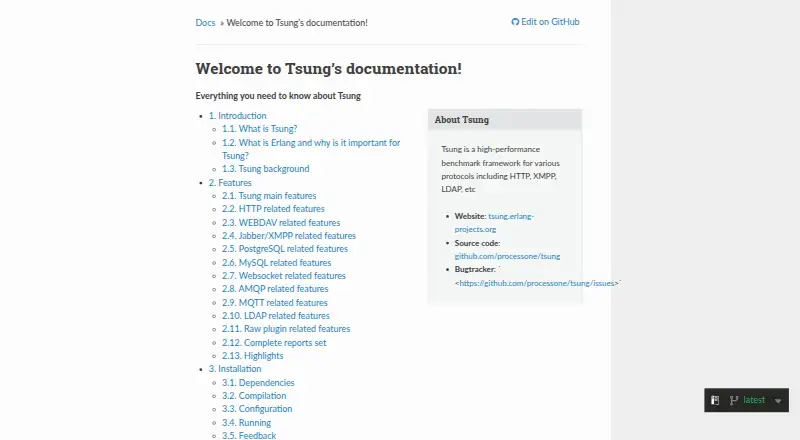
What Tsung is
Tsung is a free distributed load-testing tool for IP-based client/server applications. It can simulate thousands of users on one CPU and spread work across a cluster of client machines. It supports HTTP, WebDAV, SOAP, PostgreSQL, MySQL, AMQP, MQTT, LDAP, and Jabber/XMPP. Test scenarios are written in XML and can include dynamic data, loops, and different user behaviors. A recorder can create scenarios in a browser for HTTP and PostgreSQL. During a benchmark, reports cover response and connection times, requests per second, errors, and target-server metrics; graphs can be viewed while a benchmark runs. Tsung can monitor CPU, memory, and network traffic through Erlang agents or SNMP, and supports Munin for remote servers. SSL is also supported. Tsung is distributed under the GNU General Public License version 2 and is listed for Linux, macOS, Windows, and self-hosted use. It requires Erlang/OTP R16B03 or later; distributed runs need passwordless SSH access or rsh.
Who it suits
Tsung suits users who need complex benchmark scenarios and detailed reports across its supported protocols. It is a fit for teams prepared to configure XML scenarios and meet its documented Erlang and distributed-run requirements.
What it does well
- Simulates thousands of users on one CPU.
- Distributes load across a client cluster.
- Supports HTTP, PostgreSQL, LDAP, and other protocols.
- Reports response times, errors, and server metrics.
- Free under GNU General Public License version 2.
What to know first
- MySQL, WebSocket, AMQP, and MQTT plugins are experimental.
- Distributed runs require passwordless SSH or rsh.
- Requires Erlang/OTP R16B03 or later.
Limits
Tsung is free under the GNU General Public License version 2. It requires Erlang/OTP R16B03 or later, and distributed runs require passwordless SSH access or rsh; the MySQL, WebSocket, AMQP, and MQTT plugins are marked experimental.
Plans
| Plan | Billed and limits | Price |
|---|---|---|
| Tsung | GNU General Public License version 2 | Free |
As tsung.readthedocs.io lists them, read 9 Oct 2026. The maker's own page has the final word.
Getting started
- Open the Tsung documentation website.
- Use Linux, macOS, Windows, or a self-hosted environment.
- Install Erlang/OTP R16B03 or later.
- Configure a test scenario in XML, or use the recorder for HTTP or PostgreSQL.
- For distributed runs, arrange passwordless SSH access or rsh between client machines.
Verdict
Tsung offers broad protocol coverage, distributed load generation, and detailed benchmark reporting at no listed cost. Check the experimental plugin status and setup requirements against your intended workload.
Questions
How much does Tsung cost?
Tsung is free. Its listed plan is free under GNU General Public License version 2.
Which protocols does Tsung support?
Supported protocols include HTTP, WebDAV, SOAP, PostgreSQL, MySQL, AMQP, MQTT, LDAP, and Jabber/XMPP. SSL is also supported.
Can Tsung distribute a load test?
Yes. It can spread load across a cluster of client machines. Distributed runs require passwordless SSH access or rsh.
Does Tsung support browser-based testing?
Browser-based testing is listed as unsupported. Its recorder can create scenarios through a browser for HTTP and PostgreSQL.
Is Tsung open source?
It is distributed under the GNU General Public License version 2.
What dependencies does Tsung require?
The documented dependency is Erlang/OTP R16B03 or later.
Facts from Tsung's own pages
- Founded
- 2001 · tsung.readthedocs.io, 28 Sept 2026
- Intended users
- The documentation presents Tsung for users who need complex benchmark scenarios and extended reports across supported protocols. · tsung.readthedocs.io, 9 Oct 2026
- License
- Tsung is distributed under the GNU General Public License version 2. · tsung.readthedocs.io, 9 Oct 2026
- Limitations
- The MySQL, WebSocket, AMQP, and MQTT plugins are marked experimental; the documented MySQL plugin works with MySQL 4.1 and higher. · tsung.readthedocs.io, 9 Oct 2026
- Monitoring
- Tsung can monitor CPU, memory, and network traffic through Erlang agents or SNMP, and supports Munin for remote servers. · tsung.readthedocs.io, 9 Oct 2026
- Platforms
- The installation page says the package has been tested on Linux, FreeBSD, and Solaris, with a Mac OS X port available. · tsung.readthedocs.io, 9 Oct 2026
- Protocols
- Supported protocols include HTTP, WebDAV, SOAP, PostgreSQL, MySQL, AMQP, MQTT, LDAP, and Jabber/XMPP. · tsung.readthedocs.io, 9 Oct 2026
- Purpose
- Tsung is a distributed load testing tool for testing IP based client/server applications. · tsung.readthedocs.io, 9 Oct 2026
- Recording
- The Tsung recorder can create scenarios through a browser for HTTP and PostgreSQL. · tsung.readthedocs.io, 9 Oct 2026
- Reports
- Reports include response and connection times, requests per second, errors, and target server metrics, with graphs available during a benchmark. · tsung.readthedocs.io, 9 Oct 2026
- Requirements
- The documented dependency is Erlang/OTP R16B03 or later; distributed runs require passwordless SSH access or rsh. · tsung.readthedocs.io, 9 Oct 2026
- Scale
- Tsung can simulate thousands of users on one CPU and distribute load across a cluster of client machines. · tsung.readthedocs.io, 9 Oct 2026
- Scenarios
- User scenarios are configured in XML and can include dynamic data, looping, and multiple user behaviors. · tsung.readthedocs.io, 9 Oct 2026
- Security
- The feature list states that Tsung supports SSL. · tsung.readthedocs.io, 9 Oct 2026
- Support
- The documentation directs users to the Tsung mailing list, GitHub issue tracker, and #tsung IRC channel for feedback and questions. · tsung.readthedocs.io, 9 Oct 2026
Where Tsung stands on Freedom251
- Performance Testing Software#18 of 38