Freedom251 › Design System Software
Terrazzo
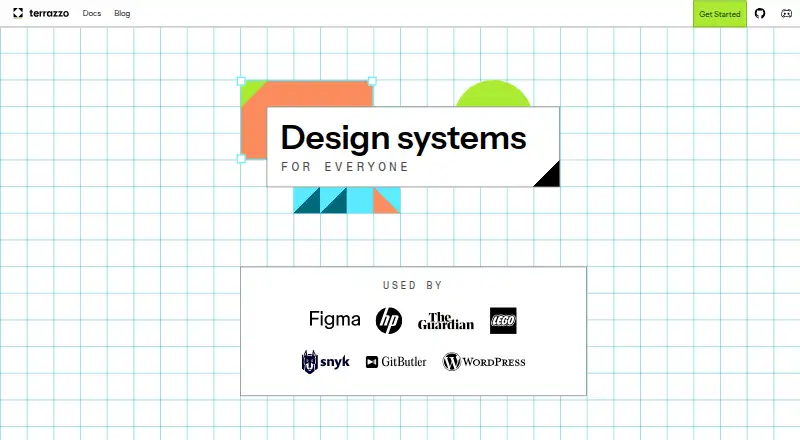
What Terrazzo is
Terrazzo is a set of open-source tools for building and maintaining design systems. Its command-line interface reads design-token files in JSON, JSONC, or YAML and can generate platform code from DTCG token JSON, including CSS, Sass, JavaScript, and TypeScript. Teams can run the CLI manually or include it in continuous integration. Lint rules cover token formatting, naming consistency, repeated values, color gamut, and accessibility checks such as contrast and font size. Documented outputs and integrations include JSON or native formats, Tailwind, and Vanilla Extract; the Tailwind plugin creates a theme for Tailwind v4. The CLI can export Figma Variables and Styles to resolver JSON, with a Figma account and authentication token required for import. Projects can start from systems such as Adobe Spectrum, Apple Human Interface Guidelines, GitHub Primer, IBM Carbon, Salesforce Lightning, Shopify Polaris, or Radix. Swift asset-catalog generation is available through an experimental plugin. Terrazzo began as Cobalt in 2021. The tools are free to use forever under the MIT license; Design Lab is listed as coming soon.
Who it suits
Terrazzo suits design-system teams that want to manage tokens and generate code for multiple platforms. Its CLI workflow may fit teams that run tools manually or in continuous integration.
What it does well
- Free to use forever under the MIT license
- Accepts JSON, JSONC, and YAML token files
- Lint rules cover naming, duplicates, and accessibility criteria
- Can run in continuous integration
- Supports documented Tailwind and Vanilla Extract integrations
What to know first
- The Swift plugin is experimental
- Figma import requires an account and authentication token
- Design Lab is listed as coming soon
Limits
The Swift plugin is described as experimental. Design Lab is coming soon.
Plans
| Plan | Billed and limits | Price |
|---|---|---|
| Terrazzo | Free to use forever · MIT-licensed open-source tools | Free |
As terrazzo.app lists them, read 2 Oct 2026. The maker's own page has the final word.
Getting started
- Open terrazzo.app.
- Use the CLI to initialize a project from a supported starting system, or configure token files in JSON, JSONC, or YAML.
- Provide DTCG design-token JSON to generate code for the desired outputs.
- Run the CLI manually or include it in a continuous integration process.
- For Figma Variables and Styles, use the export workflow with a Figma account and authentication token.
Terrazzo is an open-source toolkit for turning design tokens into production code and checking them for quality. It is best suited to design-system teams comfortable with token files, command-line tools, and CI pipelines. The central trade-off is clear: broad, self-hosted automation at no cost, but an experimental Swift path and a less visual workflow.
Overview
Terrazzo brings token management, design-tool synchronization, code synchronization, and versioning into a self-hosted workflow. Its MIT-licensed tools are free to use forever, making it a strong option for teams that want design-system infrastructure close to their repositories rather than in a paid hosted workspace.
The project began as Cobalt in 2021 and is built by Drew, Nick, and other contributors. Design Lab is marked as coming soon, so it should not be treated as a current visual design environment. A GitHub Security page exists, but no security certification or compliance program is stated.
Key features
Generation and linting
The CLI consumes DTCG design-token JSON and generates CSS, Sass, JavaScript, or TypeScript. It can run manually or in continuous integration, allowing token generation and validation to become part of an existing build process. This suits engineering-led systems that need repeatable outputs; teams wanting a browser-based authoring experience may find the command-line emphasis limiting.
Lint rules check token formats, naming consistency, duplicate values, color gamut, and accessibility requirements including minimum contrast and font size. Those checks catch common design-system defects before they reach products, making Terrazzo more than a format converter. The value is greatest when a team already has standards it wants enforced automatically.
Formats, integrations, and starting points
Configuration accepts JSON, JSONC, and YAML token files. Documented outputs and integrations cover CSS, JavaScript, JSON or native output, Sass, Tailwind, and Vanilla Extract. The Tailwind plugin creates a Tailwind v4 theme from DTCG tokens, which is particularly useful for teams standardizing utility classes from a shared source.
The CLI can initialize projects from Adobe Spectrum, Apple Human Interface Guidelines, GitHub Primer, IBM Carbon, Figma Simple Design System, Salesforce Lightning, Shopify Polaris, and Radix. That gives new systems a practical starting structure instead of requiring every token and rule to be created from scratch.
Figma and Swift workflows
Terrazzo can export Figma Variables and Styles to resolver JSON. The import command requires a Figma account and authentication token, so organizations with strict identity or credential policies should account for that setup. Swift output generates Swift asset catalogs, but the plugin is described as experimental; iOS teams needing a dependable Swift pipeline should validate it carefully or choose a more mature alternative.
Pricing
Terrazzo costs free on the Terrazzo plan. It is free to use forever and includes MIT-licensed open-source tools, with self-hosted hosting, token management, design-tool sync, code sync, and versioning. There are no paid tiers, seat charges, quotas, or trial-to-renewal terms stated. This is an unusually straightforward fit for individuals and teams that can operate their own tooling; organizations expecting vendor-hosted administration or a paid support tier will need a different model.
Platforms
Terrazzo is available on iOS, macOS, and the web. Its core workflow is a CLI, so platform availability matters most for where teams run and manage the surrounding tools rather than for a single desktop editor.
Who it's for
Choose Terrazzo if your team maintains design tokens in files, wants generated code for several front-end targets, and can place a CLI in local or CI workflows. It is especially compelling for open-source-minded organizations that want no license cost and control over hosting. Look elsewhere if your priority is a polished visual workspace today, a fully established Swift integration, or a workflow that avoids Figma authentication requirements.
Pros and cons
- Pro: Free, MIT-licensed tools remove seat and subscription barriers for teams of any size.
- Pro: One CLI combines code generation with linting for naming, duplicates, color gamut, and accessibility.
- Pro: Outputs and integrations span CSS, Sass, JavaScript or TypeScript, Tailwind v4, and Vanilla Extract.
- Pro: CI support makes token quality checks repeatable in an engineering pipeline.
- Con: The workflow is command-line and self-hosted, which is less suitable for teams seeking a managed graphical workspace.
- Con: Figma import needs an account and authentication token.
- Con: Swift generation is experimental, so it is a riskier foundation for iOS-first systems.
- Con: Design Lab is not yet available.
Alternatives
Particles UI is a better fit when you want a freemium, cross-platform option whose MIT-licensed CLI supports local token management and export without an account.
Zaklad suits readers seeking a freemium design-system tool across Android, iOS, and the web.
Supernova is the stronger choice for teams that need a hosted freemium workspace with a published free allowance of up to five seats and one design system.
Superposition is worth considering for a free desktop app on macOS, Windows, and Linux, with a separate paid design-system generator extension.
Bezel is a web-based freemium alternative with a free tier centered on AI credits, projects, themes, and token limits.
Carbon Design System is a free, open-source system for teams that want to use and contribute to an established design system rather than assemble a token CLI.
Design Tokens fits Figma-focused users who want variable sync, CSS/Sass export, W3C JSON exchange, and defined workspace and user caps on its free plan.
Fenly is another free extension-and-web option with paid Pro and Team plans potentially planned for the future.
Browse more options in Design System Software.
Verdict
Terrazzo is a strong recommendation for engineering-oriented design-system teams that want open-source token generation and enforceable linting in local or CI workflows without subscription costs. Its broad integrations and starter systems make it flexible, but teams that require a mature Swift pipeline, a visual workspace now, or a Figma-free import process should look elsewhere.
Verdict
Terrazzo combines token generation and linting in an open-source CLI, with inputs, outputs, and integrations spanning several formats and tools. Consider the experimental status of Swift support and the Figma authentication requirement if those workflows matter to your team.
Questions
How much does Terrazzo cost?
The Terrazzo plan is free, and the tools are free to use forever under the MIT license.
Which platforms are listed for Terrazzo?
The listed platforms are iOS, macOS, and web.
What token file formats does it accept?
The CLI configuration supports JSON, JSONC, and YAML token files.
Can Terrazzo work with Figma?
The CLI can export Figma Variables and Styles to resolver JSON. The import command requires a Figma account and authentication token.
Is Terrazzo open source?
Yes. Its tools are open-source and MIT-licensed.
Who built Terrazzo?
The project says it was built by Drew, Nick, and other contributors, and began as Cobalt in 2021.
Facts from Terrazzo's own pages
- CLI workflow
- The CLI can run manually or as part of a continuous integration process. · terrazzo.app, 2 Oct 2026
- Design Lab
- The homepage lists Design Lab as coming soon. · terrazzo.app, 2 Oct 2026
- Figma import
- The CLI can export Figma Variables and Styles to resolver JSON; the import command requires a Figma account and authentication token. · terrazzo.app, 2 Oct 2026
- Founded
- 2021 · terrazzo.app, 28 Sept 2026
- Input formats
- The CLI configuration supports token files in JSON, JSONC, and YAML formats. · terrazzo.app, 2 Oct 2026
- Integrations
- Documented integrations include CSS, JavaScript, JSON or native output, Sass, Tailwind, and Vanilla Extract. · terrazzo.app, 2 Oct 2026
- Makers
- The project says it was built by Drew, Nick, and other contributors, and began as Cobalt in 2021. · terrazzo.app, 2 Oct 2026
- Purpose
- Terrazzo is a collection of open-source tools for creating and managing design systems. · terrazzo.app, 2 Oct 2026
- Security
- The project’s GitHub Security page is available, but the opened page does not state a security certification or compliance program. · github.com, 2 Oct 2026
- Supported starting systems
- The CLI can initialize projects from Adobe Spectrum, Apple Human Interface Guidelines, GitHub Primer, IBM Carbon, Figma Simple Design System, Salesforce Lightning, Shopify Polaris, and Radix. · terrazzo.app, 2 Oct 2026
- Swift support
- The Swift plugin generates Swift asset catalogs and is described as experimental. · terrazzo.app, 2 Oct 2026
- Tailwind
- The Tailwind plugin generates a Tailwind v4 theme from DTCG tokens. · terrazzo.app, 2 Oct 2026
- Token generation
- The CLI takes DTCG design-token JSON and generates code for platforms including CSS, Sass, and JavaScript or TypeScript. · terrazzo.app, 2 Oct 2026
- Token linting
- Lint rules can check token formats, naming consistency, duplicate values, color gamut, and accessibility criteria such as minimum contrast and font size. · terrazzo.app, 2 Oct 2026
Where Terrazzo stands on Freedom251
- Design System Software#9 of 22