Freedom251 › Event Volunteer Management Software
Helfertool
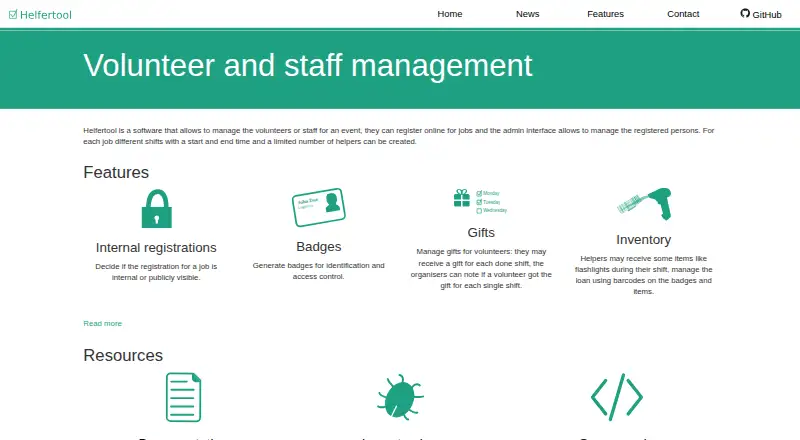
What Helfertool is
Helfertool is open source software for organizing volunteers or staff at events. People can register online for jobs and shifts, while organizers manage registrants and schedules. Events can include any number of jobs and shifts, with start and end times and a maximum helper count. Jobs may be public or internal, and each can have administrators limited to managing that job’s helpers. Organizers can create registration links for internal jobs and shifts. They can email helpers, coordinators, or all registered people, with a history of sent messages saved, and export event data to Excel or PDF. Badge creation from LaTeX templates supports access control or privileges; barcode scanning helps avoid duplicate badge exports. Barcodes on badges and items can also track equipment loaned during shifts. Registration can collect T-shirt sizes and, for events in Germany, ask about food-handling certificates and renewals. Helfertool supports local accounts, LDAP, and OpenID Connect. It runs on Linux, self-hosted systems, and the web; self-hosting requires several components, including Docker Engine, a database, RabbitMQ, a reverse proxy, and a mail server.
Who it suits
Helfertool suits event organizers who need online volunteer or staff registration, shift scheduling, and tools for managing helpers. It may also fit teams that need job-specific administrator access, exports, and equipment tracking.
What it does well
- Events can have any number of jobs and shifts.
- Job administrators can be limited to their job’s helpers.
- Exports available in Excel or PDF.
- Supports local accounts, LDAP, and OpenID Connect.
- Barcode tools track items loaned during shifts.
What to know first
- Self-hosting requires Docker Engine, a database, RabbitMQ, a reverse proxy, and a mail server.
- Documented languages are English and German.
- Timezone is configured for the whole installation, not per event.
Getting started
- Visit the Helfertool website and follow its linked documentation.
- Choose a deployment route: Docker with helfertoolctl, a Docker container on another system, or manual Django setup.
- For self-hosting, prepare Docker Engine, a database, RabbitMQ, a reverse proxy, and a mail server.
- Configure the required secret key and allowed-host settings; TLS is required when using the documented headers.
- Set up local accounts, LDAP, or OpenID Connect authentication.
- Create an event, define jobs and shifts, and share signup access with helpers.
Verdict
Helfertool covers volunteer registration, shift management, communications, exports, badges, and equipment tracking. Its self-hosting requirements and installation-wide timezone are important to consider before choosing a deployment.
Questions
What does Helfertool cost?
Helfertool is free and open source. There is no free trial.
Which platforms does it support?
Its listed platforms are Linux, self-hosted deployment, and web.
Can helpers sign themselves up for shifts?
Yes. Volunteers or staff can register online for jobs and shifts.
Can organizers control access to jobs?
Yes. Jobs can be public or internal, and administrators can be restricted to managing one job’s helpers.
What deployment options are available?
Helfertool can be deployed with Docker and helfertoolctl, as a Docker container on other systems, or manually as a Django application.
Which authentication methods are supported?
It supports local accounts, LDAP, and OpenID Connect.
Facts from Helfertool's own pages
- Access controls
- Jobs can be public or internal, and each job can have administrators limited to managing that job’s helpers. · helfertool.org, 4 Oct 2026
- Authentication
- Supported authentication backends are local accounts, LDAP, and OpenID Connect. · docs.helfertool.org, 9 Oct 2026
- Badges
- Badges can be created from a LaTeX template and can include barcodes for access control or privileges. · helfertool.org, 9 Oct 2026
- Databases
- Documented database options include PostgreSQL, MySQL or MariaDB, and SQLite; PostgreSQL is recommended for deployments. · docs.helfertool.org, 9 Oct 2026
- Dependencies
- A self-hosted deployment requires Docker Engine, a database, RabbitMQ, a reverse proxy, and a mail server; PostgreSQL and nginx are recommended. · docs.helfertool.org, 4 Oct 2026
- Deployment
- The maker’s admin guide describes self-hosting with Docker and helfertoolctl, or manual deployment as a Django application. · docs.helfertool.org, 9 Oct 2026
- Organizers can email helpers, job or shift coordinators, or all registered people, and the system saves a history of sent emails. · helfertool.org, 9 Oct 2026
- Exports
- Event data can be exported to Excel, or key information can be exported as PDF for all jobs or one job. · helfertool.org, 9 Oct 2026
- Exports and email
- Event data can be exported as Excel or PDF, and administrators can email helpers or coordinators with a history of sent messages saved. · helfertool.org, 4 Oct 2026
- Food handling certificates
- For events in Germany, the tool can ask helpers whether they have a food-handling certificate, need to renew it, or have never had one. · helfertool.org, 9 Oct 2026
- Inventory
- Organizers can track loaned items using barcodes on badges and items. · helfertool.org, 9 Oct 2026
- Job administrators
- Each job can have administrators who can manage that job’s helpers but not helpers for other jobs. · helfertool.org, 9 Oct 2026
- Jobs and shifts
- Organizers can create any number of jobs with shifts, start and end times, helper limits, and optional names. · helfertool.org, 9 Oct 2026
- Language and timezone
- The documented languages are English and German, and the timezone is configured for the whole installation rather than per event. · docs.helfertool.org, 4 Oct 2026
- Purpose
- Helfertool manages volunteers or staff for events, including online job registration and administration of registered people. · helfertool.org, 9 Oct 2026
- Registration details
- Registration can optionally collect T-shirt sizes and ask about food-handling certificates, including whether one needs renewal. · helfertool.org, 4 Oct 2026
- Registration links
- Admins can create links for registration to events, jobs, or shifts that are not public, and registration through these links remains possible. · docs.helfertool.org, 4 Oct 2026
- Registration visibility
- Jobs can be publicly visible or internal, with links available to access internal jobs. · helfertool.org, 9 Oct 2026
- Security configuration
- The installation guide says a deployment needs a secret key and allowed-host settings, and notes that TLS is required for use with the documented headers. · docs.helfertool.org, 9 Oct 2026
- Security settings
- Configurable protections include account lockout after five failed login attempts for ten minutes, a 12-character minimum for local passwords, and captchas for newsletter registration and password reset by default starting with version 4.0. · docs.helfertool.org, 4 Oct 2026
- Support and community
- The project invites users to open GitHub issues and provides a Matrix room for development and administration discussions. · github.com, 9 Oct 2026
- Support and source
- The maker’s homepage links to documentation, an issue tracker, and source code. · helfertool.org, 4 Oct 2026
Where Helfertool stands on Freedom251
- Event Volunteer Management Software#13 of 29