Freedom251 › Content Management Systems

Contao
by Contao
What Contao is
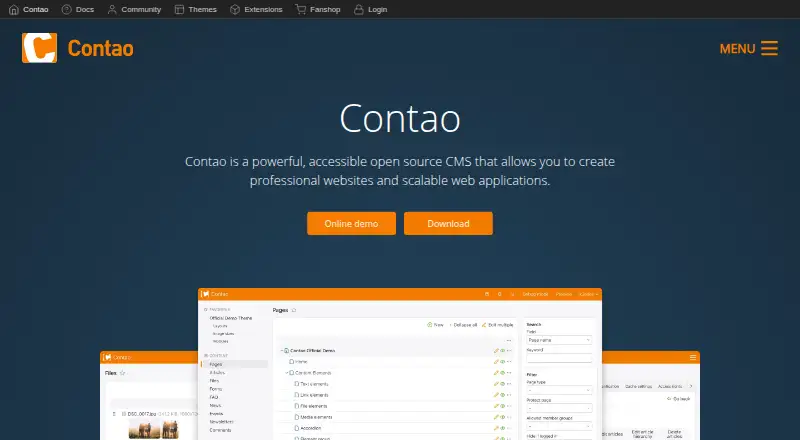
Contao is a free, open source CMS for building professional websites and scalable web applications. One installation can serve multiple websites and support multilingual content. Editors can work in TinyMCE, update several records at once and restore earlier versions. Administrators can set access rights for individual backend form fields by user or group. The core includes calendar, news and blog, and newsletter modules, plus a form generator and full-text search with phrase, wildcard and AND/OR options. Contao describes support for WCAG 2.1 level AA, and its SEO features include schema.org structured data and automatically generated XML sitemaps. Security options include passkeys or two-factor authentication and automatic account locking after too many failed login attempts. The system is based on Symfony and can be extended with packages from the Contao extension directory or Packagist. It can be installed as a Managed Edition or added as a Symfony bundle using Composer. It runs on web servers with current PHP and MySQL; documentation recommends PHP 8.4 or later and MySQL 8.0 or equivalent MariaDB. Community forum support is free, with professional support through partners.
Who it suits
Contao suits teams building landing pages, portals, e-commerce sites or enterprise sites that need multilingual publishing or multiple websites from one installation. It is intended for self-hosted use on a web server with PHP and MySQL.
What it does well
- One installation can run multiple websites.
- Includes editorial workflows and custom user roles.
- Core includes calendar, news, blog and newsletter modules.
- Offers passkeys or two-factor authentication.
- Community forum support is free.
What to know first
- Requires a web server with current PHP and MySQL.
- Documentation recommends PHP 8.4 or later.
- Long-term support versions receive four years of support.
Plans
| Plan | Billed and limits | Price |
|---|---|---|
| Contao CMS | Open source software · LGPL-3.0 · Free use, including for commercial projects | Free |
As contao.org lists them, read 11 Oct 2026. The maker's own page has the final word.
Getting started
- Visit https://contao.org/en/.
- Choose the preconfigured Managed Edition and use Contao Manager, or add Contao as a Symfony bundle with Composer.
- Prepare a web server with current PHP and MySQL; the documentation recommends PHP 8.4 or later and MySQL 8.0 or equivalent MariaDB.
- Use the CMS's editing, modules, forms, search, permissions, and SEO features to build your site.
Contao is a free, open-source CMS for professional websites and scalable web applications. It suits organizations that need self-hosted control over publishing, permissions, multiple sites, or multiple languages. Choose it when your team can manage a PHP/MySQL server or work with a Contao partner; look elsewhere for a fully hosted service.
Overview
One installation can run several websites and multilingual content, which makes Contao practical for organizations managing related brands, regions, or language editions. The core distribution includes calendar, news and blog, and newsletter modules, so common publishing functions do not depend on separate add-ons.
Contao is intended for landing pages, portals, e-commerce, and enterprise sites. It is self-hosted rather than a turnkey hosted platform: deployment uses Contao Manager and its Managed Edition, or Composer to add Contao as a Symfony bundle. That flexibility helps technical teams shape the stack, but it also makes server administration part of ownership.
Key features
- Editorial workflows and permissions: Workflow support, custom user roles, bulk record editing, and restoration of earlier versions give publishing teams control over revisions. Rights can be assigned to individual backend form fields and to users or groups, allowing precise separation of duties instead of only broad administrator/editor access.
- Content and media: TinyMCE supports day-to-day editing, while custom content types and a media library accommodate structured pages and reusable assets.
- Forms and search: A built-in form generator covers data collection. Full-text search supports phrases, wildcards, and AND/OR queries, useful for content-heavy sites where visitors need more than simple keyword matching.
- Accessibility and SEO: Contao describes support for WCAG 2.1 level AA. SEO tooling includes schema.org structured data and automatically generated XML sitemaps, reducing the amount of foundational optimization developers must build themselves.
- Security and privacy: Passkeys or two-factor authentication add stronger login protection, and accounts lock after too many failed attempts. Double opt-in is used for subscriptions and registrations, with logs retained for the legally required storage period.
- Extensibility: Because it is based on Symfony, teams can extend the CMS with packages from the Contao extension directory or Packagist. This is a strong route for custom applications, provided the team can evaluate and maintain extensions.
- Support lifecycle: Community forum support is free, while Contao partners provide professional help. Long-term-support versions receive four years of support, a useful planning horizon for organizations that avoid frequent platform changes.
Pricing
Contao CMS — free: The open-source software is LGPL-3.0 licensed and free for commercial use. There is no paid tier or free trial to compare, so the licensing cost is straightforward. Your practical costs are hosting, deployment, maintenance, and any professional partner support required for a self-hosted installation. The free plan does not remove the need to meet the platform's server requirements or operate the site.
Platforms
Contao runs as a self-hosted web application on Linux-capable hosting and exposes an API. Documentation calls for a web server with current PHP and MySQL, recommending PHP 8.4 or later and MySQL 8.0 or equivalent MariaDB. Confirm that your host meets those versions before committing; platform compatibility is a deployment prerequisite, not an optional upgrade.
Who it's for
Contao is a good fit for professional web teams, agencies, and organizations running portals, multilingual sites, e-commerce projects, or several websites from one installation. It is especially compelling when field-level permissions, structured editorial workflows, built-in search, and Symfony extensibility matter. Teams without server expertise should budget for a Contao partner or choose a hosted CMS instead.
Pros and cons
Pros
- One installation handles multiple websites and languages, reducing duplication for distributed organizations.
- Field-level access rights, workflows, version restoration, and bulk editing support accountable editorial operations.
- Calendar, news/blog, newsletter, forms, and full-text search are included in the core distribution.
- WCAG 2.1 AA support, structured data, XML sitemaps, passkeys or two-factor authentication, and login lockouts cover important governance needs.
- LGPL-3.0 licensing permits free commercial use, with a four-year support period for long-term-support versions.
Cons
- Self-hosting requires current PHP and MySQL infrastructure and ongoing technical maintenance.
- Extension-based customization and Symfony packaging reward developers but can add operational complexity for small teams.
- Professional support comes through partners rather than a bundled paid service, so assistance may need separate budgeting.
Alternatives
Drupal is the closest choice when you want another free, self-hosted CMS with API, Linux, macOS, Windows, and web support, plus a free trial option.
Pick Webflow CMS instead when a hosted web workflow is more important than self-hosting; its free Starter plan is designed for experimenting and limits CMS content, static pages, bandwidth, and form submissions.
Plone suits teams seeking a free, forever open-source CMS across common desktop and self-hosted platforms.
Choose HubSpot Content Hub when a hosted product and small-team entry plan matter; its free tier supports up to two users, with a paid Starter tier from $7.00 per month.
Joomla is another free, GPL-licensed CMS download for self-hosted sites.
TYPO3 CMS offers a free self-hosted edition and a TYPO3 v12 ELTS plan at €3,200 a year for organizations seeking a paid extended-support option.
django CMS is a free, open-source alternative for teams comfortable with a developer-oriented stack.
Umbraco CMS is worth considering when web-based authoring, media management, user management, multilingual setup, and headless APIs are priorities.
For a wider comparison, browse Content Management Systems.
Verdict
Choose Contao for a self-hosted professional site that needs multilingual or multi-site publishing, granular permissions, built-in publishing modules, and Symfony-based extensibility without licensing fees. Look elsewhere if you want hosting, infrastructure, and support bundled into a managed service or if your team cannot maintain the required PHP and MySQL environment.
Verdict
Contao offers a broad set of publishing, access-control and search tools for self-hosted websites. Check the server requirements before choosing it, and consider whether community or partner support fits your needs.
Questions
What does Contao cost?
The Contao CMS plan is free. It is open source under LGPL-3.0 and can be used commercially.
Can one Contao installation run more than one website?
Yes. One installation can run multiple websites and support multilingual websites.
How can Contao be installed?
It can be installed as a preconfigured Managed Edition with Contao Manager, or added as a Symfony bundle using Composer.
What server does Contao require?
It runs on web servers providing current PHP and MySQL. The documentation recommends PHP 8.4 or later and MySQL 8.0 or equivalent MariaDB.
What support is available?
The project offers free community forum support and professional support through Contao partners. Long-term support versions receive four years of support.
Can Contao be extended?
Yes. Contao is based on Symfony and can be extended with packages from the Contao extension directory or Packagist.
Facts from Contao's own pages
- Accessibility and SEO
- Contao describes support for WCAG 2.1 level AA and provides SEO features including schema.org structured data and automatically generated XML sitemaps. · contao.org, 11 Oct 2026
- Built-in modules
- The core distribution includes calendar, news/blog, and newsletter modules. · contao.org, 11 Oct 2026
- Custom content types
- Yes · contao.org, 22 Sept 2026
- Custom user roles
- Yes · contao.org, 22 Sept 2026
- Deployment
- Contao can be installed as a preconfigured Managed Edition with Contao Manager or added as a Symfony bundle using Composer. · contao.org, 11 Oct 2026
- Editing
- Editors can use TinyMCE, edit multiple records at once, and restore prior versions. · contao.org, 11 Oct 2026
- Editorial workflows
- Yes · contao.org, 22 Sept 2026
- Forms and search
- The CMS includes a form generator and full-text search with phrase, wildcard, and AND/OR searching. · contao.org, 11 Oct 2026
- Founded
- 2006 · contao.org, 28 Sept 2026
- Free plan
- Yes · contao.org, 22 Sept 2026
- Headquarters
- 3250 Lyss, Switzerland · contao.org, 28 Sept 2026
- Integrations
- Contao is based on Symfony and can be extended with packages from the Contao extension directory or Packagist. · contao.org, 11 Oct 2026
- Intended users
- The homepage cites use for landing pages, portals, e-commerce, and enterprise sites. · contao.org, 11 Oct 2026
- Media library
- Yes · contao.org, 22 Sept 2026
- Multilingual content
- Yes · contao.org, 22 Sept 2026
- Multiple sites and languages
- One Contao installation can run multiple websites and support multilingual websites. · contao.org, 11 Oct 2026
- Permissions
- Access rights can be set for individual backend form fields and assigned by user or group. · contao.org, 11 Oct 2026
- Platform type
- self_hosted · contao.org, 22 Sept 2026
- Privacy
- The homepage says Contao uses double opt-in for subscriptions and registrations and keeps a log for the legally required storage period. · contao.org, 11 Oct 2026
- Security
- Contao supports passkeys or two-factor authentication and automatically locks accounts after too many failed login attempts. · contao.org, 11 Oct 2026
- SEO tools
- Yes · contao.org, 22 Sept 2026
- Server requirements
- The documentation says Contao runs on web servers providing current PHP and MySQL, and recommends PHP 8.4 or later and MySQL 8.0 or equivalent MariaDB. · docs.contao.org, 11 Oct 2026
- Support
- The project offers free forum support from its community and professional support through Contao partners. · contao.org, 11 Oct 2026
- Support period
- The homepage states that long-term support versions receive four years of support. · contao.org, 11 Oct 2026
Where Contao stands on Freedom251
- Content Management Systems#10 of 165