Freedom251 › Academic Research Databases
bioRxiv
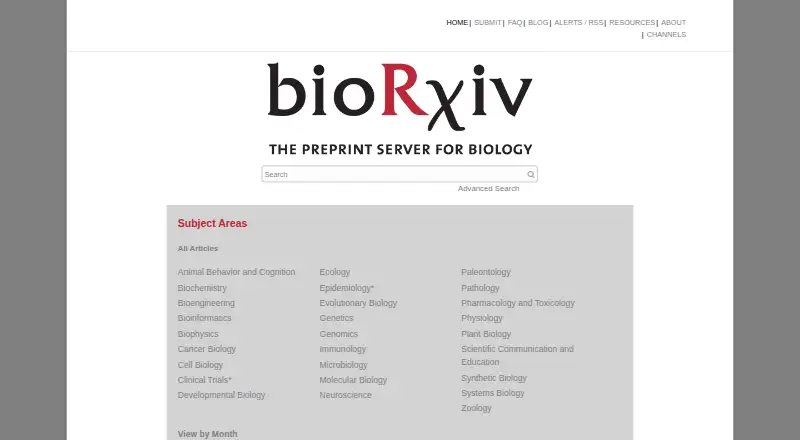
What bioRxiv is
bioRxiv is a free online archive and distribution service for unpublished preprints in the life sciences. Researchers can make findings available and receive feedback before submitting manuscripts to journals. Its coverage includes areas such as genetics, neuroscience, ecology, and bioinformatics. Submissions undergo completeness and scope checks, automated analysis for possible plagiarism or prior online posting, and review by volunteer Affiliates for biological relevance and potential public harm. Screening typically takes 24–48 hours, but may take longer on weekends, holidays, or when more discussion is needed. Posted articles are not peer-reviewed, edited, or typeset, and their appearance does not endorse their scientific quality. Research articles must include data; narrative reviews, commentaries, opinion pieces, and step-by-step protocols are not accepted. Authors can submit revisions until formal journal acceptance, but posted articles cannot be removed. Readers may add public comments, which are moderated. The service also provides journal transfer through B2J, article access, metadata through RSS feeds and APIs, and bulk full text for text and data mining. Authors retain copyright and choose from listed reuse options.
Who it suits
bioRxiv is for life science researchers who want to share preprints and receive feedback before journal submission. Its access to articles, metadata, and bulk text may also serve readers and text-and-data-mining users.
What it does well
- Free manuscript submissions and article access.
- Covers all aspects of life sciences research.
- Provides metadata through feeds and APIs.
- Offers bulk full text for text and data mining.
- Authors can revise until formal journal acceptance.
What to know first
- Posted articles are not peer-reviewed, edited, or typeset.
- Posted articles cannot be removed.
- Screening may take longer than 24–48 hours.
- Research articles must contain data.
Limits
The free plan provides a free archive and distribution service with submissions at no charge. Research articles must contain data, and narrative reviews, commentaries, opinion pieces, and step-by-step protocols are not accepted.
Plans
| Plan | Billed and limits | Price |
|---|---|---|
| Free | Free · Free online archive and distribution service · manuscript submissions free of charge | Free |
As biorxiv.org lists them, read 9 Oct 2026. The maker's own page has the final word.
Getting started
- Visit the bioRxiv website.
- Prepare a research article containing data; supplementary material, data, and code can also be shared.
- Submit the manuscript for completeness and scope checks, automated analysis, and Affiliate review.
- Allow for screening, which typically takes 24–48 hours and may take longer in some cases.
bioRxiv is a free preprint archive for life sciences researchers who want to share data-backed findings before journal submission. It suits authors seeking early visibility and readers looking for emerging work, provided they treat posted manuscripts as unreviewed research.
Overview
Founded in 2013 and operated by nonprofit openRxiv, bioRxiv accepts research preprints across life-science subjects including genetics, neuroscience, ecology and bioinformatics. Its broad scope and free access make it useful for circulating findings across biological fields without requiring readers to pay for access.
Posting does not amount to scientific endorsement: articles appear without peer review, editing or typesetting. Screening checks completeness and scope, runs automated analyses for potential plagiarism or prior online posting, and asks volunteer bioRxiv Affiliates to assess biological relevance and possible public harm. This is a meaningful initial filter, but not a substitute for journal review. Screening typically takes 24–48 hours and may take longer over weekends, holidays or when further discussion is needed.
Key features
Authors can revise preprints until formal journal acceptance, but cannot remove a posted article. That permanence gives early work a lasting public record; it also means authors should be prepared for the submitted work to remain accessible even if they later change direction.
Readers can leave public comments, moderated to maintain normal professional discourse. This creates a route for discussion, though it does not turn comments into formal peer review. The B2J service can send manuscript files and metadata directly to participating journals or peer-review services, reducing repeated submission work when a destination supports the service.
Access extends beyond the website: bioRxiv offers article metadata through RSS feeds and APIs, plus bulk full text through an Amazon S3 resource for text and data mining. The API returns article metadata in JSON, XML or HTML and paginates multi-paper results. Authors retain copyright and choose from reuse options including CC BY, CC BY-NC, CC BY-ND, CC BY-NC-ND, CC0 or no reuse.
The archive does not accept narrative reviews, commentaries, opinion pieces or step-by-step protocols as article types; research articles must contain data. That boundary keeps its purpose focused on research findings, but rules out several common forms of scholarly communication.
Pricing
The Free plan costs nothing, billed Free. It includes the online archive and distribution service, with manuscript submissions free of charge. There is no free trial because the service is free. For authors and readers seeking life-sciences preprints, there is no paid tier to unlock access or submission; the trade-off is that bioRxiv is a preprint service rather than a peer-reviewed publication route.
Platforms
bioRxiv is available on the web and through an API. The API's structured metadata and pagination suit programmatic discovery, while web access serves readers browsing and reading articles. The entry also identifies full-text access and advanced search.
Who it's for
Choose bioRxiv if you are a life-science researcher with a data-backed manuscript and want to disseminate it before journal submission, invite public feedback or use B2J to transfer it to a participating journal or review service. It also fits readers who want free access to emerging research or developers and analysts working with article metadata and bulk text.
It is a poor fit for authors seeking peer review before publication, a removable posting, or a venue for a commentary, narrative review, opinion piece or step-by-step protocol. Readers should not treat a preprint's presence as evidence that its scientific claims have been validated.
Pros and cons
Pros
- Free submissions and reading: authors can distribute eligible manuscripts and readers can access articles without a subscription charge.
- Useful routes for follow-up: public comments, revisions before formal journal acceptance and B2J transfer support feedback and onward submission.
- Open machine access: APIs, RSS feeds and bulk full text support discovery and text and data mining.
- Author-selected reuse: a range of licensing choices, including CC0 and no reuse, lets authors set terms for their work.
Cons
- No peer review before posting: readers must assess findings without the validation of journal review.
- Posting is permanent: authors cannot remove an article after it is posted.
- Narrow submission formats: manuscripts must be data-containing research articles, excluding several other scholarly article types.
- Screening is not instantaneous: the typical 24–48-hour process can take longer when calendars or further discussion intervene.
Alternatives
For a broader directory of discovery tools, browse Academic Research Databases.
- arXiv is another free open-access archive with no-cost submissions; choose it when your work belongs in its archive rather than bioRxiv's life-sciences focus.
- Europe PMC offers free access to life-sciences literature and related tools; choose it for literature access beyond bioRxiv preprints.
- AGRICOLA provides a free public catalog, with individual article full text depending on linked sources; choose it for catalog discovery rather than a preprint archive.
- JSTOR has a free read-only plan for open content and public-domain articles, with limited free reading of select items; choose it when that reading collection better suits your needs.
- Academia.edu offers free paper reading, bookmarking, downloads, search, academic follows, uploads and basic analytics; choose it for those researcher-networking and account tools.
- CORE offers API access subject to rate limits; choose it if its API access model is a better fit for your discovery workflow.
- MAXQDA is a paid research application for macOS and Windows, with a free trial; choose it when you need research software rather than a preprint archive.
- EconLit offers courtesy access to AEA members but no full-text links on that plan; choose it for economics-focused bibliographic discovery.
Verdict
bioRxiv is the right choice for life-sciences researchers who want free, early distribution of data-backed findings, especially when public feedback or transfer to a participating journal matters. Its open access and machine-readable routes are substantial strengths. Look elsewhere if you need peer-reviewed publication before work appears, want the ability to retract a posting, or have a manuscript type the archive does not accept.
Verdict
bioRxiv offers free preprint distribution and access, alongside screening and tools for comments and journal transfer. Readers should distinguish posted preprints from peer-reviewed articles, and authors should note that posted work cannot be removed.
Questions
Does bioRxiv cost anything?
The Free plan costs nothing, billed Free. Manuscript submissions are free of charge.
Are bioRxiv articles peer-reviewed?
No. Articles are not peer-reviewed, edited, or typeset before posting, and their appearance does not imply endorsement of their scientific quality.
How long does screening take?
Screening typically takes 24–48 hours. It may take longer over weekends or holidays, or when further discussion is needed.
Can authors revise or remove a posted article?
Authors may submit revisions until formal journal acceptance. Posted articles cannot be removed.
What access does bioRxiv offer for articles and metadata?
It provides free and unrestricted article access, metadata through RSS feeds and APIs, and bulk full text for text and data mining through an Amazon S3 resource.
Who operates bioRxiv?
bioRxiv is operated by openRxiv, a nonprofit organization dedicated to advancing science communication.
Facts from bioRxiv's own pages
- API
- The API provides article metadata endpoints with JSON, XML, and HTML formats and paginates multi-paper results. · api.biorxiv.org, 9 Oct 2026
- Comments
- Readers may add public comments to articles, and comments are moderated for standards of normal professional discourse. · biorxiv.org, 9 Oct 2026
- Coverage
- It accepts preprints covering all aspects of life sciences research, organized into subject categories including genetics, neuroscience, ecology, and bioinformatics. · biorxiv.org, 9 Oct 2026
- Founded
- 2013 · biorxiv.org, 28 Sept 2026
- Intended users
- It lets life science researchers make findings immediately available and receive feedback before submitting manuscripts to journals. · biorxiv.org, 9 Oct 2026
- Journal transfer
- bioRxiv can transmit manuscript files and metadata directly to participating journals or peer review services through its B2J service. · biorxiv.org, 9 Oct 2026
- Machine access
- The service provides free and unrestricted article access, metadata through RSS feeds and APIs, and bulk full text for text and data mining through an Amazon S3 resource. · biorxiv.org, 9 Oct 2026
- Operator
- bioRxiv is operated by openRxiv, a nonprofit organization dedicated to advancing science communication. · biorxiv.org, 9 Oct 2026
- Purpose
- bioRxiv is a free online archive and distribution service for unpublished preprints in the life sciences. · biorxiv.org, 9 Oct 2026
- Reuse
- Authors retain copyright and choose among listed reuse options including CC BY, CC BY-NC, CC BY-ND, CC BY-NC-ND, CC0, or no reuse. · biorxiv.org, 9 Oct 2026
- Review status
- Articles are not peer-reviewed, edited, or typeset before posting, and their appearance does not imply endorsement of their scientific quality. · biorxiv.org, 9 Oct 2026
- Revision and permanence
- Authors may submit revisions until formal journal acceptance, but posted articles cannot be removed. · biorxiv.org, 9 Oct 2026
- Screening
- Submissions receive completeness and scope checks, automated analyses for potential plagiarism or prior online posting, and review by volunteer bioRxiv Affiliates for biological relevance and potential public harm. · connect.biorxiv.org, 9 Oct 2026
- Screening time
- Screening typically takes 24–48 hours and may take longer over weekends, holidays, or when further discussion is needed. · connect.biorxiv.org, 9 Oct 2026
- Submission limits
- Narrative reviews, commentaries, opinion pieces, and step-by-step protocols are not accepted as article types; research articles must contain data. · connect.biorxiv.org, 9 Oct 2026
Where bioRxiv stands on Freedom251
- Academic Research Databases#5 of 35