Do these 3 things before closing this tab:
1Clear out junk files and repair common Windows errors2Scan for outdated or missing drivers - takes under a minute3Repair Windows errors before they cause bigger problemsAnti-reflective glass can reduce the light a solar panel reflects, but that does not guarantee a noticeable increase in a household’s annual electricity or eliminate glare. Many current panels already use treated glass, and the evidence here does not establish a universal price premium. Compare the actual glass specifications, site-specific energy estimates, glare conditions and itemized quotes—not just the coating label.
What “anti-reflective” means on a solar panel
Solar modules need sunlight to pass through their front glass to reach the photovoltaic cells. Some of that light can reflect away at the glass surface. An anti-reflection coating is designed to reduce that reflection through optical interference, allowing more light to pass into the module. Glass texturing is a different approach: its surface geometry can scatter mirror-like reflections and help couple light into the module. The two features are related, but “anti-reflective,” “textured” and “glare-free” are not interchangeable claims.
As an Amazon Associate I earn from qualifying purchases.
The Electric Power Research Institute (EPRI) explains these mechanisms in its September 2016 report, Assessing Anti-Reflective and Anti-Soiling Coatings for Photovoltaic Modules. Coating performance depends on factors including thickness and refractive index; a product label alone does not establish a particular module’s reflectance or power benefit.
Does anti-reflective glass increase panel output?
Reducing reflection can increase the light available to a module, so an optical gain is plausible. The amount of additional electricity a particular installation produces is a separate question. It depends on the module, its test rating and operating conditions, and the site’s sun exposure, orientation, tilt and shading. The available evidence does not establish a manufacturer-neutral annual-kWh gain for anti-reflective panels over standard panels currently on the market.
#1 Best Overall

- ✅Maximizes solar power generation by enhancing sunlight penetration and preventing power losses from dust and dirt accumulation.
- ✅Reduces maintenance costs by cutting annual cleaning requirements by 50%.
- ✅Improves panel longevity through superior protection against dust, soil, ice, bird droppings, and scratches.
- ✅Delivers exceptional performance with anti-reflective, hydrophobic, self-cleaning, anti-soiling, and anti-abrasion properties.
- ✅Easy to apply and environmentally friendly, suitable for all solar glass panel types.
EPRI’s report gives an illustrative best-case calculation, not a current product test: for a 1.6 m² module with 15% conversion efficiency under approximately 1000 W/m² of incident irradiance, it estimates that bare planar glass reflecting about 4% of incoming light corresponds to roughly 10 W of potential power. Its idealized illustration changes a 240 W module to 250 W. Those figures describe the report’s assumptions; they are not a guaranteed rating increase, annual-energy estimate or promised reduction in an electricity bill.
For a buying decision, compare the complete module datasheets and production estimates for your address. An advertised coating advantage matters only if it translates into a credible difference under the same rating conditions and a site model based on the same roof or ground-mount assumptions.
Rank #2

- ✅Maximizes solar power generation by enhancing sunlight penetration and preventing power losses from dust and dirt accumulation.
- ✅Reduces maintenance costs by cutting annual cleaning requirements by 50%.
- ✅Improves panel longevity through superior protection against dust, soil, ice, bird droppings, and scratches.
- ✅Delivers exceptional performance with anti-reflective, hydrophobic, self-cleaning, anti-soiling, and anti-abrasion properties.
- ✅Easy to apply and environmentally friendly, suitable for all solar glass panel types.
Does it reduce glare?
It may reduce reflected light, but no panel should be assumed to be glare-free on that basis alone. A brief flash is often called glint; a more sustained bright reflection is glare. Whether either is troublesome depends on the module surface and the geometry among the sun, panel and observer. A reflection that is insignificant from one location or time of day may be more noticeable from another.
Crashes, No Sound, or Screen Glitches?
Random freezes, missing sound and display glitches usually trace back to one bad driver. Find and replace yours safely.Free scan · under a minutePC Slower Than It Used to Be?
A free scan shows the junk files, broken settings and background clutter dragging Windows down - then fixes them in one click.Free scan · Windows 10 & 11Studies illustrate why results should be kept within their scope. A 2011 modeled study of one theoretical flat-plate photovoltaic system near Las Vegas found hazardous-glare potential similar to smooth water and did not expect it to hazard air navigation; that is not a guarantee for other sites or layouts. A 2021 study of four tested building-integrated photovoltaic glass and coating technologies reported several orders of magnitude lower relevant luminance without reducing measured module performance. Its result applies to the tested technologies and method, not every panel sold today. See Riley et al.’s 2011 study and the 2021 paper by Bucher, Danaci, Wandel and Wüthrich.
Rank #3
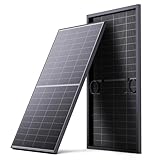
- 【N-Type 16BB High-Efficiency Solar Cells】The Callsun 200 watt solar panel is built with advanced N-type solar cells and 16BB busbar technology, delivering up to 25.6% conversion efficiency. Compared to traditional P-type cells, N-type solar panels generate higher power output and better reliability, while the 16BB design reduces hot spots and hidden cracks — ensuring superior performance and a longer lifespan.
- 【Boost Your Power with Bifacial Technology】Callsun 200W bifacial solar panels feature a transparent backsheet that captures sunlight from both sides — direct, reflected, and diffuse rays alike. Unlike traditional panels with opaque backs, our bifacial design harnesses extra solar energy from the rear, increasing your total power output by up to 30%. Get more clean energy and maximize your solar system’s efficiency with Callsun.
- 【TwinCell Anti-Shade Technology】The Callsun 200W solar panel uses an innovative dual-module parallel design, splitting the panel into two independent halves. If one section is shaded by trees, buildings, or other obstacles, the other half continues generating power. This smart design boosts shading tolerance by up to 50% compared to conventional panels, delivering more reliable energy output and reducing the risk of complete power loss.
- 【Perfect Fit for Class B Vans & Easy Installation】Measuring 51.3 x 30.3 x 1.4 inches and weighing just 23.8 lbs, this 200W solar panel is designed to maximize power in a compact footprint — ideal for Class B vans and other tight rooftop spaces. Each panel features pre-drilled holes on the back for quick, hassle-free mounting on large rail mounts or other surfaces, making installation faster and more secure.
- 【Built to Last for Decades】Engineered to withstand harsh weather year after year, the Callsun 200W monocrystalline solar panel features ultra-strong tempered glass, a corrosion-resistant aluminum frame, and an IP68-rated junction box. Built for exceptional durability and long-lasting performance, it delivers dependable clean energy and long-term value for your home, RV, or off-grid system.
If a planned system could affect an airport, road, neighboring property or another sensitive viewing location, assess the actual site and relevant local requirements rather than relying on a general claim about coatings. The FAA’s May 26, 2021 announcement says its policy applies to proposed solar energy systems at federally obligated airports with control towers and calls for visual-impact analysis and specified filing. It is not a universal rule for residential systems or every airport; consult the relevant authority for current requirements. Read the FAA announcement.
Do anti-reflective panels cost more?
There is no supported current, universal retail or installed-price premium for anti-reflective glass. EPRI’s 2016 report describes factory-integrated anti-reflective glass as a relatively easy drop-in replacement during module manufacturing. Applying a coating after a module has already been made adds processing cost and can introduce yield loss. That manufacturing context does not tell a buyer how much more a particular current panel or installation should cost.
Rank #4

- 【High-Power N-Type 16BB Cell Technology】Built with advanced N-Type monocrystalline cells and a 16BB busbar architecture, this Callsun 450W solar panel delivers higher energy yield, lower degradation, and improved long-term stability compared to traditional P-Type modules. Designed for high-power solar arrays, it helps maximize output per panel and reduce the total number of modules required in large rooftop and off-grid systems.
- 【Bifacial Design for Higher Total Energy Yield】Featuring a transparent backsheet, this Callsun 450W bifacial solar panel captures sunlight from both the front and rear sides, utilizing reflected and ambient light from surrounding surfaces to boost total energy production. Especially effective in ground-mounted, open-area, and reflective-surface installations, it helps increase system-level output without adding more panels.
- 【Bifacial Design for Higher Total Energy Yield】Featuring a transparent backsheet, this Callsun 450W bifacial solar panel captures sunlight from both the front and rear sides, utilizing reflected and ambient light from surrounding surfaces to boost total energy production. Especially effective in ground-mounted, open-area, and reflective-surface installations, it helps increase system-level output without adding more panels.
- 【More Power per Panel, Fewer Modules Required】Delivering 450W of rated power from a single panel, the Callsun 450W solar panel helps reduce the number of panels needed for your system. Fewer panels mean less wiring, fewer connections, faster installation, and lower balance-of-system costs—making it an ideal choice for high-capacity residential, commercial, and off-grid solar projects.
- 【Optimized for High-Voltage MPPT Solar Systems】Designed for high-power and high-voltage configurations, this 450W panel pairs efficiently with modern MPPT charge controllers and solar inverters. It enables higher-voltage string designs, reduced current losses, and improved overall energy harvest across varying sunlight conditions.
Installed solar costs include much more than module glass. The National Laboratory of the Rockies’ Solar Installed System Cost Analysis covers residential rooftop, commercial rooftop and utility-scale systems, and its page lists Q1 2025 PV system cost benchmarks. Those benchmarks have specific dates, geographies, system types and assumptions; they are context, not a coating surcharge or a quote for an individual home.
Do not assume a coating will pay for itself without comparing current, itemized offers and modeled production for the same location. The premium, if any, and the value of any yield difference have to be established for the products and project being considered.
Best Value

- 【High-Power N-Type 16BB Cell Technology】Built with advanced N-Type monocrystalline cells and a 16BB busbar architecture, this Callsun 450W solar panel delivers higher energy yield, lower degradation, and improved long-term stability compared to traditional P-Type modules. Designed for high-power solar arrays, it helps maximize output per panel and reduce the total number of modules required in large rooftop and off-grid systems.
- 【Bifacial Design for Higher Total Energy Yield】Featuring a transparent backsheet, this Callsun 450W bifacial solar panel captures sunlight from both the front and rear sides, utilizing reflected and ambient light from surrounding surfaces to boost total energy production. Especially effective in ground-mounted, open-area, and reflective-surface installations, it helps increase system-level output without adding more panels.
- 【Dual-Module Parallel Anti-Shade Design】Unlike conventional solar panels, this Callsun 450W module uses a dual-module parallel architecture that allows one half of the panel to continue producing power even when the other half is shaded. This design helps minimize power loss caused by partial shading, dirt, or uneven sunlight and delivers more stable output in real-world rooftop and ground-mount installations.
- 【More Power per Panel, Fewer Modules Required】Delivering 450W of rated power from a single panel, the Callsun 450W solar panel helps reduce the number of panels needed for your system. Fewer panels mean less wiring, fewer connections, faster installation, and lower balance-of-system costs—making it an ideal choice for high-capacity residential, commercial, and off-grid solar projects.
- 【Optimized for High-Voltage MPPT Solar Systems】Designed for high-power and high-voltage configurations, this 450W panel pairs efficiently with modern MPPT charge controllers and solar inverters. It enables higher-voltage string designs, reduced current losses, and improved overall energy harvest across varying sunlight conditions.
How to compare two panel quotes fairly
- Match the module ratings. Compare technology, rated power and efficiency, checking that the figures use comparable test conditions.
- Verify the glass specification. Look for whether the front glass is coated, textured or both, and request reflectance or transmittance data if the seller claims an advantage. Check whether the treatment is factory-integrated.
- Compare durability evidence. Read the module and coating warranty terms and what evidence supports long-term performance; do not infer coating lifetime from an optical claim.
- Use the same site assumptions. Have each proposal use your roof direction, tilt, shade and local climate to estimate annual production.
- Compare itemized installed costs. Separate modules from inverters, mounting, labor, permitting and other project charges so a glass feature is not confused with differences elsewhere in the quote.
- Check glare-sensitive locations. Identify where a reflection could matter and whether a local authority or project review applies; seek a site-specific assessment when appropriate.
These checks help distinguish a real, documented product difference from a broad marketing promise. They also let you compare the coating on its merits without overlooking system design or installation costs.
Can you add an anti-reflective coating to panels you already own?
A homeowner should not assume a coating can be safely or effectively applied to an installed module. EPRI describes anti-reflective treatment as a manufacturing-stage feature and notes added processing cost and potential yield loss for post-manufacture coating. The report does not establish a universal retrofit method or compatibility with existing modules. Consult the module manufacturer before considering any surface treatment.
Quick Recap
Product prices and availability are accurate as of the date/time indicated and are subject to change. Any price and availability information displayed on Amazon at the time of purchase will apply.

