Recommended Free Tools
For most first-time owners, a Linux-based Anbernic handheld is easier to set up. You generally flash one firmware image to a microSD card, boot into a console-style launcher and begin configuring games. An Android model is more adaptable, but usually asks you to complete system updates, choose and install emulators, select a frontend, grant storage permissions and map controls. That extra work can be worthwhile if you want a broader app ecosystem or newer emulator builds.
The clearest comparison is the Linux ANBERNIC RG35XX H against the Android ANBERNIC RG556. They represent different setup philosophies rather than identical hardware tiers: Linux is appliance-like, while Android behaves more like a small tablet that you turn into a game console.
As an Amazon Associate I earn from qualifying purchases.
The short answer: Linux is easier, Android is more flexible
Ease of setup depends on what you call setup. If you want to copy legally obtained game files to a card, open a console-style menu and play classic systems, Linux usually involves fewer decisions. If you want to install several emulator apps, experiment with frontends, adjust per-system settings or use Android software beyond emulation, Android offers more room to customize but takes longer to make feel finished.
Quick wins for a faster PC:
Clear out junk files and repair common Windows errorsFree Scan →Scan for outdated or missing drivers - takes under a minuteDriver Scan →Repair Windows errors before they cause bigger problemsFix Now →Linux does not mean no technical work. Reflashing normally requires a computer, a card reader, a compatible microSD card, an image-writing utility and the correct firmware for the exact model. Android may avoid that image-writing step on some devices, but shifts the effort into software configuration. Neither operating system guarantees a trouble-free result if the wrong firmware, a damaged card or incompatible files are used.
#1 Best Overall
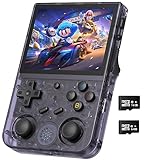
- 【Anbernic RG353V latest Dual System】The open source linux and the Android 11 dual system . Built-in 64G SD Card 4452 games , it can support Android games and 20 kinds of games format . When you use the Android system , it is not only a game console , but also a multi-function entertainment device. You can listen to the music,watch TV and go shopping,socialize and so on.
- 【5G WIFI &4.2 Bluetooth & TV Output & Moonlight streaming】Built-in 2.4/5G WIFI 802.11a/b/g/n/ac , New generation of 5G WIFI technology , support 2 hosts to play online at the same time . Bluetooth 4.2 can connect gamepad , headset . Support Moonlight streaming that can play PC games smoothly . Dual 360-degree operation is really cool let the market Most portable game consoles on the market are prohibitive. Wow, this is crazy, this is a must-have item for kids, a wonderful retro game console.
- 【Upgrade RK3566 Chip】RG353V game console use the RK3566 Quad-Core 64 bit Cortex-A55, Main frequency up to 1.8GHz , LPDDR4 2GB , 32GB high-speed eMMC 5.1 + 16GB TF , which can solve the problem of frame dropping in the game, run the game perfectly, and make your game screen smoother.
- 【3.5 INCH IPS SCREEN】3.5-inch IPS full viewing angle, zero distance OCA full fit/ 640*480 , very clear display. Tempered glass, double protection with scratchproof and anti-fall, brings exciting gaming experience and better eye protection.
- 【3200MAH HIGH CAPACITY BATTERY】Built-in 3200mAh high capacity lithium battery for ultra-long standby time and battery life. Support up to 6 hours game playing. Support fast charging with USB Type-C cable. Brings lots of joy and happiness to you during a trip or a long journey.
ANBERNIC does not publish an authoritative setup-time or failure-rate statistic for these devices. Community accounts describing Android as more involved are useful impressions, not controlled measurements, so treat the comparison as a practical rule of thumb rather than a timed test.
What “easy to set up” actually involves
There are five separate jobs hidden inside the phrase plug and play. Separating them helps explain why the two operating systems feel different.
First boot
A Linux image normally supplies the operating system and a console-oriented launcher together. After the card is prepared and the handheld boots, there are fewer interface choices to make. Android starts in a tablet-like environment. You may need to finish the initial Android setup, install or update emulators, decide how games will be launched and configure the controls before the experience resembles a dedicated console.
Free tools Windows power users keep installed
One-click scans. No signup required.
Firmware installation
Linux firmware is commonly distributed as an image intended for a microSD card. The image must match the model and, in some cases, the card layout expected by that model. Android handhelds can also have firmware packages and update procedures, but day-to-day setup more often centers on applications and permissions.
Game and application organization
Linux tends to present a fixed set of system folders and menu categories. Android gives you choices: individual emulator apps, a frontend, file managers, storage locations and different ways to scan a library. Those choices are useful, but each one introduces another setting that can be wrong.
Controls and storage permissions
Linux distributions designed for handhelds generally expose controls through their launcher and emulator defaults. Android applications may need permission to read a particular folder, and an emulator may require its own button mapping. A game can launch successfully while still having incorrect controls or no permission to create save files.
Maintenance
Linux is relatively predictable once a known-good image is working, although changing images still requires care. Android has a broader update and application ecosystem, which can improve compatibility but also creates more opportunities for an app update, permission change or frontend setting to alter the experience.
Linux setup: the bounded workflow
ANBERNIC’s support instructions for its RG35XX 2024 process, modified 11 March 2025, describe a finite sequence: obtain the exact firmware, extract it with 7-Zip, format the TF1 card as FAT32 and write the image with Rufus. The same logic applies only when the instructions for your particular model call for that method; do not assume every Anbernic device uses the same image or card arrangement.
1. Identify the exact handheld and card slot
Read the model name printed on the device, its box and the existing system information screen. Names that look similar can have different images. The official firmware directory lists separate model entries, including an ANBERNIC RG35XX H Linux handheld and an ANBERNIC RG556 Android handheld. Firmware versions and package links change, so use the current entry for your model rather than an old download saved from a forum.
Rank #2

- 【Anbernic RG34XXSP Retro Handheld Game Console】The Anbernic RG 34XXSP recreates the classic clamshell design with powerful magnets for a satisfying snap shut, and a built‑in Hall sensor that wakes the system when opened and puts it to sleep when closed – saving battery and protecting the screen. This tribute to the golden age of handhelds turns every open‑close into a ceremonial moment: no extra steps, just play or pause instantly. The magnetic damping and wake logic not only boost playability but also add immersion and ease, delivering a unique retro charm with a distinctive design.
- 【Stable and Smooth Linux System】The RG34XX SP handheld game console featuring an H700 quad-core 1.5GHz CPU, Mali‑G31 dual‑core GPU, and 1GB RAM, delivers instant game loading, stable framerates, and fluid multitasking for a smooth retro gaming experience. Its intuitive OS boots straight to your library with zero setup – enhanced capabilities for a wide range of emulators. Tech-savvy users can customize the interface, add new emulators, and manage their game library with greater freedom. Modern performance, pure nostalgia.
- 【3.4-Inch IPS OCA Screen】The RG 34XXSP retro gaming console features a 3.4-inch IPS full-angle OCA-laminated display with 720×480 resolution, delivering sharp details and vivid colors that faithfully recreate the classic retro game palette. The full-lamination design reduces glare and reflections, helping keep your eyes comfortable during long gaming sessions. With a wide viewing angle, the screen maintains consistent color and clarity from any holding position — whether you’re gaming in bright outdoor patios, dim airplane cabins, relaxing on the couch, or lounging sideways in bed.
- 【Massive Game Library】The RG 34XXSP emulator console comes with a 64GB TF card and dual slots expandable up to 512GB, supporting over 30 game formats. It features a 3300mAh lithium polymer battery and third-party software and the RixelHK game downloader for more titles. Powerful hardware delivers smooth, lag-free performance for an immersive retro experience.It supports 2.4G wireless, wired and Bluetooth controllers, HDMI output, vibration motor, WiFi online battles and streaming. Ideal for family gatherings or online co-op, it brings joyful multiplayer fun.
- 【Perfect Gift, Worry-Free Support】Ideal for Valentine’s Day, birthdays, Christmas, Father’s Day, New Year, the RG34XXSP is a warm, delightful gift. More than a console, it is tangible youthful nostalgia. With elegant packaging and out-of-box play, it conveys your sincere care to partners, family and friends.We offer comprehensive after-sales for peace of mind: fast-responding professional support, hassle-free returns for quality issues, and full technical guidance. Sincere and efficient, we safeguard every gaming moment — a decent, reliable, long-lasting gift.
2. Prepare the required equipment
- A computer with enough free storage for the downloaded archive and extracted image.
- A card reader that can reliably write to the microSD card.
- A microSD card compatible with the handheld and large enough for the image and your intended library.
- A FAT32-capable formatting tool or operating-system utility, when the model instructions require FAT32.
- 7-Zip for extracting the supplied archive and Rufus, specifically named in ANBERNIC’s RG35XX instructions, for writing the image.
- A stable network connection for downloading the package.
Keep the original card untouched until the replacement boots and basic functions work. If you have important saves, make a verified backup before formatting anything. A backup that is merely copied but never opened or checked is not a reliable recovery plan.
3. Download only the package for your model
Open ANBERNIC’s official system-model firmware page and select the exact handheld. Check the model label, package description and any version information. Firmware listings are volatile; a version visible today may be replaced later. Do not substitute an image because another Anbernic model has a similar name, shell or screen.
4. Extract the archive
Use 7-Zip to extract the downloaded package. Do not write the compressed archive itself to the card unless the model’s instructions explicitly say to do so. The extracted image may be large and can take time to unpack. Keep the archive until the card has been tested so you have a clean source for another attempt.
5. Format the TF1 card when instructed
ANBERNIC’s documented RG35XX workflow calls for formatting the TF1 card as FAT32 before imaging. Formatting erases the card, so verify the drive letter or device name before confirming. Disconnect other removable drives if possible, and check the card’s capacity in the formatting dialog. If your exact model’s instructions specify another filesystem or partition process, follow that instead of applying the RG35XX procedure blindly.
6. Write the image with Rufus
Launch Rufus, select the correct removable card and choose the extracted firmware image. Recheck the destination: selecting an external hard drive instead of the microSD card can destroy unrelated data. Start the write and wait for Rufus to report completion. Do not remove the card while it is being written or verified.
7. Boot and perform a small acceptance test
- Safely eject the card from the computer.
- Insert it into the slot identified by the model instructions, commonly the TF1 system slot in the documented RG35XX process.
- Power on and allow the first boot to finish without interrupting it.
- Confirm that the launcher opens, buttons respond, the display and audio work and the handheld can shut down normally.
- Test one legally obtained game, create a save state and restart to verify that the save location is writable.
Only after this basic test should you copy a large library or experiment with alternate firmware. A small test reduces the number of variables if something fails.
Android setup: more choices, more decisions
An Android Anbernic handheld may be usable immediately after its initial boot, but a console-like setup usually takes several additional choices. The following order keeps those choices manageable.
1. Finish system setup and updates
Complete the Android setup screens, connect to a trusted network and install available system updates for the device. Record the current software version before changing settings. If an update is offered, allow it to finish before installing a large emulator collection; troubleshooting is easier when the base system is current and stable.
2. Install only the emulators you need first
Start with the systems you actually intend to play. Installing many emulators at once creates overlapping file associations, duplicate settings and more possible controller mappings. Add another emulator only when the first one is working and you know why you need it.
Rank #3

- [RG35XX H Handheld Game Console]The RG35XX H retro handheld game console is powered by an H700 quad-core ARM Cortex-A53 processor with a 1.5GHz clock speed, delivering smooth and responsive performance for an enhanced gaming experience.
- [Massive Storage for Game Downloads] The RG35XXH hand held game console comes with 64GB TF card, supporting expansion up to 2TB. It allows users to add emulators and games in various formats.
- [3.5-Inch IPS Display] Featuring OCA full lamination and multi-touch support, the 640*480 resolution IPS screen ensures sharp visuals. The tempered glass provides dual protection (scratch-resistant and drop-proof) while reducing eye strain.
- [3300mAh High-Capacity Battery] With long-lasting battery life, the RG 35XXH retro gaming console handheld offers up to 8 hours of continuous gameplay and supports fast charging via USB Type-C, making it perfect for gaming on the go.
- [Multiple Connectivity Modes for Interactive Fun] The RG35XX H handheld gaming console supports 2.4G wireless/wired controllers, Bluetooth controllers, HDMI TV output, vibration feedback, Wi-Fi multiplayer, and game streaming. The HDMI mode is ideal for family gatherings or parties, adding excitement to social gaming sessions.
3. Choose a frontend deliberately
A frontend can present games in a console-style library, but it is optional. Decide whether you prefer launching each emulator directly or managing everything through one interface. A frontend usually needs the correct emulator paths, system names, artwork folders and game directories. If those paths are wrong, the frontend may show an empty library even though the files are present.
The Tool Desk
Outbyte Driver Updater FREEFix the driver behind crashes, sound loss and screen glitchesFind Drivers →Outbyte PC Repair FREEClear out junk files and repair common Windows errorsFree Scan →4. Grant storage access carefully
When an emulator or frontend requests access to game folders, select the intended directory and note what permission was granted. Android’s storage model can distinguish between a folder and its parent location. An application that can list games may still lack permission to write save states. Test both launching and saving rather than assuming that a successful scan proves everything is configured.
5. Map the controls
Open the emulator’s input settings and map the handheld’s buttons, analog controls and menu or hotkey combination. Keep a written note or screenshot of the mapping before changing it. Different emulators can use different names for the same physical button, and a mapping that works in one application does not automatically apply to another.
6. Test saves and suspend behavior
Load a small game, make an in-game save and a save state, exit the emulator and reopen it. Check that both saves can be found. Also test sleep and resume if you expect to pause the handheld frequently. This catches permission and background-process problems before you invest time in organizing a large collection.
7. Add customization last
Themes, shader settings, alternative frontends and per-game profiles can improve the experience, but they make the configuration harder to reproduce. Keep a simple baseline working before changing appearance or performance settings.
RG35XX H versus RG556: what the comparison means
| Setup axis | Linux handheld, such as RG35XX H | Android handheld, such as RG556 |
|---|---|---|
| Initial setup | Usually one firmware image and an SD-card write; a computer and card reader are needed if reflashing. | Usually involves Android setup plus emulator, frontend and storage-permission choices. |
| First-boot experience | Typically a console-style launcher with fewer decisions after the image is working. | Starts closer to a small tablet and may need software configuration before it feels console-like. |
| Firmware reference | The current ANBERNIC directory lists RG35XX H Linux firmware entries; versions can change. | The current ANBERNIC directory lists RG556 Android firmware entries; versions can change. |
| Retro-only ease | Easier for most beginners who want classic systems and a focused interface. | More choices and more decisions before the library is organized. |
| Flexibility | Focused and appliance-like once configured. | Broad Android application ecosystem and more customization. |
| Main setup risk | Choosing the wrong image, formatting the wrong drive or interrupting an SD-card write. | Configuration sprawl, inconsistent app permissions or controller mappings. |
| Authoritative setup-time statistic | Not stated. | Not stated. |
This is a setup comparison, not a performance benchmark. The operating system can influence the amount of configuration, but it does not by itself establish how many games a device can emulate or how well a particular title runs.
Independent reader supportYour contribution helps us test, update, and keep practical guides available for everyone.When Android’s extra setup is worthwhile
Choose Android when the ability to install applications matters more than the shortest path to a working library. Android is a sensible fit if you are willing to select emulator builds, adjust permissions and maintain a frontend in exchange for broader software flexibility. It is also more appealing when your use case extends beyond a fixed, classic-system menu.
Choose Linux when your priority is a predictable, controller-first interface for 8-bit through PlayStation-era systems and you would rather make one careful card image than manage several applications. This is a buying heuristic, not a measured performance claim: the right choice still depends on the exact model, firmware and games.
Common Linux problems and recovery steps
The handheld will not boot after flashing
- Confirm that the image matches the exact model and the current official package.
- Check that the image was fully extracted before writing.
- Reflash the card after verifying the destination drive in Rufus.
- Try a known-good card or reader if the write reports errors or the card repeatedly disconnects.
- Restore the original card if the device worked before the experiment; this separates a firmware problem from a hardware problem.
The computer shows the card with the wrong capacity
Disk images can create partitions that look smaller or different from the card’s advertised capacity. Do not immediately format every visible partition. Follow the model’s documented partition and expansion instructions, and keep your backup before changing anything.
Rank #4

- RG35XX handheld came console: 3.5-inch IPS full viewing angle screen with OCA full lamination and 640x480 resolution for vibrant crisp visuals; Its H700 quad-core ARM Cortex-A53 CPU at 1.5GHz
- RG35XX retro gaming console: The 64GB built-in storage space contains over 5,500 retro games; RG35XX retro console offers comprehensive game compatibility covering PSP PS1 DC NDS and more formats
- Battery and Charging: The 2600mAh battery provides up to 7 hours of continuous gameplay on a single charge; Surpports 5V/1.5A charging and C2C charger
- Audio and Connectivity: High-fidelity speaker. Supports 2.4G wireless/wired controllers. HD output for TV connection
- Ergonomic Design and Accessories:Ergonomic design. Includes USB cable; manual; screen protector. Stylish colors for appeal
Games appear missing
Verify that the files are in the folders expected by the launcher and that the card is in the correct slot. Add one test file first, rescan or reboot, and confirm that the launcher recognizes it before copying a full library.
Common Android problems and recovery steps
The frontend shows an empty library
Check the selected game directory, Android storage permission and the system name assigned by the frontend. Test the same file by opening it directly in the emulator. If direct launch works, the problem is library configuration rather than the game file.
Buttons work in one emulator but not another
Open the second emulator’s input menu and map the controls there. Avoid assuming that a global Android gamepad setting controls every application. Save the profile if the emulator supports profiles, then test a game and its menu hotkeys.
Save states fail
Recheck the application’s folder permission and save-path setting. Use a small test game, create a state, close the emulator normally and reopen it. If the state disappears, correct the path before importing a large library.
Do these 3 things before closing this tab:
1Fix the driver behind crashes, sound loss and screen glitches2Clear out junk files and repair common Windows errors3Scan for outdated or missing drivers - takes under a minuteAn update changes the behavior
Note the Android version, emulator version and frontend version whenever the system works. If an update introduces a problem, consult that application’s settings and release notes, disable unnecessary automatic changes where possible and restore your documented baseline.
A practical decision checklist
Select Linux if most of these statements describe you:
- You want the shortest route to a console-style menu.
- You are comfortable using a computer and card reader once to prepare the system card.
- You mainly want classic systems rather than a broad Android app environment.
- You prefer fewer settings to maintain after the initial installation.
Select Android if most of these statements describe you:
- You want to install and change emulator applications.
- You are comfortable granting storage permissions and mapping controls per app.
- You want a frontend and are willing to configure its paths and metadata.
- You value flexibility more than the fewest first-day decisions.
If you are undecided, the Linux path is the safer default for a first Anbernic purchase aimed at retro-only play. The Android path makes sense when you already know which applications and customization options you intend to use.
PC Slower Than It Used to Be?
A free scan shows the junk files, broken settings and background clutter dragging Windows down - then fixes them in one click.Free scan · Windows 10 & 11Crashes, No Sound, or Screen Glitches?
Random freezes, missing sound and display glitches usually trace back to one bad driver. Find and replace yours safely.Free scan · under a minuteBackups, legal game files and safe experimentation
Keep the original system card or a verified disk backup before flashing alternate images. Label cards so the system card and game card are not confused, and store a copy of important save files separately. When testing a new image, change one variable at a time: card, firmware, frontend or emulator, not all four together.
Use legally obtained game files. The setup procedures do not provide ROMs, and installing an emulator does not grant permission to download copyrighted games. Organize only the files you have the right to use, and keep your library separate from the firmware backup so a future reflash does not erase both.
Bottom line
For the question “Which is easier to set up, an Anbernic Android handheld or a Linux handheld?”, the answer is Linux for most beginners. A Linux model such as the RG35XX H concentrates the work into obtaining the correct image and writing the SD card. An Android model such as the RG556 avoids some image-flashing situations but replaces them with emulator, frontend, permission and controller decisions. Pick Linux for a fast, focused retro console; pick Android when its flexibility is the reason you are buying the handheld.
Quick Recap
Product prices and availability are accurate as of the date/time indicated and are subject to change. Any price and availability information displayed on Amazon at the time of purchase will apply.
What’s actually slowing this PC down?
Pick the symptom - the matching free tool is one click away.

