Quick wins for a faster PC:
Fix the driver behind crashes, sound loss and screen glitchesFind Drivers →Repair Windows errors before they cause bigger problemsFix Now →Scan for outdated or missing drivers - takes under a minuteDriver Scan →For new, worrying, persistent, or worsening symptoms, choose a clinician-led telemedicine visit or in-person care—not an AI symptom checker. If you have a potentially life-threatening warning sign, call emergency services immediately. An AI checker is useful for general education, organizing a symptom timeline, and preparing questions, but it should not diagnose you or justify delaying treatment.
The practical choice depends on urgency, whether an examination or testing may be needed, access, privacy, and cost. The guide below shows where each option fits and when to move from one to the other.
As an Amazon Associate I earn from qualifying purchases.
Quick decision: which option fits your situation?
| Your situation | Best first step | Reason |
|---|---|---|
| General education or preparing questions | AI for education only | It can organize information quickly, but verify important claims with a trusted medical source or clinician. |
| New, persistent, worsening, or unexplained symptoms | Book telemedicine or contact primary care | A clinician can ask follow-up questions, interpret your history, prescribe when appropriate, and arrange testing or examination. |
| A common, non-life-threatening problem when travel is difficult | Telemedicine, if the service covers that problem | Virtual urgent care can assess many routine complaints and decide whether you need in-person care. |
| You may need a hands-on examination, imaging, laboratory work, a procedure, or the diagnosis is uncertain | In-person care, sometimes after telehealth triage | Remote care cannot perform every examination or test. |
| Severe or rapidly worsening warning signs | Emergency services now | Do not wait for an AI response or a routine appointment. |
Telemedicine means a healthcare encounter by video, telephone, or secure messaging. It is still clinical care: a licensed professional gathers information, makes a triage decision, and can arrange treatment or escalation. An AI checker is software that generates information from the details you enter; it has no physical examination, laboratory result, or responsibility for your care.
Windows Errors? Fix Them Before They Spread
Repair common Windows errors and clear accumulated junk for a smoother, more stable PC - no reinstall needed.Free scan · no reinstallOutdated Drivers Are Slowing You Down
One free scan finds every outdated or missing driver and matches the right update for your exact hardware.Free scan · exact hardware matchWhat an AI symptom checker is good for
Symptom checkers can be convenient when your goal is orientation rather than a medical decision. They can translate unfamiliar terms, group symptoms into a timeline, and suggest topics to discuss at an appointment. For example, you might ask, “What are common causes of a dry cough?” or request a concise list of questions for a clinician.
#1 Best Overall

- ✨Swift Results in Just 1 Second: Experience the efficiency of ANMEATE thermometer for adults with its remarkable 1-second read capability. Obtain accurate temperature readings swiftly, providing you with timely and dependable results.
- ✨Reliable and Accurate Measurements: Our forehead thermometer undergoes rigorous clinical testing, ensuring it is a fast and highly reliable device for temperature readings. Specifically designed for forehead use, it boasts a tiny error margin, making it an ideal choice for precise measurements.
- ✨3 Backlight Indicators: (Green, Yellow, Red) for different temperature levels, turns red, and sounds an alarm when the temperature is abnormal. It has 35 sets of memory storage, a one-touch mute,℉ /℃ switchable, and a fever warning.
- ✨Suitable for All Ages with User-Friendly Design: Crafted to be gentle and ergonomic, our Fahrenheit/Celsius thermometer is suitable for all age groups. Its easy-to-use controls make it an excellent choice as a baby thermometer, for children, and as a reliable device for adults.
- ✨Complete Package with Support: Your purchase includes the Anmeate thermometer, 2 AAA batteries, user manual, and lifetime support. We are committed to providing you with a comprehensive and reliable solution for your temperature measurement needs.
Useful, low-risk tasks
- Terminology: Ask for plain-language explanations of a diagnosis, test, or medication name you have already received from a professional.
- Preparation: Turn notes into a chronological record showing when a symptom began, what changed, and what you have tried.
- Question generation: Create prompts about possible causes, side effects, follow-up timing, or what information to bring to an appointment.
- General education: Compare broad categories of causes, provided you treat the output as background information and verify it.
A symptom checker may also offer a preliminary urgency suggestion. That can help you recognize that a situation deserves attention, but it is not a reliable “all clear.” The safest use is as a research assistant for your conversation with a healthcare professional, not as a substitute for one.
Why an AI result cannot replace clinical assessment
Consumer AI receives only the information you type or upload. It cannot feel your pulse, observe breathing effort, examine a rash, perform a neurological examination, review your complete record, or order a test. Missing one detail can change the appropriate next step.
Common failure modes
- Missed emergencies: A user may omit a key symptom or describe it ambiguously, leading the system to understate urgency.
- False reassurance: A plausible-sounding low-risk explanation can encourage someone to wait when an examination is needed.
- Over-triage: The opposite can happen: ordinary symptoms may be described as urgent because the system cannot judge context.
- Hallucinated certainty: An answer can sound authoritative while being incorrect, incomplete, or based on a pattern that does not fit the individual.
- Bias and uneven performance: Training data and app design may not represent every age, skin tone, language, disability, or medical history equally.
- Incomplete advice: A generated list may omit medication interactions, pregnancy considerations, allergies, or a relevant chronic condition.
The American Academy of Dermatology reported diagnostic-accuracy ranges of 19% to 38% across symptom-checker studies in 2023. That figure comes from dermatology and app evidence; it is not a universal accuracy rate for every checker, symptom, or patient. Accuracy also does not equal safety: a tool can occasionally name the right condition while still missing an emergency or giving unsuitable next steps.
Mayo Clinic clinicians have cautioned that current tools may miss key details, miss emergencies, sound too urgent, or sound certain while wrong. The U.S. Agency for Healthcare Research and Quality likewise notes that consumer-AI accuracy varies and that outputs can be incomplete or misleading. UK medical-device vigilance guidance identifies failures that can cause misdiagnosis, false reassurance, or delayed treatment.
Rank #2
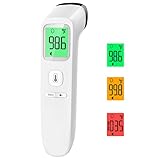
- Reliable & Accurate: Goodbaby Forehead Thermometer has been clinically tested and found to be a fast and absolutely reliable gadget to use. It is ideal for forehead readings.
- Fast & Easy Temperatures Readings: Taking your family’s temperature with Goodbaby Forehead Thermometer is as simple as pointing, and pressing a button. It uses infrared technology and can show readings in Celsius or Fahrenheit.
- Advanced Technology for Excellent Performance: It uses reliable ABS housing materials. Ergonomically designed, the firm grip makes it easy for even naughty children.
- Multi-mode Thermometer: Goodbaby Thermometer is designed for all ages, adults, infants, and elders. It not only supports the forehead function but is able to take room/object temperature.
- Trustworthy and Precies: Goodbaby Thermometer is backed by clinical validated and recommended by the pediatrician. Please contact our friendly customer support team if you have any concerns about the device.
What a telemedicine appointment adds
A telemedicine clinician can conduct a structured history rather than relying on whatever details a user thinks to enter. The professional can ask when the problem started, what makes it better or worse, what medicines you take, and whether a chronic condition changes the risk. They can judge whether your description is internally consistent and ask follow-up questions in real time.
Clinical actions available remotely
- Assess urgency and decide whether emergency, same-day, routine, or self-care is appropriate.
- Discuss a working diagnosis and explain what findings would change it.
- Prescribe when legally and clinically appropriate.
- Order laboratory tests or imaging, where the service and jurisdiction allow.
- Refer you to primary care, a specialist, an emergency department, or an in-person clinic.
- Arrange follow-up so that worsening symptoms are not left without a plan.
MedlinePlus lists virtual visits, prescriptions, dermatology, eye care, nutrition, mental-health counseling, and some urgent-care conditions among telehealth uses. It also emphasizes that an in-person examination or laboratory test may still be necessary and that insurance coverage varies. The U.S. Department of Health and Human Services describes telehealth as useful for urgent-care visits and triage, including a clinician deciding whether emergency-department care is needed.
What telemedicine cannot do by itself
A remote visit may not be enough when diagnosis depends on touching an area, listening with a stethoscope, checking vital signs with reliable equipment, collecting a specimen, taking an image, or performing a procedure. A clinician should tell you when to switch to in-person care; do not interpret a video visit as proof that no examination is needed.
When to skip both options and call emergency services
Do not open a symptom checker or wait for a routine telehealth slot when you have a sign of a possible life-threatening problem. MedlinePlus identifies examples that warrant emergency services or an emergency department:
Rank #3

- Safe Thermometers for Adults and Babies: Boncare thermometer comes with a soft silicone tip and a reliable stainless - steel probe. It's designed for oral, rectal, or axillary use, making it suitable for infants, children, adults, and dogs. It offers great convenience and ensures safety for you and your family.
- Accurate and Fast Reading: This digital thermometer uses the latest and most advanced sensor probe and takes only about 10 seconds to get a reading. Its temperature - reading function has been clinically tested, enabling it to accurately detect fever. Thus, it can assist you in deciding whether you need to rest or seek medical care.
- LCD Screen Display: Our baby thermometer features a highly legible LCD screen. It comes with a beeper alarm for notification, a memory display function to recall last reading, and an auto - shut - off mechanism for energy conservation. Moreover, it allows you to easily switch between ℉(Fahrenheit) and ℃ (celsius).
- Portable and Easy-to-Clean Design: The waterproof tip of the mouth thermometer allows for effortless cleaning. You can wipe it with water or disinfect it with medical alcohol before or after each use. Lightweight and compact, it comes with a protective storage case—ideal for both home use and on-the-go convenience whenever needed.
- Note: Before using the health care thermometer, carefully read the product manual. Start measuring when “Lo℉” shows up. To ensure the accuracy of the measurement, avoid touching the probe with your hands or other hot objects prior to taking the temperature.
- Severe chest pain or pressure.
- Severe shortness of breath or breathing difficulty.
- Fainting or loss of consciousness.
- Sudden inability to speak, see, walk, or move.
- One-sided weakness.
- Heavy bleeding.
- A severe allergic reaction accompanied by breathing trouble.
- Severe pain or another rapidly worsening, life-threatening symptom.
If you are unsure whether a symptom belongs in this category, err toward immediate professional help. Use your local emergency number, and do not drive yourself if you may pass out, are confused, or cannot breathe safely.
How to use an AI checker safely before an appointment
If your symptoms are mild and stable and you are using AI for preparation, keep the interaction bounded. The objective is a better clinical conversation, not a self-issued diagnosis.
- Write the timeline first. Record the start date, progression, triggers, associated symptoms, temperature or other measurements, and anything that relieved or worsened the problem.
- Ask an educational question. Request common categories of causes or definitions, rather than “Tell me exactly what I have.”
- Ask what information a clinician will need. Use the output to identify missing dates, medication names, exposures, or prior diagnoses.
- Generate questions. Ask for a short list covering possible explanations, warning signs, expected course, tests, treatment options, and follow-up.
- Check against authoritative advice. Compare urgent-care guidance with a government health service, your clinician, or a recognized medical organization.
- Set a time limit. If symptoms persist, worsen, or remain unexplained, stop querying and arrange professional care.
Never let a reassuring AI response overrule a red flag, a clinician’s instruction, or your own observation that you are deteriorating. Conversely, an alarming output is not a diagnosis; contact a clinician for context unless emergency signs require immediate action.
The Tool Desk
Outbyte Driver Updater FREEScan for outdated or missing drivers - takes under a minuteDriver Scan →Outbyte PC Repair FREERepair Windows errors before they cause bigger problemsFix Now →How to book and prepare for telemedicine
- Choose the appropriate service. Select primary care, virtual urgent care, a specialist, or a mental-health service based on the complaint. Confirm that the service treats your age group and symptom type.
- Check location and coverage. Clinicians may be licensed only where you are physically located. Verify insurance participation, self-pay fees, and whether tests or prescriptions create additional charges.
- Review technical requirements. A stable internet connection, camera or telephone, charged device, and a private location improve the visit. Ask whether secure messaging is available if video fails.
- Gather records. Have a medication and allergy list, relevant diagnoses, home readings, dates of prior visits, and photographs that show changes over time. Follow the service’s instructions for uploading files.
- Describe the problem directly. Start with the main symptom, when it began, how it is changing, and what worries you most. Mention emergency warning signs even if they have resolved.
- Confirm the plan. Before ending, ask what to do today, which symptoms require urgent escalation, when results will arrive, and how to obtain an in-person examination if needed.
On-demand telehealth can address complaints such as headache, nausea, fever, and rash in some services. A clinician can redirect you to an emergency department or in-person clinic when the remote assessment is insufficient.
Rank #4

- Instant Read Meat Thermometer | Our instant read thermometer features a temperature probe and advanced, highly accurate technology with a 1-2 second response time. Our instant read food thermometer comes pre-calibrated with instructions and a meat temperature chart, plus a recalibration feature if needed.
- Multi-Use | From bbq thermometer to baking thermometer, our digital food thermometer for cooking is perfect for meats, liquids, deep frying and candy making. For air fryer, oven, grill, BBQ, griddle, smoker, kitchen and outdoors.
- Easy-Read Digital Thermometer For Cooking | Large instant thermometer dial with bright blue backlight means you can always read the temperature, whether you are grilling in the dark or baking in your kitchen. Perfect must have grilling accessory for kitchen essentials.
- Waterproof (IP67) | Perfect digital cooking thermometer for meat, our digital meat thermometer for food of any kind is waterproof IP67 rated and can be washed and cleaned under running water. A must-have among your grilling and kitchen accessories.
- Stocking Stuffers for Men | Our meat thermometer for cooking and grilling arrives in an elegant gift box, making it an ideal Christmas gifts for men, mens gifts, mens stocking stuffers, and stocking stuffers for adults. Perfect gifts for dad, husband, him, white elephant gifts or a secret santa favorite.
Privacy: what not to share with a public AI tool
Health information can identify you even when you remove your name. Public chatbots may retain prompts, use them for service improvement, or expose them through account, device, or sharing settings. Mayo Clinic advises against uploading identifying medical records to a public chatbot and notes that AI lacks the safeguards and complete context of a healthcare relationship.
Safer data practices
- Do not paste your full medical record, insurance number, government identifier, address, phone number, or date of birth into a general-purpose chatbot.
- Remove names, exact dates, record numbers, photographs containing identifying details, and unrelated family information.
- Use a healthcare service with clear privacy terms when you need to transmit records or images.
- Ask how long data is retained, who can access it, whether it is used to train models, and how to delete it.
- Keep the minimum information needed for the educational question; more data is not automatically safer or more accurate.
Telemedicine is not automatically private either. Use the provider’s official application or portal, a private room, headphones when appropriate, and a secure connection. Read the service’s privacy notice before sending sensitive material.
Convenience, access, and cost trade-offs
| Factor | AI symptom checker | Telemedicine |
|---|---|---|
| Speed | Immediate response at any time. | Depends on appointment availability or on-demand queues. |
| Professional judgment | No clinician; output depends on entered information. | Licensed clinician can ask questions, interpret context, and triage. |
| Examination and testing | Cannot examine, measure, collect specimens, order tests, or perform procedures. | Can arrange prescriptions, tests, imaging, referrals, or an in-person examination when appropriate. |
| Travel and mobility | No travel. | Avoids travel for eligible complaints but requires a device, connection, and suitable location. |
| Cost and coverage | Varies by app; privacy and data-use terms may be the trade-off. | Fees and insurance coverage vary by state, insurer, provider, and service; verify before booking. |
| Accountability | No individualized follow-up or duty to arrange care. | Provides a documented plan and escalation route within the service. |
Telemedicine can improve access when transportation, mobility, distance, or scheduling makes an office visit difficult. It still may involve a copay, self-pay fee, or separate charge for a test. Coverage rules differ by jurisdiction and insurer, so confirm the price and what is included before you start.
Situations that favor telemedicine first
New or unexplained symptoms
A clinician can determine whether the symptom is suitable for monitoring, needs a same-day evaluation, or requires examination and testing. This is safer than trying multiple AI prompts until one sounds reassuring.
Best Value

- A century of powerful relief: At Vicks, we believe everyone deserves a touch of care; you can rely on our line of digital thermometer for adults, kids and babies to provide quick, accurate results when you need them most
- Versatile: With an 8-second result, it’s ideal as an adult thermometer while also serving infants, toddlers, and kids; SpeedRead works orally, rectally, or under the arm as digital baby thermometers
- Quick, accurate results: This Vicks Thermometer provides accurate, simple readings in only 8 seconds, so you can get results quickly; this oral thermometer also has a memory feature that recalls and displays last temperature taken
- Easy to read infant thermometer: The color coded Fever InSight helps you understand temperature readings at a glance; a green display suggests a normal temperature, yellow is an elevated temperature and red is a high temperature
- Special Features: Vicks digital thermometers are water resistant for easy, thorough cleaning, and have an automatic shut-off for longer battery life; plus, it includes a battery and has a limited 1 year warranty
Persistent or worsening symptoms
Change over time is clinically important. Tell the clinician what has changed, what you have already tried, and whether new symptoms appeared. The professional can revise the working diagnosis and set a follow-up interval.
Common complaints with limited travel options
For eligible non-life-threatening problems, virtual urgent care can provide a rapid assessment and direct you to in-person treatment if the remote view is inadequate.
Medication or treatment questions
Use a clinician for decisions involving prescriptions, interactions, dose changes, side effects, or whether to stop a medicine. An AI tool cannot verify your complete medication list or prescribe safely.
When an in-person visit is the better next step
Book in-person care directly, or follow a telemedicine referral, when the likely decision depends on findings that cannot be obtained remotely. Examples include a need for a hands-on examination, imaging, laboratory testing, a procedure, or an uncertain diagnosis that has not improved. Bring your symptom timeline and medication list so the in-person team can use the preparation you made without treating an AI output as a diagnosis.
After a telemedicine visit
Follow the clinician’s escalation instructions exactly. Seek earlier care if symptoms worsen, a new warning sign appears, a prescribed treatment causes a concerning reaction, or the promised follow-up or test result does not arrive. A remote appointment is one step in care, not a guarantee that the initial assessment remains correct.
Questions to ask during the appointment
- What are the most likely explanations, and what serious conditions are you checking for?
- What findings would mean I should seek emergency care?
- Do I need an examination, laboratory test, imaging, or a specialist?
- What can I do safely while waiting, and what should I avoid?
- When should I expect improvement, and when should I contact you again?
- How will I receive results, prescriptions, referrals, or an in-person appointment?
These questions turn an AI-generated preparation list into a clinician-led plan. The clinician’s assessment, not the software’s wording, should determine your next action.
The bottom line for choosing between them
Use AI symptom checkers as organizational and educational aids for low-risk situations. Use telemedicine when you need individualized triage, treatment, a prescription, or help deciding whether an examination or test is necessary. Choose in-person care when remote assessment cannot answer the question. For severe or rapidly worsening warning signs, bypass both and contact emergency services.
Do these 3 things before closing this tab:
1Scan for outdated or missing drivers - takes under a minute2Repair Windows errors before they cause bigger problems3Fix the driver behind crashes, sound loss and screen glitchesQuick Recap
Product prices and availability are accurate as of the date/time indicated and are subject to change. Any price and availability information displayed on Amazon at the time of purchase will apply.

