AI skincare tools can analyze a phone selfie, score visible skin attributes and suggest a routine or products. Neutrogena Skin360 and L’Oréal Paris Skin Genius offer examples, but their descriptions and performance claims come from the companies themselves. Treat these tools as cosmetic guidance—not a way to diagnose a rash, check a suspicious spot or decide whether to seek care.
What a selfie skincare scan does
A typical tool asks for a face photo and returns assessments of visible attributes—such as skin texture or signs associated with aging—then turns those scores into tips, routine steps or product suggestions. It can make cosmetic concerns easier to notice or track, but a score is an app-generated estimate, not a clinical finding.
As an Amazon Associate I earn from qualifying purchases.
The distinction matters because the camera captures an image under particular lighting and device conditions. It does not, by itself, establish the cause of a visible change or whether that change needs medical attention.
What current tools say they offer
| Tool and region | What the company says it does | Important qualification |
|---|---|---|
| Neutrogena Skin360, U.S. | Its page describes a selfie scan with scores across six attributes, analysis of more than 150 facial biomarkers and 15 skin metrics, and ingredient, tip and product suggestions. It says the tool was trained on more than 3 million data points. | These are Neutrogena’s claims, not independent validation. The page says a mobile phone is needed and results may be emailed. Review the current consent and privacy terms before using it. Neutrogena Skin360 |
| Neutrogena Skin360, Canada | The Canadian page describes a three-selfie scan compared with 10,000 dermatologist-graded images spanning ethnicities, skin types, ages 7–70 and more than 10 lighting types. | The image-set and deletion details are company disclosures for the Canadian service; they should not be assumed to apply in other markets. The page says facial images are deleted immediately after processing. Neutrogena Canada |
| L’Oréal Paris Skin Genius, U.S. | The company says the tool compares a selfie with clinically graded faces, scores eight skin attributes and suggests a routine from its product range. It claims “Up to 95% accurate compared with a live dermatologist consultation” and says it has been validated across women of a wide range of ethnic origins and skin types. | The accuracy and validation statements are L’Oréal’s claims; they have not been independently verified here. Suggestions are drawn from the company’s own product range. L’Oréal Paris Skin Genius |
These examples show what consumer tools can do, not how well they work for every person. A large image database or a precise-looking score does not, on its own, establish accuracy for a particular user, phone or lighting setup.
#1 Best Overall

- Professional Face and Scalp Imaging: Capture clear facial and scalp images with an enclosed face chamber, chin rest, touchscreen, and handheld scalp viewer for beauty salon consultations
- Multi-Light Visual Analysis: Built with normal, UV, and polarized light modes to present surface appearance, tone variation, pore visibility, oiliness look, and fine-line details
- 15.6 Inch Touchscreen Workflow: The vertical screen displays visual reports, client profiles, image history, and side-by-side image comparison for easy communication during skincare consultations
- Handheld Scalp Viewer: The included probe supports close-up viewing of hairline, scalp surface, and local skin texture, helping beauty professionals explain care routines with visual references
- Made for Professional Beauty Spaces: Suitable for salons, spas, skincare studios, and cosmetic centers that want a modern consultation setup and organized client records
Why a cosmetic score is not a diagnosis
The American Academy of Dermatology (AAD) cautions against relying on apps that claim to diagnose skin disease. It reports studies in which some melanoma apps missed 41% of melanomas, online symptom checkers misdiagnosed rashes 69% of the time, and symptom-checker accuracy across varied medical conditions ranged from 19% to 38%. Those figures refer to the studies summarized on the AAD page; they are not a performance estimate for every current skincare app.
The AAD’s practical warning is simple: inaccurate results can delay care. A cosmetic scan is not a substitute for a qualified clinician when a condition is concerning or persistent. Do not use a reassuring score to rule out disease or an app’s suggestion to self-diagnose. Read the AAD’s consumer guidance.
Rank #2

- Professional Face and Scalp Imaging: Capture clear facial and scalp images with an enclosed face chamber, chin rest, touchscreen, and handheld scalp viewer for beauty salon consultations
- Multi-Light Visual Analysis: Built with normal, UV, and polarized light modes to present surface appearance, tone variation, pore visibility, oiliness look, and fine-line details
- 21.5 Inch Touchscreen Workflow: The vertical screen displays visual reports, client profiles, image history, and side-by-side image comparison for easy communication during skincare consultations
- Handheld Scalp Viewer: The included probe supports close-up viewing of hairline, scalp surface, and local skin texture, helping beauty professionals explain care routines with visual references
- Made for Professional Beauty Spaces: Suitable for salons, spas, skincare studios, and cosmetic centers that want a modern consultation setup and organized client records
Regulatory status also depends on what a software feature is intended to do and the risks involved. FDA guidance gives the example of a camera-based app that documents or transmits pictures of skin lesions or wounds to supplement a consultation with health professionals or patients. That example does not mean every selfie score is a medical device, nor does it establish the status of any particular skincare tool. See the FDA’s software-function guidance.
The Tool Desk
Outbyte Driver Updater FREEScan for outdated or missing drivers - takes under a minuteDriver Scan →Outbyte PC Repair FREERepair Windows errors before they cause bigger problemsFix Now →How much confidence should you put in an app?
Look beyond the number or polished interface. The European Academy of Dermatology and Venereology (EADV) recommends transparency about intended use, accuracy, data quality, privacy and cost, as well as a consistent experience for diverse groups. Useful questions include:
Rank #3
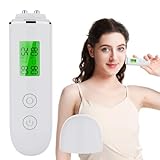
- 【High Precision Skin Analysis】Advanced sensor technology accurately measures skin moisture and oil levels within seconds, helping you clearly understand your skin condition.
- 【Digital LCD Display】Large, easy-to-read LCD screen displays clear percentage readings, making data simple and intuitive to understand.
- 【Fluorescent Agent Detection】Built-in UV detection function helps identify fluorescent agents in skincare products, ensuring safer cosmetic choices.
- 【Historical Data Query】There are eight sets of test records on this convenient skin tester. Short press the memory function button to query the previous test record, allowing you to have a deeper understanding of your skin condition everyday
- 【Smart Reminder】 This stylish skin detector has three types of warning lights: red, yellow, and green. When your skin data is in different states, the corresponding lights will light up to alert you for reference
- What is it for? Is the service clearly limited to cosmetic education and routine suggestions, or does it claim to assess a medical condition?
- How was it evaluated? Look for a published evaluation, the reference standard used and, where relevant, measures such as sensitivity and specificity. A company’s description of its training images is not the same as an independent evaluation.
- Who was represented? Ask whether results were tested across skin tones, ages, phones, cameras and lighting conditions relevant to you. Performance may not carry over to people or devices outside the validation set.
- What happens to your image? Check what is collected, where analysis occurs, how long images are retained, whether data may be used for model improvement or advertising, and how consent works.
- How are recommendations chosen? Find out whether suggestions are sponsored, limited to the operator’s brands or products, or independent—and whether commercial ties are disclosed.
- What does using it require? Check for a fee, account, extra personal information or country restriction before uploading a photo.
A 2024 cross-sectional study in JAMA Dermatology illustrates why these checks matter, while also showing the limits of broad claims about the app market. The authors identified 909 listings, removed 518 duplicates and assessed 41 AI dermatology apps in detail. None of those 41 was FDA-approved, and the authors found gaps in supporting evidence, clinician input, algorithm transparency and privacy disclosure. That result applies to the study’s sample—not every tool currently available. See the study record.
Privacy depends on the particular service and region
Do not assume that every selfie scan stores or processes images in the same way. Neutrogena Canada says its facial images are deleted immediately after processing. L’Oréal’s U.S. Skin Genius notice says a selfie is sent to a central cloud-based hub for analysis and generally deleted from that hub within seconds after the result is returned. The notice also describes using information for tailored recommendations, service improvement and research analytics.
Rank #4

- Adopting Bioelectric Impedance Analysis technology to analyze your skin condition accurately.
- Can test the skin moisture, skin oil and elasticity, as well as detecting the fluorescer.
- Lets you know how your skin condition is, gives suggestion to you on choosing skin care products.
- Designed with 15 groups memory function. Digital display shows your skin condition in real figures.
- Compact size for convenient carry.
Those are disclosures for specific services and markets, not universal rules. Read the privacy notice and consent screen for the version you are actually using, including how it handles images and other information. L’Oréal Paris Skin Genius Information Notice.
Free tools Windows power users keep installed
One-click scans. No signup required.
Why a recommendation may not be neutral
A tool that scores skin and then recommends a routine can also guide a user toward products. Skin Genius, for example, says its routine suggestions come from L’Oréal Paris’s product range. That may be useful if you want suggestions from that brand, but it is not an independent comparison of the market.
Best Value

- SHQYMBLT This Large LCD BIA Skin Analyzer adopts the latest Bioelectric Impedance Analysis to analyze skin conditions such as moisture, oil and softness based on the different permittivity between different substances.The unit is beautifully designed and easy to operate, making it an essential equipment to get to know your skin and take good care of it.
- FEATURES :Large LCD.Backlight function.Test skin moisture, oil and softness.Store the latest 5 sets of data.Low battery indicator.Auto shut off.
- USING THE MEMORY FUNCTION:-This unit can store up to 5 sets of the latest data.The data is automatically stored in memory when test is completed.-Press RECORD button to view the latest set of data. -Continue pressing the RECORD button until all 5 sets of data is displayed,“MEMORY 5" being the last set of data.
- GETTING TO TEST:1.Take off the front cover.2.Press RECORD button or TEST button to wake up the unit from sleep mode, the screen will light up and display the latest set of data.
- 3.Place the two metal sensor prods on your skin, press TEST button, keep the sensor prods contacting your skin, the display will show semicircular dots from left to right in sequence, indicating that test is processing.After 3-4 seconds, you will hear a beep and the screen will light up, indicating that test is completed.The resul twill show up on the display.4.lf "Er" message shows up on the display, it means poor skin contact on sensor prods.Please retry.
The EADV AI Task Force warns: “Consumers should remain vigilant about potential non-medical influence from skincare corporations, as they may provide recommendations for their products through smartphone applications.” Check for sponsorship, brand limits and disclosed commercial relationships before treating an app’s product list as impartial advice. Read the EADV position statement.
Use a scan as a starting point, not a verdict
A selfie tool may help organize cosmetic questions or make a visible concern easier to revisit. Its useful role ends where unsupported certainty begins: a score cannot establish a diagnosis, and a routine suggestion is not proof that a product is necessary. Judge the service by its evidence, representation, privacy practices and commercial disclosures—not by how exact its numbers look.
Quick Recap
Product prices and availability are accurate as of the date/time indicated and are subject to change. Any price and availability information displayed on Amazon at the time of purchase will apply.

