The Tool Desk
Outbyte Driver Updater FREEFix the driver behind crashes, sound loss and screen glitchesFind Drivers →Outbyte PC Repair FREEClear out junk files and repair common Windows errorsFree Scan →AI is increasing the cost of poorly coordinated software choices, but available evidence does not show that organizations broadly are abandoning best-of-breed tools for pretested stacks. Instead, AI is arriving through embedded features, departmental products and centrally built systems at the same time. The practical challenge is deciding where local choice is worth keeping and where shared testing, integration controls and governance are needed.
What is changing—and what is not?
For decades, organizations have often selected specialized applications independently, then connected them to the rest of their systems. AI complicates that pattern: a company may have AI features added to its existing business software, separate AI products chosen by departments, and custom AI assembled by a central team. Those routes can coexist.



As an Amazon Associate I earn from qualifying purchases.
Gartner describes the choice as build, buy or blend, not as a universal contest between one standard stack and best-of-breed software. Its analyst Hung LeHong observes that departments want specialized AI for specific business needs. Gartner also warns that accumulating independent AI solutions can duplicate capabilities already embedded in applications, adding cost and technical debt.
Recommended Free Tools
So the defensible conclusion is narrower than the headline’s implied industry-wide shift: as AI increases the number and variety of components in use, integration architecture and portfolio oversight matter more. Pretesting a set of components together can reduce some uncertainty, but it is not proof that a fixed stack will fit every organization or workload.
#1 Best Overall
Where does enterprise AI come from?
Gartner identifies three concurrent routes. Each can be useful; each can also create work across the application portfolio.
| Route | What it means | Where to pay attention |
|---|---|---|
| Embedded AI | AI features added to existing software such as ERP, CRM or case-management applications. | Check how the feature changes workflows and affects existing investments; an embedded feature may overlap with a separate AI product. |
| Department-selected AI | Independent, best-of-breed products chosen by business teams for particular needs. | Review how each tool connects to shared data and applications, and whether it duplicates another capability. |
| Enterprise-crafted AI | Capabilities built centrally or assembled from foundation-model APIs, custom interfaces, integrations and organizational customization. | Make ownership, dependencies, operating controls and maintenance responsibilities visible across the assembled system. |
These descriptions follow Gartner’s build/buy/blend framing. The distinction is useful for inventory and governance, not a reason to assume that one route should replace the others.
Why can AI make integration risk harder to manage?
More components mean more dependencies
An AI workflow can rely on an application, model, API, data source and infrastructure provider, with connections between them that are not obvious from any one product’s interface. When a dependency changes, teams need to know which workflows and controls are affected. Gartner’s March 2026 integration architecture brief describes components including integration runtimes, development tools, observability and governance, with the aim of helping independently designed applications—from legacy systems to AI agents—work together.
Do these 3 things before closing this tab:
1Repair Windows errors before they cause bigger problems2Fix the driver behind crashes, sound loss and screen glitches3Clear out junk files and repair common Windows errorsRank #2

- Durable Carbon Steel: Rack mount screws and cage nuts are made of high-quality carbon steel with a black finish for high strength and dependable durability.
- Easy Installation: Clear metric threads and uniform pitch for better grip. Nylon washers help secure screws and protect equipment surfaces.
- Organized Storage: All parts are packed in a portable storage box for easy organization and access.
- Wide Compatibility: Fits most square-hole racks and cabinets—ideal for server racks, network cabinets, equipment enclosures, and A/V gear.
- 20-Set Kit: Includes 20 mounting screws with nylon washers (M6 x 20 mm) and 20 square cage nuts—40 pieces in total—meeting daily install and replacement needs.
Switching and outages test the design
In a 2026 IBM Institute for Business Value study conducted with Oxford Economics, 71% of 1,000 surveyed senior executives across 16 countries and 17 industries said switching their primary AI vendor or model would be difficult. Fieldwork ran from February through April 2026. In that same survey, 91% said they did not fully understand dependencies across AI vendors, models and infrastructure, and 81% said a seven-day vendor outage would still cause severe or critical disruption. These are self-reported survey results, not a census of organizations, but they highlight why dependency mapping and recovery planning belong in architecture discussions.
AI can help build integrations without making them self-validating
AI tools may help engineers translate requirements and API documentation into proposed service compositions. A 2025 University of Stuttgart thesis by Robin D. Pesl discusses that possibility while noting that generated compositions are not always correct and need further work. Treat generated integration logic as a proposal to review and test, not as reliable automation by default. The thesis is academic context, not evidence of production performance for commercial integration platforms.
What does “pretested stack” mean in practice?
Here, a pretested stack means a collection of components whose compatibility, operational behavior, security controls and upgrade path have been evaluated together. That is a practical working definition, not a formal standard established by Gartner or the other sources cited here.
The value is shared validation: teams can start from components whose interactions have been checked, rather than discovering every incompatibility separately. But a tested combination is only a starting point. Your own applications, data flows, security requirements, workload and recovery needs determine whether it is suitable. Pretesting cannot eliminate vendor changes, configuration errors or the need to monitor the live system.
How should an organization choose between local choice and shared controls?
Keep specialized tools where their business value justifies them; standardize the guardrails and connections that must work across teams. Gartner recommends reviewing the application portfolio, considering how embedded AI affects workflows and investments, and applying governance across embedded, departmental and centrally crafted AI.
- Integration coverage: Identify which legacy and current applications, APIs, agents and data flows a design must connect. Gartner’s architecture components include runtimes, development tools, gateways, and messaging or event brokers.
- Observability and governance: Determine whether teams can trace integration behavior and enforce policy across components. Gartner includes both observability and governance in its integration architecture description.
- Reliability and recovery: Decide how workflows respond to a provider outage, model deprecation, price change or usage restriction. Identify critical paths and how they can be restored or rerouted.
- Flexibility and switching cost: Map what would need to change if a model, vendor or infrastructure component were replaced. Keep data and workflow dependencies visible enough to assess the effort.
- Overlap and maintenance: Before adding a departmental tool, compare its function with embedded capabilities and existing services. Account for the additional integration and ongoing ownership it would require.
- Evidence quality: Separate analyst recommendations, vendor or industry surveys, measured results and causal evidence. A reported association does not establish that an architecture caused an outcome.
Governance can scale with the portfolio. Gartner suggests human mechanisms such as a responsible-AI or ethics team, a central AI committee and communities of practice when the number of initiatives is manageable. For a larger volume, it says governance technologies can mechanize policies. These are governance options, not requirements to buy a particular platform.
What do the survey results say about composable architecture?
A 2026 survey of 600 senior technology decision-makers at large enterprises in seven countries, conducted by M·E·L Research with the MACH Alliance, reported measurable AI return on investment among 78% of respondents classified as fully composable, compared with 13% of those in early planning. The same survey reported that 98% of the fully composable group said they could support AI at scale, compared with 33% in early planning.
Those figures suggest a relationship worth examining, not proof that composability caused the results. The survey reflects the alliance’s definitions and perspective as an advocate for composable architecture; organizations in the groups may differ in ways the figures do not resolve. The results also argue against treating standardization as the only route: modularity and connected systems may be part of an AI strategy, provided teams can govern and operate them.
PC Slower Than It Used to Be?
A free scan shows the junk files, broken settings and background clutter dragging Windows down - then fixes them in one click.Free scan · Windows 10 & 11Outdated Drivers Are Slowing You Down
One free scan finds every outdated or missing driver and matches the right update for your exact hardware.Free scan · exact hardware matchHow can teams reduce integration risk step by step?
- Inventory the portfolio. Record embedded AI features, department-selected products and centrally built or assembled systems. For each, note its owner, purpose, data access, integrations and business-critical workflows.
- Find duplication and hidden dependencies. Compare new capabilities with functions already present in applications. Trace which vendors, models, APIs and infrastructure each important workflow depends on.
- Classify the consequences of failure. Identify which workflows can tolerate a delay, which need a fallback and which require a recovery plan. Include provider outage, model retirement and restrictions on use as scenarios to examine.
- Set shared requirements before selecting a stack. Specify the integration coverage, observability, governance, security controls, upgrade process and switching expectations the organization needs. Use those requirements to judge pretested combinations as well as individual products.
- Validate the combination in your environment. Test compatibility with the actual applications, data flows and policies involved. Exercise failure and recovery paths, and confirm that teams can see and diagnose what happens across component boundaries.
- Assign ownership and review changes. Establish who approves additions, monitors dependencies and responds when a component changes. Revisit the inventory and tests as workflows and providers evolve.
This sequence is an operational way to apply the architecture and governance concerns identified by Gartner and the dependency issues reported in the IBM survey; it is not a prescribed vendor implementation.
Best Value
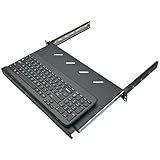
- Universal 19" Standard Compatibility: Designed for 19-inch-wide racks, adhering to EIA-310 industry standards, and works with any 2-post or 4-post rack system, ensuring the standardized width simplifies integration into existing setups and supports diverse equipment; this shelf needs more than 10.8 inch depth space to be installed
- Space-Saving 1U Height (1.75"): Compact 1U profile maximizes vertical rack space and fits seamlessly into dense server environments without sacrificing capacity; includes mounting hardware (M6 screws, cage nuts & washers)
- Improved 3-Rail Ball Bearing Sliding Mechanism: Equipped with precision-engineered ball bearings that help this shelf glides smoothly in and out of server racks for frequent maintenance, upgrades, or adjustments; shelf has a max extension of 10.38 inches
- Vented Shelf Design: Vents allow air to pass through the shelf to prevent overheating by allowing heat to dissipate from servers, switches, or UPS units and complement rack cooling systems, maintaining optimal performance for heat-sensitive equipment and extending hardware lifespan
- Durable SPCC Steel with Anti-Corrosion Finish: Constructed from SPCC cold-rolled steel and finished in dark gray powder coated paint to resist corrosion, scratches, and wear in high-traffic IT environments; Attention: Keyboard is for display only and is not included
What evidence supports a broader shift?
Gartner reported in 2025 that 77% of surveyed software engineering and application development leaders considered building AI capabilities into applications a moderate or significant pain point. The survey covered 400 leaders in the United States and United Kingdom and was conducted from October through December 2024. That finding points to integration work as a real concern among those respondents, but it does not measure adoption of pretested stacks.
Across the cited evidence, no market-wide measurement establishes that DIY best-of-breed is giving way to pretested stacks. The better-supported picture is a mixed portfolio, mounting coordination demands and several possible responses: stronger integration architecture, shared governance, compatibility testing and, where useful, composable or prevalidated components. Whether a particular organization benefits from consolidating components or preserving local choice depends on its systems and requirements.
Quick Recap
Product prices and availability are accurate as of the date/time indicated and are subject to change. Any price and availability information displayed on Amazon at the time of purchase will apply.
Free tools Windows power users keep installed
One-click scans. No signup required.

