Recommended Free Tools
AI is already part of some diagnostic workflows, particularly radiology and pathology. However, the evidence behind six often-cited examples is not uniform: four describe active AI use or integration, while two document digital-pathology infrastructure that is preparing for possible AI. Treating all six as proven, live AI diagnostic programs would overstate what the published accounts show.
The deployments below are best understood as implementation examples, not a head-to-head test of accuracy, patient outcomes or cost. Most results come from health-system announcements or vendor case studies, and local gains may not transfer to another hospital.
As an Amazon Associate I earn from qualifying purchases.
What counts as a real diagnostic-AI deployment?
A diagnostic-AI deployment means an algorithm or AI-enabled function has been connected to a clinical workflow at a named institution. That can include flagging urgent images for faster review, reconstructing scans, correcting motion, measuring tissue or helping clinicians navigate images. It does not necessarily mean the software makes an autonomous diagnosis.
What’s actually slowing this PC down?
Pick the symptom - the matching free tool is one click away.
The six cases here fall into two groups. Advocate Health, KMC Manipal, ASAN Medical Center and Ocean Imagerie report active AI use or AI integration. Paris Saint-Joseph and Marie Lannelongue hospitals, plus Sullivan Nicolaïdes Pathology, are genuine digital-pathology deployments, but their cited descriptions discuss AI as planned or potential rather than as a currently deployed diagnostic tool.
#1 Best Overall

- The Uniden BCD160DN sets the standard for performance, features, and innovation. Exclusive Features like Band Scope Rapid System/Channel Number Tagging, Narrow-band Reception, and a complete suite of search features help you detect those elusive signals faster than ever. Uniden Digital Scanners offer you more than ever before.
- DCS/CTCSS RAPID DECODE - Instantly detects and displays CTCSS tones and DCS codes so you can quickly determine the system settings.
- CONVENTIONAL DIGITAL DECODING - Supports DMR and NXDN decoding out of the box. A free firmware update adds support for APCO P25 Phase 1 & 2 decoding. Trunking is not supported, and encrypted signals cannot be decoded.
- 1,000 CHANNELS - Store up to 1,000 channels with alpha tags for easy identification.
- PC PROGRAMMING - Use free available to download Uniden software to manage your scanner’s Profiles, Favorites Lists, Databases, and firmware updates.
Six examples at a glance
| Institution and location | Modality and task | Status | Integration point | Reported measure or scope | Evidence limitation |
|---|---|---|---|---|---|
| Advocate Health, United States | Imaging triage for pulmonary embolism, incidental pulmonary embolism and intracranial hemorrhage | AI integrated at 22 sites; pilot began October 2024 | Radiology workflow | Nearly 63,000 patients a year projected to benefit from faster prioritization | Projection based on internal modelling and early pilot information; not an independent outcome study |
| KMC Manipal, India | Patient positioning, deep-learning reconstruction, brain-scan batching and cardiac motion correction | Used for three years by the June 2025 case study | CT scanner and department workflow | Daily CT volume reported to rise from 70–80 to 90–100 exams | Philips case-study results are site-specific and may not predict results elsewhere |
| ASAN Medical Center, South Korea | AI-supported morphometric analysis of digitized pathology slides | AI interface and use described in a March 2025 case study | Digital pathology, electronic record and image systems | Morphometric analysis reported at under one minute per case; diagnosis time reported 19 hours 51 minutes, or 27.6%, lower | Figures are attributed to Philips and the institution-specific case study |
| Ocean Imagerie, France | AI-integrated radiology workspace and post-processing | AI integrated into a centralized PACS | Enterprise PACS across multiple sites | 90% of studies reportedly read directly in the PACS | Shows workflow integration, not independent accuracy improvement for a named algorithm |
| Paris Saint-Joseph and Marie Lannelongue hospitals, France | Digital pathology and shared oncology information | Infrastructure deployed; AI planned or potential | Enterprise imaging workflow | Shared digital diagnostic information for oncology teams | The cited account does not confirm a live AI diagnostic deployment |
| Sullivan Nicolaïdes Pathology, Australia | High-resolution slide sharing and distributed collaboration | Digital pathology deployed; AI and machine learning described as future possibilities | Pathology image-sharing system | Supports collaboration across a large geographic area | Not evidence of current AI diagnosis |
1. Advocate Health: AI flags urgent imaging findings
Advocate Health began a pilot in October 2024 in which clinical teams at 22 sites in Wisconsin and North Carolina integrated Aidoc imaging models into their workflows. The initial models flag pulmonary embolism, incidental pulmonary embolism and intracranial hemorrhage. These findings can require rapid attention, so the software’s role is prioritization: it alerts or moves a suspected case higher in a clinician’s work queue rather than replacing the radiologist’s interpretation.
Advocate estimated that nearly 63,000 patients annually could benefit from faster prioritization and earlier diagnosis. That number is an internal projection based on modelling and early pilot outcomes, not an independently measured reduction in mortality, diagnostic error or waiting time. The scale is nevertheless notable because it covers a multi-state health system rather than a single department.
Dr. Christopher Whitlow, enterprise chair of radiology at Wake Forest University School of Medicine, said in Advocate’s July 2025 announcement that, after testing and evaluating AI, the system concluded that responsibly deployed imaging AI with oversight from trained human providers is a best practice. The statement describes Advocate’s position in its own deployment announcement; it is not a randomized evaluation of the tools.
Quick wins for a faster PC:
Repair Windows errors before they cause bigger problemsFix Now →Fix the driver behind crashes, sound loss and screen glitchesFind Drivers →Clear out junk files and repair common Windows errorsFree Scan →What this example demonstrates
- AI can enter a live workflow as a triage and prioritization layer.
- The clinical decision remains with a trained provider.
- Large projected reach does not equal proven outcome improvement.
2. KMC Manipal: AI-assisted CT workflow
KMC Manipal in India had used Philips CT Smart Workflow for three years by the time of a June 2025 case study. The implementation combines several functions rather than one diagnostic classifier: AI-enabled patient positioning, deep-learning image reconstruction, brain-scan batching and cardiac motion correction.
Philips reported that the department’s daily CT volume increased from 70–80 examinations to 90–100. The case study also describes time savings and changes in image quality. Those numbers are operational results reported for this site and this configuration. Philips explicitly cautions that case-study outcomes may not predict results at other hospitals.
Rank #2

- ON-THE-GO SCANNING MADE SIMPLE | Meet the Fastest, Lightest and Most Efficient Single Sheetfed Scanner in its Class. | The HPPS100 Mobile Document Scanner Lets You Convert Stacks of Papers Into Digital Files—No Heavy, Expensive Equipment Needed. | Wide Compatibility Makes it Easy to Send Docs and Images to Your PC or Mac Computer, Laptop, or Similar Windows/MacOS Devices for Amazing Versatility
- EASY, AFFORDABLE SIMPLEX SCANNING | Despite its Slim Profile, This Office Essential Offers Reliable 15ppm [15 Pages Per Minute or 4 Seconds Per Page] Operating Speed for Small- to Medium-Batch Jobs in Black and White and Color | Simplex One-Sided Scanning Technology Delivers Premium Results in a Single Pass, Speeding Up Scan Time and Improving Your Productivity When Converting Invoices, Contracts, Plans, Reports and Letters
- DESIGNED FOR LIGHTWEIGHT PORTABILITY | Slip Inside a Bag or Briefcase, Then Travel from Home to Office to Business and Beyond. | Compact, Portable Styling Suits Your Busy Lifestyle While Providing All the Capabilities of a Professional-Quality Document Scanner Including Beautiful 1200 dpi Resolution, Versatile Paper Size Ranging from 2” x 2.9” (Minimum) to 8.5” x 14” (Maximum) and Versatile Conversion to PDF, JPG and Other File Formats
- STUNNING SCANS WITHOUT THE BULK | Skip the Clunky, Messy, Complex Setups. | This Scanner Boasts a Tiny Footprint, Powers Via USB 2.0 [Cable Included] and Easily Plugs and Unplugs for Amazing On-the-Go Ease | Perfect Choice for People Who Fly or Travel for Work, Commuters, Small Business Owners, Legal Practices, Tax Preparers and Unique Scanning Tasks Such as Business Cards, Photos, Bills, Brochures, Receipts and Much More
- WORK SMARTER WITH HP WORKSCAN | Download Our Free, Easy-to-Use Software or App for Windows and MacOS to Start Scanning. | Simple, Intuitive Platform with Auto-Scan and Size Detection Allows You to Easily Adjust Document Settings; Preview and Zoom in on Scans; Crop, Edit and Optimize Image Quality; Clean Up Background, Edges and Holes; and Save to Destination with Just a Few Clicks—No Tech Savvy Required.
Dr. Prakashini K., a professor and radiologist at KMC Manipal, said the workflow produced time savings throughout the department. That is a participant statement in a vendor case study, not an independent comparison with another scanner, staffing model or reconstruction method.
Why this is diagnostic AI even without an automated diagnosis
Image reconstruction and motion correction affect the data clinicians interpret. Positioning and batching affect how quickly usable images reach the work list. These functions can improve throughput or consistency while leaving the final diagnosis to a radiologist. Calling every such tool an autonomous diagnostic system would be inaccurate; excluding it from the AI workflow discussion would also miss how hospitals actually deploy the technology.
Free tools Windows power users keep installed
One-click scans. No signup required.
3. ASAN Medical Center: morphometry in digital pathology
ASAN Medical Center in South Korea decided in 2022 to digitize newly produced pathology slides and a decade of archived slides. It connected the electronic medical record and image systems and implemented an interface through which AI algorithms could be used. A March 2025 Philips case study describes an AI program for morphometric analysis.
Philips says the morphometric analysis takes less than a minute per case, compared with a previous resident workflow described as taking two hours each day. The same case study reports that average histopathology diagnosis time decreased by 19 hours 51 minutes, or 27.6 percent. These are institution-specific figures attributed to Philips and ASAN’s case-study account; the source does not establish that the same reduction would occur with another laboratory, slide scanner or staffing pattern.
Morphometry measures shapes, dimensions or spatial relationships in tissue. It can provide repeatable quantitative information alongside a pathologist’s review. The deployment therefore illustrates AI-supported measurement embedded in a digitized pathology system, not an unsupervised machine issuing final cancer diagnoses.
Rank #3

- 【Convert Film to Digital at Home】 Easily scan 35mm (135), 126, 110 and Super 8 (photo only), including color and black & white negatives and slides. A versatile film, negative and slide scanner with no computer required
- 【16MP / 22MP High-Resolution Scans】 Choose between 16MP standard or enhanced 22MP output for sharper details and clearer images
- 【Large 5" LCD Screen for Instant Preview】 Preview, adjust and align photos in real time directly on the scanner for easy and accurate scanning
- 【Save to SD Card & HDMI Output】 Store photos directly to SD card up to 128GB or connect to a TV via HDMI for real-time viewing
- 【Built-In Image Adjustment Tools】 Adjust brightness, color and orientation to enhance image quality before saving your digital photos
4. Ocean Imagerie: an AI-ready radiology workspace
Ocean Imagerie, a multi-site imaging group in France, is described in a Philips case study dated March 20, 2026. The group implemented a centralized picture archiving and communication system (PACS) with native integration for AI tools and post-processing.
The case says 90 percent of studies are read directly within the PACS. That figure indicates where radiologists perform their work and how tightly image review, post-processing and AI access are connected. It does not show that a particular algorithm improved sensitivity, specificity or patient outcomes. The deployment is best characterized as an AI-integrated radiology workspace rather than proof of an accuracy gain.
Why PACS integration matters
When an algorithm is separate from the PACS, staff may have to open another application, reconcile patient identifiers and copy results back into the reporting workflow. Native integration can reduce those handoffs. It can also make governance easier because access, audit trails and human review occur within a system the department already manages. Integration alone, however, does not validate the algorithm’s clinical performance.
5. Paris Saint-Joseph and Marie Lannelongue: digital pathology infrastructure, AI planned or potential
Philips describes Paris Saint-Joseph and Marie Lannelongue hospitals in France integrating digital pathology into an enterprise imaging workflow. Oncology teams can access shared diagnostic information rather than relying only on physical slides or isolated systems.
The account discusses the future potential for AI tools in digital pathology. It does not confirm that these hospitals had a named AI diagnostic algorithm operating on patient cases. They are therefore a real deployment of digital diagnostic infrastructure, not a confirmed live AI deployment.
Rank #4
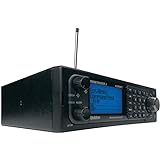
- Stay Safe and Informed with the Uniden BCD996P2. A true scanner powerhouse, it comes with state-of-the-art NOAA weather access and S.A.M.E. weather alerts that warn you of severe conditions in your area. This mobile scanner radio comes with 25,000 channels, Close Call RF Capture, TrunkTracker V technology, and more.
- CLOSE CALL RF TECHNOLOGY WITH DND Provides information about nearby radio transmissions. Close Call Do-Not-Disturb checks for Close Call activity during channel reception so active channels are not interrupted.
- TRUNK TRACKER V OPERATION Scans APCO 25 Phase 1 and Phase 2, X2-TDMA, Motorola, EDACS, and LTR trunked systems, as well as conventional analog and P25 digital channels.
- S.A.M.E. WEATHER ALERT Stay ahead of the weather and on top of the waves. During an NOAA Weather or Emergency Alert, a code for your specific location will alert you to severe conditions in your immediate area.
- LOCATION BASED SCANNING Connect this scanner to a compatible GPS receiver and it will automatically select programmed systems based on your exact location. You'll save time by scanning only the local signals.
6. Sullivan Nicolaïdes Pathology: distributed slide access, AI not yet confirmed
Sullivan Nicolaïdes Pathology in Australia uses a digital pathology solution to share high-resolution slide images and support collaboration over a large geographic area, according to Philips. That capability can help specialists review the same material across locations and can create the data pipeline needed for later algorithmic analysis.
The cited description presents AI and machine learning as future possibilities. It does not say that an AI tool currently reads or triages the provider’s cases. This distinction matters: preparing images and systems for AI is an important implementation step, but it is not evidence that AI is making diagnostic decisions today.
Independent reader supportYour contribution helps us test, update, and keep practical guides available for everyone.What the six cases say about adoption
National adoption statistics provide context but should not be substituted for evidence of diagnostic-AI use. A 2025 brief from the Office of the National Coordinator for Health Information Technology found that 71 percent of surveyed non-federal acute-care hospitals reported predictive AI integrated with the electronic health record in 2024, up from 66 percent in 2023.
ONC’s definition is broad. It includes statistical analysis and machine learning that classify patients or produce individual risk scores, not only imaging or pathology diagnosis. Adoption lagged among small, rural, independent, government-owned and critical-access hospitals. A national percentage therefore conceals major differences in resources, geography, ownership and EHR integration.
Regulatory authorization is not the same as clinical use
The US Food and Drug Administration reported more than 1,600 AI-enabled medical devices authorized for US marketing as of September 2026. The count includes functions such as skin-cancer imaging and diabetic-retinopathy detection, and it changes as products receive or lose authorization. It measures regulatory authorization, not the number of hospitals using those devices in practice.
Best Value

- COMS Sensor Scanner: Equip with high-sensitive CMOS sensor, hand barcode scanner easily reads bar code from paper and screen, such as computer monitor, smartphone or tablets.
- Strong Recognition Capability: USB wired barcode reader can accurately read blurring, incomplete, support almost all 1D bar codes. 2D barcode: PDF417, MicroPDF417, Data Matrix, Maxicode, QR Code, Aztec, Hanxin, etc.
- Compatibility: Full compatible with Windows, Mac OS, Linux, plug the usb cable into your laptop, computer, cash register or POS, simple operation. The bar code scanner works with Quickbook, Word, Excel, Novell, and all common software.
- Supports Multi Languages: The scanner support 18 international keyboards: American Keyboard, Germany, France, Belgium, Finland, Sweden, Russia, Turkey, Portugal, England, Denmark, Norway, Spain, Italy, Japan, Poland, Romania, Hungary.
- Widely Use Range: The Sumicor 2m wired barcode scanner with holder is widely used in supermarket, restaurant, retail stores, warehouse, library, drugstore, Logistics for for file management, inventory tracking and POS(point of sale), etc.
The FDA states: “The FDA does not regulate AI as such; it regulates medical devices, including AI-enabled medical devices.” Its risk-based approach considers intended use and technological characteristics. Depending on the device, a pathway may include 510(k), De Novo or premarket approval. FDA’s lifecycle view extends through validation, deployment, monitoring, maintenance and modification.
Authorization means a device met the requirements of its regulatory pathway for its stated intended use. It is not a blanket endorsement of every AI application, nor proof that performance or outcomes will be identical in every hospital. Local validation, human oversight and monitoring for changes in data or software remain necessary.
A partnership announcement that should not be counted as a deployment
Samsung Healthcare announced a supply contract with Lunit in January 2024 involving Lunit INSIGHT CXR and Lunit Insight CXR Triage. Samsung said the tools would analyze adult chest X-rays for suspected pleural effusion or pneumothorax and prioritize suspected cases in a radiologist’s queue.
The Tool Desk
Outbyte PC Repair FREEClear out junk files and repair common Windows errorsFree Scan →Outbyte Driver Updater FREEScan for outdated or missing drivers - takes under a minuteDriver Scan →This announcement describes a contract and intended capabilities, not a named healthcare site operating the tools on patients. It is useful evidence of a commercial partnership and the kinds of triage functions being offered, but it should not be added to a list of six confirmed clinical deployments without site-level evidence.
How to judge a diagnostic-AI deployment
When a hospital announces an AI implementation, check the following before treating it as proof of clinical benefit:
- Clinical role: Is the software triaging, reconstructing images, measuring structures, offering a risk score or making a final classification?
- Integration point: Does it run at the scanner, inside the PACS, in a pathology system or through the EHR?
- Human review: Who verifies the result, and can clinicians override or ignore it?
- Local validation: Was the model tested on that site’s equipment, patient mix and workflow?
- Evidence type: Is the number independently evaluated, internally modelled, or reported by a vendor case study?
- Outcome measured: Does the report show accuracy and patient outcomes, or only throughput, time or system usage?
- Lifecycle controls: How are updates, drift, errors, cybersecurity and ongoing performance monitored?
Across these six examples, the available evidence is strongest for showing that systems were implemented and used in particular workflows. It does not provide a like-for-like comparison of diagnostic accuracy, cost-effectiveness or patient outcomes.
Quick Recap
Product prices and availability are accurate as of the date/time indicated and are subject to change. Any price and availability information displayed on Amazon at the time of purchase will apply.

