The Tool Desk
Outbyte Driver Updater FREEFix the driver behind crashes, sound loss and screen glitchesFind Drivers →Outbyte PC Repair FREERepair Windows errors before they cause bigger problemsFix Now →Google’s story does not begin with a company formed in 1995, and it does not begin with the invention of search engines. Larry Page and Sergey Brin met at Stanford in 1995, built a research project called Backrub in 1996, and incorporated Google in California in September 1998.
What made the young company important was its method for ranking pages. Instead of treating the Web as a flat directory, Backrub used links as signals of importance. That idea became the foundation for a search engine that grew into a much larger technology business spanning advertising, maps, mobile software, cloud computing, machine learning and artificial intelligence.
| # | Preview | Product | Price | |
|---|---|---|---|---|
| 1 |
|
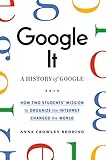
Google It: A History of Google | $11.49 | Buy on Amazon |
| 2 |

|
How Google Works | $9.99 | Buy on Amazon |
| 3 |

|
Life After Google: The Fall of Big Data and the Rise of the Blockchain Economy | $9.00 | Buy on Amazon |
| 4 |
|
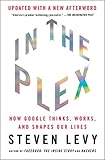
In the Plex: How Google Thinks, Works, and Shapes Our Lives | $12.99 | Buy on Amazon |
| 5 |

|
The Google Story | $13.99 | Buy on Amazon |
As an Amazon Associate I earn from qualifying purchases.
1995–1998: From Stanford research project to Google
Larry Page and Sergey Brin met at Stanford University in 1995. Page was considering Stanford for graduate study, while Brin was assigned to show him around. Their collaboration began the following year.
In 1996, they built a search engine called Backrub. Its distinctive feature was a ranking system that used links between Web pages to estimate their importance. A page referenced by many other pages could be treated as more authoritative than an otherwise similar page with few links.
#1 Best Overall
Backrub was renamed Google sometime between 1997 and 1998. The name was a play on googol, the mathematical term for the number represented by 1 followed by 100 zeros. It fit the ambition of indexing a vast and rapidly expanding Web.
Google was incorporated in California in September 1998. That makes 1998 the relevant company-formation date—not 1995, which was the year the founders met.
The garage, the first investment and the early infrastructure
In August 1998, Sun Microsystems co-founder Andy Bechtolsheim wrote Page and Brin a $100,000 check. Google’s company history says the investment helped the team move out of Stanford dorm rooms and into its first office.
That first office was Susan Wojcicki’s garage in Menlo Park, California. Wojcicki later became Google employee No. 16 and went on to lead YouTube as its CEO. The garage is an important part of Google’s origin story, but it belongs to 1998—not 1995.
The early company also had an improvised approach to hardware. Google’s published history describes server housing built partly with Lego construction. The detail is memorable because it captures the contrast between the company’s enormous technical ambitions and its makeshift early workspace.
Google also published its first Doodle in 1998. It was not an interactive animation or a complex illustration: it was a simple stick figure telling visitors that the staff was attending the Burning Man festival. Doodles later became a regular way for Google to mark people, events and anniversaries on its homepage.
Rank #2
Google was not the first search engine
Google’s success is sometimes summarized inaccurately as the invention of Web search. Search engines existed before Google. Google’s own account of its search history says the company was “far from the first search engine” when it launched.
Free tools Windows power users keep installed
One-click scans. No signup required.
The company’s early advantage was the way it ranked results. Link-based analysis helped Google return pages that were often more useful than results ordered mainly by text matching or directory placement. Over time, Search became more than a list of Web pages. Google added structured information, databases and knowledge sources such as Wikidata to produce features including direct answers, panels and other specialized result formats.
2001–2002: Images, spelling help and news
Google Images launched in 2001. Google says the product was partly motivated by the public interest in Jennifer Lopez’s green Versace dress at the 2000 Grammy Awards. Many people were searching for a picture of the dress, but a conventional text-results page could not meet that need effectively. Image search addressed the gap.
Also in 2001, Google introduced the “Did you mean?” spelling suggestion. Google describes it as one of its early applications of machine learning. The feature became a small but highly visible example of software inferring what a user intended rather than mechanically matching a misspelled query.
Google’s first public annual search-trends report also appeared in 2001. It was originally called the Year-End Google Zeitgeist. The report turned aggregated search behavior into a record of what people were interested in during a particular year.
Do these 3 things before closing this tab:
1Clear out junk files and repair common Windows errors2Scan for outdated or missing drivers - takes under a minute3Repair Windows errors before they cause bigger problemsGoogle News launched in 2002. Google says the service was developed after the difficulty of finding timely information during the September 11, 2001 attacks. Instead of relying on a single publication, the service was designed to help users find and compare news coverage from multiple sources.
2006–2008: Translation and voice search
Google Translate launched in 2006. Its initial language direction was Arabic-to-English and English-to-Arabic. The product later expanded substantially, using machine-learning systems to translate text across many language pairs.
Google introduced voice search in the Google Mobile App in 2008. Speaking a query was particularly useful on phones, where typing on a small keyboard was slower and less convenient. Google later expanded voice search to desktop computers in 2011.
These products showed how Google was broadening its core task. Search was no longer limited to typing words into a browser and receiving blue links; it was becoming a system that could interpret images, spelling, speech and multilingual queries.
What’s actually slowing this PC down?
Pick the symptom - the matching free tool is one click away.
2015: Google became part of Alphabet
Google reorganized under Alphabet Inc. in 2015. Alphabet became the parent company, while Google remained its largest business. The stated purpose was to give Google and the company’s other businesses more operational focus and independence.
Alphabet did not replace Google as a consumer brand. Search, advertising, Maps, Android, YouTube and Google Cloud remained Google businesses, while Alphabet provided the corporate structure for Google and other ventures, often reported as “Other Bets.”
In October 2015, Sundar Pichai became CEO of Google, while Larry Page became CEO of Alphabet. In December 2019, Page and Brin announced that they would step away from day-to-day management of Alphabet. Pichai became CEO of both Google and Alphabet.
2017–2020: Transformers, BERT and AlphaFold
Google Research introduced the Transformer architecture in 2017 in the paper Attention Is All You Need. The architecture became highly influential in modern language and generative-AI systems because it could process relationships between words and other elements of a sequence efficiently.
PC Slower Than It Used to Be?
A free scan shows the junk files, broken settings and background clutter dragging Windows down - then fixes them in one click.Free scan · Windows 10 & 11Outdated Drivers Are Slowing You Down
One free scan finds every outdated or missing driver and matches the right update for your exact hardware.Free scan · exact hardware matchIn 2019, Google introduced BERT into Google Search. BERT uses Transformer-based language understanding to interpret words in context. That is especially useful for longer queries in which a small word—such as “to,” “for” or “with”—can change the meaning of the request.
Google’s AI research also reached beyond search. In 2020, DeepMind’s AlphaFold made a major advance in predicting protein structures, addressing a long-standing problem in biology. AlphaFold illustrated how machine learning could be applied to scientific questions rather than only to consumer products.
2023: Google at 25
Google marked its 25th birthday in 2023. By then, the company had expanded far beyond its original search engine into mapping, digital-career education, AI-enabled tools and a broad portfolio of consumer and enterprise services.
Google also introduced PaLM 2 in 2023. Google described it as improving multilingual, reasoning and coding capabilities. At the time, the company associated it with products and features including Bard, Gmail and Workspace generative-AI tools, as well as Search Generative Experience.
Quick wins for a faster PC:
Fix the driver behind crashes, sound loss and screen glitchesFind Drivers →Repair Windows errors before they cause bigger problemsFix Now →Scan for outdated or missing drivers - takes under a minuteDriver Scan →Those names describe Google’s 2023 AI product landscape and should not automatically be treated as the current product names or architecture. Google’s 2023 AI timeline also referred to Bard and said Gemini was the next model under development. The safer historical conclusion is that Google was rapidly integrating large language models into Search and its productivity products, while continuing to change the names and systems involved.
Best Value
Google’s mission and lasting influence
Google’s stated mission is “to organize the world’s information and make it universally accessible and useful.” The company’s history shows how that mission expanded in practice.
| Period | What changed |
|---|---|
| 1996–1998 | Backrub became Google, with links used to rank Web pages. |
| 2001–2002 | Search expanded into images, spelling assistance, search trends and news. |
| 2006–2008 | Translation and voice search made Search more multilingual and conversational. |
| 2015 | Alphabet became the parent company, with Google as its largest business. |
| 2017–2020 | Transformer research, BERT and AlphaFold demonstrated Google’s growing investment in AI. |
| 2023 | Google’s 25-year history culminated in a company focused heavily on AI alongside Search and its other businesses. |
The central thread is not that Google invented every category it entered. It did not invent search engines, translation or voice interfaces. Its influence came from combining large-scale infrastructure, ranking and machine learning with products used by hundreds of millions of people. A Stanford research project became a search company, then a global technology business, and finally the principal operating business inside Alphabet.
FAQ
Was Google founded in 1995?
No. Larry Page and Sergey Brin met at Stanford in 1995, but Google’s company history places the company’s formation in 1998. Alphabet’s filings specify that Google was incorporated in California in September 1998.
What was Google called before Google?
The search engine was called Backrub. Page and Brin built it in 1996, using links to estimate the importance of Web pages. It was renamed Google around 1997–1998.
Did Google invent search engines?
No. Search engines existed before Google. Google’s early breakthrough was its link-based ranking approach, which helped it identify important and useful pages more effectively.
Why did Google start in a garage?
After Andy Bechtolsheim invested $100,000 in August 1998, the team moved from Stanford dorm rooms into Susan Wojcicki’s garage in Menlo Park, California. Google was already being developed before that move.
When did Google become Alphabet?
Google reorganized under Alphabet Inc. in 2015. Alphabet became the parent company, while Google continued as its largest business and retained products such as Search, Maps, Android, YouTube and Google Cloud.
When did Google begin using BERT?
Google introduced BERT into Search in 2019. The Transformer-based system helps Search interpret words in context, particularly in longer queries.
The Bottom Line
Bottom line: Google began with a Stanford collaboration, became a company in 1998, and grew through a series of extensions to its original ranking technology. Search remained its foundation, but products such as Images, News, Translate and voice search broadened what users could ask it to do. Alphabet’s creation in 2015 changed the corporate structure—not the identity of Google—and the company’s later work on Transformers, BERT and AlphaFold put artificial intelligence at the center of its next phase.
Quick Recap
Product prices and availability are accurate as of the date/time indicated and are subject to change. Any price and availability information displayed on Amazon at the time of purchase will apply.

