Recommended Free Tools
Use a database connection pool when a Node.js application makes frequent queries: it reuses connections instead of repeating a connection handshake for every query, while limiting how many clients the application can open at once. Pooling can reduce setup overhead, but it does not guarantee a specific speedup; database capacity, query patterns, and the number of application processes all matter.
What a connection pool does
Opening a database connection is more than issuing a query: the client and server must establish a connection and complete a handshake. The node-postgres pooling guide estimates that connecting a new PostgreSQL client can take 20–30 milliseconds. That is a documentation estimate for connection setup, not a guaranteed amount saved on every query or in every application.



A pool keeps reusable connections available. When application code needs the database, it uses an available connection or waits for one to become free. This avoids creating a fresh client for each request and puts a ceiling on concurrent clients from that pool. The ceiling matters because a database cannot serve an unlimited number of clients, and requests sent through a single client are handled serially. As the node-postgres guide puts it, “If you’re working on a web application or other software which makes frequent queries you’ll want to use a connection pool.”
How to use a pool in Node.js with node-postgres
The pg package includes a Pool. Create a reusable pool for the application process rather than constructing a new pool for each request. The official guide warns that unbounded pools defeat the purpose of pooling.
#1 Best Overall
Use pool.query() for one independent query
For a query that does not need to share a connection with other statements, pool.query(text, values) is the straightforward option. node-postgres checks out a client and releases it when the query completes.
import pg from 'pg'
const { Pool } = pg
const pool = new Pool({ max: 10 })

export async function getUser(id) {
  return pool.query('SELECT * FROM users WHERE id = $1', [id])
}
The max: 10 value illustrates the documented node-postgres default, not a recommended setting for every application. Choose a limit that fits the database connection budget and the workload.
Use one checked-out client for a transaction
Every statement in a transaction must run on the same client. Do not use separate pool.query() calls as a transaction API: they may use different clients. Check out a client with pool.connect() and release it in finally, so an error does not leave the connection checked out.
Rank #2
export async function transfer() {
  const client = await pool.connect()
  try {
    await client.query('BEGIN')
    // Run every statement in this transaction on this client.
    await client.query('COMMIT')
  } catch (error) {
    await client.query('ROLLBACK')
    throw error
  } finally {
    client.release()
  }
}
This is an illustrative pattern, not a complete production error policy: an application should decide how to handle a rollback failure. The essential requirement is to release a checked-out client even when the operation fails.
The Tool Desk
Outbyte PC Repair FREERepair Windows errors before they cause bigger problemsFix Now →Outbyte Driver Updater FREEFix the driver behind crashes, sound loss and screen glitchesFind Drivers →Close the pool during shutdown
Call pool.end() when a script finishes or as part of graceful application shutdown, so the pool can close its connections cleanly.
await pool.end()What happens when the pool is full?
A node-postgres pool starts empty and opens clients as needed up to its maximum. When all clients are checked out, additional requests wait in a FIFO queue. This bounds database connections, but a saturated pool can add waiting time to application requests.
The API exposes total, idle, and waiting client counts. Watch those alongside query latency and timeouts: a growing waiting count can indicate pool saturation, while raising the maximum without checking database capacity may simply shift the bottleneck.
Size the pool across all processes and instances
A pool limit applies to one pool, not to the whole application fleet. If each process creates its own pool, the possible total is approximately the number of simultaneously live processes multiplied by each process’s maximum, plus connections used by other applications and operational work.
What’s actually slowing this PC down?
Pick the symptom - the matching free tool is one click away.
- Count peak concurrent application processes or instances, not just the number running on one developer machine.
- Include other database clients, such as migrations, monitoring, and administration.
- Leave room within the database’s connection budget for those clients.
- Measure queueing and timeouts before changing a limit; a larger pool does not necessarily increase throughput when database capacity or query behavior is the constraint.
The Sequelize v7 alpha pool documentation notes that a pool is not shared between Sequelize instances. It gives an example budget that reserves connections for other database users; treat that as an illustration, not a formula for a different database or workload.
Rank #4
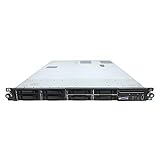
- HP ProLiant DL360 G7 8B Server
- 2x X5650 2.66GHz 12-Cores Total
- 32GB RAM / 8x 146GB 10K 2.5in SAS Hard Drives
- P410 w/ 512MB
Serverless and autoscaling workloads
For a serverless or rapidly autoscaling application, estimate connections using the maximum number of live instances and the connections each instance can open. A small per-instance pool can still produce a large aggregate when many instances start at once. A managed pooler can multiplex many application-side connections onto fewer database connections, but its own plan limits and connection behavior matter.
Independent reader supportYour contribution helps us test, update, and keep practical guides available for everyone.Driver pools, ORM pools, and managed poolers differ
Do not assume every Node.js database stack uses the same default or configuration. Check the exact driver, ORM version, and deployment model.
| Option | What controls connections | Important considerations |
|---|---|---|
| node-postgres pool | Each application process owns its pool. The documented default maximum is 10 clients; requests wait in a FIFO queue when all are checked out. | Account for every process when calculating aggregate connections. See the node-postgres Pool API. |
| Sequelize v7 alpha | The cited v7 alpha documentation gives a default maximum of five active connections and options including max, min, acquire, and idle. Pools are not shared between Sequelize instances. |
This is specifically v7 alpha documentation; defaults and release status can change. See Sequelize’s pool guide. |
| Prisma ORM v7 with relational driver adapters | The supplied Node.js driver controls pool defaults and configuration. | Do not carry over Prisma v6 connection-limit guidance without checking the adapter and exact version. See Prisma’s database connections documentation. |
| Prisma Postgres pooled endpoint | Provider-managed PgBouncer in transactional mode multiplexes application connections. The cited page lists pooled limits of 50 for Free and Starter, 250 for Pro, and 500 for Business; direct limits are lower. | These are provider plan limits, not general PostgreSQL limits, and may change. Transaction-mode session behavior and direct-connection use cases are described below. See Prisma Postgres connection pooling. |
When a transaction-mode pooler is not enough
With transactional pooling, a database connection is assigned for a transaction rather than held for an entire client session. As a result, session state does not persist between transactions. Prisma Postgres recommends direct connections for migrations, schema introspection, administration, LISTEN/NOTIFY, session-level settings, and long-running queries that exceed its stated timeout. Check the current provider documentation for applicable plan limits and timeout details before relying on them.
Quick wins for a faster PC:
Repair Windows errors before they cause bigger problemsFix Now →Fix the driver behind crashes, sound loss and screen glitchesFind Drivers →Clear out junk files and repair common Windows errorsFree Scan →Quick Recap
Product prices and availability are accurate as of the date/time indicated and are subject to change. Any price and availability information displayed on Amazon at the time of purchase will apply.




