Do these 3 things before closing this tab:
1Scan for outdated or missing drivers - takes under a minute2Repair Windows errors before they cause bigger problems3Fix the driver behind crashes, sound loss and screen glitchesThe best keyboard apps for iPhone and Android in 2026 depend on your platform and priorities: Gboard is the broadest choice on Android, SwiftKey is best for cross-platform customization, Grammarly Keyboard is best for writing help, and Apple’s built-in keyboard is the simplest iPhone baseline. No single app is objectively best for every typing style, language, or privacy preference.
Gboard, SwiftKey, Grammarly Keyboard, and Apple’s keyboard are not direct equivalents. Gboard emphasizes integrated Google tools, SwiftKey emphasizes personalization and Microsoft features, Grammarly emphasizes writing quality, and Apple’s keyboard emphasizes native iPhone integration. The right choice also depends on whether you tap or swipe, use multiple languages, want AI assistance, and are comfortable enabling optional network-connected features.
As an Amazon Associate I earn from qualifying purchases.
Key takeaways
- Gboard is the broadest Android choice, combining glide, voice, handwriting, emoji and GIF search, multilingual typing, translation, and other tools in the keyboard.
- Microsoft SwiftKey is the strongest cross-platform option for custom themes, keyboard resizing, adaptive predictions, multilingual typing, and Microsoft AI features.
- Grammarly Keyboard is primarily a writing assistant for spelling, grammar, clarity, tone, and rewriting rather than a universal keyboard replacement.
- Apple’s built-in iPhone keyboard remains the simplest baseline because QuickPath swipe typing is already integrated into the operating system.
- Gboard advanced voice typing depends on hardware, language, region, and feature support: Google specifies Pixel 6 or later for advanced voice typing, Pixel 8 or later for Fix it and detailed edits, and Pixel 9 or later for certain writing-tool voice commands.
- No keyboard is automatically the most private; privacy depends on the operating system, permissions, and optional features such as search, voice dictation, contacts, synchronization, and AI rewriting.
Quick picks: which keyboard app should you choose?
The best keyboard app depends more on the phone and the task than on a universal accuracy ranking. Gboard is the default recommendation for most Android users, SwiftKey is the most flexible choice for people who use both major mobile platforms, Grammarly is best for writing assistance, and Apple’s keyboard is the sensible first choice on iPhone.
| Reader priority | Best choice | Why it fits | Main trade-off |
|---|---|---|---|
| Best all-around Android keyboard | Gboard | Glide typing, voice typing, handwriting, translation, emoji and GIF search, and multilingual tools are integrated into one keyboard. | Some voice and AI features are limited by Pixel model, language, region, or connectivity. |
| Best cross-platform customization | Microsoft SwiftKey | Android and iPhone support, adaptive predictions, themes, resizing, layout controls, toolbar features, and swipe typing. | Feature availability and AI behavior can differ between Android and iPhone. |
| Best grammar and tone help | Grammarly Keyboard | Spelling, grammar, conciseness, tone feedback, synonyms, and generative rewrites appear inside mobile apps. | Some advanced suggestions, tone transformations, and rewriting tools require premium access. |
| Best no-download iPhone option | Apple’s built-in keyboard | Native system integration and QuickPath swipe typing without installing another keyboard extension. | It has fewer third-party search, theme, AI, and writing-assistance features. |
Which keyboard app is best for Android?
Gboard is the best overall Android keyboard for users who want the widest set of integrated features without adding a separate writing workflow. Google’s Android listing describes Glide Typing, voice typing, handwriting, emoji search, GIF search, multilingual typing, Google Translate, cursor control by sliding across the space bar, gesture deletion, an optional number row, one-handed mode, and themes.
#1 Best Overall

- Can't Connect the Bluetooth? Please reset the keyboard and then reconnect the Bluetooth: 1. Turn on the keyboarad; 2. Press and hold the first and the last key at the top row of the keyboard until all indicators start flashing; 3. Bluetooth light flickers quickly, auto entering Bluetooth pairing mode (If not, press Fn + 1 or 2); 4. Search and find "Wireless keyboard".
- Multi-OS Compatible: The keyboard is widely compatible with Android, Windows and iOS devices. Also the basic typing function works with other OS devices such as fire tablets.
- Connect 2 Devices: Seamless switching between 2 Bluetooth devices (iOS/Android/Windows) with single-tap transitions (Fn+"1"/ "2").
- Orange Keys for Productivity Boost: The color-coded design help you to position the keys effortlessly and reduce mistyping. The orange keys are more visible than standard keys, engineered for speed typists.
- Compact & Travel-Friendly: Only 6oz weight and slim 0.6in profile fits in most handbags. The flexible hinge allows you to fold it up for travel – perfect for coffee shops, flights, or campus life.
Gboard is particularly compelling when Google tools are already part of your routine. Google’s Gboard translation documentation explains how to translate text as you type, so a user can compose in one language and insert the result in another without switching to a separate translation app. The exact language and feature availability can vary.
What are Gboard’s advanced voice-typing limits?
Gboard advanced voice typing is not one identical feature on every Android phone. Google’s advanced voice-typing documentation specifies Pixel 6 or later for advanced voice typing, Pixel 8 or later for Fix it and detailed edits, and Pixel 9 or later for voice commands involving writing tools. Google also lists additional language and regional restrictions.
That hardware distinction matters when comparing Gboard with a competing keyboard. A Pixel 9 owner in a supported language may see voice-editing capabilities that a non-Pixel Android owner does not. Gboard’s ordinary voice typing and its advanced voice features should therefore be treated as separate capabilities, not as a promise that every Android device receives the same AI tools.
The Tool Desk
Outbyte PC Repair FREERepair Windows errors before they cause bigger problemsFix Now →Outbyte Driver Updater FREEScan for outdated or missing drivers - takes under a minuteDriver Scan →Who should choose Gboard?
- Choose Gboard if you use Android and want the broadest general-purpose feature set.
- Choose Gboard if you frequently translate, search for GIFs or emoji, dictate messages, or switch between languages.
- Choose Gboard if cursor movement, gesture deletion, one-handed mode, or an optional number row would improve your workflow.
- Compare another keyboard first if your top priority is deep visual customization, professional grammar feedback, or minimizing optional cloud-connected features.
Is Microsoft SwiftKey the best keyboard for customization?
Microsoft SwiftKey is the best choice for users who prioritize personalization, adaptive predictions, and continuity between iPhone and Android. Microsoft describes SwiftKey as a keyboard that adapts to the way a user types, and its current Android listing highlights tap and swipe typing, spelling correction, AI-assisted predictions, toolbar shortcuts, tone rewriting, AI composition, emoji, GIFs, stickers, themes, custom photo themes, keyboard-size controls, and layout controls.
Microsoft’s current SwiftKey listing, reviewed for this 2026 guide, advertises support for more than 700 languages and simultaneous support for up to five languages. Those figures describe the listing’s stated support, not a guarantee that every feature works in every language. Prediction quality, voice typing, rewriting, and AI tools can have narrower language coverage than basic keyboard layouts.
Microsoft’s SwiftKey product information confirms the app’s cross-platform positioning. SwiftKey is a strong fit for someone who changes phones between Android and iPhone and wants a familiar keyboard experience rather than learning a different layout on each device.
What does SwiftKey’s toolbar do?
SwiftKey’s toolbar is the keyboard’s command center for shortcuts and extra tools. Microsoft’s toolbar guide describes access to functions such as search, tone rewriting, chat, GIFs, and other shortcuts from the keyboard interface.
Rank #2

- 【Mini Foldable Bluetooth Keyboard For Typing On the Go】American Broadcom chip. Ergonomic, foldable Mini Bluetooth keyboard with a hidden bracket. Reply to emails, take notes, or work on a draft from your phone or pad—even when desk space is limited. From lecture hall desks and library study spots to café tables and small airport tables, this compact iphone keyboard fits into your day, then folds into a narrow shape that slips easily into your everyday bag.Perfect gift for travel and business trips!
- 【Exquisite & Lightweight Portable Keyboard】 A dark gray aluminum-alloy shell with a matte finish brings a solid feel and a clean, understated look that pairs naturally with darker finishes on your iPhone Duo or iPad mini. At approximately 165 g (5.8 oz), it opens to just larger than your palm and folds into a slim strip roughly 2 to 3 fingers wide. Provide you with maximum convenience with minimal weight and size, turns your phone or tablet into a true laptop replacement for work, study, or creative projects.(Note: The built-in stand is intended for lightweight devices. Heavier devices, such as iPads, require a separate stand. This does not affect Bluetooth keyboard connectivity.)
- 【Mini Portable Keyboard Compatible 】iOS/Windows/Android/ MacOS/HMS Foldable mini keyboard is perfectly compatible with iOS, Android and Windows operating systems for cell phones, tablets, laptops, desktops, and provides stable and fast Bluetooth connectivity. With just one touch, the foldable Mini Bluetooth keyboard can instantly switch between registered devices with scissor-foot structure keys, easy to press without worrying about damage
- 【160mAh Wireless Rechargeable Portakeys Keyboard】Built-in rechargeable lithium battery, 2 hours of charging time provides up to 45 hours of continuous typing or up to 90 days of standby time. With a full charge, it is enough for your short business trip or vacation. The foldable mini keyboard also features an energy-saving mode that puts you to sleep after ten minutes of inactivity and wakes you up with a single click.
- 【 How to use After-sales service】: 1. How to use: Keyboard open】 Pairing mode:1,Press Fn and Bluetooth 1/Bluetooth 2/Bluetooth 3 at the same time to put the keyboard into pairing mode. 2, Turn on the Bluetooth on your device.3,Click the name of this keyboard"B.O.W"in the Bluetooth device list. - 4, Once the Bluetooth connection is established, the message "Connected" will be displayed. If you have any questions, please don't hesitate to contact us, we will reply within 24 hours.
SwiftKey is therefore more than a choice of key shapes or colors. The toolbar brings Microsoft-oriented writing and search tools into the typing surface, while more than 100 themes, custom photo themes, resizing, and layout controls let users change how the keyboard looks and occupies the screen.
How does SwiftKey voice typing work?
SwiftKey supports multimodal voice typing on Android and iPhone, allowing users to dictate while keeping the keyboard visible. Microsoft’s voice-to-text documentation says the experience is enabled by default and that the Android implementation is provided by the system and powered by Google speech recognition.
Voice, AI composition, tone rewriting, and related tools may involve network services or platform-specific processing. SwiftKey is a good customization recommendation, but users should check the current permission prompts and disclosures before enabling features that send voice or text to a service.
Who should choose SwiftKey?
- Choose SwiftKey if you want custom themes, a photo background, keyboard resizing, or detailed layout controls.
- Choose SwiftKey if you use both Android and iPhone and want one familiar keyboard across platforms.
- Choose SwiftKey if Microsoft Copilot, tone transformation, composition tools, or toolbar shortcuts are useful to you.
- Do not assume that personalization automatically makes SwiftKey more accurate for every person; that claim would require controlled testing across devices, languages, and typing styles.
Is Grammarly Keyboard better for writing than for ordinary typing?
Grammarly Keyboard is best understood as a writing-quality companion rather than the best conventional keyboard for every user. Grammarly’s current iOS listing, reviewed for this 2026 guide, describes real-time spelling, grammar, and conciseness suggestions in more than 20 languages, typing in six languages, voice dictation with automatic cleanup, tone detection, premium tone transformations, multi-word predictions, autocorrect, synonyms, swipe typing, emoji search, and generative-AI rewrites.
PC Slower Than It Used to Be?
A free scan shows the junk files, broken settings and background clutter dragging Windows down - then fixes them in one click.Free scan · Windows 10 & 11Crashes, No Sound, or Screen Glitches?
Random freezes, missing sound and display glitches usually trace back to one bad driver. Find and replace yours safely.Free scan · under a minuteGrammarly’s main advantage appears after the basic act of entering words. The keyboard can help a user make a message clearer, shorter, more fluent, or better matched to a desired tone. That makes Grammarly especially relevant for professional messages, schoolwork, customer communication, applications, and anyone who routinely edits mobile text before sending it.
The listing distinguishes ordinary keyboard functions from higher-level assistance. Premium features add advanced clarity, conciseness, tone, and vocabulary suggestions, while generative rewrites can adjust length, fluency, and tone. The exact free-versus-premium boundary, supported languages, and feature behavior can differ between iOS and Android, so the current platform listing should be checked before subscribing.
What are Grammarly Keyboard’s privacy and voice-dictation caveats?
Grammarly’s iOS listing says that audio from voice dictation is not stored. That is a vendor disclosure about voice dictation, not an independent privacy audit and not a guarantee about every text-processing, rewriting, synchronization, or AI feature.
Rank #3

- Compatible with 4.5''-6.8'' (width of 6-9.5cm) Bluetooth cell phone, including Android, and iOS Phones.
- Light weight, compact, easy to carry and handle. Detachable magnetic keyboard tray to turn keyboard cover into classic portfolio case.
- Unique folio design prevents scratches while allowing easy access to all ports.
- Built-in stand securely holds your cellphone hands in a angle for typing or watching movies.
- Premium PU leather protective exterior provides , rugged, shockproof cushion when dropped and the plastic keyboard is scratch, high performance and
Grammarly is the right recommendation when writing quality matters more than having the largest collection of keyboard utilities. Users who mainly want fast predictions, translation, handwriting, themes, or a broad Google-integrated toolset should start with Gboard or SwiftKey instead.
What’s actually slowing this PC down?
Pick the symptom - the matching free tool is one click away.
Should iPhone users keep Apple’s built-in keyboard?
Yes. Apple’s built-in keyboard is the baseline iPhone option for users who want the least setup, predictable system integration, and no additional keyboard app. Apple identifies QuickPath as a swipe-based typing method available on iPhone, iPad, and Mac in its Apple documentation about QuickPath.
Apple’s keyboard is not a separately downloaded app, but that is precisely its advantage. The keyboard is already present, works as the native input method, and provides a useful swipe-typing option without asking the user to install another keyboard extension.
Third-party keyboards are worthwhile on iPhone when a specific benefit justifies the extra setup: Gboard adds Google Search, GIFs, emoji search, stickers, Glide Typing, and many languages; SwiftKey adds cross-platform personalization and Microsoft tools; Grammarly adds writing feedback and rewriting. Apple’s keyboard should remain the comparison point rather than being dismissed simply because it has fewer headline features.
Apple’s built-in keyboard should not be described as universally more private or more accurate without a defined test and current privacy documentation. Its practical advantage is simpler system integration, not a blanket privacy or accuracy guarantee.
What is different about keyboard apps on iPhone and Android?
iPhone and Android do not provide identical keyboard experiences, so an app that is excellent on one platform may be merely adequate on the other. Third-party iPhone keyboards operate within iOS’s keyboard-extension model, while Android users may receive deeper integration with Google or Microsoft services depending on the phone and enabled features.
| Keyboard | On iPhone | On Android | Best interpretation |
|---|---|---|---|
| Gboard | Google Search, GIFs, emoji search, stickers, Glide Typing, voice input, and many languages are listed for the iPhone version. | Google’s keyboard tools include Glide Typing, voice typing, handwriting, translation, multilingual typing, emoji search, GIF search, one-handed mode, and themes. | Choose it primarily for Android breadth or Google-centric features; do not assume iPhone feature parity. |
| SwiftKey | Cross-platform keyboard with swipe or tap typing, predictions, toolbar tools, and voice features, subject to iOS behavior and availability. | Customization, adaptive predictions, toolbar functions, AI tools, voice typing, and multilingual options are prominent in the current listing and support material. | Choose it when a similar experience across both platforms matters more than native simplicity. |
| Grammarly Keyboard | The current iOS listing emphasizes grammar, conciseness, tone, voice cleanup, synonyms, swipe typing, and generative rewriting. | Use as a writing-assistance keyboard, but verify current Android language coverage and premium feature behavior separately. | Choose it for writing feedback, not merely for changing the keyboard’s appearance. |
| Apple’s built-in keyboard | Native iPhone keyboard with QuickPath swipe typing and no third-party installation. | There is no Apple keyboard equivalent on Android; use the phone’s native keyboard or install a third-party option. | Choose it when iPhone simplicity and system integration are more important than extra tools. |
iPhone users should compare an app’s actual iOS feature list with its Android feature list before switching. Search, voice input, AI writing, language support, toolbar behavior, permissions, and synchronization can change by platform even when the app has the same name.
Rank #4
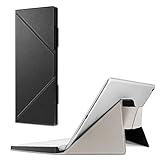
- Specifically fit for Apple Magic Keyboard MK293LL/A, MLA22LL/A, MK2A3LL/A working with iPad / iPad Air / iPad Pro / iPad mini / iPhone / iMac (Case Only! Tablet and Apple Keyboard are Not included!)
- Durable and high-quality PU leather can well protect your keyboard from scratches and dust
- Slim and lightweight, easily slide into your briefcase, backpack, or other bag for convenient carry
- Designed with magnetic closure for easy closure and stand setup.
- Secure stand with magnetic flaps to hold your device in landscape mode.
Are keyboard apps accurate enough to replace the default keyboard?
There is no evidence in this comparison that one keyboard is objectively the most accurate for every user. Accuracy depends on device, language, typing method, vocabulary, app context, autocorrection settings, and whether the user taps or swipes. Adaptive predictions may feel better for one person without improving results for another.
App Store and Google Play ratings are not laboratory measurements. A meaningful accuracy comparison would need controlled testing across devices, languages, typing styles, and application contexts. This guide therefore recommends keyboards by feature fit and workflow rather than claiming a universal typing-speed or error-rate winner.
Quick wins for a faster PC:
Repair Windows errors before they cause bigger problemsFix Now →Scan for outdated or missing drivers - takes under a minuteDriver Scan →What should you know about keyboard privacy?
A keyboard can potentially handle sensitive text because a keyboard is an input method, so optional cloud-connected features deserve separate scrutiny from ordinary typing. The important question is not simply whether an app is called private; the important questions are what data each enabled function sends, what permissions the operating system grants, and what the developer currently discloses.
Ordinary typing versus optional features
Search, voice dictation, contacts lookup, cloud synchronization, AI composition, translation, and rewriting can involve different data flows from ordinary key presses. A user who enables one of these functions should review the relevant prompt and privacy disclosure instead of treating the app’s basic keyboard behavior as proof about every feature.
Google’s iPhone listing says that searches and voice inputs are sent to Google for those functions and describes other typed content as staying on the device. The same App Store privacy disclosure lists possible data categories including user content, identifiers, and diagnostics. These are Google’s developer disclosures, not an independent privacy audit.
Google’s Android data-safety disclosure says Gboard does not share data with third parties while listing possible collection of audio, app activity, and other data. Microsoft’s Android listing likewise says SwiftKey does not share data with third parties, lists categories the app may collect, and states that data is encrypted in transit. Store data-safety sections are useful disclosures, but they should not be treated as a complete third-party verification of how every feature processes text.
Privacy checklist before enabling a keyboard
- Install the keyboard only from the official Apple App Store or Google Play listing.
- Read the operating system’s permission prompt before granting access, and enable optional permissions only when the related feature is genuinely useful.
- Review search and voice settings separately because search queries and dictated audio or transcripts may use network services.
- Decide whether contacts access, cloud synchronization, AI composition, or rewriting is necessary before enabling each feature.
- Keep the native keyboard available as a fallback, especially on iPhone.
- For highly sensitive text, consider switching back to the native keyboard and avoid optional search, voice, or AI tools.
- Recheck the developer’s current privacy disclosure after major app or operating-system updates because permissions and feature behavior can change.
How do you install and switch keyboard apps?
Install the app from the official store, add it through the phone’s keyboard settings, and grant only the permissions needed for the features you plan to use. The exact names and locations of settings can change with iOS and Android releases, so the current operating-system labels should take precedence over an older menu path.
Best Value

- Made for iPhone and iPad Users: Designed for iPadOS/iOS 14.5 or later, works with iPad Pro, Air, Mini, 11th/10th/9th/8th/7th Gen etc and iPhone 13/14/15/16/17 Pro/Pro Max etc. 【NOTICE: The function keys not fully compatible with other system】
- Recharge Less, Type Longer: The built-in 280mAh rechargeable battery delivers up to 70 hours of working time after a 2-3 hour charge, making it ideal for study, business trips and travel without frequent charging
- Portable Workstation for student and office worker: The foldable base legs adjust typing angle to keep comfortable. Paired with the included adjustable stand to create a setup for study, remote work, online meetings and everyday typing on the go
- Slim for Daily Carry: Lighter than ordinary water bottles. Only 0.68 lb with an 11 x 4.7 in compact layout, this portable keyboard fits easily into backpacks, handbags and briefcases, making it easy to carry between dorms, cafe shop or trips
- 2 DIY Key Stickers for Style and Visibility: Includes a gradient purple sticker for a personalized look and a large font black sticker for easier visibility in low light or from a distance, while both helping protect the keys from fading and wear
- Download Gboard, SwiftKey, or Grammarly from the official store listing for the phone’s platform.
- Open the phone’s keyboard settings and add or enable the newly installed keyboard.
- When the keyboard selector appears, choose the new keyboard and test it in a low-risk app such as a notes field.
- Check typing, swipe input, autocorrection, languages, voice input, and any AI toolbar before relying on the keyboard for important messages.
- Return to keyboard settings to change the default keyboard, disable an unused keyboard, or alter permissions.
Keep Apple’s keyboard enabled on iPhone and the Android phone’s native keyboard available as a fallback. A fallback is useful if a third-party keyboard does not appear in a particular app, loses a language, behaves differently after an update, or requires a permission you do not want to grant.
Which keyboard app is best for each type of user?
| If you want… | Choose… | Reason | Check first |
|---|---|---|---|
| The broadest Android toolkit | Gboard | It combines glide, voice, handwriting, translation, emoji and GIF search, and multilingual typing. | Whether your phone, language, and region support the advanced voice features you want. |
| Google Search or Translate while typing | Gboard | Google-specific search and translation tools are integrated into the keyboard experience. | Google’s disclosures for search and voice input, plus any permissions requested. |
| The most visual and layout customization | SwiftKey | The keyboard offers themes, custom photo themes, resizing, layout controls, and a toolbar. | Whether the iPhone and Android versions expose the same customization or AI features. |
| A familiar keyboard on iPhone and Android | SwiftKey | SwiftKey is designed for both platforms and adapts predictions to the user’s typing. | Language availability, voice behavior, and current synchronization settings. |
| Grammar, clarity, and tone feedback | Grammarly Keyboard | Its strongest differentiator is in-app writing assistance, including corrections and rewrites. | Which suggestions and tone or rewriting tools are included in the free version. |
| The least setup on iPhone | Apple’s built-in keyboard | It is already installed, integrated with iPhone, and supports QuickPath swipe typing. | Whether the lack of third-party search, themes, or writing tools is acceptable. |
| The most privacy-conscious decision | No automatic winner | Privacy depends on platform, permissions, enabled features, and current developer disclosures. | Search, voice, contacts, cloud sync, AI, and rewriting disclosures before activation. |
Final recommendation
Pick Gboard for a feature-rich Android experience, especially if Google translation, search, voice, handwriting, or multilingual tools matter. Pick SwiftKey for cross-platform continuity and customization. Pick Grammarly Keyboard when correcting and polishing writing is the main job. On iPhone, try Apple’s built-in keyboard first and install a third-party keyboard only when a specific feature justifies the additional extension, permissions, and privacy review.
Frequently Asked Questions
What is the best keyboard app for iPhone and Android in 2026?
There is no single best keyboard for both platforms. Gboard is the broadest feature choice on Android, SwiftKey is the strongest cross-platform customization option, Grammarly Keyboard is best for grammar and rewriting, and Apple’s built-in keyboard is the simplest iPhone baseline.
Free tools Windows power users keep installed
One-click scans. No signup required.
Does Gboard’s advanced voice typing work on every Android phone?
Gboard’s advanced voice typing is device-dependent. Google specifies Pixel 6 or later for advanced voice typing, Pixel 8 or later for Fix it and detailed edits, and Pixel 9 or later for certain writing-tool voice commands, with additional language and regional limits.
Do keyboard apps work the same way on iPhone and Android?
Yes, but iPhone and Android versions may not have identical features. Search, voice input, AI writing, language support, toolbar behavior, permissions, and synchronization can differ between platforms.
Are third-party keyboard apps private?
Keyboard privacy depends on the enabled features and current developer disclosures. Users should review search, voice dictation, contacts access, cloud synchronization, AI composition, and rewriting separately from ordinary typing.
The Bottom Line
Bottom line: Gboard is the best broad-feature choice for Android, SwiftKey is the best cross-platform customization choice, Grammarly Keyboard is the best writing-assistance choice, and Apple’s built-in keyboard is the best simple iPhone baseline. Compare platform-specific features and review optional data permissions before switching.
Recommended Free Tools
Quick Recap
Product prices and availability are accurate as of the date/time indicated and are subject to change. Any price and availability information displayed on Amazon at the time of purchase will apply.

