Freedom251 › Embedded Systems Toolchains

Zephyr SDK
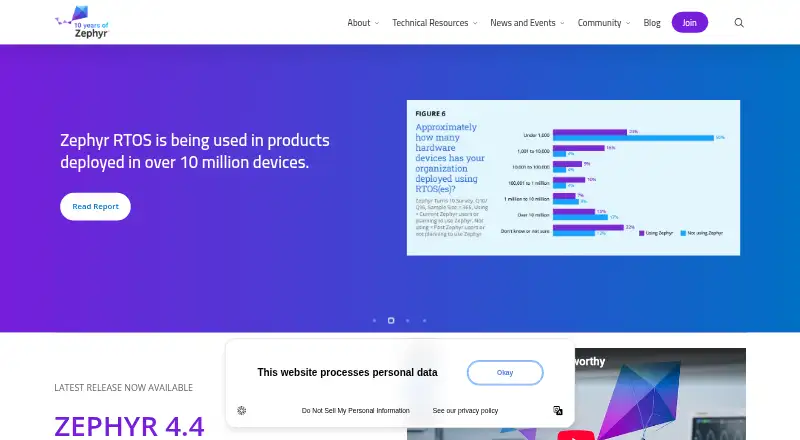
What Zephyr SDK is
Zephyr SDK is a development kit for building applications for Zephyr, an RTOS for resource-constrained devices such as connected sensors, LED wearables, modems, and small wireless gateways. It supplies GNU and LLVM toolchains for a broad set of target architectures, with GNU, LLVM, and minimal bundle options. Each variant includes host tools, and SDK bundles are available for Linux, macOS, and Windows. Components include a compiler, assembler, linker, GDB, QEMU, OpenOCD, BOSSA, Xilinx QEMU, and Picolibc. The included QEMU and OpenOCD tools support emulating, flashing, and debugging Zephyr applications. The SDK works with CMake, west, and Ninja, and provides QEMU GDB server, OpenOCD, and GDB debugging interfaces. It can be installed from the Zephyr repository using `west sdk install`. The project identifies the referenced SDK version as recommended for its corresponding Zephyr version and provides a compatibility matrix. Zephyr documents PSA Crypto with Mbed TLS and a monolithic kernel-and-application binary design. Its software is open source under Apache 2.0 and free for commercial and non-commercial solutions; community support is available through mailing lists and Discord.
Who it suits
Zephyr SDK suits developers building for resource-constrained devices such as connected sensors, wearables, modems, and small wireless gateways. It is a fit for teams that need GNU or LLVM toolchains, host-side emulation and debugging tools, and support for Zephyr's listed target architectures.
What it does well
- GNU, LLVM, and minimal bundle variants are available.
- Targets include ARC, ARM, RISC-V, x86, and Xtensa.
- Includes compiler, assembler, linker, GDB, QEMU, and OpenOCD.
- Works with CMake, west, and Ninja.
- Apache 2.0 licensed and free for commercial and non-commercial use.
What to know first
- Vendor-specific crypto APIs, including TPM and TEE support, are planned.
- The macOS host platform is listed for AArch64 only.
- Community support is through mailing lists and Discord.
Plans
| Plan | Billed and limits | Price |
|---|---|---|
| Zephyr SDK | Free to use; Apache 2.0 licensed; GNU, LLVM, or minimal bundle variants | Free |
As zephyrproject.org lists them, read 30 Sept 2026. The maker's own page has the final word.
Getting started
- Open the Zephyr Project website.
- Choose a GNU, LLVM, or minimal SDK bundle for your host platform.
- Install the SDK from the Zephyr repository with `west sdk install`.
- Use the referenced SDK version recommended for your corresponding Zephyr version; consult the compatibility matrix.
- Build with CMake, west, or Ninja, and use the included tools for emulation, flashing, or debugging.
Verdict
Choose Zephyr SDK if you are developing Zephyr applications and need toolchains and host tools for emulation, flashing, and debugging. Its free Apache 2.0 license suits commercial and non-commercial solutions. Look elsewhere if your work depends on vendor-specific cryptographic APIs such as TPM or TEE support.
Questions
How much does Zephyr SDK cost?
The listed plan is free. It is free to use under the Apache 2.0 license.
Is there a free trial?
No. The SDK is listed as free, with no free trial.
Which platforms does it support?
SDK bundles are available for Linux, macOS, and Windows. Host platforms are listed as Linux, macOS (AArch64), and Windows (x86-64).
Is Zephyr SDK open source?
Yes. The Zephyr Project says its software is available under the Apache 2.0 open source license and is free for commercial and non-commercial solutions.
What tools and build systems are included?
Components include a compiler, assembler, linker, GDB, QEMU, OpenOCD, BOSSA, Xilinx QEMU, and Picolibc. Build systems include CMake, west, and Ninja.
How can I get support?
Community support is provided through mailing lists and Discord.
Facts from Zephyr SDK's own pages
- Bundle options
- The SDK is distributed in GNU, LLVM, and minimal bundle variants, each including host tools. · docs.zephyrproject.org, 30 Sept 2026
- Compatibility
- The SDK page describes its referenced version as the recommended version for the corresponding Zephyr version and links to a compatibility matrix. · docs.zephyrproject.org, 30 Sept 2026
- Emulation and debugging
- The included custom QEMU and OpenOCD tools are used to emulate, flash, and debug Zephyr applications. · docs.zephyrproject.org, 30 Sept 2026
- Installation
- The SDK can be installed from the Zephyr repository with the command `west sdk install`. · docs.zephyrproject.org, 30 Sept 2026
- Intended users
- The project describes Zephyr as an RTOS for resource-constrained devices, including connected sensors, LED wearables, modems, and small wireless gateways. · zephyrproject.org, 30 Sept 2026
- License
- The Zephyr Project says its software is available under the Apache 2.0 open source license and free for commercial and non-commercial solutions. · zephyrproject.org, 30 Sept 2026
- Operating systems
- SDK bundles are available for Linux, macOS, and Windows. · docs.zephyrproject.org, 30 Sept 2026
- Purpose
- Zephyr SDK provides GNU and LLVM toolchains for Zephyr-supported architectures, plus host tools including custom QEMU and OpenOCD. · docs.zephyrproject.org, 30 Sept 2026
- Security
- Zephyr documents PSA Crypto with Mbed TLS and describes a monolithic kernel-and-application binary design. · docs.zephyrproject.org, 30 Sept 2026
- Security limitation
- The security overview says vendor-specific cryptographic hardware and software APIs, including TPM and TEE support, are planned. · docs.zephyrproject.org, 30 Sept 2026
- Support
- Community support is provided through mailing lists and Discord. · docs.zephyrproject.org, 30 Sept 2026
- Target architectures
- The SDK lists ARC, ARM, Microblaze, MIPS, RISC-V, RX, SPARC, x86, and Xtensa target architectures. · docs.zephyrproject.org, 30 Sept 2026
Where Zephyr SDK stands on Freedom251
- Embedded Systems Toolchains#18 of 30