Freedom251 › Port Scanner Software
Unicornscan
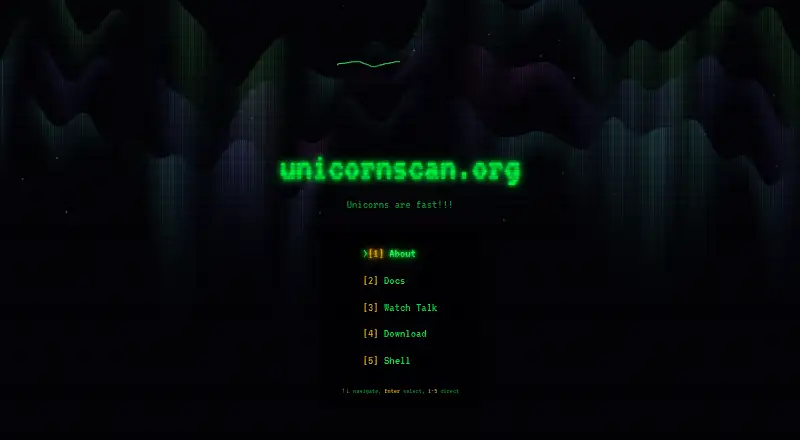
What Unicornscan is
Unicornscan is a free network reconnaissance tool that sends asynchronous, stateless probes and records responses. Its documented modes include TCP SYN scans, UDP probes with protocol-specific payloads, local-network ARP discovery, and stateless TCP traceroute. Alicorn provides a web interface for examining scan history, host and port statistics, OS fingerprinting, and network topology. The pgsqldb module can export results to PostgreSQL, which Alicorn uses for storage; starting Alicorn also launches a PostgREST API. Optional free DB-IP Lite databases add country, city, and ASN lookups to scan output and the interface. Packages are listed for Debian, Ubuntu, Fedora, RHEL-compatible distributions, and macOS through Homebrew or DMG. Linux capabilities are set automatically so scans can run without root privileges. The Alicorn interface requires Docker and PostgreSQL. Scan modes that begin with ARP are limited to targets on the local broadcast domain, since ARP requests cannot cross routers. The project directs users to its website and GitHub Issues for support.
Who it suits
Unicornscan suits users who need network reconnaissance with TCP, UDP, discovery, and tracing modes. Those who want its Alicorn web interface should be prepared to use Docker and PostgreSQL.
What it does well
- Includes TCP SYN scans and UDP probes.
- Offers local-network ARP discovery and stateless TCP traceroute.
- Alicorn displays scan history and network topology.
- Linux capabilities allow scans without root privileges.
- Optional DB-IP Lite databases provide country, city, and ASN lookups.
What to know first
- Alicorn requires Docker and PostgreSQL.
- ARP-based compound modes are limited to the local broadcast domain.
- Free DB-IP Lite databases are optional, not built-in.
Limits
Alicorn requires Docker and PostgreSQL. Compound scan modes beginning with ARP require targets on the local broadcast domain because ARP requests cannot cross routers.
Plans
| Plan | Billed and limits | Price |
|---|---|---|
| Unicornscan | GPL software · downloadable packages and source | Free |
As unicornscan.org lists them, read 2 Oct 2026. The maker's own page has the final word.
Getting started
- Visit the Unicornscan website for the project and installation guide.
- Install a listed package for Debian, Ubuntu, Fedora, an RHEL-compatible distribution, or macOS through Homebrew or DMG.
- Use the command-line tool to run a documented TCP SYN scan, UDP probe, local-network ARP discovery, or stateless TCP traceroute.
- For the Alicorn web interface, provide Docker and PostgreSQL.
- Optionally add DB-IP Lite databases for country, city, and ASN lookups.
Verdict
Unicornscan combines stateless probing with Alicorn’s result-viewing interface and PostgreSQL integration. Its ARP scope restriction and Alicorn’s Docker and PostgreSQL requirements are important deployment considerations.
Questions
How much does Unicornscan cost?
The listed plan is free, and is described as GPL software with downloadable packages and source.
Is there a free plan or trial?
The plan is free. There is no free trial.
Which platforms are supported?
Platforms listed are API, Linux, macOS, self-hosted, and web. Packages are listed for Debian, Ubuntu, Fedora, RHEL-compatible distributions, and macOS through Homebrew or DMG.
Does Unicornscan have a web interface or API?
Alicorn provides a web interface and launches a PostgREST API alongside its web server. Alicorn requires Docker and PostgreSQL.
Who created Unicornscan?
The project README says it was created by Jack C. Louis.
Can ARP scans reach targets across routers?
No. Compound modes beginning with ARP require targets on the local broadcast domain because ARP requests cannot cross routers.
Facts from Unicornscan's own pages
- API
- The Alicorn startup process launches a PostgREST API alongside the web server. · unicornscan.org, 2 Oct 2026
- Creator
- The project README says Unicornscan was created by Jack C. Louis. · github.com, 2 Oct 2026
- Database integration
- The pgsqldb module can export scan results to PostgreSQL, which Alicorn uses for data storage. · unicornscan.org, 2 Oct 2026
- Discovery and tracing
- Documented scan modes include local-network ARP discovery and stateless TCP traceroute. · github.com, 2 Oct 2026
- GeoIP
- Optional free DB-IP Lite databases enable country, city, and ASN lookups in scan output and the web interface. · unicornscan.org, 2 Oct 2026
- Network scope limit
- Compound modes beginning with ARP require targets on the local broadcast domain because ARP requests cannot cross routers. · github.com, 2 Oct 2026
- Permissions
- The package guide says Linux capabilities are set automatically so scans can run without root privileges. · unicornscan.org, 2 Oct 2026
- Purpose
- Unicornscan is an asynchronous stateless network stimulus delivery and response recording tool for scalable, high-speed network reconnaissance. · unicornscan.org, 2 Oct 2026
- Requirements
- The Alicorn web interface requires Docker and PostgreSQL for data storage. · unicornscan.org, 2 Oct 2026
- Support
- The install guide points users to the project website and GitHub Issues for support and bug reports. · unicornscan.org, 2 Oct 2026
- Supported systems
- Prebuilt packages are listed for Debian, Ubuntu, Fedora, RHEL-compatible distributions, and macOS via Homebrew or DMG. · unicornscan.org, 2 Oct 2026
- TCP and UDP scanning
- The getting-started guide documents TCP SYN scans and UDP probes with protocol-specific payloads. · github.com, 2 Oct 2026
- Web interface
- Alicorn is a web interface for viewing and analyzing scan results, including scan history, host and port statistics, OS fingerprinting, and network topology visualization. · unicornscan.org, 2 Oct 2026
Where Unicornscan stands on Freedom251
- Port Scanner Software#13 of 26