Freedom251 › Data Masking Software

Syntho
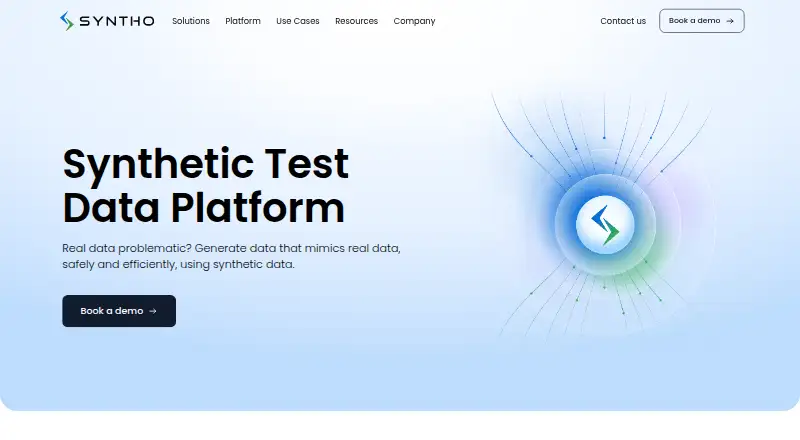
What Syntho is
Syntho is a test data management platform that combines data masking with rule-based and AI-generated synthetic data. It is designed for production-like test data, product development, tailored demos, data sharing, analytics and AI modeling. Its Sensitivity Scanner identifies PII, PHI and other sensitive fields so mock data can replace them. Generation options include formula- and pattern-based methods, subsetting, upsampling, quality assurance reports and an AI Assistant. Syntho connects to databases and services such as PostgreSQL, SQL Server, Oracle, MySQL, Databricks, IBM DB2, MariaDB, Azure Data Lake and Amazon S3. It runs in a customer environment, including air-gapped setups, using Docker Compose or Kubernetes. The maker says processing stays in that environment and deployments send no telemetry or usage data. A REST API supports pipeline integration and automation. Deployment requires Linux (x86_64), with a stated minimum of 8 virtual CPUs, 32 GB RAM and 128 GB disk. Pricing is on request; plans usually start with a one-year license agreement.
Who it suits
Syntho suits organizations that need synthetic or masked data for testing, development, sharing or analytics, especially when deployment must stay in their own environment. Its stated use cases also include tailored demos and AI modeling.
What it does well
- Combines masking with rule-based and AI data generation.
- Supports air-gapped, customer-environment deployment.
- REST API supports pipeline integration and automation.
- Privacy Audit Reports can be exported.
- Includes support in its plans.
What to know first
- No free plan is listed.
- Pricing requires contacting Syntho for a quote.
- Minimum setup calls for 8 virtual CPUs and 32 GB RAM.
- Additional deployments can incur extra costs.
Limits
The Basic plan includes 1–5 database connections, 1–2 connector types, and a small deployment package. Plans include one deployment process; additional deployments can incur extra costs.
Plans
| Plan | Billed and limits | Price |
|---|---|---|
| Standard | Usually starts with a 1-year license agreement; contact Syntho for a quote. · 6–10 database connections · 1–5 connector types · all current features · medium deployment package · support included | On request |
| Basic | Usually starts with a 1-year license agreement; contact Syntho for a quote. · 1–5 database connections · 1–2 connector types · small deployment package · support included | On request |
| Ultimate | Usually starts with a 1-year license agreement; contact Syntho for a quote. · 11–15 database connections · 1–8 connector types · all current and future features · large deployment package · support included | On request |
As syntho.ai lists them, read 8 Oct 2026. The maker's own page has the final word.
Getting started
- Visit the Syntho website and contact the company for a quote.
- Choose a plan based on database connections, connector types, and deployment package.
- Prepare a Linux x86_64 environment with at least 8 virtual CPUs, 32 GB RAM, and 128 GB disk storage.
- Deploy using Docker Compose or Kubernetes.
- Connect data sources and integrate the REST API if needed.
Verdict
Syntho brings data masking, synthetic-data generation and audit reporting into one platform, with deployment in a customer environment. Organizations should account for its stated Linux resource minimum and request pricing details, including any costs for additional deployments.
Questions
Is Syntho free?
Syntho has no free plan. Pricing is on request.
What platforms does Syntho support?
It is available for Linux, API use, web access, and self-hosted deployment. Deployment requirements specify Linux on x86_64.
Where does Syntho process data?
Syntho runs in a customer environment, including air-gapped environments, and says processing remains there.
What does the Basic plan include?
Basic includes 1–5 database connections, 1–2 connector types, a small deployment package, and support.
Does Syntho offer API access?
Yes. Its REST API supports integration into data pipelines and automation.
What is the minimum deployment setup?
The stated minimum is Linux on x86_64, 8 virtual CPUs, 32 GB RAM, and 128 GB disk storage; no GPU is required.
Facts from Syntho's own pages
- API
- Syntho offers a REST API for integrating the engine into data pipelines and automating its functionality. · syntho.ai, 8 Oct 2026
- Company
- Syntho describes itself as an Amsterdam-based company focused on enabling organizations to work safely and quickly with synthetic data. · syntho.ai, 8 Oct 2026
- Data handling
- Syntho says it collects no data from deployments, including telemetry or usage data, and that processing stays within the customer environment. · syntho.ai, 8 Oct 2026
- Data masking
- Its Sensitivity Scanner identifies PII, PHI, and non-personal sensitive fields, while mock data can replace sensitive values. · syntho.ai, 8 Oct 2026
- Deployment
- Syntho runs in a customer environment, including air-gapped environments, and supports Docker Compose and Kubernetes deployment. · syntho.ai, 8 Oct 2026
- Generation features
- Features include formula-based and pattern-based generation, subsetting, quality assurance reports, upsampling, and an AI Assistant. · syntho.ai, 8 Oct 2026
- Headquarters
- Amsterdam, Netherlands · syntho.ai, 28 Sept 2026
- Integrations
- Syntho lists connectors including PostgreSQL, SQL Server, Oracle, MySQL, Databricks, IBM DB2, MariaDB, Azure Data Lake, and Amazon S3. · syntho.ai, 8 Oct 2026
- Pricing limits
- The pricing page says plans include one deployment process and that additional deployments can incur extra costs. · syntho.ai, 8 Oct 2026
- Privacy audit
- The Privacy Audit Report records protection status, privacy rank, and settings for each generation job, with exportable reports. · syntho.ai, 8 Oct 2026
- Product
- Syntho combines synthetic data masking, rule-based generation, and AI-generated synthetic data in one test data management platform. · syntho.ai, 8 Oct 2026
- Support
- Pricing includes support, and the FAQ describes documentation, ticketing, dedicated communication, and onboarding guidance. · syntho.ai, 8 Oct 2026
- System requirements
- The deployment page specifies Linux (x86_64), says no GPU is required, and gives a minimum setup of 8 virtual CPUs, 32 GB RAM, and 128 GB disk storage. · syntho.ai, 8 Oct 2026
- Use cases
- The platform is presented for production-like test data, product development, tailored demos, data sharing, and analytics and AI modeling. · syntho.ai, 8 Oct 2026
Where Syntho stands on Freedom251
- Data Masking Software#18 of 26
- AI Synthetic Data Generators#21 of 25
- Synthetic Data Generation Software#28 of 29