Freedom251 › AI Voice Isolators

Sharpi
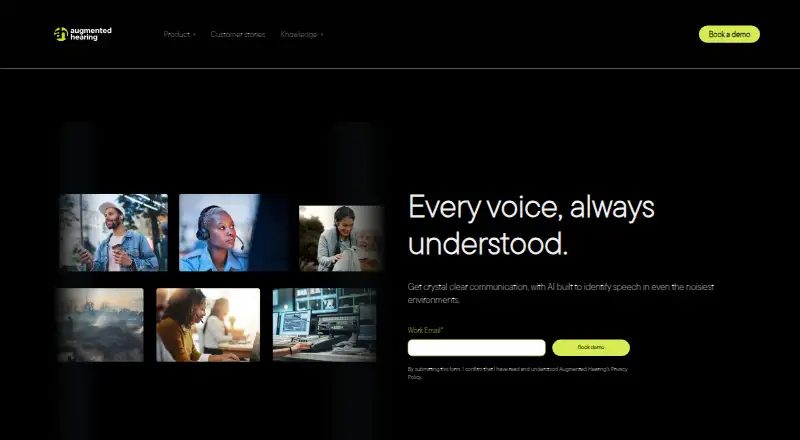
What Sharpi is
Sharpi uses AI speech enhancement to separate speech from background noise in real time. Its Windows app processes incoming and outgoing audio with under 10 ms latency and is designed to work with softphone and radio client applications. The maker says it recognizes human speech across all languages. Sharpi is also available as a physical on-premises box, a SIP Bridge, and an embedded solution. The SIP Bridge connects through standard SIP/RTP interfaces and supports SIP-based telephony without vendor-specific extensions; typical end-to-end processing latency is approximately 10–20 ms, depending on configuration. Embedded deployments can be configured for latency from 2–12 ms, along with model size, CPU and NPU loads, and power budget. The maker says the Windows app works without internet or cloud connectivity and does not store or transmit audio data. Sharpi is presented for contact centers, emergency and critical communications, and manufacturers integrating speech enhancement into products. Pricing is on request; sales and engineering consultations are offered to help select and integrate a deployment.
Who it suits
Sharpi is aimed at contact centers, emergency and critical communications teams, and manufacturers embedding speech enhancement in products. Its different deployment options suit organizations evaluating Windows, SIP, on-premises, or embedded configurations.
What it does well
- Windows app processes audio with under 10 ms latency.
- SIP Bridge uses standard SIP/RTP interfaces.
- Embedded latency can be configured from 2–12 ms.
- Windows app works without internet or cloud connectivity.
- Maker says audio is not stored or transmitted.
What to know first
- Pricing is available only on request.
- SIP Bridge latency is approximately 10–20 ms.
- Windows app is designed for Windows.
Limits
Pricing is on request, with prospective customers directed to sales or a demo. SIP Bridge latency is approximately 10–20 ms depending on configuration; embedded latency can be configured from 2–12 ms.
Plans
| Plan | Billed and limits | Price |
|---|---|---|
| Sharpi | Pricing not published; contact sales | On request |
As augmentedhearing.io lists them, read 4 Oct 2026. The maker's own page has the final word.
Getting started
- Visit the Augmented Hearing website.
- Contact sales or book a demo to discuss pricing and deployment.
- Discuss a Windows app, on-premises box, SIP Bridge, or embedded solution.
- Arrange a sales or engineering consultation to select and integrate a deployment.
Verdict
Sharpi offers several deployment formats, with different latency and configuration details for each. Prospective customers need to contact sales for pricing and can request sales or engineering guidance on selection and integration.
Questions
How much does Sharpi cost?
Sharpi is paid, and pricing is available on request. Prospective customers are directed to sales or a demo.
What platforms and deployment options does Sharpi offer?
Sharpi is listed for Windows and self-hosted use. Deployment options include a Windows app, a physical on-premises box, a SIP Bridge, and embedded solutions.
Does Sharpi work offline?
The maker says the Windows app works without internet or cloud connectivity and does not store or transmit audio data.
What telephony systems can the SIP Bridge work with?
It supports SIP-based telephony through standard SIP/RTP interfaces, without vendor-specific extensions.
What latency does Sharpi offer?
The Windows app processes audio with under 10 ms latency. The SIP Bridge has typical end-to-end latency of approximately 10–20 ms depending on configuration; embedded deployments can be configured for 2–12 ms.
Who makes Sharpi?
Augmented Hearing makes Sharpi. The company says its founders began developing the idea in 2015, drawing on Danish audio-industry experience and research at the Technical University of Denmark.
Facts from Sharpi's own pages
- Audio processing
- The Windows app processes incoming and outgoing audio with under 10 ms latency. · augmentedhearing.io, 4 Oct 2026
- Company
- Augmented Hearing says its founders began developing the idea in 2015, drawing on experience in the Danish audio industry and research at the Technical University of Denmark. · augmentedhearing.io, 4 Oct 2026
- Compatibility
- The Windows app is designed to work with softphone and radio client applications. · augmentedhearing.io, 4 Oct 2026
- Deployment
- Sharpi is offered as a Windows app, a physical on-premises box, a SIP Bridge, and embedded solutions. · augmentedhearing.io, 4 Oct 2026
- Embedded configuration
- Embedded deployments can be configured for latency from 2–12 ms, model size, CPU and NPU loads, and power budget. · augmentedhearing.io, 4 Oct 2026
- For whom
- The product is presented for contact centers, emergency and critical communications, and manufacturers embedding speech enhancement into products. · augmentedhearing.io, 4 Oct 2026
- Integrations
- The SIP Bridge uses standard SIP/RTP interfaces and supports SIP-based telephony systems without vendor-specific extensions. · augmentedhearing.io, 4 Oct 2026
- Notable limits
- Pricing is not listed on the product pages, which direct prospective customers to talk to sales or book a demo. · augmentedhearing.io, 4 Oct 2026
- Product
- Sharpi uses AI speech enhancement to separate speech from background noise in real time. · augmentedhearing.io, 4 Oct 2026
- Security and data
- The maker says the Windows app works without internet or cloud connectivity and does not store or transmit audio data. · augmentedhearing.io, 4 Oct 2026
- SIP latency
- The SIP Bridge page describes typical end-to-end processing latency as approximately 10–20 ms, depending on configuration. · augmentedhearing.io, 4 Oct 2026
- Speech detection
- The maker says Sharpi recognizes human speech across all languages. · augmentedhearing.io, 4 Oct 2026
- Support
- The maker offers sales and engineering consultations to help select and integrate a deployment. · augmentedhearing.io, 4 Oct 2026
Where Sharpi stands on Freedom251
- AI Voice Isolators#22 of 23