Freedom251 › Educational Search Engines
Scopus
by Elsevier
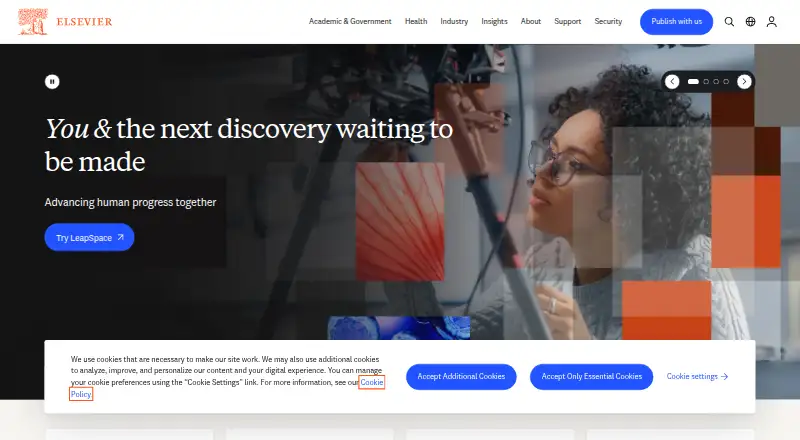
What Scopus is
Scopus is an abstract and citation database for locating research, identifying experts, and examining scholarly output. Its coverage includes academic journals, preprints, books, and conference proceedings, with more than 100 million records listed on its product page. Search tools help users find sources, identify research trends, and locate potential collaborators. Author Profiles show research output, impact, and collaborators, while metrics cover journals, articles, authors, and institutions, including CiteScore, SNIP, SJR, PlumX, and h-index. Users can analyze, compare, and export research output at individual or institutional levels. Scopus with AI offers referenced topic summaries, expanded summaries, conversational follow-up, foundational documents, concept maps, emerging themes, and Deep Research reports. Its summaries use Scopus metadata, abstracts, and author profiles, with coverage starting in 2003. Scopus content is curated by an independent international Content Selection and Advisory Board. A free preview is available, but full access is sold through organization subscriptions. APIs provide metadata, abstracts, and citation data to subscribing academic institutions; other uses may require approval under Elsevier’s policies.
Who it suits
Scopus is aimed at researchers, educators, students, librarians, and higher-education administrators. Its institutional analysis and subscription-based API access may also suit academic organizations managing research information.
What it does well
- Coverage includes journals, preprints, books, and proceedings.
- Author Profiles show output, impact, and collaborators.
- Metrics span journals, articles, authors, and institutions.
- Scopus with AI includes Deep Research reports.
- A free preview is available.
What to know first
- Full access requires an organization subscription.
- API access is for subscribing academic institutions.
- AI summary coverage starts at 2003.
- Other API uses may require approval.
Limits
Scopus Preview provides free preview access, while full Scopus access is sold through an organization subscription. API access is for Scopus-subscribing academic institutions, and other uses may require approval.
Plans
| Plan | Billed and limits | Price |
|---|---|---|
| Scopus Preview | Free preview access; full Scopus access is sold by organization subscription | Free |
| Scopus organization subscription | Organization subscription access only | On request |
As elsevier.com lists them, read 8 Oct 2026. The maker's own page has the final word.
Getting started
- Open the Scopus product website
- Use Scopus Preview for free preview access
- Contact Elsevier about an organization subscription
- Access Scopus through the web or API
- Use the Author Profile Wizard for profile corrections
Verdict
Scopus combines research discovery, author and institutional profiles, metrics, and AI-assisted summaries. The free preview offers a way to explore it, while full access and institutional API use depend on organization subscriptions and applicable policies.
Questions
Is Scopus free?
Scopus Preview is listed as free for preview access. Full access is sold through an organization subscription.
Which platforms does Scopus support?
Scopus is available through the web and an API.
What does Scopus with AI include?
It provides referenced and expanded topic summaries, conversational follow-up, foundational documents, concept maps, emerging themes, and Deep Research reports.
Who can use the Scopus APIs?
The APIs provide metadata, abstracts, and citation data to Scopus-subscribing academic institutions, including research portals and systems such as Pure and Digital Commons.
How are AI queries handled?
Elsevier says Scopus with AI adheres to GDPR and that queries sent to ChatGPT on Microsoft Azure are not stored or used to train or improve ChatGPT.
Facts from Elsevier's own pages
- AI content scope
- Scopus with AI summaries use Scopus metadata, abstracts, and author profiles, and summary coverage starts at 2003. · elsevier.com, 8 Oct 2026
- AI privacy
- Elsevier says Scopus with AI adheres to GDPR and that queries passed to ChatGPT hosted on Microsoft Azure will not be stored or used to train or improve ChatGPT. · elsevier.com, 8 Oct 2026
- Analytics
- Scopus lets users analyze, compare, and export research output at individual or institutional levels. · elsevier.com, 8 Oct 2026
- API access
- Scopus APIs provide metadata, abstracts, and citation data to Scopus-subscribing academic institutions, including for research portals and institutional systems such as Pure and Digital Commons. · elsevier.com, 8 Oct 2026
- API availability
- Non-commercial API use is free subject to policies and limits; commercial use requires license and subscription. · nonprod-devportal.elsevier.com, 18 Nov 2026
- API policy
- Elsevier ties API use to specific use cases and policies, and says other uses may require approval. · dev.elsevier.com, 8 Oct 2026
- Audience
- Elsevier describes Scopus as serving researchers, educators, students, librarians, and administrators in higher education. · elsevier.com, 8 Oct 2026
- Author profiles
- Searchable author profiles provide output, impact and collaborator information. · elsevier.com, 18 Nov 2026
- Content coverage
- Scopus includes academic journals, preprints, books, and conference proceedings, with more than 100 million records listed on its product page. · elsevier.com, 8 Oct 2026
- Content review
- Scopus content is curated by an independent international Content Selection and Advisory Board. · elsevier.com, 8 Oct 2026
- Coverage
- Indexes journals, preprints, books and conference proceedings. · elsevier.com, 18 Nov 2026
- Curation
- Content is source-neutral and curated by an independent advisory board. · elsevier.com, 18 Nov 2026
- Full text behavior
- Full-text links depend on institutional setup. · tutorials.scopus.com, 18 Nov 2026
- Integration
- APIs use REST architecture and support standard formats and links. · nonprod-devportal.elsevier.com, 18 Nov 2026
- Metrics
- Provides journal, article, author and institutional metrics. · elsevier.com, 18 Nov 2026
- Product
- Scopus is an abstract and citation database for finding relevant research, identifying experts, and gaining insights with metrics and analytical tools. · elsevier.com, 8 Oct 2026
- Purpose
- Find relevant research and gain strategic insights with metrics and analytical tools. · elsevier.com, 18 Nov 2026
- Research search
- Scopus search tools help users discover sources, identify research trends, and find potential collaborators. · elsevier.com, 8 Oct 2026
- Scale
- More than 100 million records are listed. · elsevier.com, 18 Nov 2026
- Scopus with AI
- Scopus with AI provides referenced topic summaries, expanded summaries, conversational follow-up, foundational documents, concept maps, emerging themes, and Deep Research reports. · elsevier.com, 8 Oct 2026
- Search capabilities
- Advanced search discovers sources, trends and collaborators. · elsevier.com, 18 Nov 2026
- Support
- The product page links to a Scopus Support Center and the Author Profile Wizard for author-profile corrections. · elsevier.com, 8 Oct 2026
Where Scopus stands on Freedom251
- Educational Search Engines#11 of 21