Freedom251 › Warranty Management
ReverseLogix
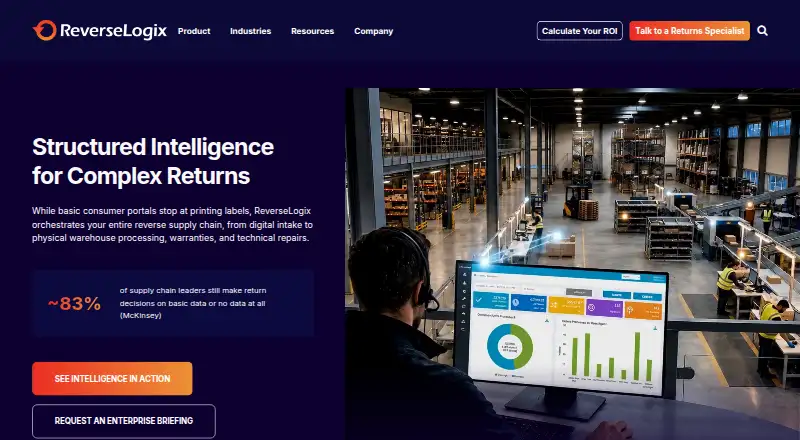
What ReverseLogix is
ReverseLogix is a returns management system for retailers, manufacturers, ecommerce brands, and third-party logistics providers handling B2B, B2C, or hybrid returns. It manages returns, warranty claims, and repairs from initiation and authorization through shipping, receiving, inspection, disposition, and settlement, with added warranty, repair, and resale workflows. Its self-serve portal supports branded return requests, shipping labels or QR codes, status tracking, and email or text updates. After items arrive, teams can inspect and grade them, then use rules to route them to restocking, refurbishment, repair, resale, vendor return, liquidation, or scrap. Configurable rules can reflect company policies, claims, vendor entitlements, and approval hierarchies. The platform connects with ERP, commerce, warehouse, and helpdesk systems, including SAP, Oracle, NetSuite, Microsoft Dynamics 365, Salesforce, Shopify, Magento, BigCommerce, and WooCommerce. It also connects with over 400 carriers in more than 100 countries. ReverseLogix says its API integrations use mapped fields, a sandbox, user acceptance testing, and a go-live plan; existing ERP, WMS, and commerce platforms remain systems of record. Founded in 2014, the company is headquartered in San Francisco. Pricing is by quote, and standard agreements run for three years.
Who it suits
ReverseLogix suits retailers, manufacturers, ecommerce brands, and third-party logistics providers managing B2B, B2C, or hybrid returns. It is built for organizations that need workflows for returns alongside warranty claims, repairs, inspection, and disposition.
What it does well
- Covers returns from initiation through settlement, with warranty and repair workflows.
- Portal supports branded requests, labels or QR codes, tracking, and updates.
- Rules route inspected items to restock, repair, resale, or other dispositions.
- Connects with named ERP, commerce, warehouse, and helpdesk systems.
- Supports over 400 carriers across more than 100 countries.
- Role-based access and audit history are available on records.
What to know first
- There is no free plan.
- Pricing requires a quote and varies by modules, return volume, workflow complexity, and integrations.
- Standard agreements run for three years.
- A standard return-initiation go-live takes 4 to 6 weeks; added workflows can extend the project.
Plans
| Plan | Billed and limits | Price |
|---|---|---|
| Modular enterprise subscription | Annual subscription; standard agreements run for three years. Quote required. · Modules selected · Return volume tier · No per-user or per-site license charge · Annual service and support, implementation, and integrations quoted separately | On request |
As reverselogix.com lists them, read 9 Oct 2026. The maker's own page has the final word.
Getting started
- Visit the ReverseLogix website and request a quote.
- Select modules and discuss return volume, workflow complexity, and integrations.
- Plan API integrations using mapped fields and a sandbox.
- Complete user acceptance testing and follow the go-live plan.
- Allow 4 to 6 weeks for a standard returns-initiation go-live; additional workflows may extend implementation.
ReverseLogix is a returns management system for retailers, manufacturers, ecommerce brands, and third-party logistics providers handling B2B, B2C, or hybrid returns. It suits organizations that need one process for customer returns, warehouse decisions, warranty claims, repairs, and resale while keeping their ERP, WMS, and commerce systems in place. The main trade-off is an enterprise implementation and quote-based subscription rather than a small, instantly deployable tool.
Overview
ReverseLogix follows a return from initiation and authorization through shipping, receiving, inspection, disposition, and settlement. Warranty, repair, and resale workflows make it broader than a basic returns portal. Because existing ERP, WMS, and commerce platforms remain the systems of record, it functions as a specialized returns layer instead of requiring a replacement for core business systems.
A standard returns-initiation deployment is stated to take 4 to 6 weeks. Additional workflows can extend the project, so organizations with complex warranty, vendor, approval, or warehouse requirements should plan for a longer implementation. The platform is offered through web and API access.
Key features
Customer-facing returns
The self-serve portal can be branded for return initiation and can generate a shipping label or QR code. Customers can track status and receive email or text updates. Exchange workflows and return-label support are included, giving ecommerce and retail teams a connected customer entry point rather than a purely internal case tool.
Inspection and disposition
Returned items can be received, inspected, and graded, then routed by rules to restock, refurbishment, repair, resale, return to vendor, liquidation, or scrap. That range is valuable for businesses where the financial outcome depends on condition and recovery path, not simply on approving a refund.
Configurable controls
Rules can represent company policies, claims, vendor entitlements, and approval hierarchies. This supports differentiated handling across products, partners, and claim types, but it also means teams must define and maintain those rules during implementation.
Integrations and governance
API-based integrations use mapped fields, a sandbox, user acceptance testing, and a go-live plan. Connections cover SAP, Oracle, NetSuite, Microsoft Dynamics 365, Salesforce, Shopify, Magento, BigCommerce, WooCommerce, several warehouse and helpdesk systems, and more than 400 carriers in over 100 countries. That breadth suits multinational or multi-channel operations, particularly when carrier and commerce data must move through existing systems.
ReverseLogix states that it is ISO 27001 and SOC 2 certified. Role-based access and record audit history support controlled operations. Hosting, encryption, single sign-on, and penetration-testing information is shared during evaluation, so buyers should address those requirements in the sales process.
Pricing
ReverseLogix uses a modular enterprise subscription with custom pricing. The quote varies by selected modules, return-volume tier, workflow complexity, and integrations; there is no published rate card or free plan.
The subscription is billed annually, and standard agreements run for three years. There is no per-user or per-site license charge, but annual service and support, implementation, and integrations are quoted separately. This structure fits organizations that want a tailored deployment and can commit to a multi-year contract. It is a poor fit for a small operation seeking transparent monthly pricing, a short trial, or a free tier.
Platforms
ReverseLogix is available through web and API access. Its API-led integration approach is designed to connect the returns process with ERP, WMS, commerce, customer-service, and carrier systems rather than operate as an isolated application.
Who it's for
Retailers and ecommerce brands can use the branded portal, exchanges, labels, notifications, and disposition rules to manage customer-facing returns. Manufacturers can apply warranty, repair, vendor-entitlement, and approval workflows. Third-party logistics providers can support B2B, B2C, or hybrid programs with warehouse routing and connections to multiple systems and carriers.
It is best suited to organizations with substantial return volume or varied processing paths that need a governed system alongside existing records of account. Smaller teams with straightforward returns may find the implementation effort, integration work, and three-year standard agreement disproportionate.
Pros and cons
Pros
- End-to-end coverage: initiation, authorization, shipping, receiving, inspection, settlement, warranty, repair, and resale are handled within one returns program.
- Flexible recovery routing: condition-based grading can direct goods to restock, refurbishment, repair, resale, vendor return, liquidation, or scrap.
- Broad ecosystem reach: API connections include major ERP, commerce, warehouse, helpdesk, and carrier platforms, including over 400 carriers in more than 100 countries.
- Controlled enterprise operations: role-based access, audit history, ISO 27001, and SOC 2 certification support governed deployments.
Cons
- Opaque cost: every deployment requires a quote, with implementation, integrations, and support priced separately.
- Long commitment: standard agreements run for three years and billing is annual.
- Implementation dependency: a basic go-live takes 4 to 6 weeks, while additional workflows can lengthen the project.
- No free entry point: there is no free plan for testing the product at low cost.
Alternatives
Choose Dyrect instead if you need a web-based freemium option, including a free plan with one business user, one brand or store, and 100 lifetime credits.
ServicePower is the alternative to consider for freemium access across Android, iOS, web, and API, with workforce scheduling, mobile access, customer self-service, work-order management, analytics, and Vision AI in its Employed Workforce plan.
Pick Tavant Warranty Management when warranty management is the priority and you want a paid, custom-quote product available on Android, iOS, and web.
Oracle Yard Management, Warranty Monkey, PTC Warranty, and SAP Warranty Claim Processing are paid alternatives for organizations evaluating other warranty or yard-management products.
Zehntech Product Warranty Management suits buyers seeking a web product with a one-time 78.65 USD price and no recurring subscription fees, including warranty registration, lifecycle management, and claims handling.
For category browsing, see Warranty Management and Returns Management Software.
Verdict
Choose ReverseLogix when returns span customer initiation, warehouse inspection, warranty, repair, and resale and must connect to established enterprise systems. Its strongest reason to buy is the breadth of rules-based lifecycle coverage and integrations. Look elsewhere if you need published pricing, a free plan, a short commitment, or a lightweight returns workflow with minimal implementation.
Verdict
Choose ReverseLogix if your organization needs a returns system spanning customer initiation, warehouse processing, warranty, repair, and resale workflows. Look elsewhere if you need a free plan or published prices; ReverseLogix prices by quote and standard agreements run for three years.
Questions
How much does ReverseLogix cost?
Pricing is on request. The quote varies by modules, return volume, workflow complexity, and integrations; annual service and support, implementation, and integrations are quoted separately.
Is there a free plan?
No. ReverseLogix does not offer a free plan.
Which platforms does ReverseLogix support?
It is available through web and API. The platform connects with ERP, commerce, warehouse, and helpdesk systems, plus over 400 carriers in more than 100 countries.
What integrations are named?
Named connections include SAP, Oracle, NetSuite, Microsoft Dynamics 365, Salesforce, Shopify, Magento, BigCommerce, and WooCommerce, as well as several WMS and helpdesk systems.
How long does implementation take?
ReverseLogix states that a standard returns-initiation go-live takes 4 to 6 weeks. Additional workflows may extend the project.
What is the contract term?
The modular enterprise subscription is billed annually, and standard agreements run for three years.
Facts from ReverseLogix's own pages
- API
- ReverseLogix describes its integrations as API-based and says they use mapped fields, a sandbox, user acceptance testing, and a go-live plan. · reverselogix.com, 9 Oct 2026
- Customer experience
- Its returns portal supports branded return initiation, label or QR code generation, status tracking, and email or text updates. · reverselogix.com, 9 Oct 2026
- Founded
- 2014 · reverselogix.com, 28 Sept 2026
- Headquarters
- The company lists its headquarters in San Francisco, California, USA. · reverselogix.com, 9 Oct 2026
- Implementation
- ReverseLogix states that a standard returns-initiation go-live takes 4 to 6 weeks, with additional workflows potentially extending the project. · reverselogix.com, 9 Oct 2026
- Integrations
- The platform connects with SAP, Oracle, NetSuite, Microsoft Dynamics 365, Salesforce, Shopify, Magento, BigCommerce, WooCommerce, several WMS and helpdesk systems, and over 400 carriers in more than 100 countries. · reverselogix.com, 9 Oct 2026
- Intended customers
- The company describes the platform for retailers, manufacturers, ecommerce brands, and third-party logistics providers handling B2B, B2C, or hybrid returns. · reverselogix.com, 9 Oct 2026
- Lifecycle coverage
- The platform supports return initiation, authorization, shipping, receiving, inspection, disposition, and settlement, with warranty, repair, and resale workflows. · reverselogix.com, 9 Oct 2026
- Pricing limits
- The company does not publish a rate card; its quote varies by modules, return volume, workflow complexity, and integrations. · reverselogix.com, 9 Oct 2026
- Processing
- Returned items can be received, inspected, graded, and routed by rules to restock, refurbishment, repair, resale, return to vendor, liquidation, or scrap. · reverselogix.com, 9 Oct 2026
- Purpose
- ReverseLogix manages returns, warranty claims, and repairs in one returns management system. · reverselogix.com, 9 Oct 2026
- Security
- The company states that ReverseLogix is ISO 27001 and SOC 2 certified and provides role-based access and audit history on records. · reverselogix.com, 9 Oct 2026
- Security review details
- The security page says details on hosting, encryption, single sign-on, and penetration testing are shared during evaluation. · reverselogix.com, 9 Oct 2026
- Systems of record
- ReverseLogix says it works alongside existing ERP, WMS, and commerce platforms, which remain the systems of record. · reverselogix.com, 9 Oct 2026
- Workflow rules
- Configurable rules can cover company policies, claims, vendor entitlements, and approval hierarchies. · reverselogix.com, 9 Oct 2026
Where ReverseLogix stands on Freedom251
- Warranty Management#6 of 10
- Returns Management Software#27 of 29