Freedom251 › Breach and Attack Simulation Software

Pentera Platform
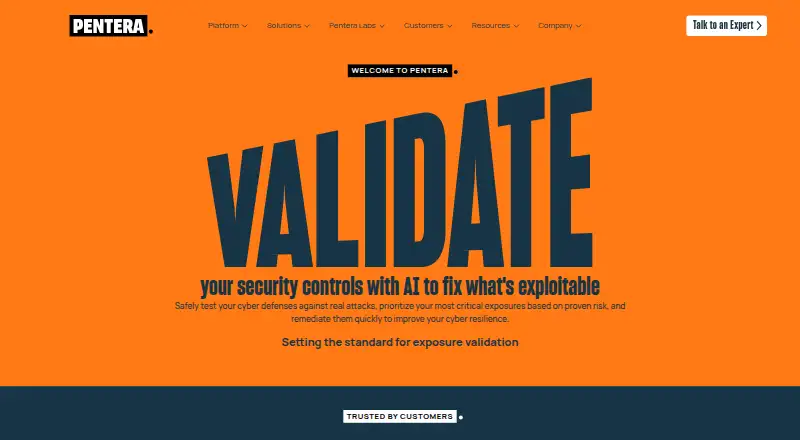
What Pentera Platform is
Pentera Platform validates security controls by emulating attacks, helping teams prioritize demonstrated exposure and support remediation. Pentera Core, Surface, and Cloud cover internal networks, external attack surfaces, and cloud environments; listed coverage also includes web applications, endpoints, servers, services, and network devices. Simulations are agentless, can run continuously, and map findings to MITRE ATT&CK. Pentera Resolve prioritizes validated attack paths and supports remediation and retesting to check for reduced exposure. Pentera Peer provides an AI-native interface for analyzing adversarial testing, including natural-language queries about validated paths and findings. For production tests, customer-controlled safeguards include throttling, impact limits, emergency stops, optional read-only modes, and audit logs. Integrations include AWS, Azure, GCP, Okta, Jira, ServiceNow, Slack, GitHub, CrowdStrike, and Microsoft Defender. Pentera says AI data is hashed and encrypted, not used for model training, and not retained. Pricing is on request. Pentera was founded in 2015.
Who it suits
It suits vulnerability management, SOC and blue teams, red teams and pentesters, security executives, compliance teams, and cloud security practitioners. Customer-controlled guardrails may matter to teams conducting production testing.
What it does well
- Agentless simulations can be scheduled continuously.
- Covers internal, external, and cloud environments.
- Maps findings to MITRE ATT&CK.
- Resolve supports remediation and retesting.
- Customer-controlled production safeguards are available.
What to know first
- Pricing is available on request.
- Pentera says it does not certify compliance.
- Pentera does not claim FedRAMP authorization.
Plans
| Plan | Billed and limits | Price |
|---|---|---|
| Pentera Platform | Pricing is not listed; contact Pentera for a personalized demo and commercial details | On request |
As pentera.io lists them, read 4 Oct 2026. The maker's own page has the final word.
Getting started
- Visit the Pentera website.
- Contact Pentera to request a personalized demo and commercial details.
- Choose a deployment environment from the listed Linux, Windows, web, API, or self-hosted platforms.
Pentera Platform is an agentless breach-and-attack simulation service for validating security controls across internal, external and cloud environments. It suits security teams that need repeatable proof of exploitable paths and a workflow for reducing them. The trade-off is a quote-based commercial model and no claim of FedRAMP authorization or compliance certification.
Overview
Founded in 2015, Pentera combines safe attack emulation with exposure prioritization and remediation support. Pentera Core, Surface and Cloud cover internal networks, external attack surfaces and cloud environments, while the platform can test web applications, endpoints, servers, services and network devices. Its purpose is practical validation: show which controls stop a simulated attack, identify the attack paths that still work, and help teams close them.
Testing is agentless, which avoids installing agents across every asset in scope. Continuous scheduling supports recurring validation rather than one-off exercises. MITRE ATT&CK mapping gives findings a common adversary-technique frame, useful for communicating coverage to defenders and security leadership.
Key features
Simulation and remediation
Pentera Resolve ranks validated attack paths and guides remediation, then supports retesting to confirm that exposure has actually been reduced. That closes the loop better than a report that ends with a list of theoretical vulnerabilities. Pentera Peer adds an AI-native interface for analysing adversarial-testing results and answering natural-language questions about validated paths and findings.
Production safeguards
Customer-controlled guardrails include attack throttling, impact limits, emergency stops, optional read-only modes and audit logs. These controls make production testing more governable, although teams still need to define suitable limits before scheduling simulations against live systems.
Integrations and privacy
Integrations span AWS, Azure, GCP, Okta, Jira, ServiceNow, Slack, GitHub, CrowdStrike and Microsoft Defender. That mix can connect validation results to cloud, identity, ticketing, collaboration and endpoint workflows. Pentera says AI data is hashed and encrypted, is not used to train models and is not retained by Pentera.
The Trust Center lists SOC 2 Type II, SOC 3, ISO 27001:2022, ISO 42001, ISO 9001, GDPR and CCPA badges. Those attestations may support vendor review, but Pentera does not certify customer compliance and does not claim FedRAMP authorization.
Pricing
| Plan | Price | What it includes |
|---|---|---|
| Pentera Platform | Custom pricing | Contact Pentera for a personalized demo and commercial details. |
There is no published self-serve tier, seat allowance, usage quota or trial term. This model fits organizations prepared for a sales-led evaluation and a tailored deployment; it is a poor match for a small team that needs an immediately priced tool or a free proof of concept.
Platforms
Pentera provides API, Linux, self-hosted, web and Windows access. The agentless design is relevant to mixed estates where installing endpoint software everywhere would add operational work.
Who it's for
Vulnerability-management teams can use validated attack paths to rank remediation by demonstrated exposure. SOC and blue teams gain recurring control validation, while red teams and pentesters can use repeatable emulation alongside their exercises. Security executives receive an evidence-based view of risk reduction; compliance teams can use mapped findings and audit logs as supporting material, but not as a certification. Cloud-security practitioners benefit from dedicated cloud coverage and the AWS, Azure and GCP integrations.
Pentera also offers expert advisory and adversarial-testing services, with a global team that combines localized expertise and support. The company says more than 1,000 CISOs trust its work, but that scale does not replace evaluating whether its scope and commercial terms fit your environment.
Pros and cons
- Pro: One platform covers internal, external and cloud attack surfaces, including applications, endpoints and network infrastructure.
- Pro: Resolve and retesting connect prioritization to measurable exposure reduction.
- Pro: Production guardrails, emergency stops, read-only modes and audit logs support controlled live-environment use.
- Pro: Natural-language analysis through Pentera Peer and broad security-tool integrations can shorten investigation and workflow handoffs.
- Con: Pricing is on request, with no published plan limits or trial, so budgeting and initial evaluation require a sales conversation.
- Con: Pentera does not claim FedRAMP authorization or certify compliance, which can rule it out for some regulated procurement requirements.
Alternatives
For a wider category comparison, see Breach and Attack Simulation Software and Penetration Testing Software.
- Atomic Red Team is a free, community-developed option for quick tests with minimal setup on API, Linux, macOS and Windows.
- AttackIQ Platform suits buyers wanting free testing packages, adversary research or a 300.00 USD pay-as-you-go credit purchase.
- Infection Monkey is a free open-source BAS tool for Linux, self-hosted, web and Windows deployments.
- MITRE Caldera is a free Apache-licensed cybersecurity framework for API, Linux, macOS, self-hosted and web use.
- OpenAEV offers a free-forever on-premise Community Edition with core attack simulation, tabletop exercises and community support.
- FourCore ATTACK is a paid alternative for Linux, self-hosted, web and Windows.
- Stratus Red Team is a free option spanning API, Linux, macOS, self-hosted and Windows.
- BlackNoise BAS is a paid alternative for self-hosted and web deployments.
Verdict
Choose Pentera Platform when your security program needs agentless, continuously scheduled validation across on-premises, external and cloud environments, with prioritized remediation and retesting in the same workflow. Look elsewhere if you require transparent pricing, a free starting tier or FedRAMP authorization; Pentera’s request-based commercial process and stated compliance limits are decisive constraints.
Verdict
Pentera Platform combines attack simulation with prioritization and remediation support across several environments. Teams should account for its request-based pricing and the stated limits around compliance certification and FedRAMP authorization.
Questions
How much does Pentera Platform cost?
The platform is paid, with pricing available on request. Pentera invites prospective customers to contact it for a personalized demo and commercial details.
What environments and attack surfaces does it cover?
Listed platforms are API, Linux, self-hosted, web, and Windows. Coverage includes internal networks, external attack surfaces, cloud environments, web applications, endpoints, servers, services, and network devices.
Does it support continuous testing and MITRE ATT&CK?
Yes. Attack simulations can be scheduled continuously and findings map to MITRE ATT&CK.
Which tools does it integrate with?
Listed integrations include AWS, Azure, GCP, Okta, Jira, ServiceNow, Slack, GitHub, CrowdStrike, and Microsoft Defender.
Does Pentera certify compliance or claim FedRAMP authorization?
Pentera says it does not certify compliance and does not claim FedRAMP authorization.
How does Pentera handle AI data?
Pentera states that AI data is hashed and encrypted, is not used for model training, and is not retained by Pentera.
Facts from Pentera Platform's own pages
- AI
- Pentera Peer is an AI-native interface for adversarial testing analysis, and the platform supports natural-language queries about validated attack paths and findings. · pentera.io, 4 Oct 2026
- Certifications
- The Trust Center lists SOC 2 Type II, SOC 3, ISO 27001:2022, ISO 42001, ISO 9001, GDPR, and CCPA badges. · trust.pentera.io, 4 Oct 2026
- Company scale
- Pentera says it has earned the trust of more than 1,000 CISOs globally. · pentera.io, 4 Oct 2026
- Compliance limits
- Pentera says it does not certify compliance and does not claim FedRAMP authorization. · pentera.io, 4 Oct 2026
- Coverage
- The platform tests internal networks, external attack surfaces, and cloud environments through Pentera Core, Surface, and Cloud. · pentera.io, 4 Oct 2026
- Deployment model
- Pentera describes the platform as agentless in its platform datasheet. · pentera.io, 4 Oct 2026
- Founded
- 2015 · pentera.io, 28 Sept 2026
- Integrations
- Listed integrations include AWS, Azure, GCP, Okta, Jira, ServiceNow, Slack, GitHub, CrowdStrike, and Microsoft Defender. · pentera.io, 4 Oct 2026
- Intended users
- The platform identifies vulnerability management, SOC and blue teams, red teams and pentesters, security executives, compliance teams, and cloud security practitioners as stakeholders. · pentera.io, 4 Oct 2026
- Purpose
- Pentera validates security controls by safely emulating attacks, prioritizing proven exposure, and supporting remediation. · pentera.io, 4 Oct 2026
- Remediation
- Pentera Resolve prioritizes and remediates validated attack paths, then supports retesting to confirm exposure reduction. · pentera.io, 4 Oct 2026
- Safety controls
- For production testing, customer-controlled guardrails include attack throttling, impact limits, emergency stops, optional read-only modes, and audit logs. · pentera.io, 4 Oct 2026
- Security and AI privacy
- Pentera states that AI data is hashed and encrypted, is not used for model training, and is not retained by Pentera. · pentera.io, 4 Oct 2026
- Support
- Pentera says its global team combines localized expertise and support, with expert advisory and adversarial testing services available. · pentera.io, 4 Oct 2026
Where Pentera Platform stands on Freedom251
- Breach and Attack Simulation Software#14 of 20
- Penetration Testing Software#30 of 34