Freedom251 › Key-Value Databases
Hibari
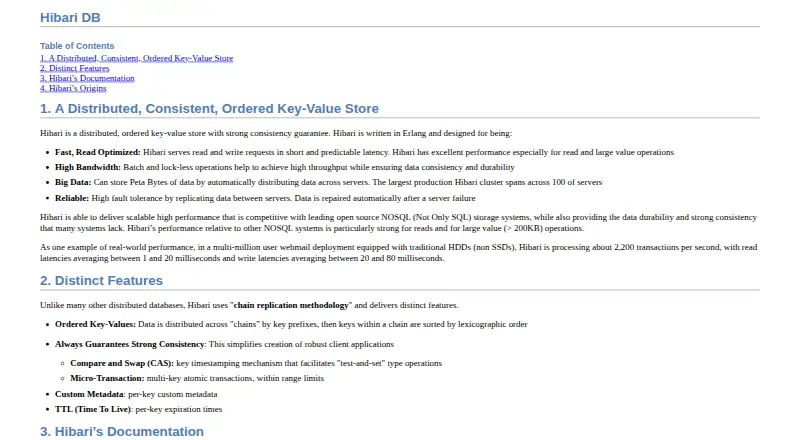
What Hibari is
Hibari is a free, self-hosted software system documented for Linux. Founded in 2005, it supports both listed persistence modes and includes time-to-live, or TTL, support. Hibari also provides clustering support for deployments that need multiple cooperating instances. The project lists several communication protocols: UBF, EBF, JSON over TCP through JSF, HTTP through JSON-RPC, and Thrift. These protocol options allow software using different interfaces to connect with a Hibari deployment. Because Hibari is self-hosted, operation takes place in an environment managed by the user rather than through a hosted service. The available facts identify Linux as its platform and describe free-plan availability, but do not list commercial tiers or a hosted deployment option. Its documentation is available through the project website. Hibari may therefore interest technical users who need a Linux-based, cluster-capable system with TTL handling, flexible persistence choices, and multiple protocol interfaces.
Who it suits
Hibari suits Linux users who want free, self-hosted software with clustering, TTL support, multiple persistence modes, and several network protocols. It is oriented toward technical deployments managed by the user.
What it does well
- Free plan available
- Self-hosted deployment model
- Supports clustering
- Includes TTL support
- Offers UBF, EBF, JSON, HTTP, and Thrift protocols
What to know first
- Linux platform only
- Requires self-hosted deployment
- Technical setup may be needed
Verdict
Hibari provides a free, self-hosted Linux option with clustering, TTL support, flexible persistence, and varied protocol interfaces. It is most relevant when users can manage their own deployment and need these specific technical capabilities.
Facts from Hibari's own pages
- Founded
- 2005 · hibari.github.io, 4 Oct 2026
Where Hibari stands on Freedom251
- Key-Value Databases#22 of 31