Freedom251 › Credentialing Software
DCC Issuer Coordinator
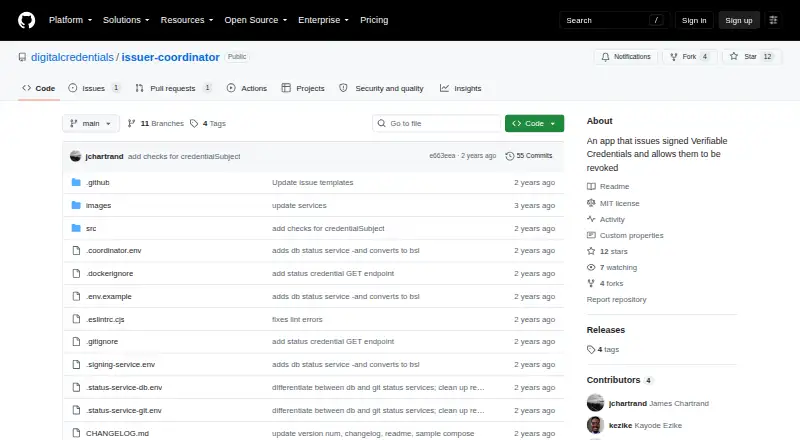
What DCC Issuer Coordinator is
DCC Issuer Coordinator is an open-source service for issuing Verifiable Credentials within a larger system. It signs credentials and can attach status information that can later be updated to revoke or suspend them. The service provides VC-API endpoints for credential issuance and status updates, plus an endpoint that returns a status list. Signing keys support the did:key and did:web DID formats. Multiple signing authorities can be configured as tenants, each with its own key and optional bearer-token protection. Optional status management uses Bitstring Status List and can store status lists through database or Git services. The coordinator calls separate signing and status services, which the project describes as Express apps run together using Docker Compose. Its intended use includes workflows such as a school sending credential data through an API client for signing. The project also describes importing issued credentials into the Learner Credential Wallet and points to a separate exchange-coordinator for direct wallet exchange. Docker Compose instructions and prebuilt Docker Hub images with version tags are available; the project says it does not provide a latest tag. The repository identifies the software as MIT licensed, and the project’s four-step quick start is described as taking less than five minutes.
Who it suits
It suits developers and organizations building credential issuance into a larger system, such as a school’s credential workflow. Teams that need API-based signing, configurable signing authorities, or optional revocation and suspension status management may find it useful.
What it does well
- Provides VC-API endpoints for issuing credentials and updating status.
- Supports did:key and did:web signing key formats.
- Allows multiple tenants with separate keys and optional bearer-token protection.
- Optional status management implements Bitstring Status List.
- MIT licensed and available as Docker Hub images with version tags.
What to know first
- The shared test signing key is unsafe for real credentials.
- Issuing and status functions call separate services run together with Docker Compose.
- The project does not provide a latest Docker image tag.
Getting started
- Open the project repository on GitHub.
- Follow the Docker Compose quick-start instructions.
- Configure a private signing key instead of using the shared test key.
- Set up signing authorities as tenants and configure bearer-token protection if needed.
- Configure the signing and status services, then connect an API client to issue credentials.
Verdict
Choose DCC Issuer Coordinator if you are building API-based credential issuance and want configurable signing authorities with optional status management. Look elsewhere if you need direct wallet exchange within this service; the project points to a separate exchange-coordinator for that workflow.
Questions
Does DCC Issuer Coordinator cost anything?
It is listed as free and open source, and the repository identifies its license as MIT.
How is it deployed?
The project provides Docker Compose instructions and prebuilt Docker Hub images with version tags.
Which DID formats can it use for signing keys?
The README says it supports did:key and did:web formats.
Can it revoke or suspend credentials?
Optional status management lets credential status be updated to revoke or suspend credentials. It implements Bitstring Status List.
Does it connect directly to a learner wallet?
The README describes importing issued credentials into the Learner Credential Wallet and points to a separate exchange-coordinator for direct wallet exchange.
What should I use for signing real credentials?
The README warns that the shared test signing key is unsafe for real credentials and recommends configuring a private key.
Facts from DCC Issuer Coordinator's own pages
- API
- The service implements VC-API endpoints for issuing credentials and updating credential status, plus an endpoint for returning a status list. · github.com, 4 Oct 2026
- Architecture
- It is an Express app that coordinates calls to separate signing and status services running together in Docker Compose. · github.com, 11 Oct 2026
- Audience
- The README presents the issuer for organizations such as schools that integrate credential issuance into their own systems and student portals. · github.com, 11 Oct 2026
- Credential signing
- The README says the issuer supports the did:key and did:web DID formats for signing keys. · github.com, 4 Oct 2026
- Credential status
- Its optional revocation and suspension mechanism implements Bitstring Status List and stores status lists through database or Git services. · github.com, 11 Oct 2026
- Deployment
- The quick start runs prebuilt Docker Hub images through Docker Compose and the README says setup takes less than five minutes. · github.com, 11 Oct 2026
- Endpoint security
- Tenant endpoints can require a Bearer token, and the README suggests IP filtering; setting a tenant token to UNPROTECTED leaves its endpoint unprotected. · github.com, 11 Oct 2026
- Founded
- 2018 · github.com, 28 Sept 2026
- Headquarters
- United States · github.com, 28 Sept 2026
- Integrations
- The README describes using the issuer from a larger system that prepares a credential and posts it to the issuer, and mentions importing credentials into the Learner Credential Wallet. · github.com, 11 Oct 2026
- Intended users
- The README describes using the issuer within a larger system, such as a school's credential issuance flow, with an API client sending credential data to be signed. · github.com, 4 Oct 2026
- Issuing API
- It implements the VC-API POST endpoints /credentials/issue and /credentials/status. · github.com, 11 Oct 2026
- Key support
- The issuer supports did:key and did:web key formats, and the README recommends did:web for many production deployments because keys can be rotated without updating credentials signed with old keys. · github.com, 11 Oct 2026
- License
- The repository identifies its license as MIT License, copyright 2023 Digital Credentials Consortium. · github.com, 11 Oct 2026
- Multiple issuers
- Tenants allow different signing keys and DIDs to be used for different credentialing purposes. · github.com, 11 Oct 2026
- Production guidance
- The README warns that the shared default signing key is only for testing and evaluation, and says issuers must generate and keep their own signing key private for real credentials. · github.com, 11 Oct 2026
- Purpose
- The app issues signed Verifiable Credentials and allows them to be revoked. · github.com, 11 Oct 2026
- Revocation and suspension
- Optional status management implements Bitstring Status List and can store status lists using database or Git services. · github.com, 4 Oct 2026
- Security guidance
- The README warns that the shared test signing key is unsafe for real credentials and recommends configuring a private key and suggests IP filtering for issuer endpoints. · github.com, 4 Oct 2026
- Setup time
- The project says its four-step quick start should take less than five minutes. · github.com, 4 Oct 2026
- Status storage limit
- The README recommends database-backed status storage for production and testing, and Git-backed storage only for light testing or experiments. · github.com, 11 Oct 2026
- Support and contribution
- The README says pull requests are accepted. · github.com, 11 Oct 2026
- Tenants
- Multiple signing authorities can be configured as tenants, each with its own key and optional bearer-token protection. · github.com, 4 Oct 2026
- Wallet integration
- The README describes importing issued credentials into the Learner Credential Wallet and points to a separate exchange-coordinator for direct wallet exchange. · github.com, 4 Oct 2026
Where DCC Issuer Coordinator stands on Freedom251
- Credentialing Software#28 of 31