Freedom251 › Metrics Monitoring Tools
collectd
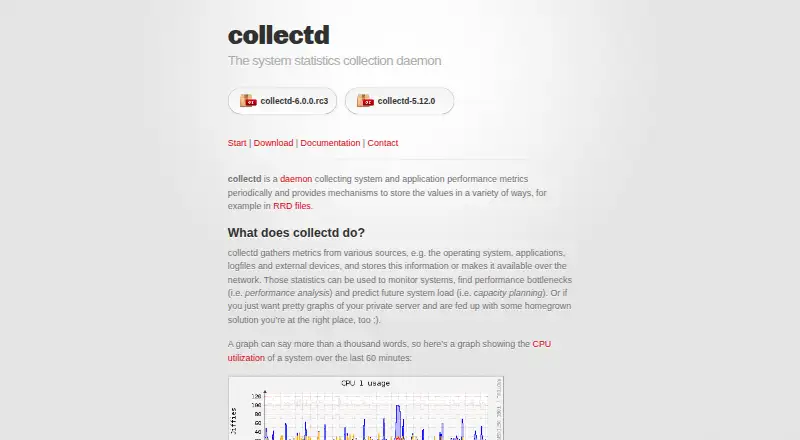
What collectd is
collectd is a free, open-source daemon that periodically gathers performance metrics from systems and applications. It can collect information from operating systems, applications, logfiles, and external devices, then store the results or make them available over a network. The statistics can help monitor systems, investigate performance bottlenecks, and forecast future system load. It supports Linux and self-hosted use; the project’s download page also points Windows users to SSC Serv, a native application that collects and dispatches performance data through the collectd network protocol.
Written in C, collectd is designed for performance and portability, including on systems without a scripting language or cron daemon. Its homepage describes more than 100 plugins and optimizations for handling hundreds of thousands of metrics. Users can write metrics to RRD files, though collectd does not produce graphs from those files. Its monitoring is limited to simple threshold checks. The project offers source packages as GZip or BZip2 compressed tar archives, along with manpages, a getting started guide, specialized documentation, and a plugin list in the source README. Bug reports go to the project’s bug tracker, while its mailing list is for announcements and development discussions.
Who it suits
collectd suits people who need to gather system or application metrics across operating systems, applications, logfiles, or external devices. It is a fit for users who can work with a daemon and its documentation, and who are comfortable with threshold checks rather than broader monitoring functionality.
What it does well
- Free and open source.
- Collects from operating systems, applications, logfiles, and external devices.
- Includes more than 100 plugins.
- Designed to handle hundreds of thousands of metrics.
- Can store metrics or make them available over a network.
What to know first
- Monitoring is limited to simple threshold checks.
- Writes RRD files but does not generate graphs.
- Windows download route points to SSC Serv.
Limits
The free plan covers system and application metrics collection and storing metrics or making them available over the network. Monitoring is limited to simple threshold checks, and collectd does not generate graphs from RRD files.
Plans
| Plan | Billed and limits | Price |
|---|---|---|
| collectd | System and application metrics collection; stores metrics or makes them available over the network | Free |
As collectd.org lists them, read 4 Oct 2026. The maker's own page has the final word.
Getting started
- Visit https://collectd.org/.
- Choose a source package in GZip or BZip2 compressed tar format.
- Use the getting started guide and manpages to begin.
- For Windows, follow the download page’s route to SSC Serv.
Verdict
Choose collectd if you need a free daemon to collect system and application metrics and can use its storage or network output. Look elsewhere if you need graph generation from RRD files or monitoring beyond simple threshold checks.
Questions
How much does collectd cost?
The listed plan is free. The project describes collectd as open source.
Which platforms does collectd support?
The listed platforms are Linux, self-hosted, and Windows. The download page points Windows users to SSC Serv, a native application that collects and dispatches performance data using the collectd network protocol.
What data can collectd gather?
It gathers metrics from operating systems, applications, logfiles, and external devices.
Does collectd create graphs?
It can write to RRD files, but it does not generate graphs from them.
What monitoring does collectd provide?
Its monitoring functionality is limited to simple threshold checking.
Where can users get help or report issues?
The project directs bug reports to its bug tracker and uses its mailing list for announcements and development discussions. Documentation includes manpages, a getting started guide, specialized documentation, and a plugin list in the source README.
Facts from collectd's own pages
- Documentation
- The project provides manpages, a getting started guide, specialized documentation, and a plugin list in its source README. · collectd.org, 4 Oct 2026
- Download formats
- The download page offers source packages as GZip or BZip2 compressed tar archives. · collectd.org, 4 Oct 2026
- Metric sources
- It gathers metrics from operating systems, applications, logfiles, and external devices. · collectd.org, 4 Oct 2026
- Monitoring limit
- The homepage says its monitoring functionality is limited to simple threshold checking. · collectd.org, 4 Oct 2026
- Performance and portability
- The project says collectd is written in C for performance and portability, including use on systems without a scripting language or cron daemon. · collectd.org, 4 Oct 2026
- Platforms
- The download page lists packages or ports for Debian and Ubuntu, Fedora, openSUSE and SLES, Red Hat and CentOS, FreeBSD, Solaris, OpenWrt, and T2 SDE. · collectd.org, 4 Oct 2026
- Plugins
- The homepage says the daemon comes with over 100 plugins. · collectd.org, 4 Oct 2026
- Purpose
- collectd is a daemon that periodically collects system and application performance metrics and provides mechanisms to store them in various ways. · collectd.org, 4 Oct 2026
- Scale
- The homepage says collectd includes optimizations and features to handle hundreds of thousands of metrics. · collectd.org, 4 Oct 2026
- Security contact
- The contact page provides [email protected] and GnuPG key 0x0C705A15 for reporting sensitive security issues. · collectd.org, 4 Oct 2026
- Storage and graphs
- collectd can write to RRD files but does not generate graphs from them. · collectd.org, 4 Oct 2026
- Support
- The project directs bug reports to its bug tracker and uses its mailing list for announcements and development discussions. · collectd.org, 4 Oct 2026
- Uses
- Collected statistics can be used to monitor systems, find performance bottlenecks, and predict future system load. · collectd.org, 4 Oct 2026
- Windows
- The download page points to SSC Serv, a native Windows application that collects and dispatches performance data using the collectd network protocol. · collectd.org, 4 Oct 2026
Where collectd stands on Freedom251
- Metrics Monitoring Tools#7 of 37