Freedom251 › Artifact repository software
aptly
What aptly is
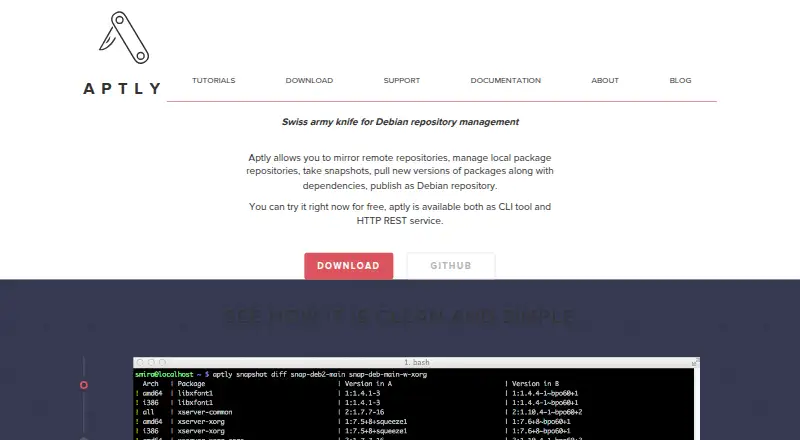
aptly manages Debian package repositories and publishes controlled package sets for systems using apt. It can mirror remote repositories, maintain local repositories, pull selected package versions with dependencies, and publish repositories. Immutable snapshots can be compared, merged, filtered, searched, and used to create repeatable package environments with controlled changes and rollback to earlier versions. Mirroring supports regular and flat repositories over HTTP(S) and FTP, with filters for architectures, components, and packages. Packages from mirrors and local repositories are kept in a deduplicated pool that can be searched and cleaned up. Repositories can be published to local storage, Amazon S3, OpenStack Swift, Azure, or JFrog Artifactory Storage, and signed using a user-provided GnuPG key that must be generated before publishing. aptly is free to try as a CLI tool and HTTP REST service, with downloads listed for Linux, macOS, and FreeBSD. Its REST API has no authentication or protection, so the documentation warns against internet exposure without a proxy that adds HTTPS and authentication. The embedded aptly serve web server is described as unsuitable for production use.
Who it suits
aptly suits administrators maintaining controlled Debian package repositories and repeatable apt-based environments. It can also fit workflows that publish repositories to local or cloud storage destinations.
What it does well
- Snapshots support comparison, merging, and rollback workflows.
- Mirrors can filter architectures, components, and packages.
- Repositories can publish to several cloud storage options.
- Available as a CLI and HTTP REST service.
What to know first
- REST API has no built-in authentication or protection.
- Embedded web server is unsuitable for production use.
- Publishing requires a user-provided GnuPG key.
- Debian and Ubuntu packages may lack some features.
Limits
The free Aptly plan is listed as free. Debian and Ubuntu packages may lack some features depending on available Go dependencies; the embedded web server is unsuitable for production use.
Plans
| Plan | Billed and limits | Price |
|---|---|---|
| Aptly | Free to try · CLI tool · HTTP REST service | Free |
As aptly.info lists them, read 9 Oct 2026. The maker's own page has the final word.
Getting started
- Visit https://www.aptly.info/ to find the project downloads.
- Choose a Debian or Ubuntu package, a Linux, macOS, or FreeBSD binary, or Homebrew for Mac OS X.
- Use aptly as a CLI tool or its HTTP REST service to manage repositories and snapshots.
- Generate a GnuPG key before publishing repositories.
Verdict
aptly offers repository mirroring, package snapshots, and publishing tools for teams managing Debian packages. Its API security warning and production-serving limitation deserve attention when planning deployment.
Questions
How much does aptly cost?
The Aptly plan is listed as free, and the product is described as free to try.
What platforms can I use it on?
The listed platforms include API, Linux, macOS, and self-hosted use. Downloads include Debian and Ubuntu packages, Linux, macOS, and FreeBSD binaries, plus Homebrew for Mac OS X.
What can aptly publish to?
It can publish to local storage, Amazon S3, OpenStack Swift, Azure, or JFrog Artifactory Storage. Published repositories can be served over HTTP, FTP, or rsync.
Does aptly have an API?
Yes. Its HTTP REST API manages repositories, snapshots, published repositories, and package uploads. The API has no authentication or protection, so the documentation advises adding HTTPS and authentication through a proxy before internet exposure.
Does publishing require a signing key?
Published repositories are signed with a user-provided GnuPG key, which must be generated before publishing.
What support is available?
Community support is available through the aptly-discuss mailing list, GitHub issue tracker, and listed chat channel. Commercial support can be requested by email.
Facts from aptly's own pages
- API security
- The REST API documentation warns that the API has no authentication or protection and should not be exposed to the internet without a proxy that adds HTTPS and authentication. · aptly.info, 9 Oct 2026
- Cloud storage
- Repositories can be published to Amazon S3, OpenStack Swift, Azure, or JFrog Artifactory Storage. · aptly.info, 9 Oct 2026
- Download caveat
- The site says Debian and Ubuntu packages may lack some features depending on available Go dependencies. · aptly.info, 9 Oct 2026
- Download platforms
- The download page lists packages for Debian and Ubuntu, Homebrew for Mac OS X, and binary releases for Linux, macOS, and FreeBSD. · aptly.info, 9 Oct 2026
- Free availability
- The site says aptly can be tried for free and is available as a CLI tool and an HTTP REST service. · aptly.info, 9 Oct 2026
- Integrations
- The integrations page lists community tools and examples including Molior, OpenAPT, Docker, Ansible, Chef, Puppet, and SaltStack. · aptly.info, 9 Oct 2026
- Intended users
- The overview describes aptly as a tool for maintaining repeatable, controlled package environments and publishing repositories consumed by apt on Debian systems. · aptly.info, 9 Oct 2026
- Linux packages
- The download page provides packages for Debian and Ubuntu distributions, including bullseye, bookworm, trixie, focal, jammy, noble, and resolute. · aptly.info, 9 Oct 2026
- Other downloads
- The download page lists binary releases for Generic Linux, FreeBSD, and Mac OS X, and Homebrew installation for Mac OS X. · aptly.info, 9 Oct 2026
- Package storage
- Packages from mirrors and local repositories are stored in a deduplicated package pool that can be searched and cleaned up. · aptly.info, 9 Oct 2026
- Production serving limit
- The embedded aptly serve web server is described as unsuitable for production use. · aptly.info, 9 Oct 2026
- Project history
- The aptly project was founded by Andrey Smirnov in 2013 and has received contributions from more than 45 developers. · aptly.info, 9 Oct 2026
- Publishing destinations
- Repositories can be published to local storage, Amazon S3, OpenStack Swift, Azure, or JFrog Artifactory Storage. · aptly.info, 9 Oct 2026
- Purpose
- aptly manages Debian repositories by mirroring remote repositories, managing local package repositories, taking snapshots, pulling package versions with dependencies, and publishing repositories. · aptly.info, 9 Oct 2026
- Repeatable package environments
- aptly creates fixed package sets for deterministic installation and upgrades, with controlled changes and rollback to earlier versions. · aptly.info, 9 Oct 2026
- Repository mirroring
- It mirrors regular and flat repositories over HTTP(S) and FTP, with options to select architectures, components, and packages using filters. · aptly.info, 9 Oct 2026
- Repository publishing
- Published repositories can be served over HTTP, FTP, or rsync, and can be consumed directly by apt. · aptly.info, 9 Oct 2026
- Repository signing
- Published repositories are signed with a user-provided GnuPG key, which must be generated before publishing. · aptly.info, 9 Oct 2026
- REST API
- Aptly provides a REST API for managing repositories, snapshots, published repositories, and package uploads. · aptly.info, 9 Oct 2026
- Snapshot operations
- It can compare, merge, filter, and publish snapshots, and pull selected package versions with dependencies into a snapshot. · aptly.info, 9 Oct 2026
- Snapshots
- Snapshots are immutable and can be merged, filtered, compared, searched, and used to pull packages along with dependencies. · aptly.info, 9 Oct 2026
- Support
- Community support is available through the aptly-discuss mailing list, the GitHub issue tracker, and the listed chat channel; commercial support can be requested by email. · aptly.info, 9 Oct 2026
Where aptly stands on Freedom251
- Artifact repository software#3 of 64
- Package Registries#4 of 28