Freedom251 › Telemetry Pipeline Software
Apica Flow
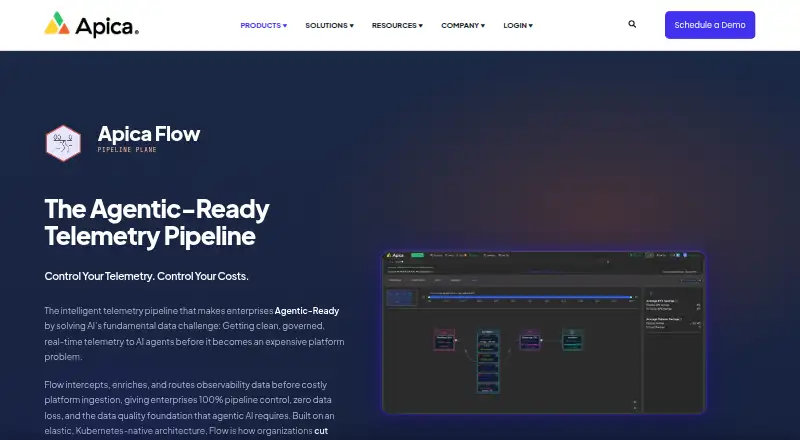
What Apica Flow is
Apica Flow processes telemetry before it reaches observability platforms. It can filter, transform, normalize, enrich, redact, and route logs, metrics, and traces in-stream. More than 200 pre-built connectors link Flow with destinations and sources including Splunk, Datadog, Elastic, OpenTelemetry, Kafka, Amazon S3, Prometheus, and Loki. InstaStore provides buffering and can replay historical data to a target. Kubernetes-native horizontal and vertical scaling is designed to handle traffic spikes that Apica says can reach 10 times normal volume. The Venn assistant drafts or edits pipeline rules from plain-language instructions, but changes require human approval before running. Flow can collect LLM telemetry such as token usage, latency, prompt metadata, and distributed traces through OpenTelemetry. It is available for on-premises and cloud environments, including a fully managed SaaS option, and can be deployed as a Kubernetes Helm chart. Flow is paid, with pricing on request. Apica lists ISO 27001 and SOC 2 certifications.
Who it suits
Flow is intended for enterprises managing telemetry across observability, security, analytics, and AI tools. It fits teams that need to reshape, enrich, buffer, and send data to multiple destinations.
What it does well
- Supports logs, metrics, and traces
- More than 200 pre-built connectors
- Buffers and replays historical telemetry
- Human approval for AI-drafted rules
- On-premises, cloud, or managed SaaS deployment
What to know first
- Pricing is available only on request
- AI-generated rule changes require approval before running
- Deployment uses Kubernetes-native infrastructure
Getting started
- Open the Apica Flow website
- Choose a self-hosted Kubernetes deployment with the Helm chart, an on-premises or cloud deployment, or managed SaaS
- Connect telemetry sources using the available connectors
- Create transformation, enrichment, redaction, and routing rules
- Use Venn for draft rule edits and approve changes before they run
Verdict
Apica Flow provides broad telemetry processing, routing, buffering, and deployment choices. Its paid pricing requires contacting Apica, and AI assistance remains subject to human approval.
Questions
How is Apica Flow deployed?
Flow is available for on-premises and cloud environments, plus a fully managed SaaS option. It is a native Kubernetes platform and can be deployed with a Helm chart.
Which telemetry does Flow support?
Flow supports logs, metrics, and traces. It can also collect LLM telemetry, including token usage, latency, prompt metadata, and distributed traces through OpenTelemetry.
What connectors are available?
The product page describes more than 200 pre-built connectors, naming Splunk, Datadog, Elastic, OpenTelemetry, Kafka, Amazon S3, Prometheus, and Loki.
What does Venn do?
Venn drafts and edits pipeline rules from plain-language instructions. A human must approve those changes before they run.
How much does Flow cost?
Flow is paid, and Apica provides pricing through a contact request rather than a posted amount.
Facts from Apica Flow's own pages
- AI-assisted rules
- Venn drafts and edits pipeline rules from plain-language instructions, with changes awaiting human approval before they run. · apica.io, 8 Oct 2026
- AI features
- Venn can draft and edit pipeline rules from plain-language instructions, with changes waiting for human approval. · apica.io, 8 Oct 2026
- AI telemetry
- Flow can collect LLM telemetry including token usage, latency, prompt metadata, and distributed traces via OpenTelemetry. · apica.io, 8 Oct 2026
- Buffering
- Apica says InstaStore provides infinite buffering and lets customers replay historical data to a target. · apica.io, 8 Oct 2026
- Data handling
- Flow filters, transforms, normalizes, enriches, redacts, and routes telemetry in-stream. · apica.io, 8 Oct 2026
- Data processing
- Flow can transform, normalize, enrich, redact, and route telemetry in-stream. · apica.io, 8 Oct 2026
- Deployment
- Flow is available for on-premises and cloud environments, and Apica offers a fully managed SaaS option. · apica.io, 8 Oct 2026
- Deployment format
- Apica’s documentation says Flow is a native Kubernetes platform available as a Helm chart for deployment on Kubernetes environments. · docs.apica.io, 8 Oct 2026
- Headquarters
- Stockholm, Sweden · apica.io, 28 Sept 2026
- Integrations
- The Flow page describes 200+ pre-built connectors and names Splunk, Datadog, Elastic, OpenTelemetry, Kafka, Amazon S3, Prometheus, and Loki. · apica.io, 8 Oct 2026
- Intended users
- Apica describes Flow as built for enterprises managing telemetry across observability, security, analytics, and AI tools. · apica.io, 8 Oct 2026
- Pricing
- The pricing page redirects to a contact page that invites visitors to reach out to Apica; it does not display Flow prices. · apica.io, 8 Oct 2026
- Pricing visibility
- The Apica pricing URL redirects to a contact page that invites visitors to contact the team; it does not show Flow prices. · apica.io, 8 Oct 2026
- Purpose
- Apica Flow processes, enriches, and routes telemetry before it reaches observability platforms. · apica.io, 8 Oct 2026
- Scaling
- Flow uses Kubernetes-native horizontal and vertical scaling, and the page says it handles 10x traffic spikes. · apica.io, 8 Oct 2026
- Security
- Apica’s Trust & Security Center says the company holds ISO 27001 and SOC 2 certifications. · trust.apica.io, 8 Oct 2026
- Support
- Apica directs technical support questions to its support email address. · apica.io, 8 Oct 2026
Where Apica Flow stands on Freedom251
- Telemetry Pipeline Software#23 of 28