Freedom251 › Penetration Testing Software
Wifiphisher
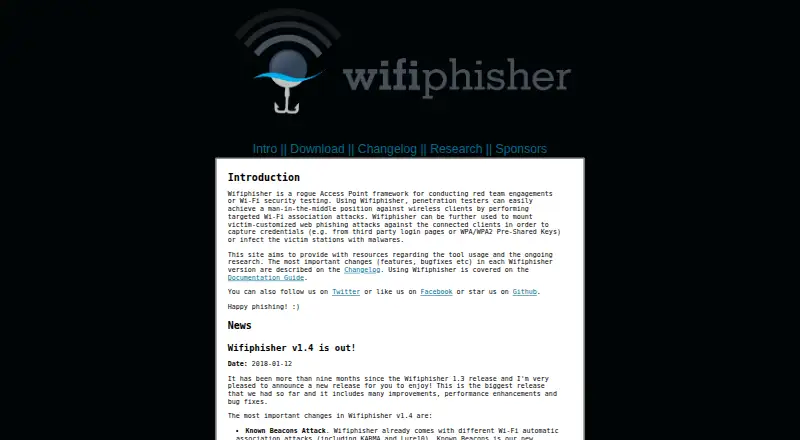
What Wifiphisher is
Wifiphisher is a free, Linux-based rogue access point framework for penetration testers conducting red team engagements or Wi-Fi security testing. It supports customized web phishing scenarios for security exercises, including scenarios that capture credentials or deliver payloads. Its association techniques include Evil Twin, KARMA, and Known Beacons. The tool provides community-driven phishing templates, and users can create custom scenarios. Python modules can extend its capabilities, but extension code runs without a sandbox. Wifiphisher identifies Kali Linux as its officially supported distribution and is also available as source code and through packages for Linux security distributions, including Kali Linux and Arch Linux. Running it requires a wireless adapter that supports AP and monitor modes, packet injection, and netlink-capable drivers. The project distributes Wifiphisher under the GNU General Public License version 3 and recommends verifying release integrity using the detached GPG signatures and checksums it provides. Its default captive portal uses a self-signed certificate; the FAQ recommends other security tools to bypass HSTS or HTTPS. The project directs users to GitHub to report bugs or suggest improvements and advises reading its FAQ first.
Who it suits
Wifiphisher is intended for penetration testers conducting red team engagements or Wi-Fi security testing on Linux. It suits users who can provide the required wireless adapter and want to build or extend testing scenarios with templates or Python modules.
What it does well
- Free download under the GNU General Public License version 3.
- Includes Evil Twin, KARMA, and Known Beacons techniques.
- Community templates and custom scenarios are supported.
- Python modules can extend the tool.
- Available as source code and Linux distribution packages.
What to know first
- Requires an adapter with AP and monitor modes, packet injection, and netlink-capable drivers.
- Kali Linux is the officially supported distribution.
- Extension code runs without a sandbox.
- The default captive portal uses a self-signed certificate.
Plans
| Plan | Billed and limits | Price |
|---|---|---|
| Free | Free download · source code under GPL | Free |
As wifiphisher.org lists them, read 4 Oct 2026. The maker's own page has the final word.
Getting started
- Visit the Wifiphisher website and review the FAQ.
- Obtain the source code or a package for a supported Linux security distribution.
- Use Kali Linux for the officially supported distribution.
- Prepare a wireless adapter supporting AP and monitor modes, packet injection, and netlink-capable drivers.
- Verify release integrity with the provided detached GPG signature and checksum.
- Use community templates or create a custom scenario.
Verdict
Choose Wifiphisher if you are a penetration tester conducting red team or Wi-Fi security work on Linux and have compatible wireless hardware. Its intended use is specialized, and the unsandboxed extensions and self-signed default portal are important considerations for security testing.
Questions
How much does Wifiphisher cost?
Its Free plan costs nothing and provides a download with source code under GPL.
Is Wifiphisher open source?
Yes. It is distributed under the GNU General Public License version 3.
Which platforms does it support?
It is a Linux project, and Kali Linux is its officially supported distribution. Packages are also available for Linux security distributions including Arch Linux.
What hardware does it require?
It requires a wireless adapter supporting AP and monitor modes, packet injection, and netlink-capable drivers.
Does it have a free trial?
No. The listed facts say there is no free trial; the tool has a free plan.
How can users report a problem?
The project directs users to GitHub to report bugs or propose improvements and advises reading the FAQ first.
Facts from Wifiphisher's own pages
- Association attacks
- Its association techniques include Evil Twin, KARMA, and Known Beacons. · github.com, 4 Oct 2026
- Distribution
- The tool is available as source code and through packages for Linux security distributions including Kali Linux and Arch Linux. · github.com, 4 Oct 2026
- Extensions
- Users can write Python modules to extend the tool, and extension code runs without a sandbox. · wifiphisher.readthedocs.io, 4 Oct 2026
- Hardware requirement
- The README requires a wireless adapter supporting AP and monitor modes with packet injection and netlink-capable drivers. · github.com, 4 Oct 2026
- HTTPS limitation
- The FAQ says its default captive portal uses a self-signed certificate and recommends other security tools to bypass HSTS or HTTPS. · wifiphisher.readthedocs.io, 4 Oct 2026
- Intended users
- The README identifies penetration testers conducting red team engagements or Wi-Fi security testing as intended users. · github.com, 4 Oct 2026
- License
- Wifiphisher is distributed under the GNU General Public License version 3. · github.com, 4 Oct 2026
- Phishing
- It supports victim-customized web phishing scenarios to capture credentials or deliver payloads. · github.com, 4 Oct 2026
- Purpose
- Wifiphisher is a rogue access point framework for red team engagements and Wi-Fi security testing. · github.com, 4 Oct 2026
- Release integrity
- The download page recommends verifying release integrity and provides detached GPG signatures and checksums. · github.com, 4 Oct 2026
- Support
- The project directs users to GitHub to report bugs or propose improvements and advises reading its FAQ first. · github.com, 4 Oct 2026
- Supported platform
- The project describes Linux as its platform and Kali Linux as its officially supported distribution. · github.com, 4 Oct 2026
- Templates
- It includes community-driven phishing templates and users can create custom scenarios. · github.com, 4 Oct 2026
Where Wifiphisher stands on Freedom251
- Penetration Testing Software#19 of 34