Freedom251 › Shop Floor Management Software
Tulip
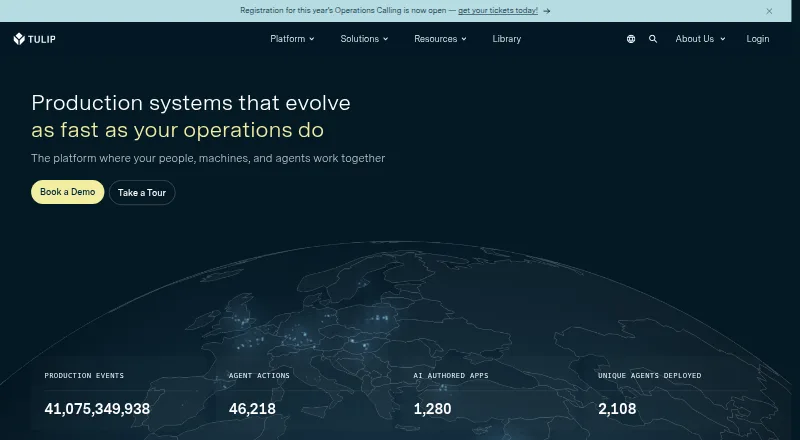
What Tulip is
Tulip is a composable frontline operations platform for production workflows, visibility, and operational improvement. Its no-code tools let teams build guided workflows, management terminals, and dashboards using a common data model. Real-time analytics and automations connect triggers and actions across machines, apps, and enterprise systems. AI agents can use operational data to surface issues, draft changes, and take actions within team-defined guardrails. Tulip connects with ERP, PLM, and other business systems through HTTP and SQL connectors, an API, and an on-premise Connector Host. Machine connections use Node-RED, MQTT, and OPC UA, directly or through Tulip edge devices; the company advertises support for more than 700 devices. Listed manufacturing uses include digital work instructions, production tracking, OEE dashboards, quality inspection, traceability, and electronic batch records. Essentials costs $100 a month and Professional costs $250 a month, each billed annually per interface with a 10-interface minimum. Tulip is SaaS-only and has no free plan or perpetual license. It lists Android, iOS, Linux, macOS, web, and Windows among its platforms.
Who it suits
Tulip suits manufacturing teams looking to build guided workflows and dashboards, connect operational systems, and track production or quality. Its listed plans require a minimum of 10 interfaces.
What it does well
- No-code tools build workflows, terminals, and dashboards.
- Analytics and automations connect machines, apps, and systems.
- Supports Node-RED, MQTT, and OPC UA connections.
- Manufacturing uses include tracking, inspection, and traceability.
- Lists Android, iOS, Linux, macOS, web, and Windows.
What to know first
- No free plan is listed.
- Essentials starts at $100 a month, billed annually per interface.
- Plans have a 10-interface minimum.
- The product is SaaS-only, with no perpetual license.
Limits
Essentials is limited to 50 interfaces and requires a 10-interface minimum. Professional has unlimited interfaces and the same minimum; the Regulated Industries and Enterprise plans also have a 10-interface minimum.
Plans
| Plan | Billed and limits | Price |
|---|---|---|
| Essentials | billed annually per interface; 10 interface minimum · Up to 50 interfaces · basic production visibility, quality, and assembly workflows · live chat | $100 a month |
| Professional | billed annually per interface; 10 interface minimum · Unlimited interfaces · SSO/SAML/LDAP · HTTP and SQL connectors · on-premise Connector Host · Tulip API | $250 a month |
| Regulated Industries | Contact us to learn more; 10 interface minimum · Unlimited interfaces · 21 CFR Part 11 eSignatures · auditable record history · 0-RPO · validation pack · LTS releases · customer audit privileges | On request |
| Enterprise | Contact us to learn more; 10 interface minimum · Unlimited interfaces · workspaces · enterprise app exchange · custom roles · app approval workflows · import/export across environments | On request |
As tulip.co lists them, read 29 Sept 2026. The maker's own page has the final word.
Getting started
- Visit tulip.co from a supported Android, iOS, Linux, macOS, web, or Windows platform.
- Review the Essentials and Professional plans and their interface minimums.
- Choose Essentials or Professional based on the listed plan features and interface needs.
- Contact Tulip to learn more about Regulated Industries or Enterprise pricing.
Verdict
Tulip combines workflow building, operational data, analytics, and machine connections for production settings. Its paid plans have a 10-interface minimum, and the service is offered as SaaS rather than a perpetual license.
Questions
Does Tulip have a free plan?
No. Tulip is a paid SaaS product.
How much does Tulip cost?
Essentials costs $100 a month, billed annually per interface, with a 10-interface minimum. Professional costs $250 a month on the same basis and minimum. Regulated Industries and Enterprise pricing is available by contacting Tulip.
Which platforms does Tulip support?
Tulip lists Android, iOS, Linux, macOS, web, and Windows, as well as an API.
What does Tulip connect to?
It connects with ERP, PLM, and other business systems using HTTP and SQL connectors, an API, and an on-premise Connector Host. Machine connections include Node-RED, MQTT, and OPC UA.
Is Tulip open source or available as a perpetual license?
Tulip describes its product as SaaS and says it does not offer a perpetual license. The listed facts do not identify it as open source.
Who makes Tulip?
Tulip says it was started by a team of engineers out of the MIT Media Lab. Its headquarters are in Somerville, Massachusetts, United States.
Facts from Tulip's own pages
- AI
- The platform includes AI agents that reason over operational data to surface issues, draft changes, and take actions within team-defined guardrails. · tulip.co, 29 Sept 2026
- Analytics and automation
- Tulip offers real-time analytics and automations that connect triggers and actions across machines, apps, and enterprise systems. · tulip.co, 29 Sept 2026
- App building
- Its no-code tools let teams create guided workflows, management terminals, and dashboards on a common data model. · tulip.co, 29 Sept 2026
- Availability
- Tulip states 99.9% uptime, daily backups across redundant locations, and 0-RPO for mission-critical data. · tulip.co, 29 Sept 2026
- Company origin
- Tulip says it was started by a team of engineers out of the MIT Media Lab. · tulip.co, 29 Sept 2026
- Compliance
- Tulip lists SOC 2 Type II, GDPR, ISO 9001:2015, and FedRAMP Moderate Equivalent among its platform compliance standards. · tulip.co, 29 Sept 2026
- Device compatibility
- Tulip advertises support for more than 700 devices and says USB devices can connect directly to workstations without an edge device. · tulip.co, 29 Sept 2026
- Headquarters
- Somerville, Massachusetts, United States · tulip.co, 28 Sept 2026
- Integrations
- Tulip connects with ERP, PLM, and other business systems and offers HTTP and SQL connectors, an API, and an on-premise Connector Host. · tulip.co, 29 Sept 2026
- License
- Tulip states that it is a SaaS solution and does not offer a perpetual license. · tulip.co, 29 Sept 2026
- Machine connectivity
- Tulip supports machine connections through Node-RED, MQTT, and OPC UA, directly or through Tulip edge devices. · tulip.co, 29 Sept 2026
- Manufacturing use cases
- Tulip lists digital work instructions, production tracking, OEE dashboards, quality inspection, traceability, and electronic batch records among its manufacturing use cases. · tulip.co, 29 Sept 2026
- Pricing model
- Tulip prices subscriptions per monthly active interface, defined as a device with activity on at least one day in the month, rather than per user. · tulip.co, 29 Sept 2026
- Purpose
- Tulip describes its product as a composable frontline operations platform for production workflows, visibility, and operational improvement. · tulip.co, 29 Sept 2026
- Security
- Tulip states that it encrypts data at rest and in transit, uses TLS/SSL-only API endpoints, and performs continuous vulnerability scanning and third-party penetration testing. · tulip.co, 29 Sept 2026
- Support
- The pricing page lists email support with a response within a maximum of 24 hours and offers a premium support plan with dedicated 24/7 support for critical issues. · tulip.co, 29 Sept 2026
Where Tulip stands on Freedom251
- Shop Floor Management Software#14 of 38
- Manufacturing Analytics Software#20 of 29
- Manufacturing Software#16 of 22
- Standard Operating Procedure Software#19 of 22