Ruby on Rails
What Ruby on Rails is
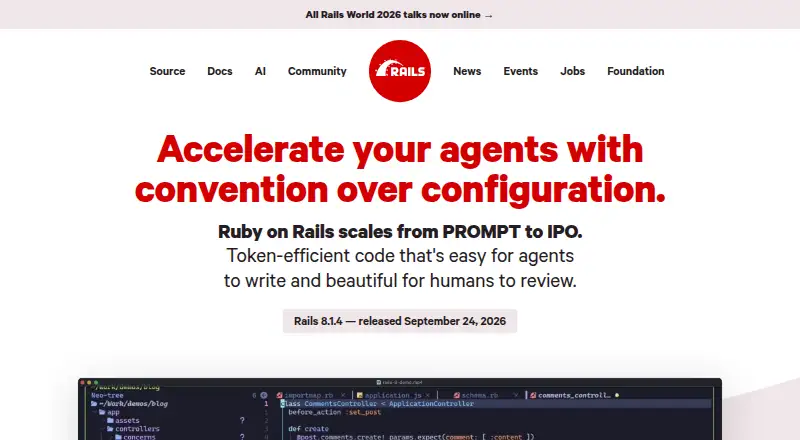
Ruby on Rails is a free, open-source, full-stack framework for building web applications with Ruby. It supports server-side rendering and includes an object-relational mapper, bringing application structure and data handling into the framework. The listed platform is web, and deployment targets are self-hosted. Rails therefore provides a framework for developers who want to build and run their own web applications rather than use a hosted application service. Ruby is the primary language, so projects need developers working in that ecosystem. Its open-source license model and free plan make it available without a listed purchase price. The framework’s defined scope is web development, combining full-stack application structure, SSR rendering, and built-in ORM support. These characteristics make Rails a foundation for teams seeking control over deployment and application data handling.
Who it suits
Ruby on Rails suits developers building web applications in Ruby who want a full-stack framework with server-side rendering and an included ORM. It also fits projects intended for self-hosted deployment.
What it does well
- Free plan
- Open-source license model
- Full-stack framework
- Included object-relational mapper
- Supports server-side rendering
What to know first
- Ruby is the primary language
- Deployment target is self-hosted
- Listed platform is web
Verdict
Ruby on Rails offers a free, open-source foundation for Ruby web applications. Its full-stack structure, SSR support, included ORM, and self-hosted deployment target define its main appeal.
Where Ruby on Rails stands on Freedom251
- Web Frameworks#25 of 31
- Frameworks#25 of 28