Freedom251 › AI Red Teaming Tools
PyRIT
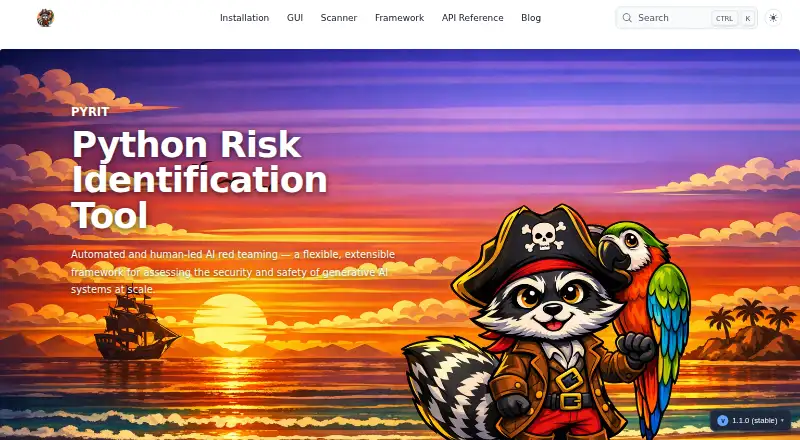
What PyRIT is
PyRIT is an open-source framework for security professionals and engineers assessing risks in generative AI systems. It supports single-turn and multi-turn red-team strategies, including Crescendo, TAP, and Skeleton Key, and repeatable scenario evaluations across hundreds of objectives such as content harms, psychosocial risks, and data leakage. CoPyRIT adds a web interface for interacting with AI systems, recording findings, and working with a team. Documented targets include OpenAI, Azure, Anthropic, Google, HuggingFace, custom HTTP endpoints and WebSockets, and web apps tested with Playwright. The framework can store conversations, scores, and attack results in SQLite or Azure SQL and export results. Scoring options include true/false, Likert scale, classification, and custom scorers, including LLM-based and Azure AI Content Safety scoring. Its documented modes include Scanner, GUI, and Framework, with command-line assessment through pyrit_scan and pyrit_shell. PyRIT is free under the MIT license and can be installed using Docker, pip, or uv; local installation documentation recommends Python 3.13.
Who it suits
PyRIT suits security professionals and engineers evaluating generative AI risks. It can support both command-line assessments and collaborative, human-led reviews through its web interface.
What it does well
- Supports single-turn and multi-turn red-team strategies
- Repeatable evaluations cover hundreds of objectives
- Targets include providers, endpoints, and web apps
- Stores results in SQLite or Azure SQL
- Offers several built-in and custom scoring approaches
What to know first
- Local installation documentation recommends Python 3.13
- Security vulnerabilities should not be reported through public GitHub issues
- Support is limited to the resources the project lists
Plans
| Plan | Billed and limits | Price |
|---|---|---|
| PyRIT | Open-source framework · install from PyPI or Docker | Free |
As microsoft.github.io lists them, read 8 Oct 2026. The maker's own page has the final word.
Getting started
- Choose Docker or install locally with pip or uv.
- For local installation, follow the documentation’s recommendation to use Python 3.13.
- Choose Scanner, GUI, or Framework mode for your assessment.
- Use the documented command-line tools pyrit_scan or pyrit_shell when working in command-line assessment mode.
Verdict
PyRIT combines attack strategies, repeatable scenarios, and configurable scoring for generative AI assessments. Its free MIT-licensed framework offers command-line and web-based workflows, with documented installation choices including Docker, pip, and uv.
Questions
Is PyRIT free?
Yes. Its listed plan is free, and it is MIT licensed.
How can I install it?
The project documents installation through Docker or locally with pip or uv. Local installation documentation recommends Python 3.13.
Which AI systems can it target?
Documented targets include OpenAI, Azure, Anthropic, Google, HuggingFace, custom HTTP endpoints and WebSockets, and web apps tested with Playwright.
Can PyRIT store assessment results?
It can store conversations, scores, and attack results in SQLite or Azure SQL, and supports exporting results.
What scoring options does it support?
Options include true/false, Likert scale, classification, and custom scorers, including LLM-based and Azure AI Content Safety scoring.
Where should security vulnerabilities be reported?
The project directs vulnerability reports to the Microsoft Security Response Center and says not to report them through public GitHub issues.
Facts from PyRIT's own pages
- Human-led interface
- CoPyRIT provides a web interface for interacting with AI systems, tracking findings, and collaborating with a team. · microsoft.github.io, 8 Oct 2026
- Installation
- The project documents user installation through Docker or locally with pip or uv, plus contributor Docker and local installation options. · microsoft.github.io, 8 Oct 2026
- License
- The GitHub repository identifies PyRIT as MIT licensed. · github.com, 8 Oct 2026
- Memory
- PyRIT can store conversations, scores, and attack results in SQLite or Azure SQL, and supports exporting results. · microsoft.github.io, 8 Oct 2026
- Purpose
- PyRIT is an open-source framework for security professionals and engineers to identify risks in generative AI systems. · github.com, 8 Oct 2026
- Python compatibility
- The current documentation recommends Python 3.13 for local installation. · microsoft.github.io, 8 Oct 2026
- Red teaming
- It supports single-turn and multi-turn attack strategies, including Crescendo, TAP, and Skeleton Key. · microsoft.github.io, 8 Oct 2026
- Scenario evaluations
- Its scenario framework supports repeatable evaluations across hundreds of objectives, including content harms, psychosocial risks, and data leakage. · microsoft.github.io, 8 Oct 2026
- Scoring
- Response scoring supports true/false, Likert scale, classification, and custom scorers, including LLM-based and Azure AI Content Safety scoring. · microsoft.github.io, 8 Oct 2026
- Security reporting
- The documentation directs vulnerability reports to the Microsoft Security Response Center and says not to report them through public GitHub issues. · microsoft.github.io, 8 Oct 2026
- Support
- The project uses GitHub Issues for bugs, feature requests, and questions, and says support is limited to the resources it lists. · github.com, 8 Oct 2026
- Targets
- Documented targets include OpenAI, Azure, Anthropic, Google, HuggingFace, custom HTTP endpoints and WebSockets, and web apps tested with Playwright. · microsoft.github.io, 8 Oct 2026
- Ways to use
- The documentation describes Scanner, GUI, and Framework modes, including command-line assessment through pyrit_scan and pyrit_shell. · microsoft.github.io, 8 Oct 2026
Where PyRIT stands on Freedom251
- AI Red Teaming Tools#11 of 27
- LLM Evaluation Tools#19 of 29