Freedom251 › Internal Developer Platforms

Mia-Platform Console
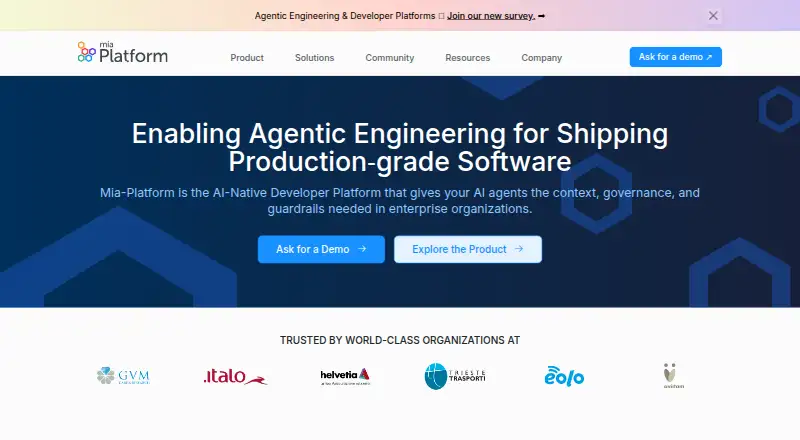
What Mia-Platform Console is
Mia-Platform Console is a platform builder for creating and managing a customized Internal Developer Platform for cloud-native development and operations. It brings software lifecycle management together with governance and control, while providing self-service provisioning of ready-to-use environments. Console supports hybrid and multi-cloud environments, including Kubernetes clusters connected across cloud providers. Teams can build workflows from project templates, deploy with GitOps, use ready-to-use services, or upload Docker images directly. The product overview also describes observability tools, metrics, alerting, a documentation portal, and API testing. Integrations connect Git repositories, secret managers, and CI/CD tools; examples include GitHub, GitLab, Jenkins, HashiCorp Vault, and Azure Key Vault. Teams can embed external web applications as custom pages, with OAuth 2.0 single sign-on for extensions. An OPA-based authorization service applies RBAC policies to requests on the shared platform layer. Installation guidance requires the shared authentication layer to be operational before Mia-Platform products are installed. Mia-Platform was founded in 2016 and is headquartered in Milan, Italy. Console is available through web and API, as well as in self-hosted deployments. Pricing is available on request. Its documentation identifies developers, operations teams, and platform engineering teams as users it serves, with Mia-Platform Support and its community as support resources.
Who it suits
Console is for developers, operations teams, and platform engineering teams building or running an Internal Developer Platform for cloud-native work. It suits organizations that need self-service environments across hybrid or multi-cloud infrastructure, including connected Kubernetes clusters.
What it does well
- Supports self-service provisioning of ready-to-use environments.
- Connects Kubernetes clusters across cloud providers.
- Offers templates, GitOps deployment, ready-to-use services, and Docker image uploads.
- Integrates with Git, secrets, and CI/CD tools.
- Supports custom embedded pages with OAuth 2.0 SSO.
What to know first
- Pricing is available on request.
- The shared authentication layer must be operational before installation.
Limits
The public pages provide no price or plan limits. Installation requires the shared authentication layer to be operational first.
Plans
| Plan | Billed and limits | Price |
|---|---|---|
| Contact for pricing | No public price or plan limits stated on the official pages opened | On request |
As mia-platform.eu lists them, read 4 Oct 2026. The maker's own page has the final word.
Getting started
- Visit the Mia-Platform website and contact the company for pricing.
- Choose a web, API, or self-hosted deployment approach.
- Make the shared authentication layer operational before installing Mia-Platform products.
- Connect Git repositories, secret managers, and CI/CD tools as needed.
- Use project templates, GitOps deployment, ready-to-use services, or Docker image uploads to build workflows.
Verdict
Consider Mia-Platform Console if your teams need a customizable Internal Developer Platform with self-service workflows, governance, and hybrid or multi-cloud support. Contact Mia-Platform for pricing; installation also depends on having the shared authentication layer operational first.
Questions
How much does Mia-Platform Console cost?
Pricing is on request; no public price or plan limits are stated.
Can Console be self-hosted?
Yes. It is available as a web service, through an API, and in self-hosted deployments.
Which teams does Console serve?
Its documentation identifies developers, operations teams, and platform engineering teams.
Which integrations are named?
Examples include GitHub, GitLab, and Jenkins for development workflows, plus HashiCorp Vault and Azure Key Vault for secrets.
What must be in place before installation?
The shared authentication layer must be operational before installing Mia-Platform products.
What security certification is described?
Mia S.r.l.’s ISO/IEC 27001:2022 certification covers development and delivery of Mia-Platform solutions in SaaS, PaaS, and self-hosted modes, with controls aligned to ISO/IEC 27017 and 27018 guidance.
Facts from Mia-Platform Console's own pages
- Access control
- The shared platform layer uses an OPA-based authorization service to enforce RBAC policies on requests. · docs.mia-platform.eu, 4 Oct 2026
- Deployment prerequisite
- The installation guidance says the shared authentication layer must be operational before installing Mia-Platform products. · docs.mia-platform.eu, 4 Oct 2026
- Development workflow
- Teams can use project templates, GitOps deployment, ready-to-use services, or upload Docker images directly. · docs.mia-platform.eu, 4 Oct 2026
- Extensibility
- Console can add custom pages by embedding external web applications as iframes, with an OAuth 2.0 SSO flow for extensions. · docs.mia-platform.eu, 4 Oct 2026
- Founded
- 2016 · mia-platform.eu, 28 Sept 2026
- Headquarters
- Milan, Italy · mia-platform.eu, 28 Sept 2026
- Integrations
- Console providers connect Git repositories, secret managers, and CI/CD tools; examples in the FAQ include GitHub, GitLab, Jenkins, HashiCorp Vault, and Azure Key Vault. · docs.mia-platform.eu, 4 Oct 2026
- Lifecycle management
- Console brings software lifecycle management, governance, and control into an integrated platform. · docs.mia-platform.eu, 4 Oct 2026
- Multi-cloud
- Console supports hybrid and multi-cloud environments and can connect Kubernetes clusters across cloud providers. · docs.mia-platform.eu, 4 Oct 2026
- Observability
- The product overview describes observability tools, metrics, alerting, a documentation portal, and API testing capabilities. · docs.mia-platform.eu, 4 Oct 2026
- Security certification
- Mia S.r.l.’s ISO/IEC 27001:2022 certification covers development and delivery of Mia-Platform solutions in SaaS, PaaS, and self-hosted modes, with controls aligned to ISO/IEC 27017 and 27018 guidance. · mia-platform.eu, 4 Oct 2026
- Self-service environments
- It provides teams with on-demand, ready-to-use environments and supports self-service provisioning. · docs.mia-platform.eu, 4 Oct 2026
- Support
- The Console documentation links to Mia-Platform Support and its community as support resources. · docs.mia-platform.eu, 4 Oct 2026
- What it does
- Mia-Platform Console is a platform builder for creating and managing a customized Internal Developer Platform for cloud-native development and operations. · docs.mia-platform.eu, 4 Oct 2026
- Who it is for
- The Console documentation identifies developers, operations teams, and platform engineering teams as users it serves. · docs.mia-platform.eu, 4 Oct 2026
Where Mia-Platform Console stands on Freedom251
- Internal Developer Platforms#19 of 27
- Platform Engineering Software#28 of 31
- Internal Developer Portals#25 of 27