Freedom251 › Healthcare Provider Directories

Medicare Care Compare
What Medicare Care Compare is
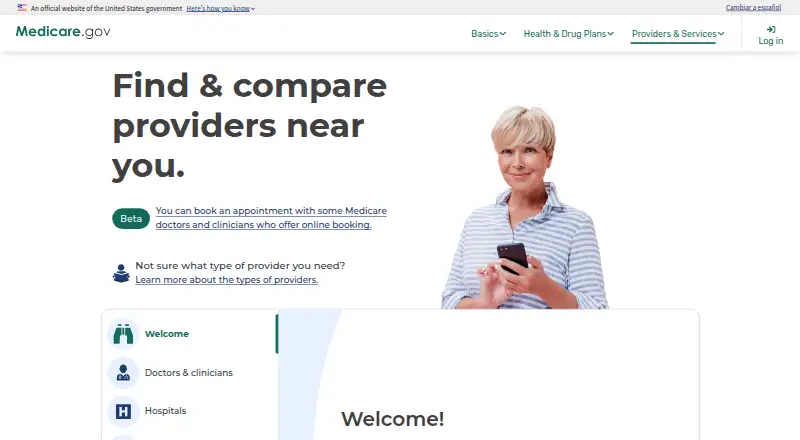
Medicare Care Compare is a free web tool for finding and comparing Medicare providers. It lists doctors and clinicians, hospitals, nursing homes, home health services, hospice care, inpatient rehabilitation facilities, long-term care hospitals, dialysis facilities, community health centers, and medical equipment and suppliers. Medicare patients and caregivers can search for clinicians and groups enrolled in Medicare, then use maps and filters to identify providers that may fit their needs. Clinician profiles can include measure-level star ratings, performance scores, check marks, telehealth indicators, and procedure-volume data. Nursing home overall ratings use health inspections, staffing, and quality measures. CMS reports more than 150 hospital quality measures through Care Compare and the Provider Data Catalog. General clinician and group information is updated monthly; performance information is updated annually. People seeking downloadable provider data are directed to the Provider Data Catalog on Data.cms.gov. Care Compare includes data only from Medicare-certified hospitals. Its interface is described as optimized for mobile and tablet use, including provider phone numbers that can be tapped to initiate calls.
Who it suits
Care Compare is for Medicare patients and caregivers looking for clinicians or groups enrolled in Medicare. It may also help people compare other listed provider types using maps and filters.
What it does well
- Free public provider search and comparison tool.
- Lists a wide range of provider types.
- Clinician profiles can include ratings and performance information.
- Maps and filters help identify providers.
- Interface is optimized for mobile and tablet use.
What to know first
- Hospital data includes only Medicare-certified hospitals.
- Clinician performance information is updated annually.
- Provider data downloads are directed to a separate catalog.
Limits
Care Compare includes data only from Medicare-certified hospitals. Clinician and group general information is updated monthly, while performance information is updated annually.
Plans
| Plan | Billed and limits | Price |
|---|---|---|
| Free | Public provider search and comparison tool | Free |
As medicare.gov lists them, read 30 Sept 2026. The maker's own page has the final word.
Getting started
- Open the Medicare Care Compare website.
- Search for a provider type or clinician group.
- Use maps and filters to narrow the providers shown.
- Open provider profiles to review available ratings and details.
- For downloadable provider datasets, visit the Provider Data Catalog on Data.cms.gov.
Medicare Care Compare is a free web directory for locating and comparing Medicare-participating providers. It is best for Medicare patients, caregivers, and families who need to narrow choices by specialty, location, organization, or care setting. Its broad provider coverage and quality indicators make it a useful first stop, provided you understand its Medicare-only hospital scope and the slower refresh of performance data.
Overview
Care Compare brings doctors and clinicians, hospitals, nursing homes, home health agencies, hospice care, inpatient rehabilitation facilities, long-term care hospitals, dialysis facilities, community health centers, and medical equipment and suppliers into one search experience. Maps and filters help turn that wide catalog into a practical local shortlist, while specialty filters and organization profiles support more focused comparisons.
The breadth is its clearest advantage: someone arranging care can move between provider types without switching directories. The important boundary is that hospital results include only Medicare-certified hospitals, so it should not be treated as a complete directory of every hospital in a region.
Key features
Search, maps, and filters
Medicare patients and caregivers can search for and compare clinicians and groups enrolled in Medicare. Maps and filtering are useful when distance, specialty, or provider category matters more than browsing a national list. On phones and tablets, provider phone numbers can be tapped to start a call, a small but practical touch for arranging appointments away from a desktop.
Clinician and organization information
Clinician profiles may include measure-level star ratings, performance scores, check marks, telehealth indicators, and procedure-volume data. Together, those fields give readers more context than a name and address alone, although annual performance updates mean a score can lag behind a clinician's recent results. General clinician and group information is refreshed monthly, so basic profile changes should appear more promptly.
Quality data across care settings
Nursing-home overall ratings combine health inspections, staffing, and quality measures, giving families several dimensions to weigh when evaluating long-term care. CMS reports more than 150 hospital quality measures through Care Compare and the Provider Data Catalog. Clinician performance information comes from the Quality Payment Program, while general profile information primarily comes from PECOS and may be verified with claims data.
Data access
People who need to analyze or download records are directed to the Provider Data Catalog on Data.cms.gov rather than the consumer search page. That catalog includes clinician demographic, MIPS performance, final-score, performance-category, and procedure-volume files. API access is available, making the service more useful for data-oriented teams than a typical consumer directory, though the main interface remains a search tool rather than a full analytics workspace.
Pricing
| Plan | Price | What it includes |
|---|---|---|
| Free | free | Public provider search and comparison tool |
There is no paid tier, seat charge, trial period, or renewal commitment. The free plan suits patients, caregivers, and organizations that need public provider lookup and comparison without a purchasing process. Its trade-off is scope rather than price: deeper downloadable datasets and programmatic use sit in the Provider Data Catalog, while hospital coverage remains limited to Medicare-certified facilities.
Platforms
Care Compare is available on the web. CMS describes the interface as optimized for mobile and tablet use, including tap-to-call provider numbers. Privacy policy and privacy-setting links are provided from Medicare pages, which is useful when several family members are coordinating care on shared devices.
Who it's for
This is a strong fit for Medicare beneficiaries and caregivers comparing clinicians, groups, nursing homes, hospitals, or other covered provider categories in a particular area. Families evaluating nursing homes benefit from the combination of inspection, staffing, and quality measures. Analysts and developers can use the Provider Data Catalog and API access for structured clinician data.
Look elsewhere if you need hospitals outside the Medicare-certified system, a rapidly refreshed view of clinician performance, or a directory built primarily for non-Medicare patients.
Pros and cons
- Pro: Covers many provider types in one directory, from clinicians and hospitals to dialysis and home health services.
- Pro: Maps, specialty filters, organization profiles, and tap-to-call numbers make local shortlisting practical.
- Pro: Clinician profiles can combine ratings, scores, telehealth indicators, and procedure volume.
- Pro: Nursing-home ratings bring inspections, staffing, and quality measures into one comparison view.
- Con: Hospital results include only Medicare-certified hospitals, excluding facilities outside that certification boundary.
- Con: Clinician performance information is updated annually, so quality figures may not capture recent changes.
- Con: Users seeking downloadable or programmatic data must move to the separate Provider Data Catalog experience.
Alternatives
Browse Healthcare Provider Directories when you want a broader directory category view rather than a single Medicare-focused service.
Practo Doctor Directory is the better choice for Android, iOS, and web access with a free doctor-profile listing, particularly when its INR-based, clinic-oriented listing model fits your market.
Choose Healthdirect National Health Services Directory when you need a free national health-service directory with Android, iOS, web, and API access for integration partners.
Healthgrades suits consumers who prefer a free, advertiser-supported directory on web or mobile, while providers wanting an elevated profile can consider its $49.95 a month subscription.
WebMD Physician Directory is an option for provider profiles emphasizing accepted insurance, credentials, and conditions treated.
Clinic Directory fits clinics that want to claim and manage a listing, with a free tier and paid analytics-oriented options.
Use NPPES NPI Registry for public NPI records and API access, including the first 2100 search results and hourly query limits.
NHS Service Finder is the relevant alternative for health and social care professionals in England.
Verdict
Choose Medicare Care Compare if you are a Medicare patient, caregiver, or data user who needs a free way to compare many Medicare provider categories with maps, filters, and quality-oriented profile fields. Its main reason to choose it is the combination of breadth and structured Medicare data at no cost. Look elsewhere when you need non-certified hospitals, faster-changing performance information, or a directory centered on another country's health system.
Verdict
Care Compare provides a broad provider directory with search, comparison, maps, and filters. Its clinician information includes profile and performance details, while hospital listings are limited to Medicare-certified hospitals.
Questions
Does Medicare Care Compare cost anything?
No. It is listed as a free public provider search and comparison tool.
What kinds of providers can I find?
It lists clinicians, hospitals, nursing homes, home health services, hospice care, rehabilitation and long-term care facilities, dialysis facilities, community health centers, and medical equipment and suppliers.
Can I search for clinicians enrolled in Medicare?
Yes. Medicare patients and caregivers can search for and compare clinicians and groups enrolled in Medicare.
What information can clinician profiles include?
Profiles can include measure-level star ratings, performance scores, check marks, telehealth indicators, and procedure-volume data.
How often is information updated?
Clinician and group general information is updated monthly; performance information is updated annually.
Where can I download provider data?
The Provider Data Catalog on Data.cms.gov includes downloadable clinician demographic, MIPS performance, final-score, performance-category, and procedure-volume data files.
Facts from Medicare Care Compare's own pages
- Clinician information
- Clinician profiles can include measure-level star ratings, performance scores, check marks, telehealth indicators, and procedure-volume data. · cms.gov, 30 Sept 2026
- Clinician search audience
- Medicare patients and caregivers can search for and compare clinicians and groups enrolled in Medicare. · cms.gov, 30 Sept 2026
- Data downloads
- Users looking to explore and download provider data are directed to the Provider Data Catalog on Data.cms.gov. · medicare.gov, 30 Sept 2026
- Data sources
- Clinician performance information comes from the Quality Payment Program, while general profile information primarily comes from PECOS and may be verified using claims data. · cms.gov, 30 Sept 2026
- Data update cadence
- Clinician and group general information is updated monthly, while performance information is updated annually. · cms.gov, 30 Sept 2026
- Downloadable clinician data
- The Provider Data Catalog includes clinician demographic, MIPS performance, final-score, performance-category, and procedure-volume data files. · cms.gov, 30 Sept 2026
- Headquarters
- Baltimore, Maryland, United States · medicare.gov, 28 Sept 2026
- Hospital data
- CMS reports more than 150 hospital quality measures through Care Compare and the Provider Data Catalog. · cms.gov, 30 Sept 2026
- Limit
- Only data from Medicare-certified hospitals are included in Care Compare. · cms.gov, 30 Sept 2026
- Maps and filters
- Medicare says users can use maps and filters to identify providers that are right for them. · medicare.gov, 30 Sept 2026
- Platform experience
- CMS describes the Care Compare interface as optimized for mobile and tablet use, including provider phone numbers that can be tapped to initiate calls. · cms.gov, 30 Sept 2026
- Provider ratings
- Nursing home overall ratings are based on health inspections, staffing, and quality measures. · medicare.gov, 30 Sept 2026
- Provider types
- The tool lists doctors and clinicians, hospitals, nursing homes, home health services, hospice care, inpatient rehabilitation facilities, long-term care hospitals, dialysis facilities, community health centers, and medical equipment and suppliers. · medicare.gov, 30 Sept 2026
- Purpose
- Care Compare lets people find and compare Medicare providers and use maps and filters to identify providers that may fit their needs. · medicare.gov, 30 Sept 2026
- Security and privacy
- The Medicare site provides links to its Privacy Policy and privacy settings from Care Compare pages. · medicare.gov, 30 Sept 2026
Where Medicare Care Compare stands on Freedom251
- Healthcare Provider Directories#6 of 16